The popular advice about bed bug bites vs flea bites sounds reassuring: look for a line of bumps, check whether they're on your ankles, and name the insect. Don't choose a treatment that way. A convincing bite photo can still send you after the wrong pest.
For a Miami homeowner, the better starting point is where you were exposed, what was happening around you, and what you can find in the home. Treat the skin when needed, but spend your pest-control effort identifying the source.
Table of Contents
- Why Bite Photos Rarely Solve the Mystery
- Appearance and Texture Side by Side
- Where Each Pest Bites on the Body
- Timing, Reactions, and When to Seek Care
- Home Checks for Physical Evidence
- Three Miami Scenarios and What They Suggest
- Deciding What to Do Next and When to Call a Pro
Why Bite Photos Rarely Solve the Mystery
A sharp photograph can document a skin reaction. It can't reliably identify what caused it. The CDC's bed bug overview explains that bed bug bites can resemble mosquito or flea bites, so matching your marks to an online gallery isn't a dependable diagnosis.
That distinction matters before you buy a spray, discard furniture, or tell a guest that your rental has bed bugs. Those are decisions with consequences, and a skin photograph doesn't provide enough evidence to make them confidently.
The sensible response isn't to ignore the marks. It's to separate evidence of a skin reaction from evidence of a particular pest.
Build an exposure history instead
Start with a short written account of what happened. Don't try to make every detail fit your first guess.
- Sleeping location: Record which bed or sofa you used before noticing the marks.
- Recent changes: Note overnight guests, travel, used furniture, or a change in where pets rest.
- Body distribution: Describe the affected areas, including whether clothing covered them.
- Household observations: Ask whether anyone has found an insect, unusual spotting, or signs of flea exposure on an animal.
Keep photographs, but use them to track the reaction rather than identify the insect. A dated photo can help you explain changes to a clinician. A photograph of an actual insect serves a different purpose: it gives a pest professional something to identify.
Practical rule: Use the bite picture to document the problem. Use the home inspection to investigate the cause.
Don't force agreement between occupants
Ask each person what they noticed without coaching them toward an answer. A condo resident who says “something bit me” hasn't confirmed the same exposure as a neighbor with a similar-looking rash.
For Miami landlords and short-term-rental operators, I recommend keeping separate records for symptoms, reported locations, and physical findings. Don't put an unconfirmed pest name at the top of the file and let every later observation inherit that assumption.
Professional confirmation makes sense when the consequences of guessing are high, especially in occupied rentals or when new complaints continue. Request an inspection based on the evidence you have, not a diagnosis you've already decided must be correct.
Appearance and Texture Side by Side
Bed bug bites are generally slightly swollen, red, and itchy, according to the CDC's description of bite symptoms. Unfortunately, that description also fits other insect bites. Redness and swelling tell you that skin is reacting, not which insect caused the reaction.
Flea bites more typically appear as small, raised, intensely itchy bumps. They may have a central punctum, a tiny visible point in the middle, or develop a blister when someone reacts to flea saliva. Bed bug reactions are also variable and may include raised bumps, hives, blisters, or substantial swelling.
Look at features without turning them into rules
A papule means a small, raised skin bump. It isn't a pest-specific label. Likewise, a blister doesn't automatically make a mark a flea bite, and a broad swollen area doesn't automatically make it a bed bug bite.
Avoid measuring bumps against internet diagrams. A rigid size cutoff creates false confidence when the useful distinction is qualitative: flea bites often look smaller and more pinpoint, while bed bug reactions may look like more broadly swollen bumps.
Itch intensity is another poor tie-breaker. An intensely itchy spot deserves relief, but it doesn't deserve an automatic flea diagnosis.
Why two people can look different
Individual immune response can change the appearance dramatically. Bed bug exposure may produce no visible reaction in one person and conspicuous bumps or swelling in another. Flea reactions can also vary, particularly when someone has an allergic response to flea saliva.
My recommendation is to describe what you see in ordinary language: raised or flat, localized or widespread, pinpoint-centered or not, blistered or unbroken. That gives a clinician useful information without pretending you've identified the pest.
Bite Appearance at a Glance
| Trait | Bed Bug Bites | Flea Bites |
|---|---|---|
| Typical appearance | Red, itchy, slightly swollen bumps | Small, raised, often intensely itchy bumps |
| Size impression | May look broadly swollen, with substantial variation | Often appear smaller and more pinpoint |
| Center | No dependable visual feature identifies the pest | A central punctum may be visible |
| Surface changes | Bumps, hives, or blisters may occur | Bumps or blisters may occur |
| Grouping | May appear grouped or individually | May appear grouped or individually |
| Visible reaction | Can be absent despite exposure | Varies with the person's response |
| What appearance establishes | A skin reaction, not pest identity | A skin reaction, not pest identity |
Use this table as a description aid, not a verdict. If the marks seem to match both columns, that's a reason to investigate the environment, not to pick whichever photograph looks closest.
Where Each Pest Bites on the Body
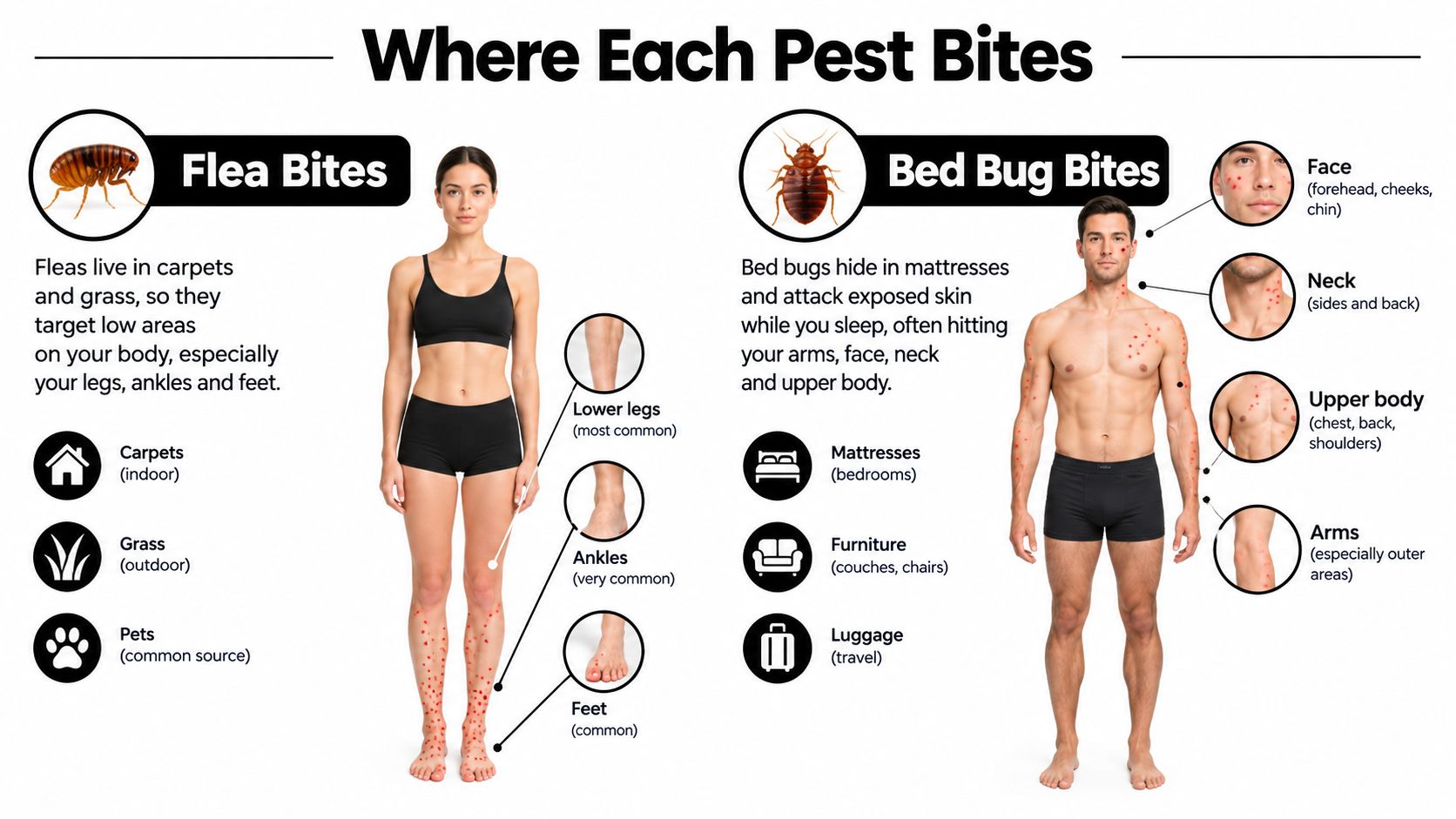
Body location is more useful than bump shape when deciding where to inspect first. University of Minnesota Extension guidance describes flea bites as favoring exposed feet and ankles, while bed bugs more often affect skin exposed during sleep, including the face, neck, arms, hands, and legs.
Fleas are associated with pets, carpets, and animal resting areas close to the floor. That makes an ankle-heavy pattern a sensible reason to investigate those areas. Bed bugs feed at night, so marks on exposed sleeping skin make the sleeping area a sensible starting point.
The distinction is about likely exposure, not a border that either insect refuses to cross.
Translate location into an inspection priority
For a Kendall household with pets, lower-leg marks should move animal resting areas higher on the inspection list. Ask where the pets sleep, which rugs they use, and whether anyone has found flea evidence.
For a Brickell resident noticing marks on exposed arms and the face after sleeping, start with the bed and nearby sleeping-area furnishings. Don't spend the first part of the investigation searching unrelated rooms just because you own a pet.
Use these practical starting points:
- Ankle-dominant complaints: Prioritize pet resting areas and floor-level surroundings.
- Several exposed sleeping areas affected: Prioritize the bed and the immediate sleeping environment.
- Mixed upper- and lower-body complaints: Keep both possibilities open and let physical findings determine the next step.
A line of bites isn't a signature
The familiar breakfast, lunch, and dinner pattern gets too much credit. Both bed bug and flea bites can occur in linear groupings, and bed bug marks can also appear in clusters, zigzags, or scattered arrangements.
Don't count bumps and treat the result as an identification test. A line is a description of distribution, not proof of who bit you.
For Miami households, I'd also avoid assuming that owning an animal settles the question. Record the pet history, but inspect the relevant areas. The same applies to a home without pets: don't cross a pest off the list solely because the household doesn't match your expectations.
Let the body pattern choose your first inspection area. Let the findings choose your treatment.
Timing, Reactions, and When to Seek Care
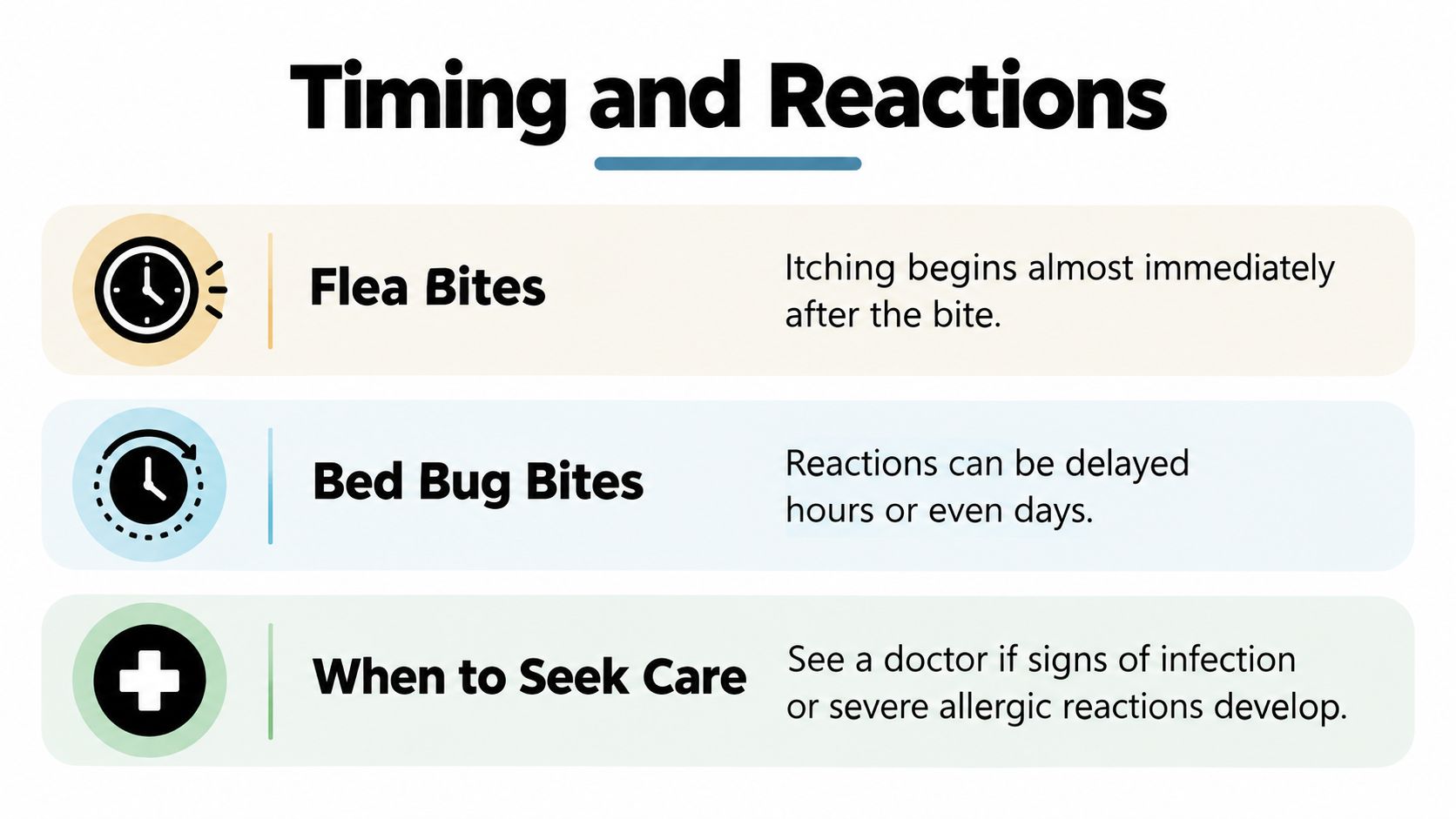
The time you notice a mark isn't necessarily the time you were bitten. Flea bites can itch quickly, while bed bug reactions may take hours or days to appear. The CDC's public-health guidance on bed bugs also describes substantial variation in reactions and the possibility of secondary infection from scratching.
That makes timing a clue, not a clock you can use to reconstruct exposure precisely. Waking up itchy doesn't establish that the bite happened in that bed immediately before you woke.
Separate ordinary irritation from warning signs
Localized redness, itching, and limited swelling fit the common reactions already described. Spreading redness, pus, fever, severe swelling, or widespread blistering warrant medical evaluation. Breathing difficulty or signs of a severe allergic reaction require emergency medical attention, not another round of pest identification.
Don't wait for a pest professional to confirm an insect before seeking care for concerning symptoms. Medical urgency depends on the person's condition.
- For an itchy but otherwise limited reaction: Ask a clinician or pharmacist about appropriate symptom relief.
- For possible infection or a substantial reaction: Arrange medical evaluation rather than continuing a home-only investigation.
- For breathing difficulty: Seek emergency help immediately.
Skin treatment and pest treatment are different jobs
Clinician-directed skin care or antihistamines may help symptoms. They won't remove an infestation. Conversely, treating a room won't substitute for medical attention when skin symptoms need evaluation.
Bed bugs haven't been shown to transmit disease to humans, but that doesn't make their effects trivial. Allergic reactions, distress, and scratching-related infection still matter. Flea bites can also cause intense itching and scratching-related infection.
If outdoor exposure remains part of the history, the mosquito bite vs bed bug bite comparison offers another comparison to consider. Don't narrow the investigation to bed bugs and fleas just because those were the first names you searched.
For landlords and hosts, keep the medical and property responses separate. Encourage a guest with concerning symptoms to seek care, and arrange the appropriate property investigation without offering a medical diagnosis.
Home Checks for Physical Evidence
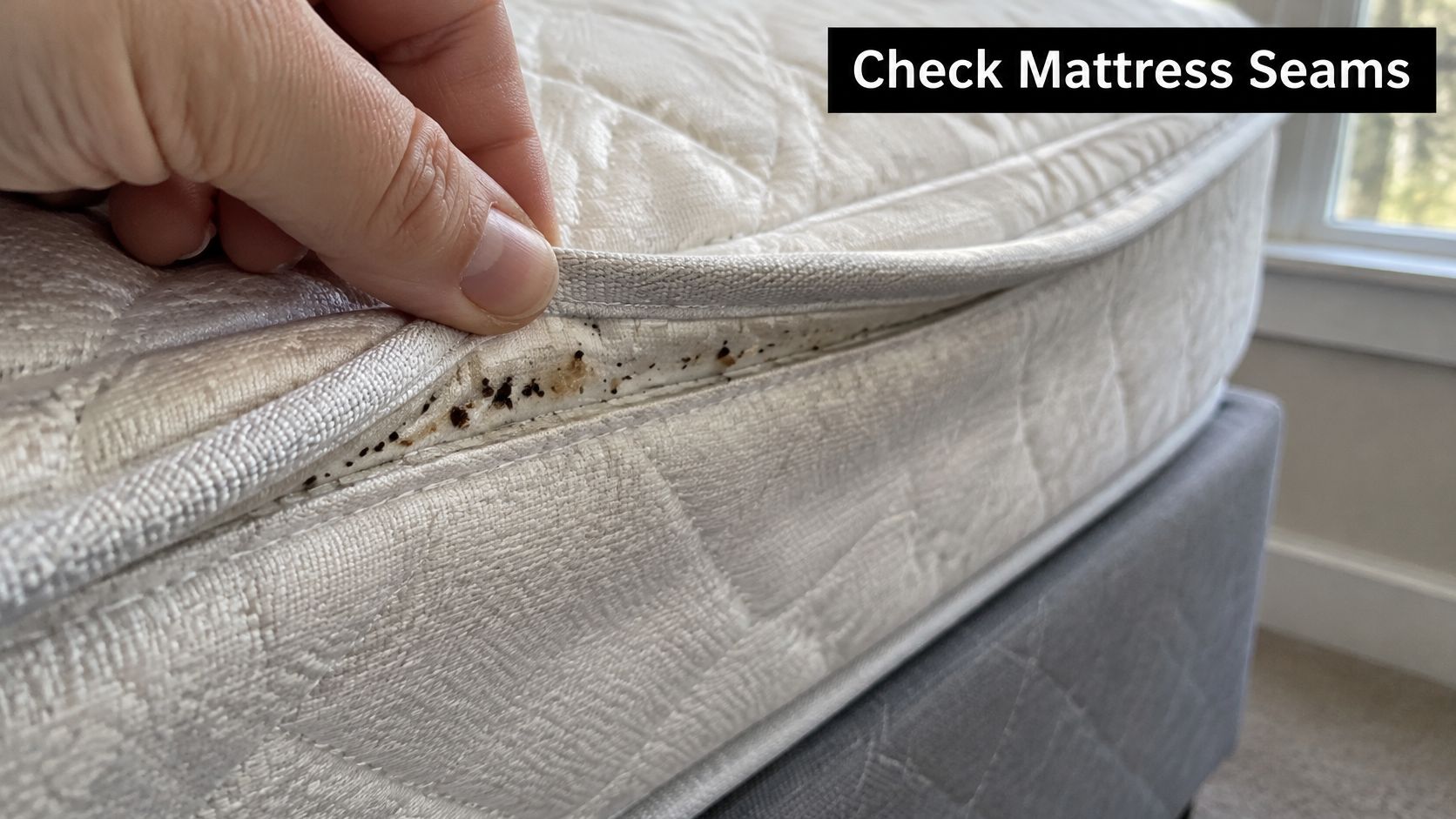
Look for the pest, not another photograph of a rash. Physical findings such as bed bugs, shed skins, fecal spotting, fleas, or flea dirt provide a stronger basis for identification than skin marks.
Use a flashlight and keep your phone ready to document what you find. Mattress seams are a useful place to begin a focused sleeping-area check.
Inspect deliberately rather than dismantling everything
I recommend following a consistent route: mattress seams, box spring, bed frame, headboard, and nearby baseboards. Include luggage in your review when travel is relevant. Photograph suspected insects, shed material, or spotting in place, then request identification rather than declaring every dark mark proof of bed bugs.
For a flea-focused check, prioritize pet bedding, nearby carpets, and the floor edges around animal resting areas. Document suspected fleas or flea dirt. If a pet is scratching but you haven't found fleas, PetScy's vet-backed tips for itchy dogs provide context for that discussion with a veterinarian.
Use the bed bug inspection checklist to organize a more detailed review. A limited home check is useful, but don't mistake an incomplete search for professional clearance.
The video below is an additional visual reference.
Keep a room-by-room record
Save or screenshot this checklist:
- Sleeping area: Record inspected surfaces and photograph suspicious findings.
- Pet resting area: Note bedding, rugs, and any suspected flea evidence.
- Recent arrivals: List relevant luggage, furniture, or overnight stays.
- Evidence file: Keep insect photographs separate from skin photographs.
- Unresolved areas: Tell the inspector what you couldn't access or confidently assess.
Don't respond to an uncertain finding with an indiscriminate spray. The National Pesticide Information Center's history of bed bugs and DDT documents rapid resistance, including control failures at Pearl Harbor in 1947. The practical lesson is to request inspection, targeted treatment, and follow-up rather than assume a single pesticide application will settle the problem.
Three Miami Scenarios and What They Suggest
These are hypothetical situations, not customer case studies. Each shows how I'd turn a complaint into a useful next step without pretending the bite pattern provides certainty.
The illustration offers related housing examples. The important point is to pair the reported exposure with an inspection, not attach a pest diagnosis to a neighborhood.
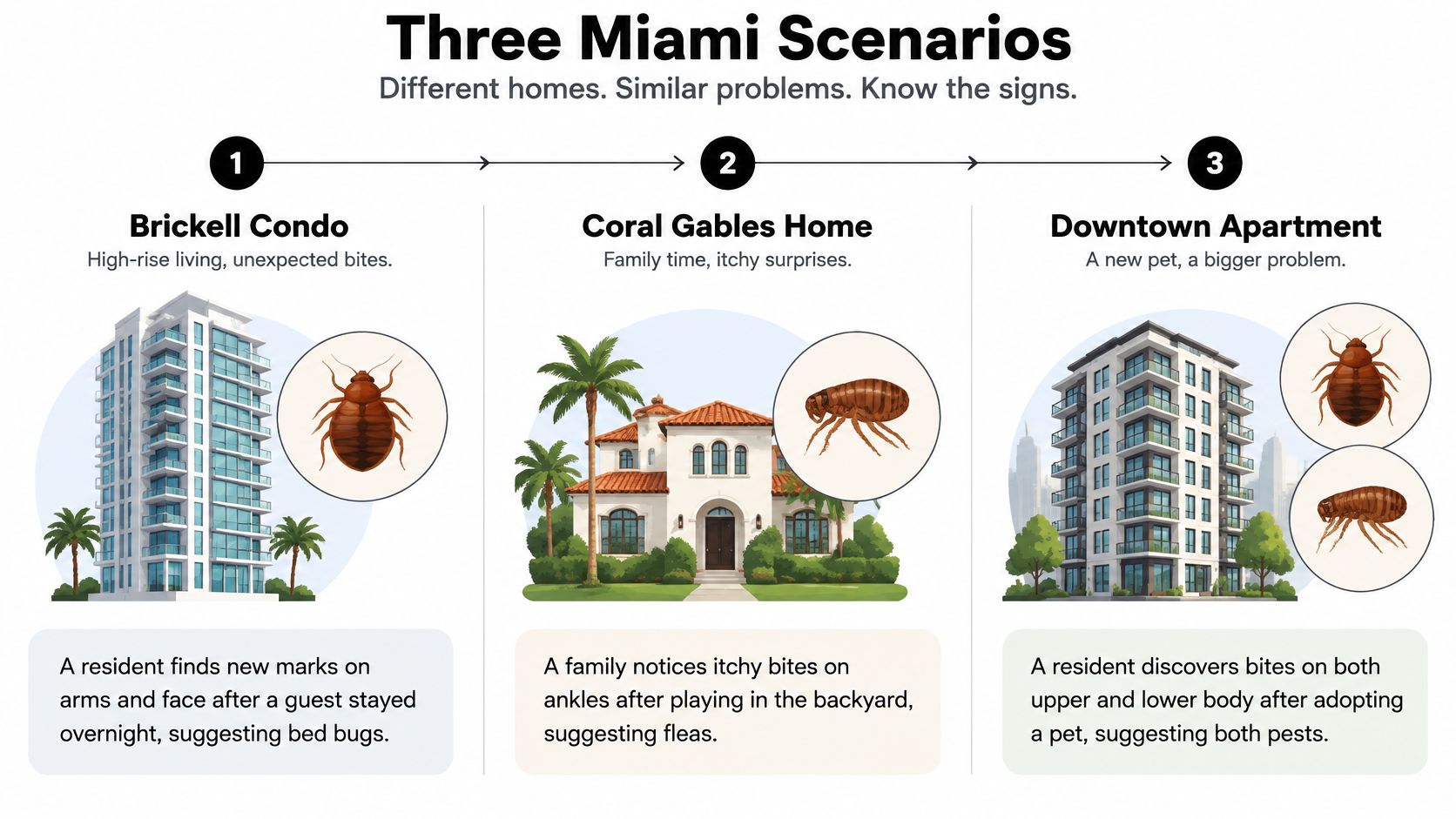
A Brickell condo after an overnight guest
A resident notices new marks on exposed arms and the face after a guest stays over. The sensible first action is a sleeping-area inspection, with the guest stay recorded as context.
I wouldn't blame the guest or announce a bed bug infestation. I'd ask the resident to document findings around the bed and arrange identification if anything suspicious appears. The exposure history justifies a closer look, not an accusation.
A Kendall home with indoor cats
A parent reports itchy ankle bumps on a child, and the household has indoor cats. I'd prioritize the cats' resting areas and ask the veterinarian about assessing the animals.
The next decision depends on what that review finds. Suspected flea evidence should be identified, and any treatment discussion should address both the animals and the home. Indoor status belongs in the history, but it shouldn't replace checking.
A Coconut Grove short-term rental
A host receives bite complaints from guests in different units. My advice is to stop comparing guest photographs and start maintaining separate unit records.
Ask where each guest slept, when they noticed symptoms, and whether anyone found an insect. Arrange inspection of the reported locations and check the provider's licensing and insurance before authorizing treatment.
For the host, I'd organize the response around:
- Individual unit records: Keep observations tied to the correct property and room.
- Confirmed findings: Distinguish an identified insect from an occupant's suspicion.
- Written next steps: Record the inspection outcome and any recommended follow-up.
Don't assume every complaint has the same cause merely because the properties share an owner. Equally, don't dismiss a new complaint because an earlier guest's photo looked different.
The right response in each situation is specific: inspect the relevant environment, identify what you find, and make the treatment decision from that evidence.
Deciding What to Do Next and When to Call a Pro
Handle observation and documentation yourself. Escalate identification and treatment when the evidence or consequences justify it. You don't need to solve the insect's identity before asking for an inspection.
A homeowner can reasonably photograph findings, record affected areas, organize relevant exposure history, and discuss pet concerns with a veterinarian. Laundering or heat measures may form part of a control plan, but don't improvise a complete treatment from a bite comparison.
Match the response to the problem
Use a straightforward decision framework:
- An isolated concern without a finding: Document it, perform a focused check, and monitor for additional evidence.
- Repeated new marks or a suspected insect: Request professional identification and an inspection.
- Findings in several rooms: Ask for an assessment that considers the affected areas together.
- A rental or managed property: Prioritize a documented inspection and a clear written response.
If fleas remain the main concern, review whether vacuuming will get rid of fleas before treating household cleaning as a complete solution. Ask the professional what needs to happen around pet care, environmental treatment, and follow-up.
Ask better questions before approving treatment
You can contact a licensed provider directly or use a matching service. Either way, ask what evidence supports the identification, what areas the proposed work covers, and how the provider will assess the result.
Check licensing and active insurance. Request written preparation instructions rather than guessing which belongings to move, wash, or discard.
Before you authorize treatment: Ask the provider to explain what they found and why the proposed work fits that finding.
Don't demand a guaranteed pest name from a skin photo, and don't accept a confident answer that skips inspection. The useful outcome of comparing bed bug bites vs flea bites is a better investigation, not a more elaborate guess.
Pestless Inc. connects Miami and Miami-Dade homeowners with licensed, insured pest control professionals, with responses typically within one business hour and no-cost, no-obligation quotes, as described on its bed bug service page. If you're still finding new marks or suspicious evidence, visit Pestless Inc., describe the affected rooms and what you've found, and request a professional inspection rather than choosing treatment from the bite picture.
Dealing with this pest right now?
Pestless connects you with a licensed, insured Miami pest control provider for a free, no-obligation quote.