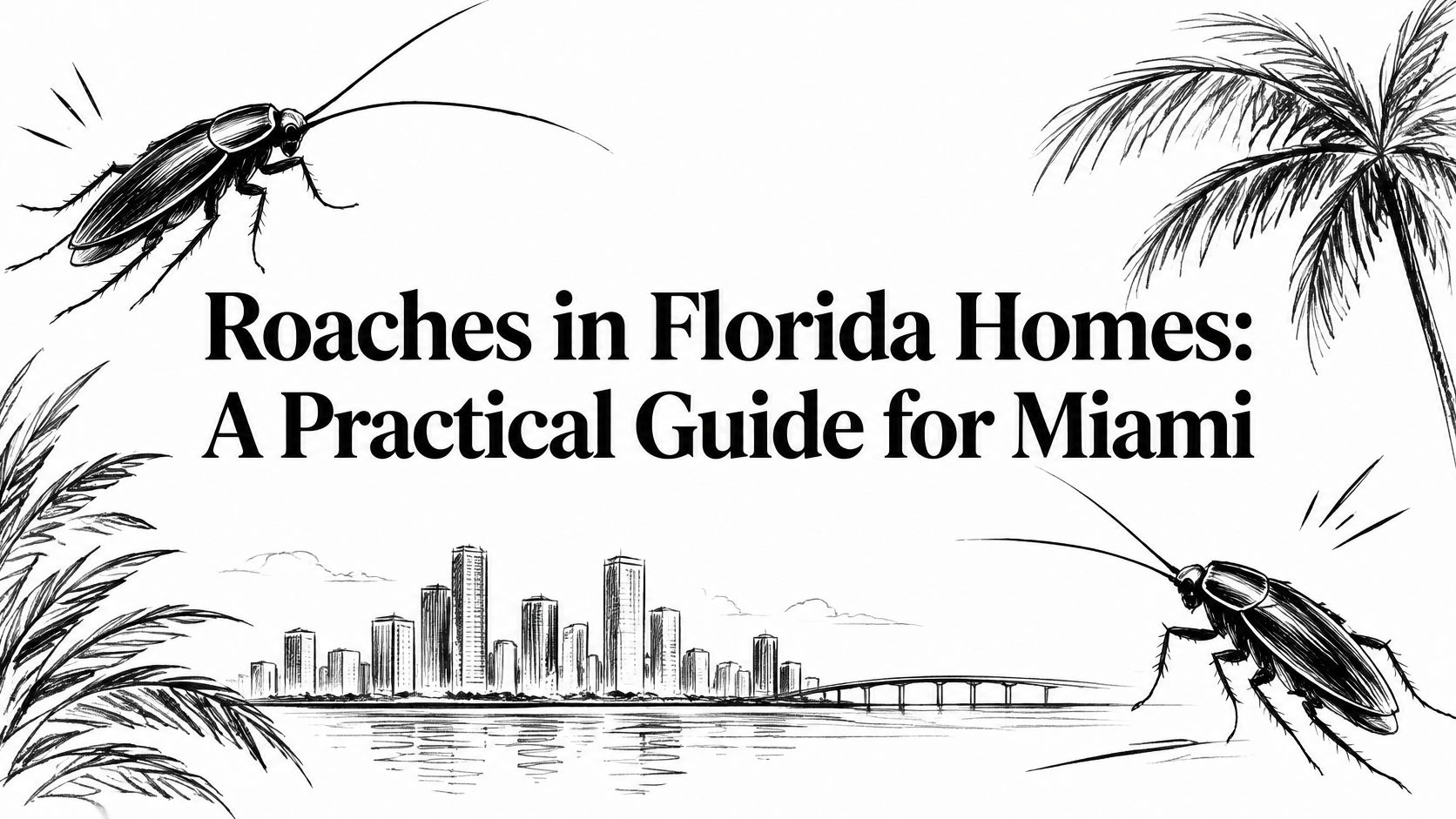
You turn on the kitchen light and catch a large roach moving along the counter's edge. It disappears behind the refrigerator before you can get a good look. In Miami, that moment doesn't automatically mean your home is dirty, but it does mean it's worth finding out what's drawing the insect inside and whether it's a stray visitor or a sign of a growing indoor population.
Roaches in Florida homes are shaped by more than crumbs. Warm, humid conditions, moisture from plumbing, outdoor habitat, and openings around a building can all contribute. A useful response starts with identifying the kind of roach and checking the conditions around it, then combines monitoring, cleaning, exclusion, and targeted treatment where needed.
Table of Contents
- Why Roaches Are a Year-Round Reality in Miami
- The Roaches You Actually See in Miami-Dade
- Why Miami-Dade Homes Attract Cockroaches
- Early Signs of a Cockroach Infestation
- What Effective Control Looks Like Step by Step
- The Health Side of a Roach Problem
- When to Call a Licensed Miami Pro Through Pestless
- Roach Questions Miami Homeowners Ask Most
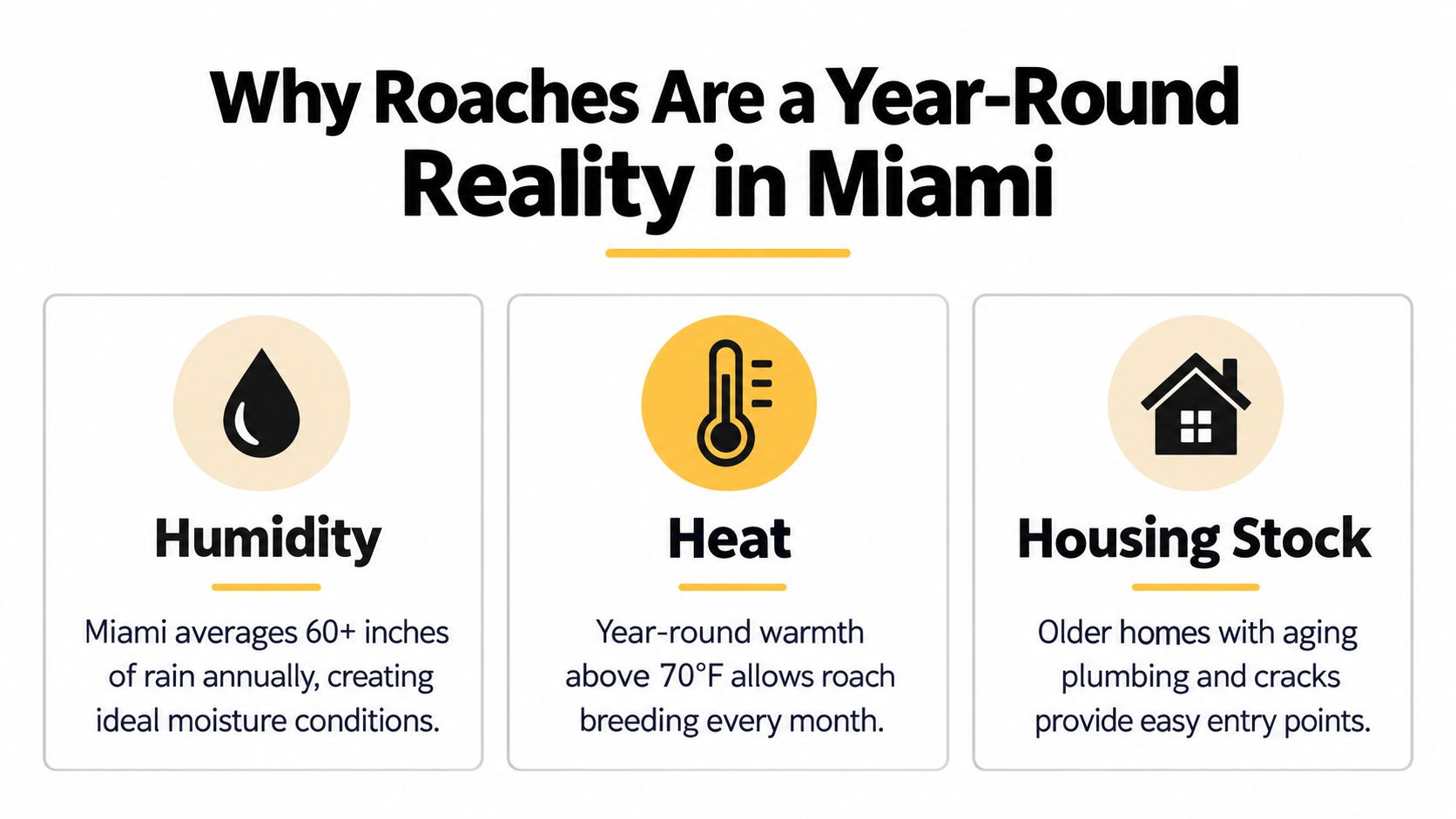
Why Roaches Are a Year-Round Reality in Miami
In South Florida, a roach encounter doesn't have to wait for a particular season. Warm weather and humidity can help cockroaches remain active, while rain, irrigation, and leaks create places for them to find moisture. A roach near a kitchen sink might have wandered in from outside, emerged from a plumbing gap, or found enough food and water indoors to stay.
Housing matters, too. Older plumbing, gaps around pipes, unsealed doors, and shared walls can give insects routes between outdoor areas and interior spaces. In a multifamily building, activity may also be connected to conditions beyond one resident's unit. A tidy counter helps, but it can't repair a leaking pipe behind a cabinet or seal an opening around a utility line.
Think beyond the insect you saw
A single large roach near a door or drain may be an outdoor insect that got inside. Small roaches appearing repeatedly in a kitchen can point to a different problem, including an indoor breeding population. Those situations call for different inspection priorities and control methods, so it helps to note the insect's size, appearance, and location rather than treating every sighting as the same.
Practical rule: The sighting is a clue. Look for the route in, available moisture, and signs of repeated activity before choosing a treatment.
That local, building-focused approach is more useful than relying on a seasonal spray routine. It also puts indoor air quality on the checklist: roach-related residues can remain after live insects are no longer visible, a concern discussed later in this guide.
The Roaches You Actually See in Miami-Dade
Start with size and location. A large roach near an exterior door, garage, or drain is more likely to be an outdoor visitor than a small roach repeatedly found near food and water indoors. The common name “palmetto bug” can add confusion because people use it for large roaches, but it doesn't identify a species precisely.
The Florida woods cockroach and smokybrown cockroach are among the outdoor species documented around Florida homes. In a peer-reviewed survey of exterior home perimeters in a Florida suburb, researchers identified eight species. Among identified adults, Florida woods cockroaches made up 39.3%, yellow cockroaches 31.4%, and smokybrown cockroaches 19.4%; each other identified adult species accounted for less than 10% of the catch. Juveniles that couldn't be assigned to species made up an additional 26.5% of all cockroaches collected (the Florida perimeter survey). Those findings show why the insects seen around a home may not all be the same kind.
Compare the clues
| Species | Size and color | Where they show up | What it signals |
|---|---|---|---|
| American cockroach, often called a palmetto bug | Large, reddish-brown | Near drains, doors, garages, or other routes from outside | Check entry gaps, plumbing openings, and exterior conditions |
| German cockroach | Small, tan to light brown, with two dark stripes behind the head | Kitchens and other indoor areas near food and moisture | Repeated sightings may indicate an indoor population that needs targeted control |
| Smokybrown cockroach | Large, dark brown to nearly black | Around exterior areas, roofline openings, or attics | Inspect outdoor harborage and gaps near the roof and vents |
| Florida woods cockroach | Large, dark reddish-brown | Mulch, leaf litter, porches, and garages | Look at the surrounding landscape and how insects may be entering |
For a closer visual guide, compare what you've found with Florida cockroach identification. A clear description of size, color, and location can help a licensed professional decide what to inspect first. Don't apply a product based only on a common name: the response to a wandering outdoor roach may differ from the response to a small species living and reproducing indoors.
Why Miami-Dade Homes Attract Cockroaches
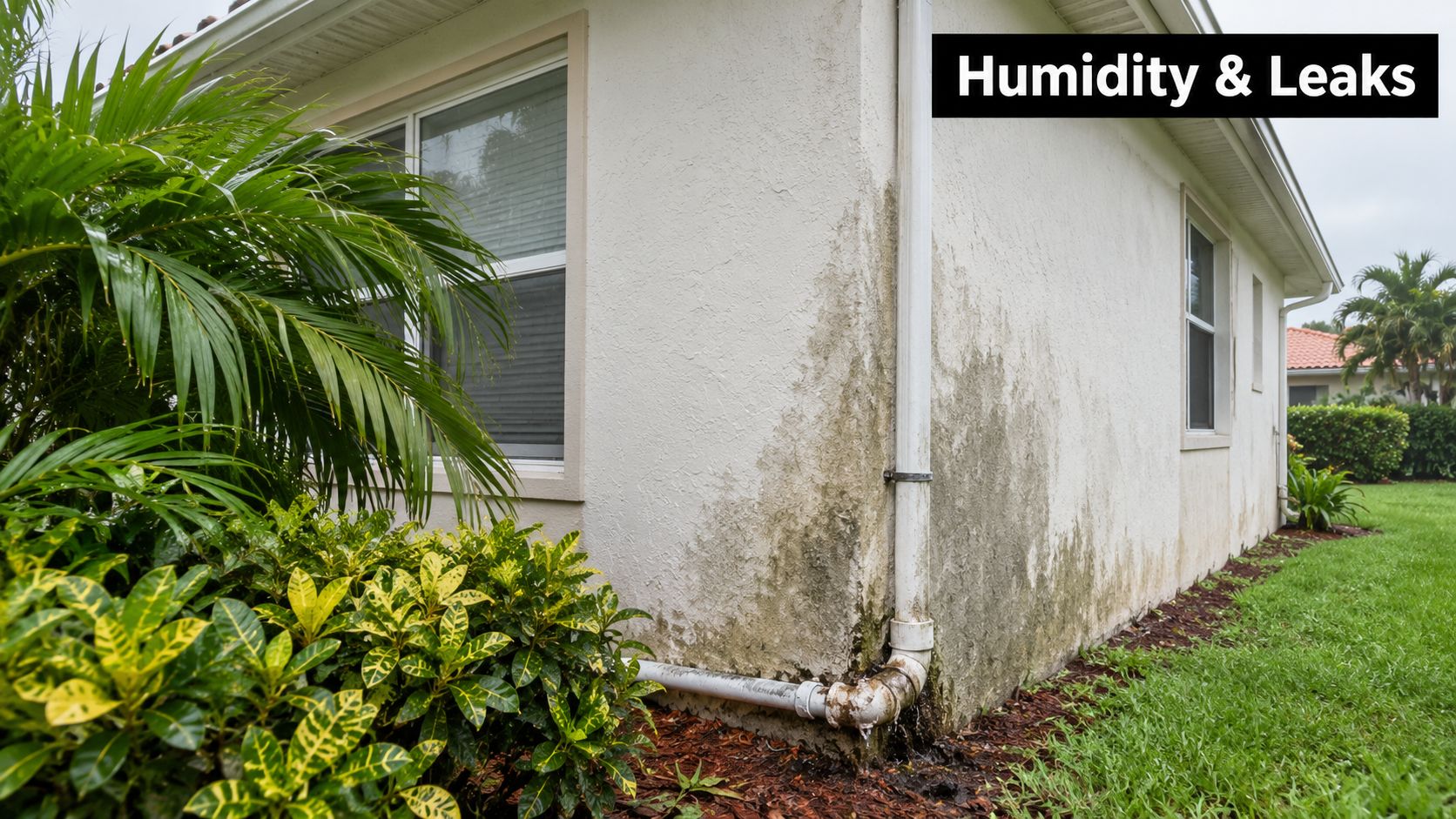
A spotless kitchen can still have cockroach activity if insects can reach water or shelter elsewhere in the building. A slow leak beneath a sink, condensation near an appliance, standing water outdoors, or a gap around a pipe can supply what a roach needs without leaving obvious crumbs on the counter. Check the whole route, not just the room where you saw the insect.
Florida's outdoor species also make the perimeter relevant. In the Florida home survey described above, large outdoor species were prominent in perimeter catches, and juvenile cockroaches were also present. That supports a practical inspection of landscaping, drainage, wall voids, and entry points, as well as indoor surfaces. Keep leaf litter and damp debris away from the building where practical, and note whether exterior lights draw insects near doors or windows.
Look for connected building conditions
In apartments and condominiums, plumbing routes and shared wall spaces can link activity across units. One household may keep food sealed and surfaces clean while a leak or opening elsewhere continues to provide moisture or access. If sightings keep returning, tell the property manager what you've observed and where. Ask for a check of plumbing penetrations and shared areas, not just a quick visit to the kitchen.
Moisture issues can also affect indoor environments in other ways. For broader background on building moisture and air systems, see Legionella and Pseudomonas in HVAC systems. That's a separate indoor-air topic, but it reinforces why leaks, dampness, and maintenance deserve attention alongside pest control.
Early Signs of a Cockroach Infestation
You don't have to wait until roaches are easy to spot. Look for small dark droppings, egg cases, shed skins, or a musty smell in sheltered areas. Check under the sink, behind the refrigerator, along cabinet edges, and near appliance cavities. Finding one clue doesn't tell you the full extent of activity, but several clues in the same area give you a reason to monitor it closely.
Sticky traps can help show where roaches are moving. Place them flush against a wall or cabinet edge, such as under a sink, behind an appliance, or inside a vanity. A trap sitting in the middle of an open floor is less useful because cockroaches tend to follow edges and sheltered routes.
Make a simple monitoring plan
Write down where each trap is placed and check them regularly. Compare catches from the same locations over time, and note whether you find small roaches, egg cases, or fresh droppings nearby. That record can help you see whether activity is concentrated in one spot or spread across rooms, and it gives a pest professional more useful information than a general report of “seeing roaches.”
Wipe up food residue, remove accessible water, and avoid moving a trap before you've checked it. If the signs continue, Cockroach Control describes an approach focused on breaking the breeding cycle rather than only killing visible insects. A recurring cluster of small roaches, especially near food and moisture indoors, is a good reason to ask for a species-specific inspection rather than relying on guesswork.
What Effective Control Looks Like Step by Step
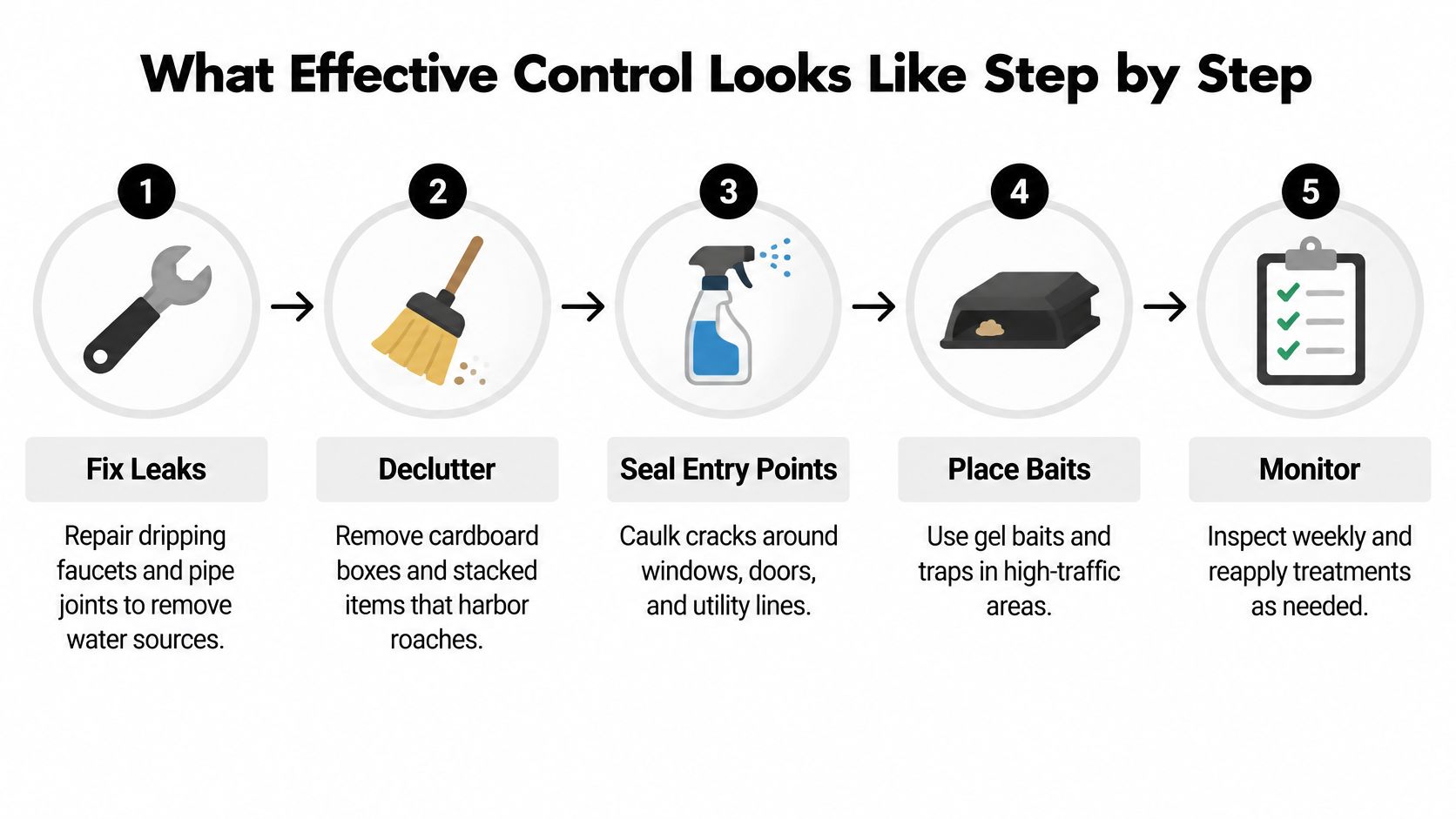
University of Florida guidance supports an integrated approach: remove conditions that attract cockroaches, monitor activity, and use targeted products according to their labels. The order matters. If water, food, and shelter remain easy to reach, pesticide use alone may not resolve the reasons roaches keep showing up.
Start with the conditions
Repair moisture sources. Fix dripping faucets and pipe joints, and look for standing water or persistent dampness near appliances. Reduce easy access to water before placing bait.
Clean and reduce hiding places. Store food in sealed containers, clean food residue, and clear clutter near suspected activity. In heavier infestations, a HEPA vacuum can remove live insects, shed skins, feces, and debris before baiting.
Seal likely routes. Close gaps around plumbing penetrations, windows, doors, and utility lines where appropriate. In a rental or shared building, report openings and leaks that require maintenance rather than attempting repairs outside your responsibility.
Monitor and target. Use sticky traps to identify active areas. UF recommends placing gel or station baits in cracks and crevices according to the product label, then checking baits monthly until populations decline and quarterly afterward. For more intensive German cockroach programs, bait may need replenishing every one to two weeks when it's consumed (University of Florida guidance on cockroach management).
Routine calendar-based pesticide applications aren't the same as monitoring-driven control. Let trap catches, visible juveniles, and egg cases guide follow-up, and don't mix products or place bait where children or pets can reach it. When repeated baiting is necessary, rotating among insecticide classes can help reduce selection pressure. For rental hosts coordinating turnover, a consistent cleaning routine can support pest prevention; this overview of vacation rental cleaning services offers context on organizing property care.
For a broader prevention-first perspective, see sustainable pest management. A separate concern such as rodents may need its own inspection and exclusion plan; Rodent Control describes the focus as removing rodents and sealing their route back in. If you can't find or fix the source, or activity persists despite careful monitoring, a licensed professional can inspect building conditions and recommend a treatment plan appropriate to the species and site.
The Health Side of a Roach Problem
When visible roaches disappear, it's tempting to assume the health concern has disappeared too. But cockroach allergens can come from feces, saliva, and insect bodies, and residues can remain in household dust after the insects are gone. That's why pest control and cleaning belong in the same plan, especially in homes where someone has asthma or allergies.
The National Survey of Lead and Allergens in Housing found detectable cockroach allergen in approximately 63% of U.S. homes. It associated exposure levels of about 2 allergen units per gram of dust with becoming sensitized and approximately 8 units per gram with asthma morbidity. The study also reported that 12.9% of sampled kitchen floors in the South exceeded its critical allergen thresholds, roughly three times the rate reported for the Northeast (housing allergen findings and Florida context). These figures describe population-level findings, not a way to diagnose a particular home or person.
Clean after treatment, too
The CDC identifies cockroach exposure as an asthma trigger and explains that allergens can come from roach waste, saliva, and bodies. Its guidance favors integrated pest management, including sealing openings, removing food and water sources, frequent cleaning, and using baits or traps rather than sprays and foggers that can provoke asthma attacks (CDC guidance on cockroach allergens and asthma).
After activity declines, focus on dust and places where debris collects. Vacuum bedrooms and living areas with a HEPA vacuum where available, clean behind appliances and inside cabinets, and wash fabrics that may have been exposed. Keep baits inaccessible to children and pets, and arrange repairs for leaks that continue to create damp conditions.
Florida's Department of Health estimates asthma affects roughly one in eight Florida adults and one in five Florida children, with cockroach allergens one contributor among several, not the sole cause. If someone in the home has asthma symptoms, involve their healthcare provider in decisions about triggers and cleaning. The practical point is straightforward: no roaches seen doesn't necessarily mean no roach-related allergen remains.
When to Call a Licensed Miami Pro Through Pestless
Professional help is a reasonable next step when sightings keep returning despite sanitation and monitoring, when small roaches are repeatedly appearing around a kitchen, or when activity seems to involve drains, wall spaces, or neighboring units. A technician can inspect likely harborage areas, help identify the species, and recommend a treatment plan that fits the site and product labels. That's especially useful when choosing an approach based on appearance alone has led to repeated activity.
Renters and condo residents should document where and when they see insects, save notes from trap checks, and report leaks or gaps to the landlord or building manager. If activity appears to cross shared spaces, ask for a building-level inspection. A licensed pest professional can help clarify what needs treatment, while the owner or manager may need to address structural maintenance.
Understand the referral process
Pestless connects Miami and Miami-Dade residents with licensed, insured local pest control professionals; it doesn't perform treatments itself. Residents describe the issue through a form or by phone and can compare quotes without an obligation to proceed. Learn what to check when choosing a licensed pest control professional, including whether the provider holds the appropriate Florida license and active insurance.
A local match can make it easier to explain what you've already tried and share observations from traps or photos. Before a service visit, ask what areas the technician plans to inspect, what preparation is needed, and how follow-up will be assessed. The aim isn't to spray where a roach appeared; it's to identify the conditions and routes that could be sustaining the problem.
Roach Questions Miami Homeowners Ask Most
Is a palmetto bug the same as a German cockroach?
No. “Palmetto bug” usually refers to a large roach associated with outdoor areas, while German cockroaches are smaller and commonly found indoors near food and moisture. Size and location help distinguish them, but a photo or specimen can help a professional confirm the identification. The control plan depends on that distinction.
What should I do if I rent and the roaches keep coming back?
Record sightings, save trap observations, and report activity and building defects such as leaks or gaps to your landlord or manager. If shared plumbing or wall spaces may be involved, ask for the affected area to be assessed, not only your kitchen. Keep copies of maintenance requests and responses.
How quickly can a licensed visit happen in Miami-Dade?
Timing depends on provider availability, location, and the details of the request. Pestless says it typically receives responses within one business hour during its stated Monday-to-Saturday service window; that's a typical response time for a request, not a guarantee of an on-site appointment. Confirm scheduling directly with the provider.
Is one treatment always enough?
Not necessarily. The right follow-up depends on the species, how widespread activity is, whether baits are being consumed, and whether moisture or access points remain. Keep monitoring and follow the technician's product-label and follow-up instructions rather than assuming one visit has resolved every source.
If you're seeing repeated roach activity, note where it appears, check for moisture and entry gaps, and arrange a species-focused inspection when the source isn't clear. Pestless Inc. connects Miami-Dade residents with licensed, insured local pest professionals so you can request and compare quotes without an obligation to proceed.
Dealing with this pest right now?
Pestless connects you with a licensed, insured Miami pest control provider for a free, no-obligation quote.