You wipe the counters, you don't leave food out, and then after a hard Miami rain you flip on the kitchen light and see a roach sprint behind the coffee maker. That's the moment a lot of homeowners start wondering whether cleanliness even matters.
It does. But in South Florida, clean alone usually isn't enough.
Roach prevention in Miami works when you treat it like a pressure problem, not a housekeeping problem. In condos, roaches move through shared walls and plumbing. In single-family homes, they push in from wet landscaping, garages, drains, and utility gaps. If you want to know how to prevent roaches, the answer is a layered system: inspection, sanitation, exclusion, monitoring, and targeted control when activity shows up.
Table of Contents
- Why Roach Prevention Matters in Miami
- Inspecting Your Home for Early Signs
- Sanitation and Exclusion Habits That Work
- DIY Monitoring and Baiting Versus Professional IPM
- Multi-Unit Buildings and Landlord Responsibilities
- When and How to Bring in a Licensed Provider
- Your Miami Roach Prevention Checklist
Why Roach Prevention Matters in Miami
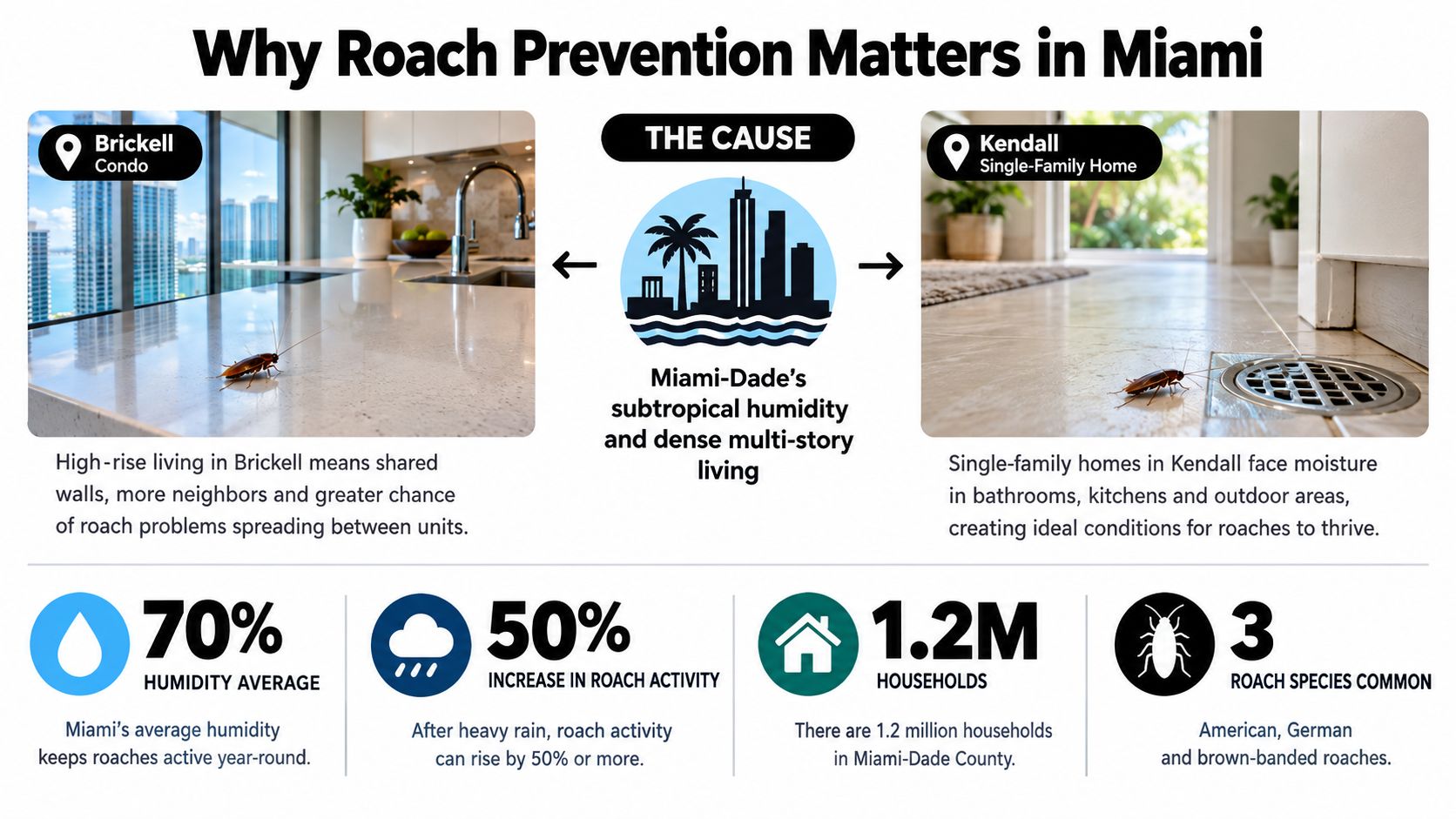
A roach problem in Miami often starts before the homeowner realizes there is one. In a condo, activity can build behind the wall from a neighboring unit and show up in a clean kitchen days later. In a single-family home, the pressure often starts outside, after rain, around drains, garage doors, mulch lines, or pool equipment.
Miami keeps that pressure on almost year-round. Heat, humidity, frequent water sources, and dense housing give roaches steady shelter and easy travel routes. That is why prevention here is less about keeping a perfect kitchen and more about controlling access, moisture, and spread across the whole property.
Why one sighting matters
One roach on the counter at night is not something to shrug off, especially in a kitchen or bathroom. Roaches contaminate food-contact areas, leave droppings in drawers and cabinets, and add allergen load indoors.
German roaches are the species that change the urgency. Once they are established, daytime sightings usually mean the hiding spaces are crowded and activity has been building for a while. In the field, that is the point where a simple spray-and-forget approach usually fails.
Practical rule: Repeated sightings in the same wet room usually mean hidden activity nearby, not a random stray.
What makes Miami properties different
The pattern depends on the building.
In older condos and high-rises, roaches move through plumbing chases, pipe cutouts, wall voids, trash rooms, and shared utility lines. A tenant can keep a unit clean and still keep getting reinfested if the source is two floors away or on the other side of the stack. Prevention in that setting takes building coordination, not just one-unit treatment.
In detached homes, the pressure is often broader. American roaches and Florida woods cockroaches work in from exterior doors, garages, beds, attics, crawlspaces, drains, and damp storage. South Florida rain cycles make that worse. After wet periods, I usually see more movement from exterior harborage into garages, laundry rooms, and first-floor baths.
What works
The properties that stay under control use a layered plan. Inspection finds where activity starts. Sanitation removes easy food and water. Exclusion closes the routes that keep letting roaches back in. Monitoring shows whether pressure is rising. Targeted baiting or professional treatment is added where evidence supports it.
That approach holds up better than routine spraying because roach species in Miami do not all behave the same way. German roaches need tight indoor control around harborages. Large peridomestic roaches often need exterior correction and moisture work first. In condos and rentals, even a well-done unit treatment has limits if management is not addressing common areas, trash handling, and entry points in the building envelope.
That is why prevention matters here. It saves money, reduces repeat flare-ups, and keeps a small problem from turning into a building problem.
Inspecting Your Home for Early Signs
Inspecting where you've seen a roach is too narrow. Good prevention starts by checking where roaches eat, drink, hide, and travel.
Start with a flashlight, not a spray can. Use the beam at a low angle along baseboards, cabinet corners, and appliance edges. Roach evidence shows up faster in raking light than it does from standing height.
Start in the wet and warm zones
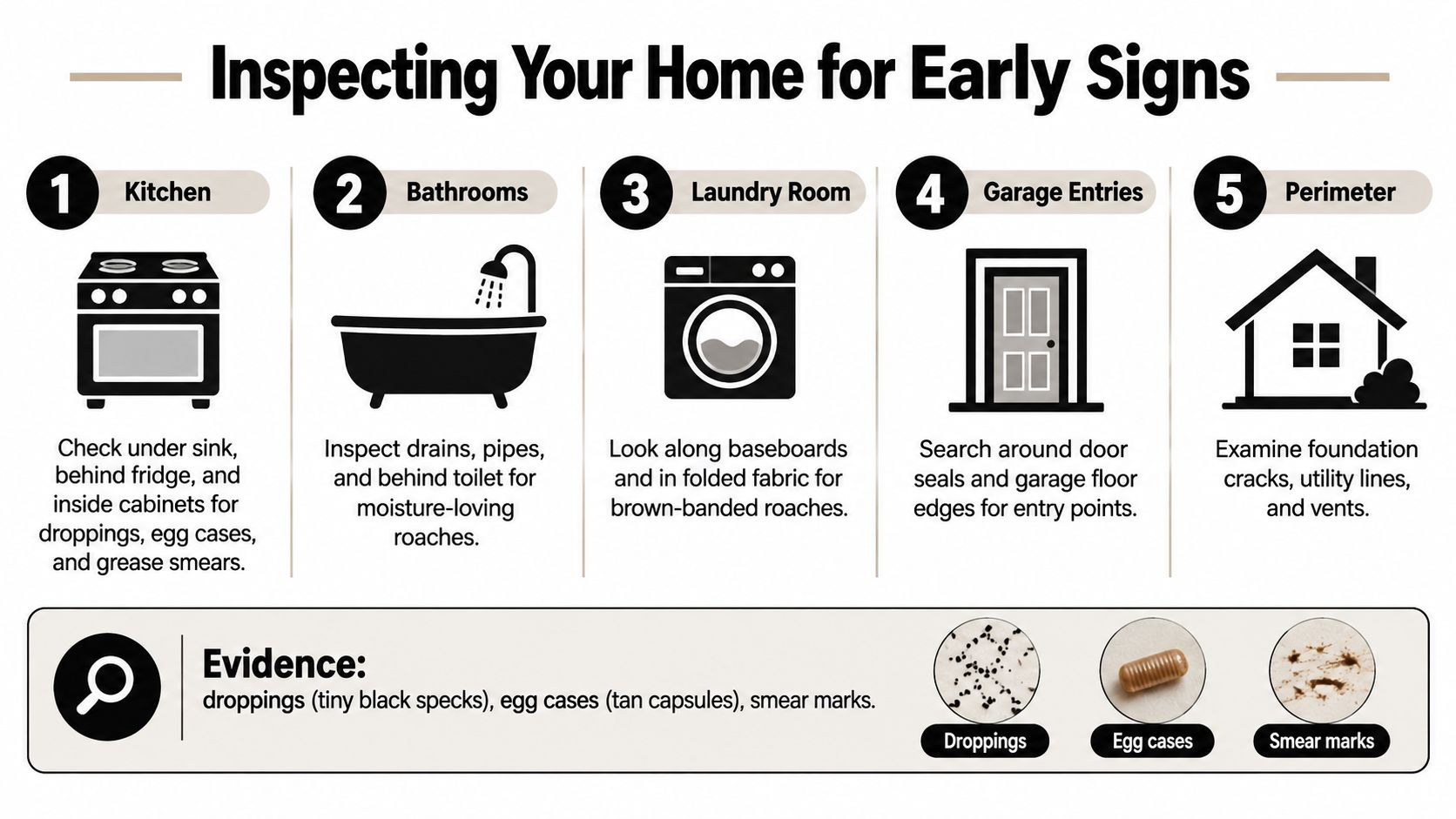
In Miami homes, the first stops should be:
- Kitchen base cabinets under the sink, especially around supply lines and the back wall
- Behind the refrigerator where heat and condensation collect
- Dishwasher voids and the cabinet space beside them
- Bathroom vanities around drains and trap lines
- Laundry rooms near washer hoses, floor edges, and stacked clutter
- Garage entry doors where outside species cross into conditioned space
German roaches usually leave the smallest clues. Look for pepper-like droppings, tan egg cases, and debris around toaster feet, microwave seams, drawer slides, and under-sink corners. If you're trying to distinguish scattered activity from a true harborage, this guide on what a cockroach nest can look like helps homeowners know what they're seeing.
Match the signs to the species
Not every roach pattern means the same thing.
| Species pattern | Where you usually find it | What you often see |
|---|---|---|
| German roaches | Kitchens, bathrooms, appliance voids | Fine droppings, egg cases, live activity near heat and moisture |
| American roaches | Utility rooms, drains, garages, lower levels | Larger bodies, smear marks, activity near plumbing or entry gaps |
| Florida woods cockroaches | Garages, patios, attics, landscape edges | Large slow-moving roaches, especially after wet weather |
If the insects are large and isolated near exterior doors or the garage, that usually points to outdoor pressure and exclusion failures. If they're small and repeating inside cabinets or around appliances, think indoor breeding population.
Use sticky monitors before you treat. They tell you where the traffic really is.
Use monitors for 48 hours
Place sticky traps under sinks, behind the stove, behind the fridge if accessible, and near garage entries. Leave them in place for 48 hours before you decide where to bait or whether you need help. One trap won't tell you much. Several traps create a map.
Check them for both numbers and location. A trap with repeated captures near a plumbing penetration tells you more than a random sighting on the floor.
Repeat the inspection monthly
This isn't a one-time deep dive. Miami's conditions keep resetting the board. Weather shifts, neighbors move, contractors open walls, and one plumbing leak can change the whole pattern.
A monthly inspection catches the problem while it's still local. That's when prevention is cheapest and least disruptive.
Sanitation and Exclusion Habits That Work
On Miami properties, roach prevention usually breaks down in two places. Moisture gets ignored because the home looks clean, and entry points stay open because the gap seems too small to matter. The homes and condos that stay under control handle both.
Sanitation that changes outcomes
Clean counters help, but roaches live off the small stuff. Grease film beside the range, kibble behind a laundry door, a wet sponge left in the sink, residue under the toaster. On German roach jobs, those are the details that keep a population going even when the kitchen looks tidy at a glance.
A few habits make a real difference:
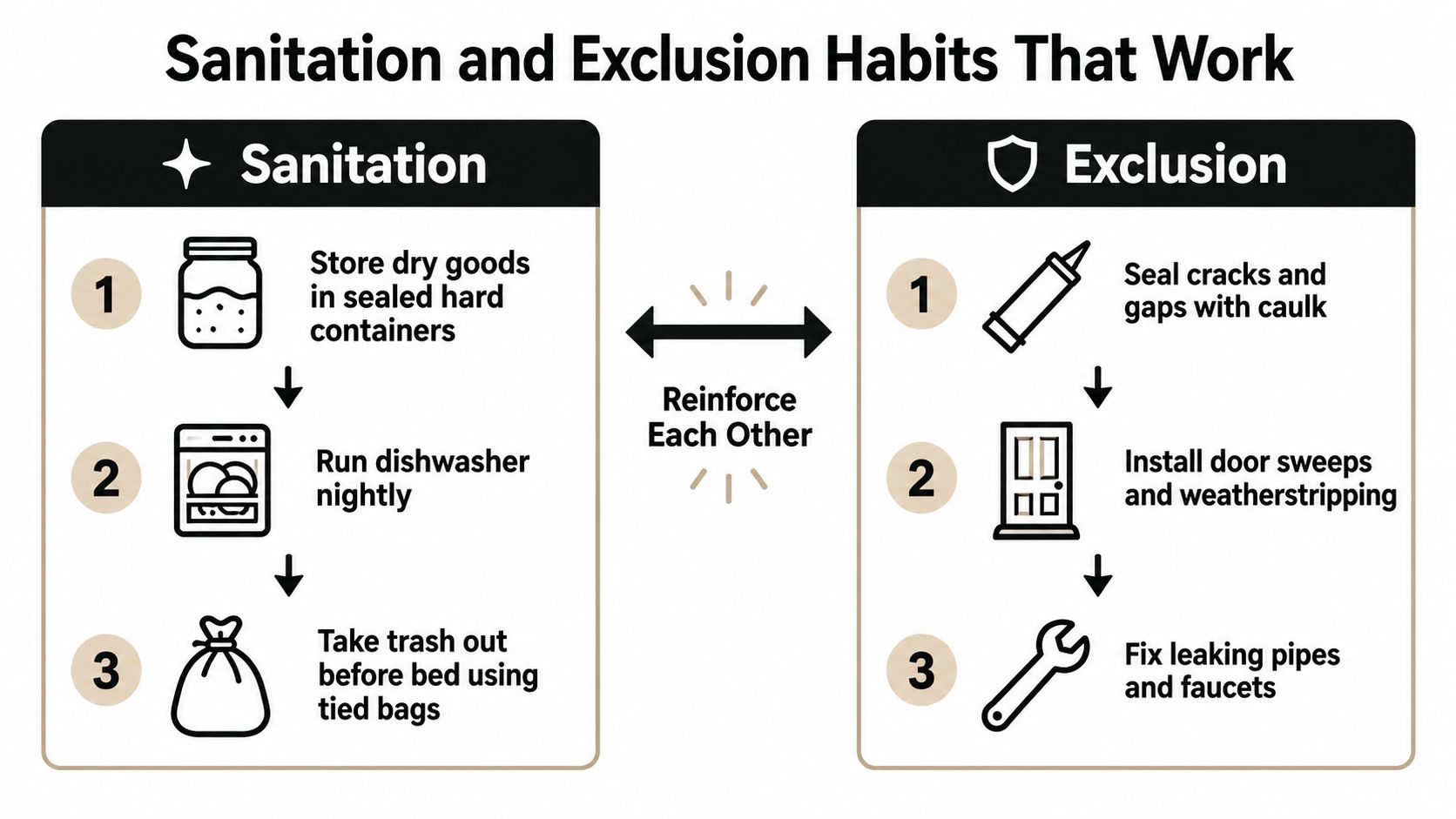
- Store dry goods in hard containers. Paper flour bags, cereal boxes, and pet food sacks are easy to exploit.
- Run the dishwasher at night. Dirty dishes sitting until morning give roaches food and water in one place.
- Take trash out before bed. Kitchen trash with food residue draws activity fast in warm weather.
- Put pet food up overnight. This matters in homes where bowls stay out near utility rooms, patios, or garage entries.
- Wipe grease film. The residue around cooktops, vent hoods, cabinet pulls, and backsplash seams feeds roaches better than one visible crumb.
As noted earlier, field work on German roaches found a clear connection between poor sanitation and active infestation. In practice, that matches what shows up in Miami condos and rentals. Units do better when residents treat food residue, grease, and moisture as one problem instead of three separate chores.
Moisture control is part of sanitation
Water keeps pressure on a home long after the crumbs are gone.
Focus on the spots that stay damp in South Florida conditions:
- Fix slow drips under sinks and at shutoff valves.
- Run bathroom exhaust fans after showers so vanity voids and cabinet bases can dry.
- Check AC condensate areas and air handler closets for standing water or persistent dampness.
- Empty standing water from plant trays, mop buckets, and utility pans.
Here's a visual walkthrough of practical prevention habits homeowners can use indoors.
Exclusion closes the access points
Roaches use the building the way water does. They follow openings, voids, and utility lines. In a single-family house, that often means exterior gaps and garage transitions. In a condo, it often means plumbing penetrations, shared walls, and pipe chases that connect one unit to the next.
Walk the home with caulk and mesh and check:
- Plumbing penetrations below sinks and behind toilets
- Cable and conduit gaps where lines pass through drywall
- Dryer vent connections where the wall opening was never sealed tightly
- Door sweeps at garage entry doors and side doors
- Weatherstripping on exterior doors that show light at the threshold
For larger gaps, stainless steel mesh holds up better than foam alone. Foam has value as a filler, but it does not last well by itself in active penetrations or service openings that get bumped, flexed, or reopened.
Don't ignore the yard, garage, or the rest of the building
South Florida yard and garden areas often act like the feeder system for indoor issues.
Cut back vegetation touching siding. Keep leaf litter and stored materials off the wall. Move firewood, cardboard, and dense clutter away from the slab edge. Clean gutters before the wet season picks up. In garages, keep recycling rinsed and avoid storing paper goods directly on the floor.
For condos and rentals, there is another trade-off homeowners run into all the time. You can keep your own unit clean and sealed and still get pressure from a neighboring unit, a trash room, a shared laundry area, or an unsealed plumbing chase. That does not make sanitation pointless. It means good prevention inside the unit works best when the building also handles common areas, leaks, garbage management, and exclusion at the larger property level.
A dry, sealed, uncluttered garage and a coordinated building do more than reduce sightings. They remove the conditions that let roaches keep coming back.
DIY Monitoring and Baiting Versus Professional IPM
DIY can work. It just works best on the right problem.
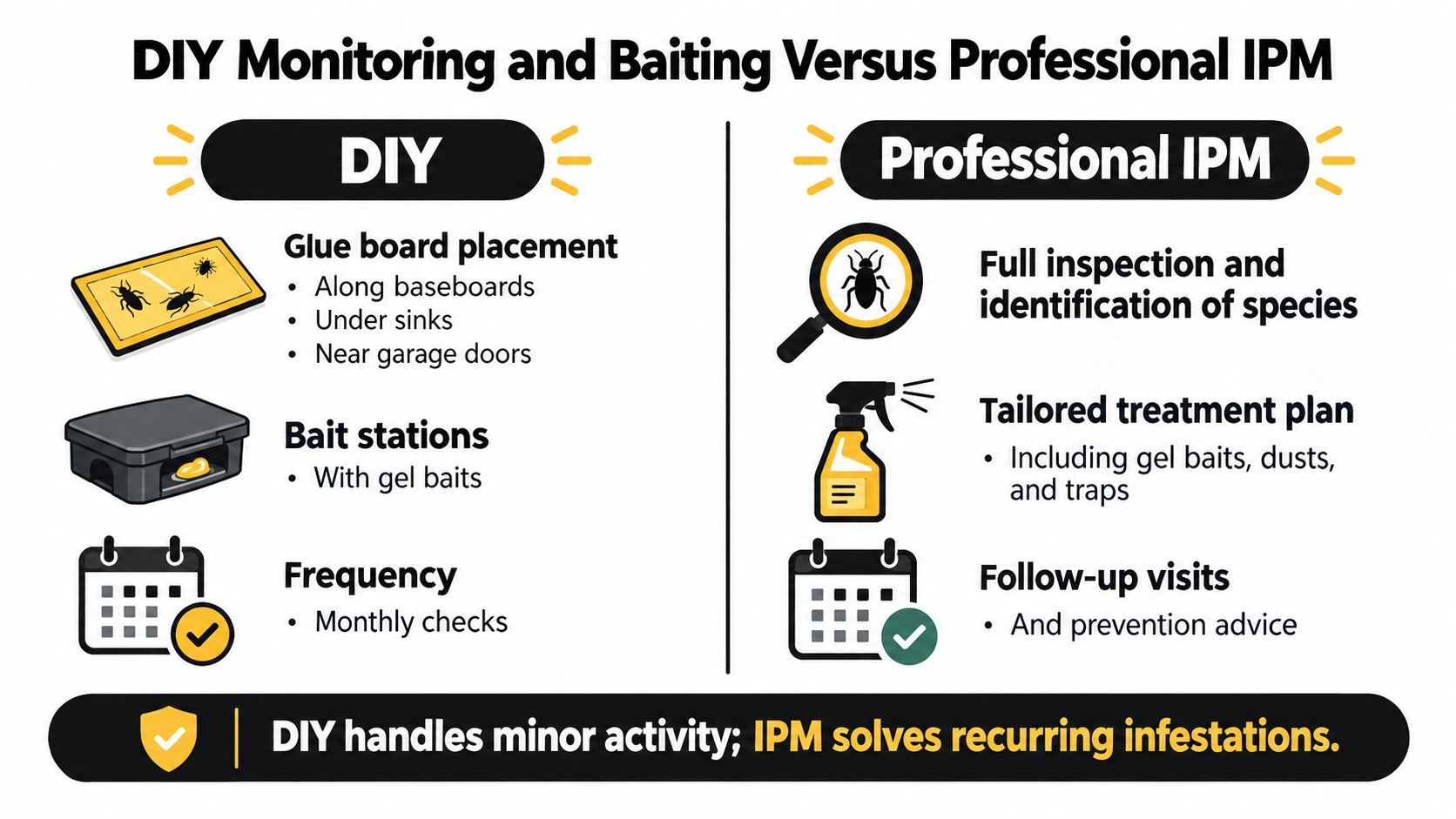
If you're dealing with a few large roaches coming in from outside, a homeowner can often improve things with exclusion, glue boards, moisture correction, and careful bait placement. If you're dealing with established German roaches in a condo kitchen, DIY usually stalls unless you're methodical and consistent.
What homeowners can handle well
DIY has a place when activity is still light and localized.
A practical home setup usually includes:
- Sticky monitors along baseboards, under sinks, behind appliances, and near garage transitions
- Gel bait in cracks, voids, and hidden travel lanes, not smeared in open areas
- Regular checks so you're responding to trap counts instead of guessing from occasional sightings
If you want a plain-language breakdown of one common material, this article on roach boric acid use is useful because it explains where homeowners get into trouble with overapplication.
A good companion read is this eco-friendly pest remedies guide, especially for households trying to reduce unnecessary chemical use while still focusing on exclusion and monitoring.
Where DIY starts to fail
The biggest mistake is over-the-counter spraying. It scatters roaches, contaminates bait placements, and gives people the false sense that smell equals control. “Bug bombs” are a poor fit indoors and have been shown to be ineffective indoors in the same cockroach prevention review.
The other problem is resistance. Repeated use of one chemical class is exactly how roach control gets weaker over time. Resistance in German cockroaches was first documented in 1952 after chlordane exposure, later reported for organophosphates in 1964, carbamates in 1968, pyrethroids in the mid-1980s, sulfluramid in 1992, and abamectin in 1994. More recent reviews report more than 282 resistance cases worldwide in this pesticide resistance review. That's why smarter control rotates methods and leans hard on prevention.
What professional IPM adds
Professional IPM is different from “someone sprayed and left.”
In a public-housing trial, a single IPM visit produced 3.1× higher odds of achieving a 25% reduction in trapped cockroaches and 2.7× higher odds of a 50% reduction at 3 months versus pesticide-only control, and by 6 months kitchen trap counts were still 0.86× those in controls in this public-housing IPM trial. The workflow included inspection, vacuuming or removal, crack-and-crevice treatment, and resident education.
That's the key difference. A real program measures decline, corrects conditions, and follows up.
For recurring infestations, a service like Cockroach Control fits because the goal is to break the breeding cycle, not just the roaches you can see.
Multi-Unit Buildings and Landlord Responsibilities
A common Miami condo scenario goes like this. One owner keeps a clean kitchen, seals a few gaps, swaps traps every week, and still finds German roaches under the sink after the next rain cycle or trash pickup. In multi-unit buildings, that usually means the source is bigger than one unit.
Roaches move through plumbing lines, wall voids, electrical penetrations, chute rooms, laundry areas, and shared utility runs. That is why single-unit prevention has a hard ceiling in condos, duplexes, and rentals. You can improve your unit, but you cannot fully control insect pressure coming from the stack above, below, or next door.
Why one-unit treatment often fails
On older Miami properties, the weak points are predictable. Sink cutouts stay open behind cabinets. Pipe penetrations widen after repairs. Door sweeps wear out. Trash rooms and compactor areas stay active because they provide food, moisture, and harborage close to occupied units.
In that setting, one treated apartment often gets temporary relief while the population shifts a few feet and returns.
A cockroach fact sheet summarizing building-wide IPM findings describes a practical pattern for multi-unit control: repeated monitoring and coordinated treatment on a 2 to 4 week cycle until activity is eliminated, not a one-time visit to the complaining unit, in this cockroach fact sheet summarizing building-wide IPM findings.
What residents and landlords should do
Treat the complaint like a building issue from day one. That changes the paper trail and usually gets better results from management.
Use a simple record:
- Log sightings by location and time. Note whether activity is in the kitchen, bath, hallway, trash room, or near shared plumbing.
- Photograph droppings, egg cases, and trap catches. A pattern across dates matters more than one insect on one night.
- Report structural openings. Include pipe chases, missing escutcheon plates, damaged cabinet backs, broken sweeps, and utility holes.
- Request inspection of adjacent units. The units above, below, and next door are the first places management should check.
- Ask for follow-up dates in writing. Multi-unit roach work fails fast when there is no reinspection schedule.
For owners and tenants sorting out notice requirements and who is responsible for treatment, this guide on landlord pest control responsibility is a practical starting point.
Building-wide IPM is the answer
The programs that work in apartments do the same few things well. They get access to affected units, inspect the shared problem areas, seal openings that keep units connected, place baits where roaches are harboring, and return often enough to measure whether counts are dropping.
A review of cockroach IPM interventions reported strong results from that coordinated approach, including large reductions in infested units and household cockroach counts across multi-unit settings, in this review of cockroach IPM interventions.
The trade-off is straightforward. Building-wide IPM takes more coordination, more access, and more follow-up than a quick spray request. It also matches how roaches behave in real Miami buildings. For condos, rentals, and older multifamily properties, that is usually the difference between short-term relief and control that holds.
When and How to Bring in a Licensed Provider
There's a point where prevention stops being a homeowner project and becomes a management problem. In Miami, that point comes sooner in condos, rentals, and any home showing daytime German roach activity in kitchens or baths.
If you've cleaned, sealed, set monitors, and still keep seeing activity, bring in a licensed provider before the population spreads deeper into wall voids and appliance harborage.
What to verify before hiring
Don't hire on price alone. Verify the basics first.
Check for:
- A Florida pest control operator license
- Active general liability coverage
- Workers' compensation coverage
- Experience with your property type, not just single-family homes in general
- An IPM-based process, not just a promise to spray
Ask how they identify species, where they place monitors, what conditions they expect you to correct, and how they decide whether the plan is working.
What a solid first service should include
A quality first visit should leave you with more than wet baseboards.
Look for these elements:
| What they should provide | Why it matters |
|---|---|
| Written inspection findings | Shows they identified pressure points and harborage |
| Species identification | German roaches and large outdoor roaches need different plans |
| Threshold-based recommendations | Prevents random overtreatment |
| Follow-up schedule | Roach control depends on rechecks and adjustment |
A provider who only wants to broadcast spray the perimeter and kitchen kickplates is usually treating the symptom, not the system.
Set realistic expectations
Roach suppression isn't instant. Under a professional program, the timeline for German roach population suppression is typically four to eight weeks, especially when sanitation and exclusion improve at the same time. In more complex properties, especially multi-unit buildings, it can take longer because access and neighboring activity affect results.
Ask the provider how they define success. Good answers sound concrete: fewer trap catches, fewer live sightings in core zones, less evidence around known harborages, and a plan to revisit any area that stays active.
The right provider should make the problem more measurable, not more mysterious.
Your Miami Roach Prevention Checklist
If you want a practical routine for how to prevent roaches, keep it simple enough that you'll repeat it. The best prevention plans aren't elaborate. They're consistent.
Weekly habits that do the heavy lifting
Handle these first:
- Kitchen reset every night. Dishes washed, counters wiped, sink dried.
- Trash out on schedule. Don't let food waste sit overnight.
- Pet food managed. No open bowls left out after bedtime.
- Grease film removed. Cooktop edges, vent hood surfaces, and backsplash seams cleaned before buildup hardens.
These habits matter because they reduce the food residue that keeps low-level activity alive.
Monthly checks that catch access points
Once a month, walk the property with a flashlight.
Check:
- Under-sink pipe penetrations
- Rear edges of bathroom vanities
- Garage entry door sweeps
- Weatherstripping at exterior doors
- Dryer vent wall connection
- Baseboard gaps behind appliances if accessible
If you find a gap, seal it then, not later. Small openings become permanent entry routes when they're ignored.
Quarterly monitoring and reset work
Every few months, refresh the parts people forget:
- Replace sticky monitors in the same locations so trends stay clear.
- Review trap locations and move them to active travel lanes if needed.
- Inspect storage zones like pantries, utility closets, and garage shelving.
- Look for new moisture sources after storms, plumbing work, or AC service.
This is also the right time to inspect around landscaping, drains, and any side yard clutter that builds up during the wet season.
When to act fast
Don't wait if the pattern points to an indoor breeding population.
Use this rule of thumb:
- One large roach near an exterior door or garage can be an exclusion issue.
- Repeated small roaches in kitchens or bathrooms should trigger immediate monitoring, baiting, and a closer inspection.
- Daytime sightings, egg cases, or repeated trap catches usually mean the problem is established enough that waiting costs you time.
For homeowners, the sweet spot is early action. For landlords and condo residents, the sweet spot is early documentation plus coordinated treatment. That's how you avoid turning a manageable problem into a building issue.
Roach prevention in Miami isn't about one magic product. It's about running the property in a way that gives roaches less food, less water, fewer hiding places, and fewer ways in.
Pestless Inc. helps Miami-Dade homeowners, landlords, and property managers connect with licensed, insured local pest control providers when DIY prevention isn't enough or when a multi-unit issue needs professional coordination. If you need help comparing vetted local options for roach control in Miami, visit Pestless Inc..
Dealing with this pest right now?
Pestless connects you with a licensed, insured Miami pest control provider for a free, no-obligation quote.