You sprayed under the sink, wiped every counter, and put out traps, and a roach still crosses the kitchen floor the next night. In an apartment, that pattern usually isn't proof you missed a crumb. It's proof the insects have another route, another water source, or another unit to breed in. Effective roach control in apartments starts by treating shared walls, plumbing stacks, and neighboring kitchens as part of the same system, then documenting whether trap counts fall.
Table of Contents
- Confirm Roaches and Find Where They Hide
- How to Run a Building-Wide Treatment Plan
- Sanitation and Sealing Steps Residents Can Take
- Coordinating With Management, Neighbors and Your Lease
- What to Ask For in a Roach Treatment Quote
- Decide When to Call a Licensed Pro in Miami-Dade
Confirm Roaches and Find Where They Hide
Start with the simplest sign you can verify without opening a wall. Look for black pepper or coffee-ground droppings along cabinet edges and drawer corners. Fresh clusters mean roaches are feeding and traveling nearby, not just passing through once.
German roaches favor kitchens and bathrooms because those rooms combine warmth, water, and tight shelter. Check cabinet hinges, the dark seam behind the stove and refrigerator, pipe penetrations under sinks, and the hollow space behind drawers. A few daytime sightings in those spots often point to a larger hidden population, since these insects prefer to stay pressed into cracks during the day.
| Sign | Where to look | What it tells you |
|---|---|---|
| Black pepper or coffee-ground droppings | Along cabinet edges, drawers and behind the fridge | Active feeding area nearby |
| Brown bean-shaped egg cases | Hinges, seams and under sinks | Breeding population in the unit or wall |
| Shed skins and dead roaches | Under sinks and around stove bases | Established population, size varies |
| Musty or oily smell | Kitchen cabinets and trash area | Heavy infestation likely |
| Sticky-trap counts above 20 after 14 days | Wall-sharing and adjacent units | Building-level spread, escalate |
Build a Two Week Baseline
Place sticky traps flat against walls, not in the middle of open floor. Put one under each sink, one beside the stove, one behind the refrigerator if you can do so safely, and one in the bathroom vanity. Label each trap with the room and start date.
Check them every few days and log the count by location. Don't just write a total for the apartment. A log that reads kitchen sink 12, stove 3, bathroom 0 tells a technician where to place bait and whether activity is moving along a plumbing wall.
Practical rule: Photograph each trap beside a dated note before you replace it. Photos turn a complaint into evidence management and a technician can act on.
If counts stay high in one harborage after cleaning, or activity shifts from kitchen to bathroom, suspect a wall void or a neighboring unit. Single-unit sightings can mislead because roaches travel through utility penetrations and shared voids, then return after a surface treatment wears off. That is why professional Cockroach Control is framed around one goal, break the breeding cycle, not just kill the roaches you can see.
By the end of two weeks you should have three things in hand. You need a dated map of droppings, egg cases, and live sightings, a trap log by room, and a clear decision on scope. If only one trap catches an occasional roach, targeted work in that unit may be enough. If several rooms or adjoining units show activity, treat it as a building problem from the start.
How to Run a Building-Wide Treatment Plan
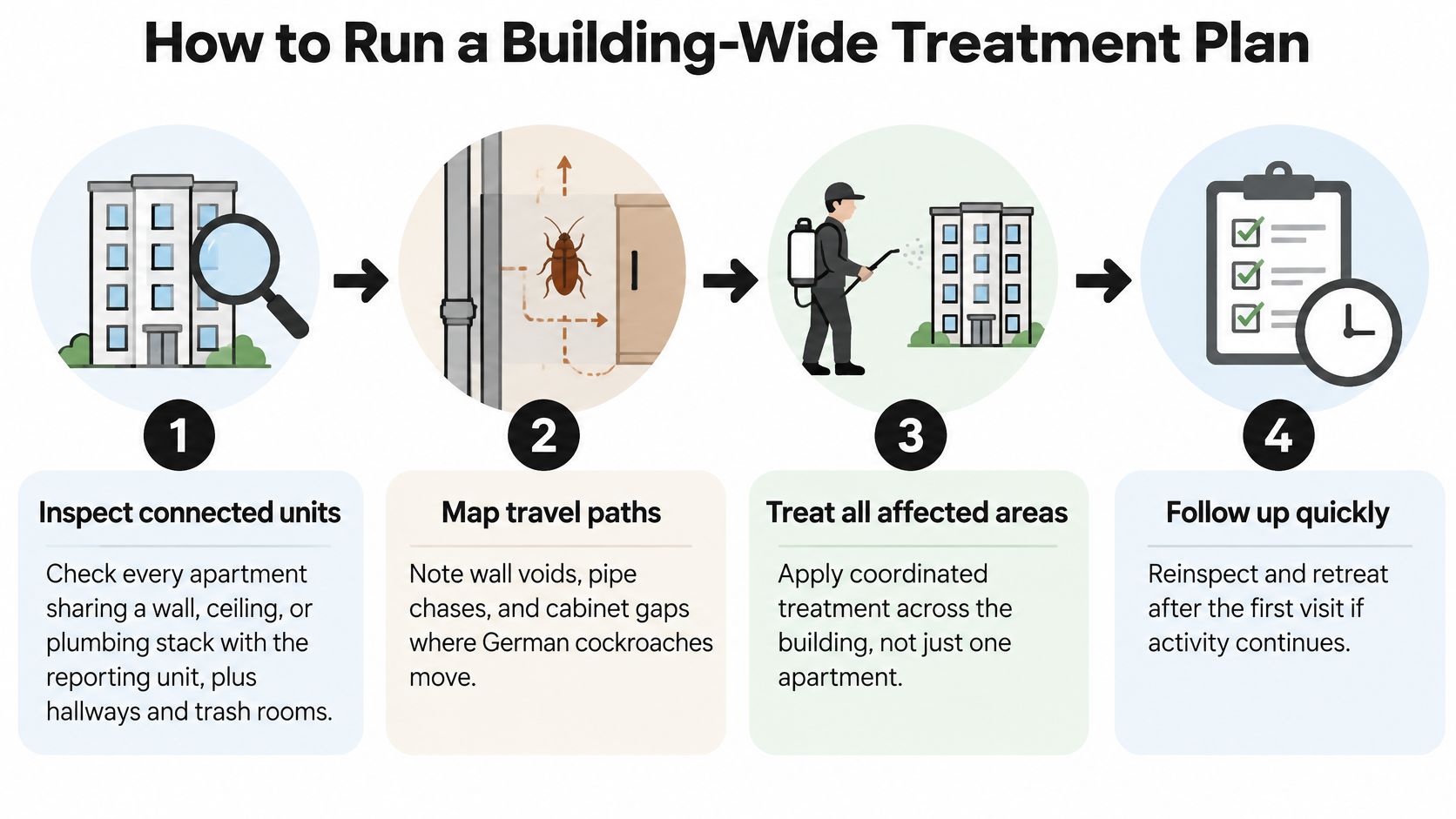
A building plan works because it follows the insects, not the complaint. One reporting apartment gets inspected, but so do the units that share its walls, ceiling, floor, and plumbing stack. Hallways, trash rooms, and laundry areas belong in the same sweep because they connect the whole stack.
Run the Sequence in Order
Inspect connected units first. Place sticky traps in the reporting unit, wall-sharing neighbors, units above and below, and common areas. In cockroach control, the first step is an inspection where a technician identifies the species and maps harborage zones and entry points, because treatment for a kitchen-breeding German roach differs from treatment for an occasional outdoor species.
Classify each unit by trap count. Mark units as light, moderate, or heavy so bait and follow-up go where they're needed. Counts that stay high point to a stubborn pocket in a void, appliance motor housing, or neighboring harborage that a single visit won't collapse.
Treat active units with targeted gel bait. Place many small spots along hinges, drawer rails, pipe collars, and travel routes where droppings cluster. Add boric-acid dust in dry voids where counts stay high, and keep repellent sprays away from bait placements so roaches keep feeding instead of scattering.
Seal routes and remove water. Caulk gaps around plumbing and electrical penetrations, repair supply and drain leaks, and fix condensation under sinks. Bait competes poorly when roaches can drink inside a wall and never need to travel to a feeding spot.
Re-inspect on a set interval. Check traps after 7 to 14 days and refresh bait only where feeding or fresh catches show it's needed. Document the new counts beside the baseline so everyone can see whether the population is bending down.
Return for surviving pockets. In cockroach control, a follow-up return visit confirms the population is collapsing and treats any surviving pockets. Don't judge success the morning after application, because egg cases already hidden in seams can still produce nymphs.
Track a Benchmark, Not a Feeling
That sequence mirrors a high-rise German cockroach IPM study, which surveyed units with traps, applied gel bait to infested apartments, and added boric-acid dust when trap counts exceeded 20 roaches after 14 days. The building infestation rate fell from 49% at baseline to 24% after six months and 12% after 12 months, and 89% of initially infested, treated apartments had no trap-detected cockroaches at 12 months.
Use that shape as your management benchmark, tracking infested units month by month. If counts plateau, check for an untreated neighbor, a leak, or bait contaminated by spray before adding more product. Managers who already document service for other facilities can borrow the same log discipline used in warehouse pest control compliance guidance, then adapt it to unit numbers and trap locations. For the written structure behind this approach, review these integrated pest management plan examples before you set visit dates.
Sanitation and Sealing Steps Residents Can Take
You don't need a spotless apartment to make bait work. You need to remove the specific food, water, and shelter that compete with bait or let roaches stay hidden near it. Lead with water, because a dry harborage forces roaches to move and feed.
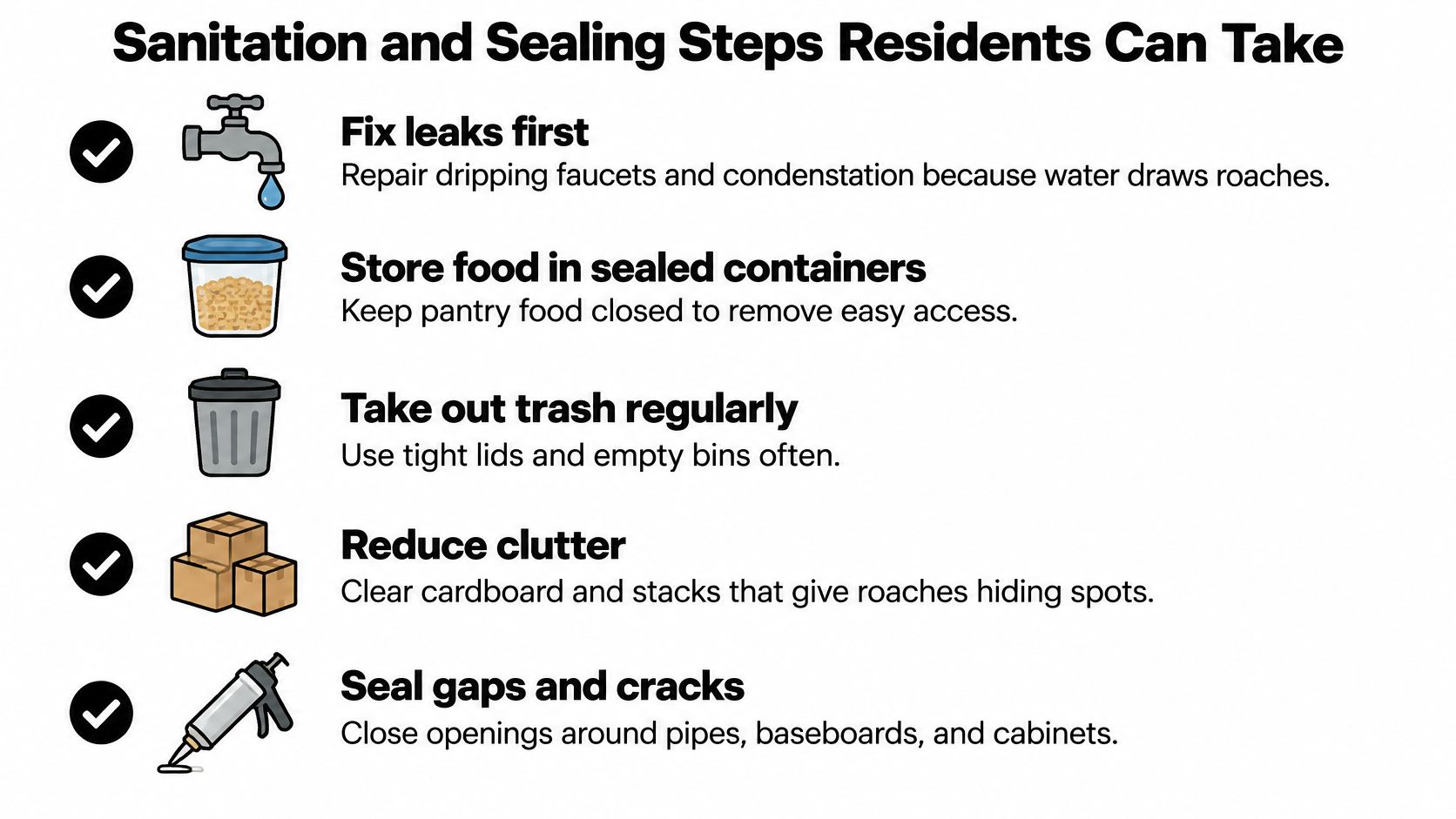
- Fix leaks and condensation first: Report dripping faucets, sweating pipes, and wet vanity floors in writing, and dry under-sink areas nightly until repair. Standing water keeps a wall population alive even when counters are clean.
- Seal pipe and cabinet gaps: Use caulk for narrow cracks and copper mesh or steel wool packed into larger pipe openings before sealing. Focus under sinks, behind appliances, and where baseboards meet plumbing walls.
- Store food and pet food sealed: Move dry goods into hard containers with tight lids and don't leave pet food out overnight. You're removing competing food so gel bait becomes the easiest meal.
- Wipe grease nightly: Clean stovetops, the side gap beside the range, and counters where crumbs collect. Grease films feed nymphs in places a spray rarely reaches.
- Take trash out daily: Use a lidded bin, rinse recyclables that held food, and clear cardboard stacks. Cardboard gives roaches both shelter and egg case hiding spots.
A 2026 intervention study in 29 low-income apartments supplied education, gel bait, boric-acid dust, sticky traps, and a prevention flyer. After six months, geometric mean cockroach counts fell 99% in intervention apartments versus 51% in controls, and cockroaches were undetected in 58% of intervention units compared with 6% of controls, even though sanitation ratings did not significantly improve. That result matters because it replaces blame with a workable protocol.
Clean Droppings Without Spreading Allergens
Wear disposable gloves, dampen droppings and debris with a wet paper towel, wipe them up, and bag the towel immediately. Use a HEPA-equipped vacuum along baseboards and cabinet seams to pull up egg cases and shed skins. Dry sweeping pushes allergen-bearing debris into the air, which is the wrong move in a home with asthma.
Don't spray household cleaner or bug spray over gel bait. You'll make the bait repellent and train roaches to feed somewhere else.
The same sealing logic explains our Rodent Control description, remove the rodents and seal the way back in, though roach gaps are far smaller. At your two-week check, compare trap counts, count remaining clutter hotspots, and pick the first fix still undone. I would start with the wettest cabinet, since water usually limits results more than crumbs do.
Coordinating With Management, Neighbors and Your Lease
Read your lease before you argue about treatment. Look for a pest clause, repair obligations, tenant preparation duties, and language assigning common areas to the landlord or association. Then check Chapter 83 of the Florida Statutes, which sets landlord duties for pest control in multi-unit buildings and common areas, and confirm the current text before you quote it in a notice.
Put the Report in Writing
Send an email or letter management can't lose. Include your unit, today's date, when activity started, room-by-room trap counts, and dated photos of droppings or egg cases. Ask directly for inspection of adjacent units, the units above and below, and shared spaces such as trash rooms and hallways.
Here's a notice structure that works:
- Subject and unit: Roach activity report, unit number, date first seen.
- Evidence attached: Trap log by room, photos of signs, leak or gap locations.
- Request: Building inspection date, treatment method, prep list, and follow-up date.
- Access offered: Days and times you can admit the technician, plus pet arrangements.
Keep that request factual and short. For background on how duties are commonly divided, read this guide to landlord pest control responsibility before you send it. Don't rely on a hallway conversation, because it leaves no record when a second visit is disputed.
Neighbors need the same schedule, not rumors. Ask adjoining residents to report activity to management and agree on prep days so connected units are treated on one timeline. If a technician needs cabinets emptied or drawers cleared, management should issue one written prep list to every affected unit.
If 14 days pass without inspection or a dated plan, follow up in writing and keep copies of every notice and reply. If management still doesn't act, contact the Miami-Dade or city code enforcement office where the building sits and request a documented inspection. You should end this step with a dated notice, a named party responsible for common areas, and a follow-up date on the calendar.
What to Ask For in a Roach Treatment Quote
Repeated broad spraying feels decisive. In apartment buildings, it's often the reason the problem survives. Sprays can push roaches deeper into voids and into neighboring units, and many German roach populations no longer respond well to familiar products.
A 2025 global review of German cockroach resistance identified resistance across 23 countries and against 60 active ingredients, with very high resistance ratios reported mainly for pyrethroids, a common spray class. A separate field finding in that brief showed almost all populations from premises using random insecticide treatments or rotation were resistant to deltamethrin, while bait-managed populations showed low-to-moderate resistance. That's why your quote should name a method, not promise a spray.
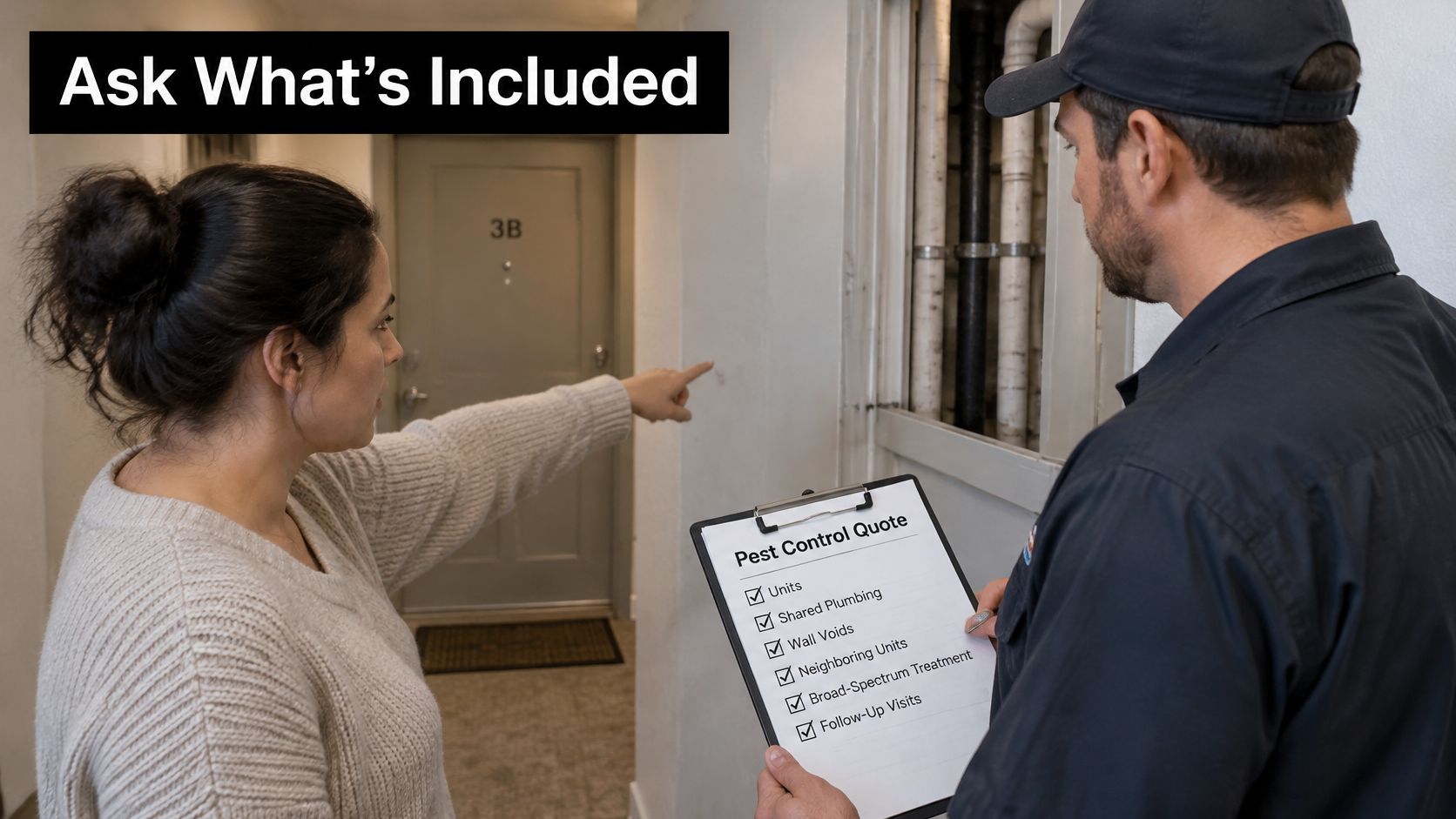
| Quote item | Why it matters | What to request |
|---|---|---|
| Treatment method | Gel bait and targeted placement behave differently from broad spraying | Named method for each room or zone |
| Products or active ingredients | Resistance varies by product class | Product names and active ingredient class |
| Preparation duties | Tenant prep affects bait success | Written prep list with dates |
| Re-entry instructions | Protects children and pets | Exact time to re-enter treated rooms |
| Monitoring plan | Shows whether the population is dropping | Trap counts, visit dates and thresholds |
| Shared-area responsibility | Hallways and voids link neighboring units | Named party responsible for common areas |
Ask who inspects wall-sharing units and who pays for trash room or hallway work. Multifamily control is coordinated work among residents, maintenance staff, housing managers, and pest professionals, so a quote that only covers the reporting kitchen is incomplete on its face. Ask what trap result triggers a retreat, and get that threshold in writing.
For cost context, an EPA-documented urban IPM program estimated building-wide cost at $46 to $69 per apartment during the first year, including repairs, and about $24 per unit annually afterward. A quote far outside that range isn't automatically wrong, but it should prompt questions about scope, repairs, and number of visits.
Red flag: A single spray, no traps, no adjacent units, and no written follow-up is not a building plan. It's a reset of the same cycle.
Send your shortlist before signing. I would not approve a quote until it names the bait or product class, the monitoring dates, and the party responsible for shared areas.
Decide When to Call a Licensed Pro in Miami-Dade
Set a decision date before treatment starts. Once sanitation, sealing, and bait are in place, most homeowners see a sharp drop in roaches within one to two weeks, and severe infestations may need a follow-up visit. If your traps don't show that bend, don't add another random spray and hope.
| Situation | Handle it yourself | Call a licensed pro |
|---|---|---|
| Single unit, few sightings, sanitation done | Keep sanitation, sealing and traps going | Call if there is no sharp drop within 1-2 weeks |
| Roaches in adjoining units or shared areas | Document and send written notice to management | Request a licensed building-wide inspection |
| Children, pets, asthma or pregnancy in the home | Avoid spraying; use bait and traps only | Call for risk assessment and product instructions |
| Repeated spraying with no result | Stop repeat spraying and log counts | Hire a pro running an integrated plan |
| Landlord does not respond | Escalate in writing and keep copies | Pair the pro inspection report with a code enforcement complaint |
Use One Clear Threshold
If trap counts stay high in two or more units after one full treatment cycle, call a licensed pro and bring the quote checklist with you. That pattern tells you the source sits beyond one kitchen, whether it's a wet wall, an untreated neighbor, or a trash room harborage. A pro can identify the species, place bait where residents shouldn't reach, and document conditions management must repair.
Homes with children, pets, asthma, or pregnancy need extra care earlier, not later. Ask for product-specific instructions on bait placement, dust use, cleaning, and re-entry, and keep people with asthma away while droppings are vacuumed. If you're checking credentials, this overview of a licensed pest control professional explains what to verify before work begins.
We route requests to a licensed, insured pest control provider serving the customer's area, and we don't perform treatments ourselves. Miami-Dade residents and managers can submit a short request for their address and be matched with a provider serving their neighborhood. Do the next step this week, photograph the evidence, update the trap log, send the written notice, and submit that provider request so inspections of connected units can be scheduled together.
Ready to stop treating one kitchen while roaches keep arriving through the wall? Visit Pestless Inc. to submit your Miami-Dade address, describe the trap counts and affected rooms, and get matched with a licensed, insured local provider. Bring your dated photos, unit log, and quote checklist to that first conversation so the building plan starts with evidence, not another spray.
Dealing with this pest right now?
Pestless connects you with a licensed, insured Miami pest control provider for a free, no-obligation quote.