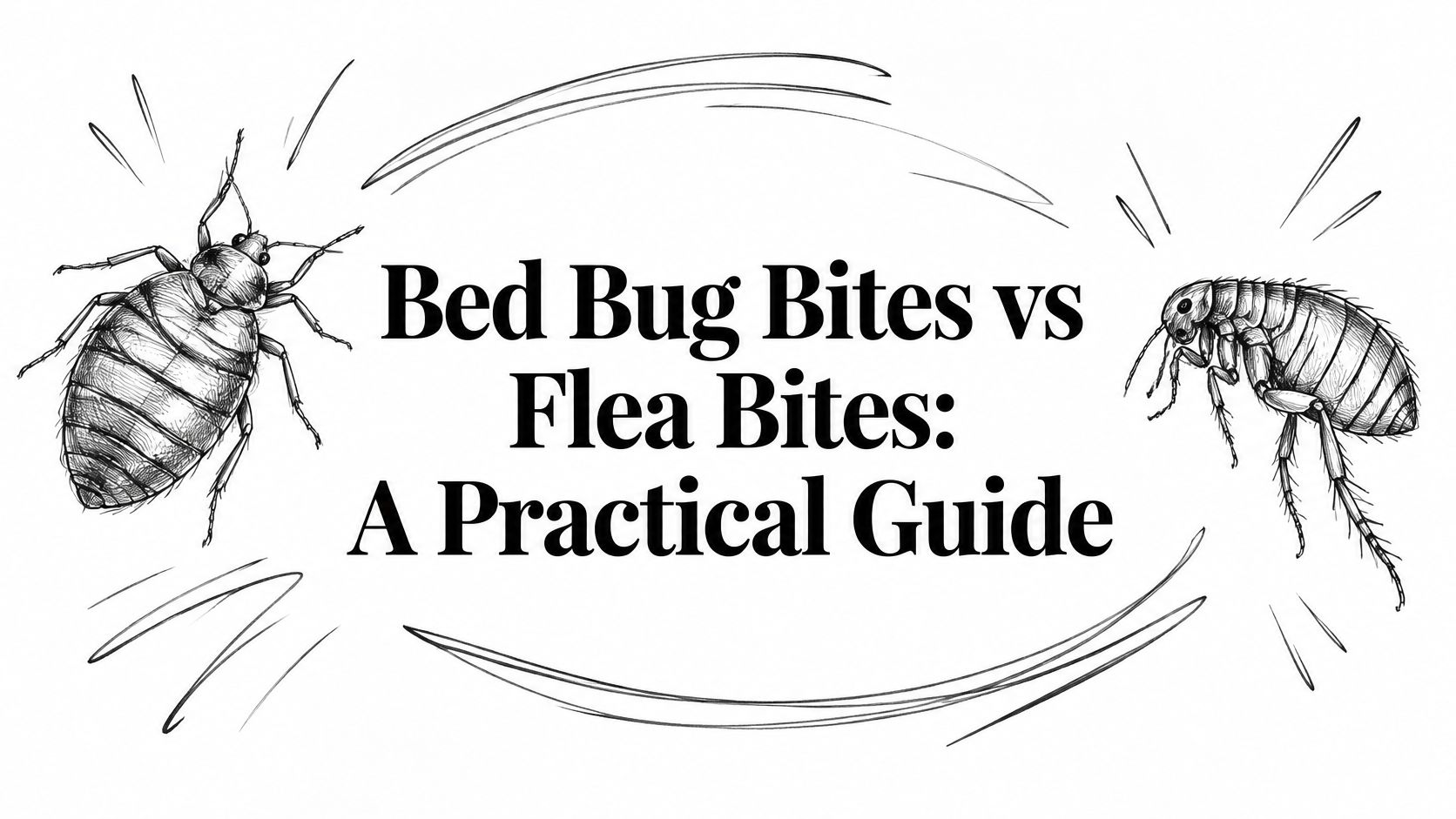
Fleas don't fly. They jump, and a single flea can leap up to 7 inches vertically and 13 inches horizontally, which is why they so often seem to vanish into the air.
If you're in Miami and you just saw a tiny speck spring off the floor, the difference matters. If you think you're dealing with a flying insect, you'll reach for the wrong fix. If you understand that fleas move by explosive jumping from carpets, bedding, and shaded spots, you'll know where to focus your cleanup and why hot weather can make the problem feel worse almost overnight.
Table of Contents
- The Final Answer Fleas Jump They Dont Fly
- The Anatomy of a Super Jumper
- Common Lookalikes That Do Fly
- How Jumping Spreads Infestations in Your Home
- A Flea Control Guide for Miami Homeowners
- When to Contact a Licensed Miami Pest Pro
The Final Answer Fleas Jump They Dont Fly
You are walking across a warm Miami floor in socks, something flicks off the baseboard, and for a split second it seems like the bug lifted into the air. That is the part that throws people.
Fleas do not fly. They have no wings, so they are not staying airborne the way gnats, mosquitoes, or flies do. What you are seeing is a very fast launch from a low surface, usually the floor, rug, pet bedding, or the edge of furniture.
The reason it looks like flight is mechanical, not mysterious. A flea stores energy in a springy body material called resilin, then releases it all at once through its back legs. It works like a tiny loaded spring. Your eye catches the bug after takeoff, not during the crouch and release, so the jump reads as flight.
Miami heat makes that illusion more common. Warm conditions speed up flea activity, so the movement looks even sharper and more sudden inside homes, especially around pets, tile-to-rug transitions, and resting areas near baseboards. Homeowners often describe that as "flying fleas" because the jump starts and ends so quickly.
That detail matters because it tells you where to look and what to treat. A flying insect spreads one way. A jumping insect spreads from the ground up. If the pest seems to appear from low spots instead of hovering near lights or windows, focus your attention on floors, cracks along baseboards, rugs, upholstered edges, and pet hangouts.
A simple rule helps here.
Practical rule: If it seems to pop up from below ankle level, treat it like a flea problem until you prove otherwise.
That small shift in thinking keeps Miami homeowners from wasting time on the wrong tools. Fleas are not drifting through your house on wings. They are launching from the places where people and pets pause long enough for a quick jump.
The Anatomy of a Super Jumper
A flea can't fly because it has no wings. That's the simple part. The interesting part is why it looks airborne anyway.

The spring inside the jump
Fleas use specialized hind legs built for launch, not for walking around the way many other insects do. They also use a rubbery protein called resilin, which stores energy like a compressed spring and then releases it almost instantly. That mechanism helps them jump up to 18 cm (7 inches) vertically and 33 cm (13 inches) horizontally, with takeoff that happens 100 times faster than the blink of an eye, as described in WebMD's explanation of flea movement.
It works like a tiny catapult.
The flea crouches. Energy loads into that spring-like system. Then it fires. To you, it looks like the insect lifted off and flew away. In reality, it launched.
Why your eyes get fooled
Most homeowners don't get a clear, slow look at a flea. They see a dark speck on a sock, pet bed, or hallway rug. Then it disappears. Because the movement is so sudden, the brain reads it as fluttering or flying.
That confusion happens with other pests too. For example, proper treatment for Bed Bug Treatment focuses on every life stage, bugs, eggs, and all, because the biology of the pest determines the treatment. Fleas work the same way. You solve them by understanding movement and hiding behavior, not by guessing from a quick sighting.
A flea isn't hovering in your house. It's launching from a surface you may not have treated yet.
The local angle matters here. In Miami, warm floors, sunlit rooms, and active pets can make flea movement look even more chaotic. When people say, "I swear it flew," they're usually describing a jump they couldn't track with the eye.
Common Lookalikes That Do Fly
A lot of the confusion comes from size. Fleas are tiny, often only 1.5 to 3.3 mm, and their fast jumps make them easy to mistake for gnats or fruit flies. But all ~2,500 known flea species lack wings entirely and cannot generate lift, as noted in Nature Shield's flea identification article.
If you're asking do fleas fly or jump, this side-by-side view usually clears it up.
Flea vs flying insect identification guide
| Characteristic | Fleas | Fungus Gnats | Fruit Flies |
|---|---|---|---|
| Body shape | Narrow, flattened body that looks built to move through fur | Small, delicate, gnat-like body | Small rounded fly body |
| Movement | Sudden jumping from floors, rugs, pet bedding, or ankles | Light, drifting flight near plants and damp soil | Short erratic flight near fruit, trash, or drains |
| Where you notice them | On pets, carpets, upholstery, socks, lower legs | Around houseplants or damp potting soil | Near kitchens, produce, recycling, or drains |
| What confuses people | Their jump looks like a takeoff | They actually fly | They actually fly |
One practical clue is direction. Fleas usually seem to come up from below. Flying insects tend to move around your field of vision.
If you're trying to separate flea activity from other small pests common in South Florida, Pestless also has a useful guide to mosquito species in Florida, which helps when homeowners lump every tiny biting or flying insect into one category.
If sticky traps for flies aren't catching much, but ankles and pet areas are still the trouble spots, fleas move higher on the suspect list.
How Jumping Spreads Infestations in Your Home
The biggest mistake I see is homeowners focusing only on the pet. The dog gets treated. The cat gets checked. But the carpet, throw rug, and couch seam where the problem keeps restarting stay in play.

Why the pet is only part of the problem
Once a cat flea lands on a host, it stays there for the remainder of its life and rarely jumps to another animal. At the same time, 95% of the flea population exists off the pet as eggs, larvae, and pupae in carpets and bedding, according to Pet Camp's flea guide.
That's the part not typically expected.
They assume fleas are bouncing from pet to pet all day. Usually, what they're seeing is a new flea from the environment jumping onto whoever walks by next. That might be your dog. It might be your ankle while you're carrying laundry through the bedroom.
What that means for cleanup
If the environment is the reservoir, then control has to be environmental too.
- Treat the host: Follow your veterinarian's advice for the pet that's carrying adult fleas.
- Target the reservoir: Vacuum carpets, rugs, furniture edges, and pet sleeping areas.
- Wash fabric zones: Focus on bedding, blankets, and anything your pet uses repeatedly.
A short visual can help you understand why the floor-level environment matters so much:
Another common misunderstanding is the idea that fleas spread like flying bugs from room to room on their own. What usually happens is much simpler. People and pets move through the home. Fleas wait in soft surfaces and shaded areas. Then they jump.
The flea you notice on a person is often evidence of a hidden population in the room, not a sign that the insect flew in from elsewhere.
That changes your game plan. If you only medicate the pet and stop there, the home keeps producing new jumpers.
A Flea Control Guide for Miami Homeowners
Miami adds one more layer to this problem. Heat makes flea activity look more dramatic, and that visual chaos leads homeowners toward the wrong pests and the wrong products.

Why Miami heat changes what you see
In Miami's summer heat, fleas become hyper-active, and their rapid jumps at 50 to 150 times their body length create an even stronger illusion of flight. The explanation given in this video on flea jumping and heat ties that effect to the resilin-powered spring mechanism, which makes fleas seem airborne and points homeowners back toward environmental treatment.
So when a Miami resident says, "They're flying in the living room," I take that seriously, though not as actual flight. What they're often describing is heat-driven jumping from warm carpet, pet bedding, or nearby shaded areas by a door.
A practical plan you can start today
Here is the approach I recommend in plain terms:
Start with the pet. Use a veterinarian-approved flea treatment and make sure every pet in the home is on a consistent plan. If you'd like supportive pet-care context, this guide on ACV for dog skin, digestion, and fleas can help you think through comfort and coat care, but it shouldn't replace veterinary flea treatment.
Vacuum like you're chasing the launch points. Don't just do the middle of the room. Get baseboards, rug edges, under furniture, upholstered seams, and the places where pets nap.
Wash repeat-use fabrics. Pet bedding matters first, but don't forget throw blankets, washable covers, and any fabric your pet claims as its own.
Check the yard. Focus on shady, moist areas where pets rest or cut through regularly. Flea problems often keep restarting when indoor and outdoor conditions feed each other.
Stay consistent. Miami's climate doesn't give much room for a casual one-and-done approach.
You can also compare your options through residential pest control resources in Miami if you need help deciding whether your problem still fits DIY or needs a licensed treatment plan.
A few habits make a big difference in hot weather:
- Cooler indoor conditions help: Heat can increase the frantic-looking activity that makes fleas seem airborne.
- Daily attention beats occasional deep cleaning: Repeated vacuuming matters more than a single heavy session.
- Pet rest zones deserve extra focus: If one chair cushion or one bedroom rug keeps producing sightings, treat that as a clue.
Local takeaway: In Miami, the "flying flea" report usually means active jumping in a warm environment, not a separate flying-insect infestation.
When to Contact a Licensed Miami Pest Pro
A flea problem usually reaches the professional stage when the activity starts feeling bigger than the spots you can clean and monitor on your own. In Miami, that point can arrive faster than homeowners expect because heat speeds up flea activity. The hotter the environment, the more those spring-loaded jumps can look like tiny bursts of flight, especially when fleas launch from carpet edges, pet bedding, or shaded furniture seams.

Signs your flea problem has outgrown DIY
Call a licensed pro if you are seeing a pattern like this:
- Sightings keep popping up after cleaning and pet treatment: That usually means eggs, larvae, or hidden flea pockets are still active somewhere in the home.
- The problem has spread beyond one pet zone: If fleas are turning up in multiple rooms, they are no longer staying close to a single bed, rug, or couch.
- People are getting bitten indoors on a regular basis: Ankles, lower legs, and areas near upholstered seating often give the first clue.
- Fleas seem to be "flying" in warm rooms: What you are usually seeing is fast jumping powered by a spring-like body structure, not actual flight. In Miami heat, that illusion is more noticeable.
A licensed inspection is also useful when you are not fully sure what is biting you. Homeowners sometimes lump different pests together because the result feels similar. Mosquito Control addresses outdoor mosquito pressure in the yard, which is a separate issue from floor-level fleas multiplying indoors.
Why licensing matters in Florida
A professional should do more than spray and leave. They should identify where fleas are developing, explain how indoor and outdoor pressure are connected, and choose products that fit the home, pets, and level of infestation.
Before hiring anyone, verify their credentials with this guide to checking a Florida pest control license. That extra step helps you confirm you are dealing with a legitimate, insured professional who can treat the problem safely and legally.
For homeowners who want a simple way to compare local options, Pestless Inc. is a matching service that connects Miami and Miami-Dade residents with licensed, insured pest control professionals for no-obligation quotes.
If fleas seem to be flying through your home, treat that as a sign of active jumping and a growing infestation, especially in warm Miami conditions. Pestless Inc. can help you connect with licensed, insured Miami-area pest control professionals so you can compare quotes and get the right treatment plan for your home.
Dealing with this pest right now?
Pestless connects you with a licensed, insured Miami pest control provider for a free, no-obligation quote.