You're making dinner in your Miami kitchen when a few tiny black flies rise from the sink. Minutes later, more are circling the fruit bowl, hovering near a houseplant, or resting on the bathroom wall. Swatting the adults feels productive, but it rarely solves the problem because “gnats” describes several different small flies with different breeding sites.
That distinction matters. Fungus gnats usually point to wet potting media, drain flies develop in organic buildup inside drains, and fruit flies follow fermenting food or liquid. The right treatment depends on finding the source, not applying the same spray to every flying insect. If you're unsure whether the insects can bite, this guide to whether gnats bite can help separate nuisance flies from other pests.
Table of Contents
- Introduction - Conquering the Flying Gnat Mystery
- The Big Three - Identifying Indoor Flying Gnats
- Why Miami Homes Are Gnat Magnets
- Quick Elimination Steps for Immediate Relief
- Long-Term Prevention Strategies for Homeowners
- When to Call the Experts and Find Local Help
Introduction - Conquering the Flying Gnat Mystery
A homeowner may describe the problem as flying gnats in the house, but the insects may not be gnats in the strict sense. A dark, long-legged fly lifting from a potted palm is behaving very differently from a fuzzy insect resting beside a shower drain. A tan fly hovering over bananas has an entirely different food source.
In Miami, this confusion is common because warm, humid conditions can support several small-fly problems at once. A kitchen may have fruit flies near recycling, fungus gnats around indoor plants, and drain flies in a rarely cleaned sink drain. Treating the visible adults without identifying the breeding material lets the next generation continue emerging.
University extension guidance consistently places source identification, sanitation, moisture reduction, and exclusion ahead of blanket insecticide use. Fungus gnats are associated with moist soil and decomposing organic matter, while drain flies are tied to the slime layer inside drains. That means the first question shouldn't be, “What spray kills gnats?” It should be, “Where are these flies developing?”
Practical rule: Follow the insects to the place where they gather, then inspect the moisture or organic material supporting them.
The sections below use appearance, behavior, and location to narrow the diagnosis. Once you know which fly you're facing, the cleanup becomes more targeted, safer, and far more likely to last.
The Big Three - Identifying Indoor Flying Gnats
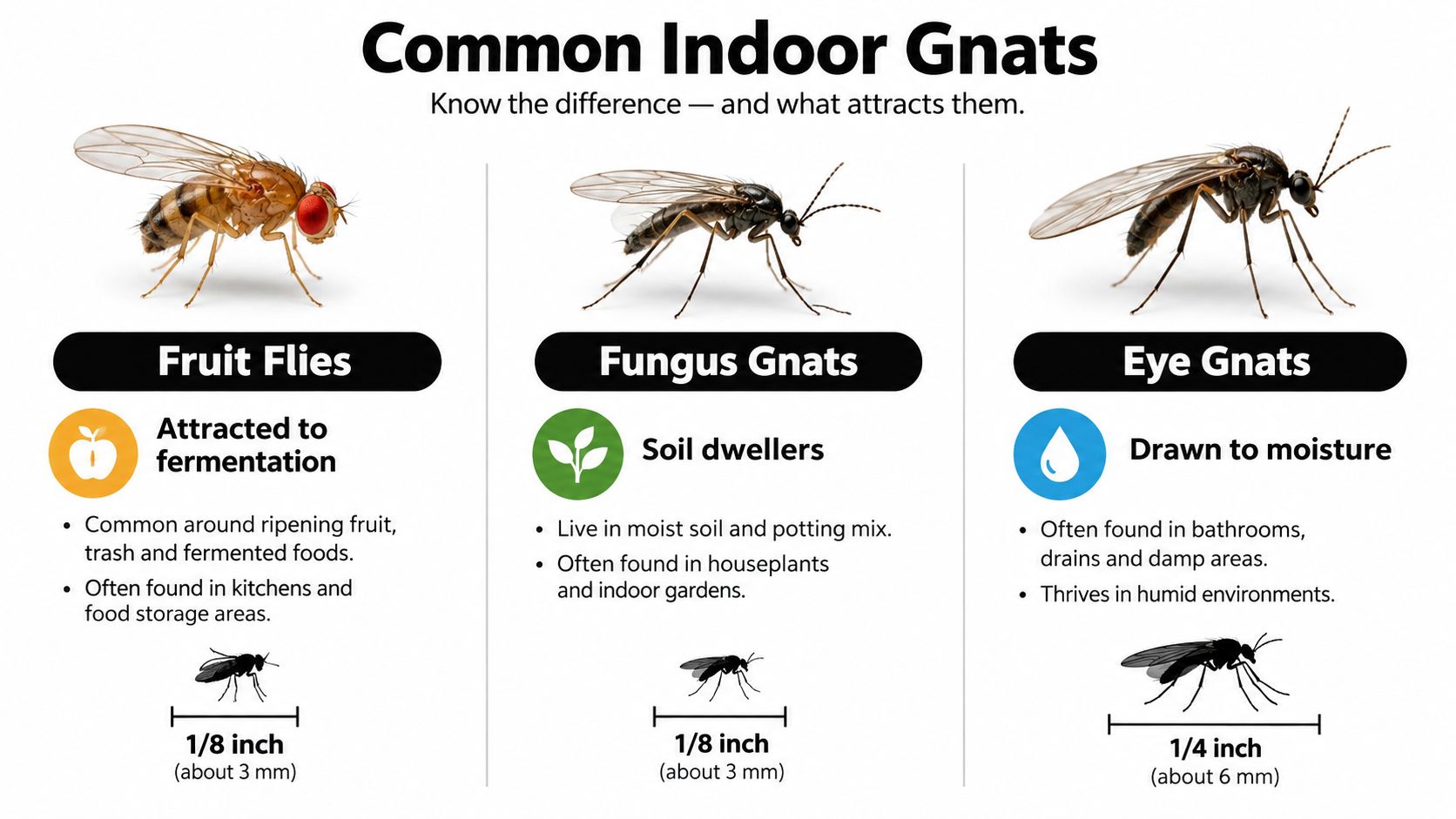
Before treating an indoor fly problem, compare the insects and their location. Three common lookalikes are fruit flies, fungus gnats, and drain flies. They overlap in size, but their body shape and behavior provide useful clues.
Fruit flies follow fermentation
Fruit flies are usually small, tan or brown flies found around ripe or overripe produce, wine, juice, recycling containers, and sticky spills. They tend to stay in kitchen areas because their larvae develop in fermenting organic material. Check under appliances, inside trash and recycling bins, and around fruit stored on the counter.
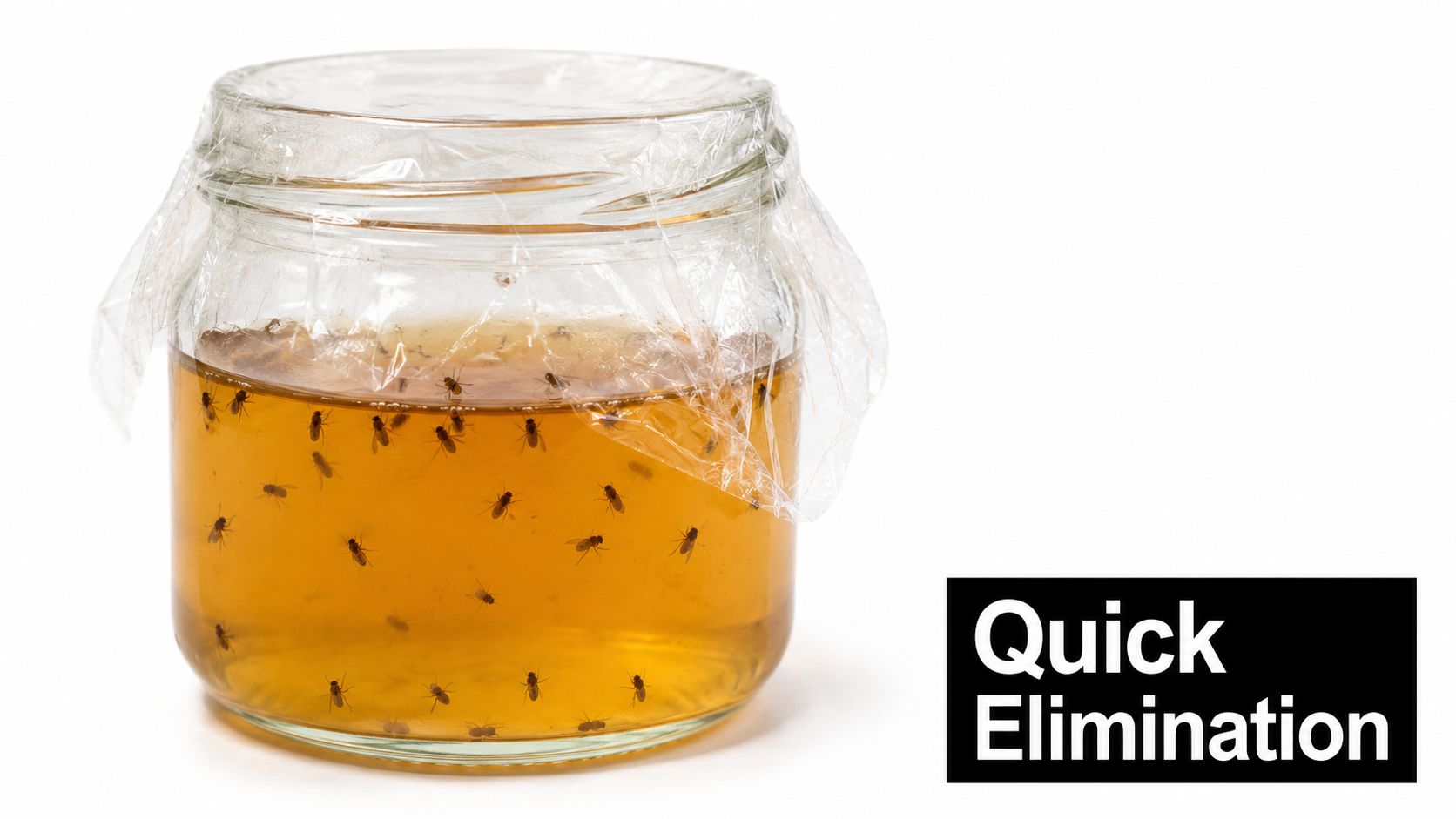
A small vinegar-style trap may catch adults, but it won't remove the breeding material. If you want to compare consumer trap options, this explanation of whether fruit-fly traps work on gnats is useful, but remember that a trap's results depend on the species involved.
Fungus gnats rise from plant soil
Fungus gnats are slender, dark, and long-legged. They often hover around houseplants, windows, and grow lights instead of gathering around food. Their larvae live in moist growing media rich in organic matter, generally near the surface. The University of Maryland identifies the top 1 to 2 inches, or about 13 mm, of growing medium as a common larval zone in its fungus gnat guidance.
A 2023 nuisance-arthropod study found fungus gnats accounted for 42% of flies captured in indoor traps, compared with phorid flies at 18%, moth flies at 17%, fruit flies at 10%, and midges at 8% (Journal of Economic Entomology). That finding doesn't identify every household infestation, but it shows why a plant inspection should be an early diagnostic step.
Drain flies stay near wet plumbing
Drain flies, also called moth flies, look fuzzy or moth-like rather than sleek. Adults commonly rest on bathroom or kitchen walls near sinks, tubs, floor drains, and other damp plumbing areas. Virginia Tech notes that they don't damage indoor plumbing. Their presence usually reflects organic buildup and humidity inside a drain, not broken pipes.
For a kitchen-specific diagnostic checklist, compare the signs described in this guide to gnats in the kitchen. Location alone isn't perfect, but the combination of appearance, resting place, and breeding material usually points to the correct treatment.
Why Miami Homes Are Gnat Magnets
Miami homes create a different pest-control environment from dry inland climates. Outdoor humidity, air-conditioning condensation, frequent rain, lush landscaping, and indoor plants can keep surfaces and growing media damp for longer. That doesn't mean every small fly comes from outdoors, but it does mean a minor moisture source can remain suitable for breeding.
Fungus gnats benefit when houseplant soil stays wet between waterings. Drain flies benefit when a drain retains humid organic residue. Fruit flies can exploit damp waste containers and food residue, especially when kitchen ventilation and drying are limited. The practical response isn't to treat the entire home with insecticide. It's to match the inspection to the suspected species.
Start with the likely source
Use this sequence rather than spraying every room:
- Inspect plants first if the insects hover around leaves, pots, or windows. Feel the soil below the surface and check for rotting leaves, poor drainage, or saucers holding water.
- Inspect drains if adults rest on bathroom walls or appear after sinks, showers, or floor drains are used. The target is the organic film inside the drain.
- Inspect food and waste areas if the flies stay near produce, bottles, recycling, or trash.
- Inspect entry points and hidden moisture if none of those sources fits. Look around window screens, doors, foundation gaps, plumbing penetrations, condensate lines, and areas with a history of leaks.
For broader indoor comfort and moisture management, these humidity-control tips for Sylacauga homes explain why ventilation, air movement, and humidity control matter. The same principles are relevant in Miami, although local homes may face heavier humidity pressure.
Outdoor moisture matters too. Standing water and damp organic debris can support other insects, so review common mosquito breeding grounds while checking patios, planters, gutters, and yard drainage. Don't assume that an indoor sighting proves an outdoor source, but don't ignore the perimeter when indoor sources are absent.
Quick Elimination Steps for Immediate Relief
Once the species is reasonably clear, remove the material supporting it. Adult traps can reduce activity and help you monitor progress, but they're secondary tools. Source removal breaks the cycle; trapping mainly measures or suppresses the adults you can see.
Match the action to the fly
For fruit flies, discard overripe produce, rinse bottles and cans, empty food waste, and wash sticky residue from counters and cabinet edges. Check hidden areas such as the underside of a garbage-disposal splash guard, the space beneath a refrigerator, and damp recycling containers.
For fungus gnats, let the potting mix dry thoroughly between waterings. Remove decaying leaves, confirm that containers drain freely, and avoid leaving water in saucers. Yellow sticky cards near the soil surface can catch adults and show whether activity is declining. Extension guidance also identifies soil-applied Bti as an option for larvae when used according to the product label.
For drain flies, scrub the inside of the drain with a firm brush to remove the slime layer where larvae develop. Clean the drain opening, overflow area, and nearby trap access where possible. Pouring a quick treatment into the drain may kill some exposed insects, but it won't replace physical removal of the organic film.
Colorado State Extension summarizes this approach in its guidance on flies in the home. It emphasizes drying plant soil, removing rotting material, using traps for monitoring, and cleaning drains when plumbing is the source.
A trap can be useful near a fruit bowl, but it shouldn't distract from cleanup. If the issue turns out to be a different pest entirely, such as bed bugs, a Bed Bug Treatment service addresses every life stage, including bugs and eggs, rather than treating a flying-insect problem with the wrong method.
Use the video below as a visual supplement, not as a substitute for identifying the breeding site.
In Miami, drying is often the difficult part. Keep plant containers ventilated, repair dripping fixtures, empty dehumidifier reservoirs, and avoid storing wet mop heads or organic debris in warm utility areas. A cooler, drier surface won't solve a hidden drain problem, but it makes the home less supportive of repeated activity.
Long-Term Prevention Strategies for Homeowners
Cleaning visible insects doesn't guarantee that the home is fixed. A recurring population after plant care and drain cleaning suggests that another breeding site, moisture source, or entry point remains. The common assumption that DIY cleanup is always enough fails when the source is hidden behind a cabinet, below a fixture, inside a condensate system, or outside the screened envelope.
Build a moisture inspection habit
Check the places that stay damp longest:
- Houseplants: Use pots with drainage, remove dead plant material, and don't keep soil constantly saturated.
- Bathrooms and kitchens: Clean drain openings and overflow channels, repair slow leaks, and watch for recurring condensation.
- Air-conditioning systems: Inspect condensate lines, drain pans, and nearby surfaces for persistent moisture.
- The exterior envelope: Repair damaged screens and seal gaps around doors, windows, foundation cracks, and utility penetrations.
- Waste and storage areas: Clean bins, remove organic residue, and keep damp materials from sitting against walls or floors.
Repeated moisture deserves more attention than a stronger spray. If you see staining, musty odor, peeling materials, swollen cabinetry, or insects returning from the same area, consult a qualified professional about the underlying water condition. This mold remediation guide for homes offers useful context for recognizing why moisture-related building issues require more than surface cleaning.
Inspection trigger: If the insects return after the suspected source has been dried and cleaned, stop repeating the same treatment and investigate the structure, plumbing, HVAC drainage, and exterior entry points.
Sealing the home also requires pest-specific thinking. If inspection finds signs of rodents creating openings or contaminating hidden areas, Rodent Control focuses on removing the rodents and sealing the way back in. That isn't a gnat treatment, but it illustrates the broader principle: lasting control requires correcting access and habitat, not only removing visible pests.
When to Call the Experts and Find Local Help
Call for professional help when flying insects keep returning despite targeted cleanup, when the source can't be located, or when moisture damage is suspected. Persistent activity may indicate a concealed leak, a drain biofilm that hasn't been fully removed, an HVAC condensate issue, or an exterior entry route. Professionals can inspect the pattern instead of guessing from the insects seen in one room.
Pestless connects Miami and Miami-Dade County homeowners with licensed and insured local pest-control professionals. The process is straightforward:
- Describe the problem through the online form or by phone, including where the insects appear and what you've already cleaned.
- Provide location details so the request can be matched with a nearby provider familiar with South Florida homes.
- Compare the response from a vetted local professional and discuss inspection and treatment options before authorizing work.
Pestless facilitates introductions and doesn't perform treatments itself. That distinction matters because the technician who visits your home should explain what was found, which species is involved, and what source correction the treatment requires.

Bring a sample photo, note whether the insects are near plants, food, or drains, and mention any recent leaks or remodeling. Those details can make the inspection more efficient and help prevent a generic treatment plan for the wrong pest.
If flying gnats in your house keep returning, Pestless Inc. can connect you with licensed, insured pest-control professionals serving Miami-Dade County. Submit the short request with the insect location and moisture clues so a local provider can help identify the source and recommend the right next step.
Dealing with this pest right now?
Pestless connects you with a licensed, insured Miami pest control provider for a free, no-obligation quote.