The slider is still wet from the afternoon storm, the pet bowl has a ring of reddish ants, and a second line is leaving the baseboard by the washer. If you live on a Miami slab, that is fire ants in house, not a one-off kitchen bug. Most of those workers are shopping from a colony in the lawn. Heavy rain, fresh landscaping, or a nest pushed into a wall void is a different problem, and a spray on the trail can make it worse.
Name the pattern before you buy anything. A line to food is one job. Ants pouring from a wall or an air-conditioner closet is another.
Table of Contents
- Tell a Foraging Trail From an Indoor Nest
- How to Contain Fire Ants Inside the House
- Treat the Outdoor Colony That Feeds the House
- Keep Fire Ants Out of South Florida Homes
- When to Stop DIY and Call a Licensed Pro
Tell a Foraging Trail From an Indoor Nest
A pet bowl beside the slider attracts a line of ants after a storm. At the same time, another stream emerges from the baseboard near the washer. The first trail may lead outdoors to food; the second could point to a nest inside a wall void. Each pattern calls for a different response.
Mississippi State University Extension's guide to indoor fire ant invasions describes both possibilities: workers can enter while foraging, or a colony can relocate indoors after flooding, drought, landscaping, or another disturbance. Killing ants on the tile leaves the colony that produced them in place.
Match what you see tonight
| What you see | Likely source | Do this first |
|---|---|---|
| Trail from a door, window, or slab crack to food or a pet bowl | Outdoor foragers entering for food | Remove the food and identify where the trail enters |
| Ants repeatedly emerging from a wall void, pipe, or wiring chase | Colony established inside the structure | Isolate the room and arrange a licensed inspection |
| Sudden large numbers after heavy rain, drought, or yard work | Displaced outdoor colony moving indoors | Check nearby mounds and damp slab edges the same day |
| Ants concentrated in an outlet, breaker panel, or AC closet | Nesting around electrical equipment | Keep the box closed and get pest and electrical help |
| A few scouts on a counter and no trail into voids | Attraction to a food or water source | Clean the source and watch for a trail |
Use the closest match to decide what needs attention first. A food trail tends to connect an entry point with crumbs or a pet bowl. A structural nest keeps sending ants from a void, pipe, or wiring chase even after food is cleared. A sudden crowd after rain or yard work may signal a displaced colony. Ants around electrical equipment need particular caution.
Stop line: Ants emerging from a wall or gathering around electrical equipment call for a licensed inspection.
Fire ants around electrical equipment may damage insulation or interfere with switching mechanisms. A closet full of ants is a safety issue that needs prompt attention, especially when children or pets use the room.
Confirm the species before bait
Ant control starts with identifying the species, because different ants respond to different baits and strategies. Tiny pale ghost ants and dark white-footed ants can both appear in Miami kitchens, and a product meant for outdoor mounds may not address either one.
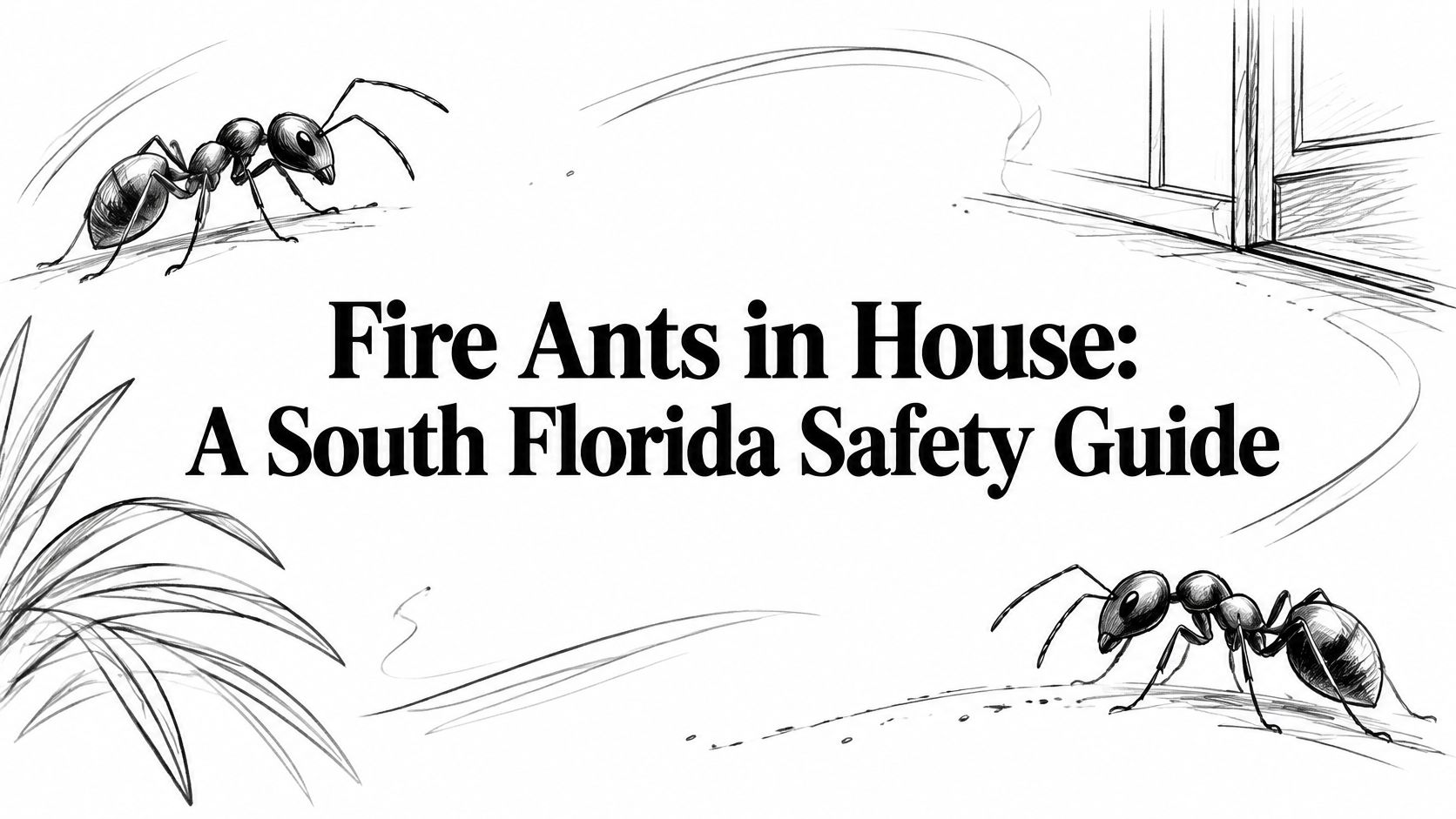
Red imported fire ant workers are reddish brown with a darker abdomen. Their outdoor nests are loose dirt mounds without an obvious entrance hole. If the ants indoors do not match that description, avoid guessing at the species.
Check for stings before choosing a product. Trouble breathing, facial or throat swelling, or widespread hives after stings require emergency care. If ants are inside a panel, meter, or electrical box, leave the cover closed.
How to Contain Fire Ants Inside the House
Use the sequence below only when your row was outdoor foragers or a few scouts. A wall nest or an electrical box is a different response, and store spray is not part of it.
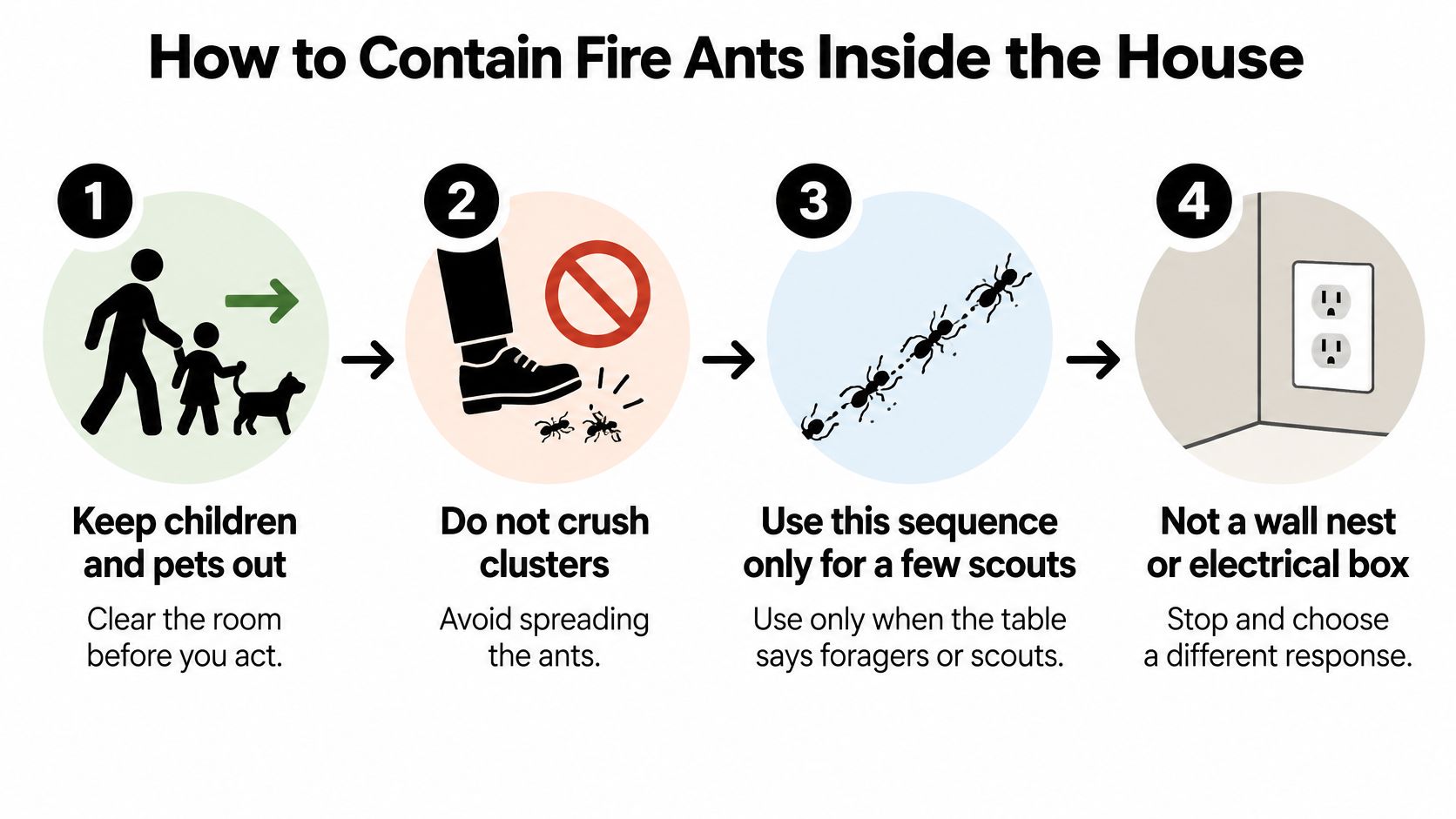
Texas A&M AgriLife lays out the indoor order clearly. Identify the ants and follow the trails to learn whether workers are entering from outside or a nest is already inside. Use only an indoor-labeled bait for indoor foragers, or an indoor-labeled contact product where the label permits. Outdoors, treat nearby mounds and seal cracks and utility penetrations. Then recheck trails and mounds instead of assuming the ants are gone. Spraying the visible trail alone kills workers, does not eliminate the colony, and can cause that colony to fragment into smaller colonies. Products that are not labeled for indoor use do not belong in the house.
The indoor sequence
- Clear the room. Keep children and pets out so nobody steps into a cluster. Crushing a pile spreads alarm scent and pulls more workers onto the floor.
- Cut the recruitment. Pick up pet bowls, wipe crumbs, and dump standing water in sinks and plant trays. Foragers stop advertising a source that is gone.
- Mark one entry. Follow what is left of the trail to a door sweep, a window track, a pipe penetration, or a weep hole, and put tape on that spot. You need one path, not a guess at every crack.
- Do not spray that path. A contact spray on the baseboard kills the workers you can see and can push the colony to split. That mistake comes before any bait goes down, because bait needs living foragers.
- Place indoor-labeled bait only. Set it where workers are still moving. Never bring a yard granular or a mound drench inside. The label, not the package photo, decides whether the product can be used in a kitchen.
- Let them carry it before you seal. Workers have to take bait back out. Sealing the crack too early can pin ants inside a void you cannot see.
- Recheck on a schedule. Look at the same path at 24 to 48 hours and again at one week. If the count rises, or ants leave a different crack, stop the home plan and treat it as an indoor colony.
In a condo, tell the association before anyone seals a chase that is shared with a neighbor. Caulk on your side of the wall can send ants into the next unit.
The kitchen is often only the destination. The nest is the void, the mound outside, or the wet soil at the slab.
Ant control inspects indoor voids, exterior mounds, and moisture sources to find the colony. Ant Control is built around that idea: treat the colony, not just the trail. A bait station on the counter, with the yard left alone, is a pause, not a finish.
Treat the Outdoor Colony That Feeds the House
After a South Florida downpour, a fresh mound may appear beside the slab while ants keep following the wall indoors. That pattern can point to an outdoor colony feeding the house. Rain or yard work can also shift a nest into a wall void, where spraying may scatter ants instead of solving the problem.
For lawn colonies, broadcast bait and individual mound treatment do different jobs. Broadcast bait reaches foraging colonies across the yard; mound treatment targets nests the broadcast misses. The University of Georgia Extension's fire ant bait guidance reports about 80–90% mound reduction when bait is correctly applied two to three times per year. A single application may take 2–6 weeks to reach maximum control, while insect-growth-regulator baits can take two months or longer. Those results depend on foragers collecting the bait and carrying it back to the colony.
Timing card for the yard
| Tactic | Expected result | Watch-out |
|---|---|---|
| Broadcast granular bait, 2 to 3 times a year | About 80–90% mound reduction when correctly applied, according to University of Georgia Extension | Wet grass, rain soon after, stale bait, or the wrong rate |
| Single bait application | Maximum control often in 2–6 weeks, according to University of Georgia Extension | Judging failure before the wait window ends |
| Insect-growth-regulator bait | Can take two months or longer | Expecting fast knockdown from a slow-acting product |
| Individual mound treatment after broadcast | Targets colonies the broadcast missed | Using it as the only method on a heavily infested yard |
| Contact spray on a foundation trail | Kills visible workers | May split a colony rather than eliminate it |
How to run the two passes
Apply granular fire-ant bait labeled for the site to dry grass. Check the label for application instructions, and avoid applying just before rain. Wet vegetation, rain soon after application, stale bait, or an incorrect rate can undermine the treatment.
After broadcasting, inspect the lawn, beds, and soil beneath pots, toys, and the air-conditioner pad. Treat missed mounds with a product labeled for individual mounds. A mound still active on day ten does not by itself mean the bait failed; slow-acting products need time for foragers to carry bait back.
Avoid boiling water and household chemicals in mounds. After heavy rain, check the soft soil near the slab, where displaced or newly established colonies may be easier to spot. One yard can contain several nests, so treating one mound may leave other colonies untouched. A dedicated ant mound killer comparison can help you choose a product suited to the treatment site.
If you rent, check who is responsible for treating the yard before applying a product. VerticalRent on landlord pest obligations explains questions to consider, especially when mounds are in a shared courtyard rather than a private backyard.
Keep Fire Ants Out of South Florida Homes
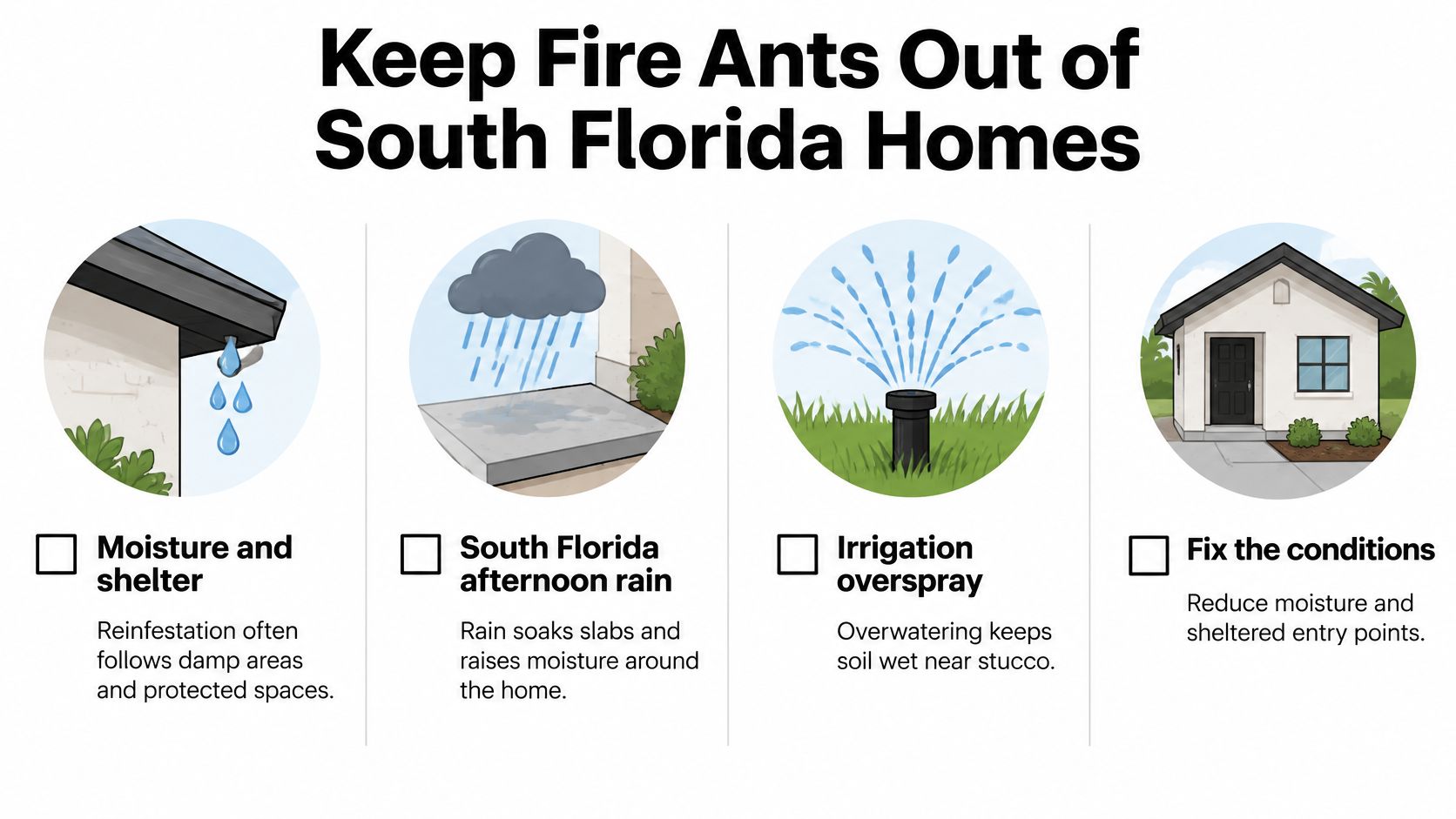
After a storm or yard work, fire ants may appear indoors even when the main colony is outside. Workers can follow a damp route beneath mulch and along a slab, while rain or soil disturbance can also push a nest into a wall void. Keeping the perimeter dry and clear helps make the house less inviting.
A monthly walk in the warm season
Walk the outside monthly during warm weather, and check again after several days of rain. Lift pots, pool toys, and spare pavers resting on soil near stucco walls. These objects hide new mounds, especially where irrigation keeps the ground soft.
Feed pets where you can supervise them. Store food in a sealed bin, and bring the lanai bowl inside after the pet finishes. Food left out overnight can draw foraging ants toward the house.
Look for water pooling beside the slab. An air-conditioner condensate line that drains against the foundation, a leak that wets a closet floor, or heavy irrigation can keep the soil damp. Mulch piled against the wall gives ants a covered route through that wet strip.
For outdoor prevention, clear mulch away from the foundation and redirect condensate so it does not drain beside the slab. Check door tracks and utility openings for gaps; the guide to common ways ants get into a house explains where to look.
In a short-term rental or a home with a pool bath, check wet rooms between guests. With no one opening the slider or noticing a damp floor, a trail can go unseen.
When to Stop DIY and Call a Licensed Pro
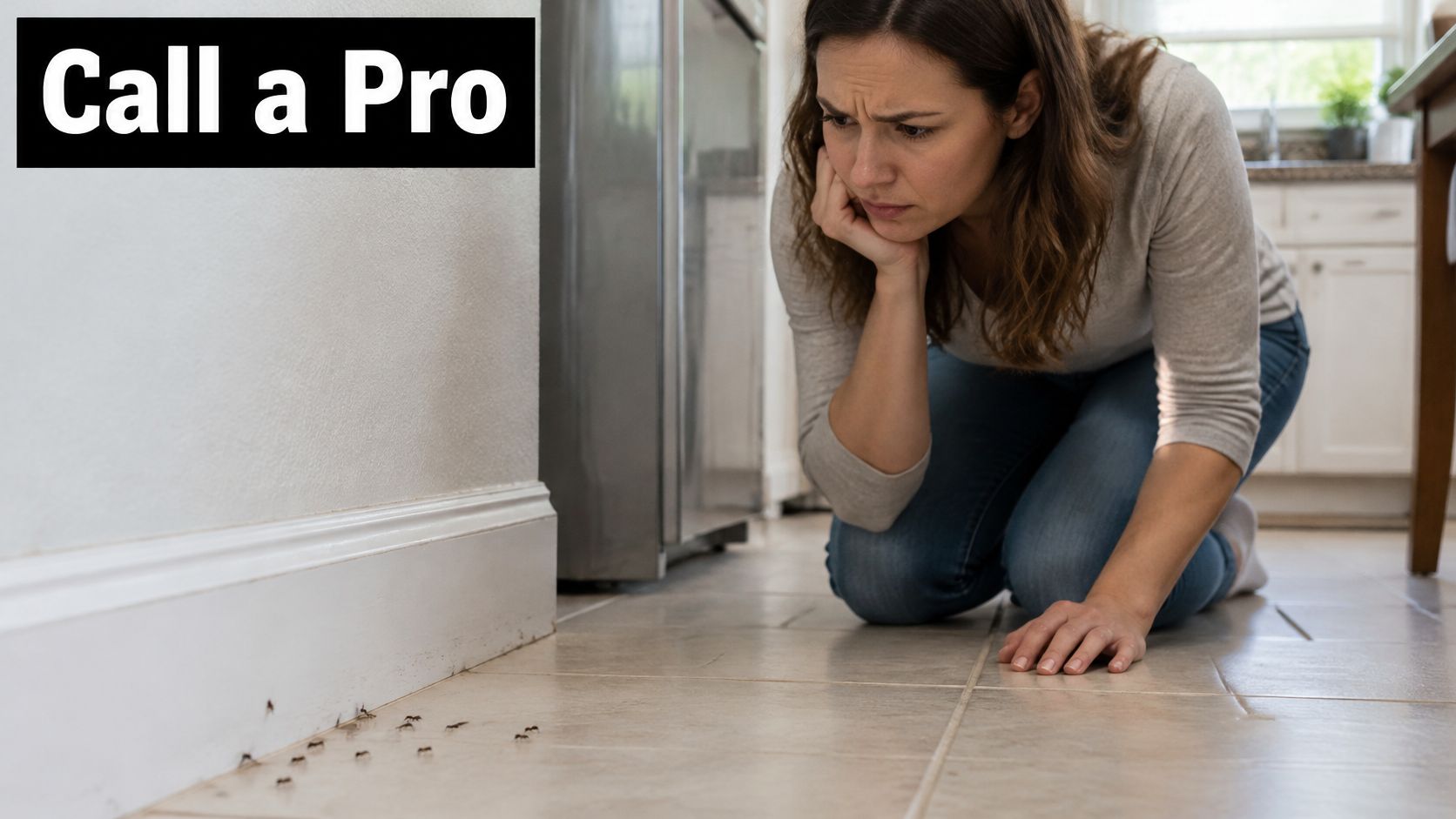
A trail that keeps emerging from a wall after indoor baiting may lead to a nest in a void, or to an outdoor colony entering through the slab. Rain and yard work can also shift where workers forage. If ants keep appearing after a correctly placed bait round, ask a licensed pro to inspect the route and locate the colony.
Get emergency care for trouble breathing, facial or throat swelling, or widespread hives after stings. For ants inside a panel, meter, or irrigation controller, leave the cover closed and contact an electrician and a pest pro.
Bring in help when ants reach a room where a child, pet, or someone sleeping could encounter them, or when a condo wall or utility chase is shared with a neighbor. The earlier spraying warning applies here: use the right bait strategy rather than interrupting bait uptake.
What to say when you book
Name the room and describe where the trail appears to begin. Mention whether ants are coming from a wall void, panel, or yard, whether the building is a condo, and whether an indoor bait round has already failed. Share the address so the request can be matched to a pro serving that Miami neighborhood.
Pestless connects Miami and Miami-Dade homeowners with licensed, insured pest control professionals. It does not perform treatments; homeowners can compare no-obligation quotes and choose a provider. Ant control covers ghost ants, white-footed ants, carpenter ants, and red imported fire ants, and the process starts by identifying the species because each responds to a different bait and strategy.
Licensed network providers treat fire ant mounds and can set up a broadcast yard program to help keep new mounds from establishing. Ant control also includes checking indoor voids, exterior mounds, and moisture sources, then using exterior barriers and entry-point sealing to reduce the chance of re-invasion. Learn what to expect from a licensed pest control professional before you request a quote.
Ask for an inspection when ants keep emerging from a wall, reach an electrical panel, or enter a room where someone sleeps.
Fire ants indoors may be workers foraging from an outdoor colony, or signs that a nest has shifted into a wall void or slab. Pestless Inc. connects Miami and Miami-Dade homeowners with licensed, insured pros, but does not perform treatments. If ants keep emerging after baiting or appear in a panel, submit the address through Pestless Inc. to request quotes from local providers.
Dealing with this pest right now?
Pestless connects you with a licensed, insured Miami pest control provider for a free, no-obligation quote.