Finding a roach crawling across your dashboard is bad enough. Finding another one disappear under the seat rail, especially after you've already cleaned the cabin, is worse. A car can look spotless while crumbs, moisture, egg cases, and living insects remain hidden inside seams, vents, storage compartments, and trunk trim.
Getting rid of roaches in a car requires a different approach from treating a kitchen or garage. You're working inside a compact space with upholstery, wiring, air vents, electronics, and limited access to hiding places. Clean first, treat locally, monitor activity, and deal with the conditions that let the infestation return.
Table of Contents
- How Roaches Invade Your Vehicle
- The Essential Deep Cleaning Protocol
- Choosing Safe Baits and Traps for Cars
- Preventing Reinfestation in Humid Climates
- When to Call a Professional Pest Control Service
- Frequently Asked Questions About Car Roaches
How Roaches Invade Your Vehicle
You bring home groceries, set the bags on the passenger seat, and drive away. A cardboard box goes into the trunk. A backpack or purse rests on the floor. None of those items looks suspicious, but roaches or egg cases can use ordinary belongings as transportation. Vehicle infestations generally begin with hitchhiking insects or egg cases, not roaches appearing spontaneously inside the cabin, as described in this guide to what causes roach infestations.
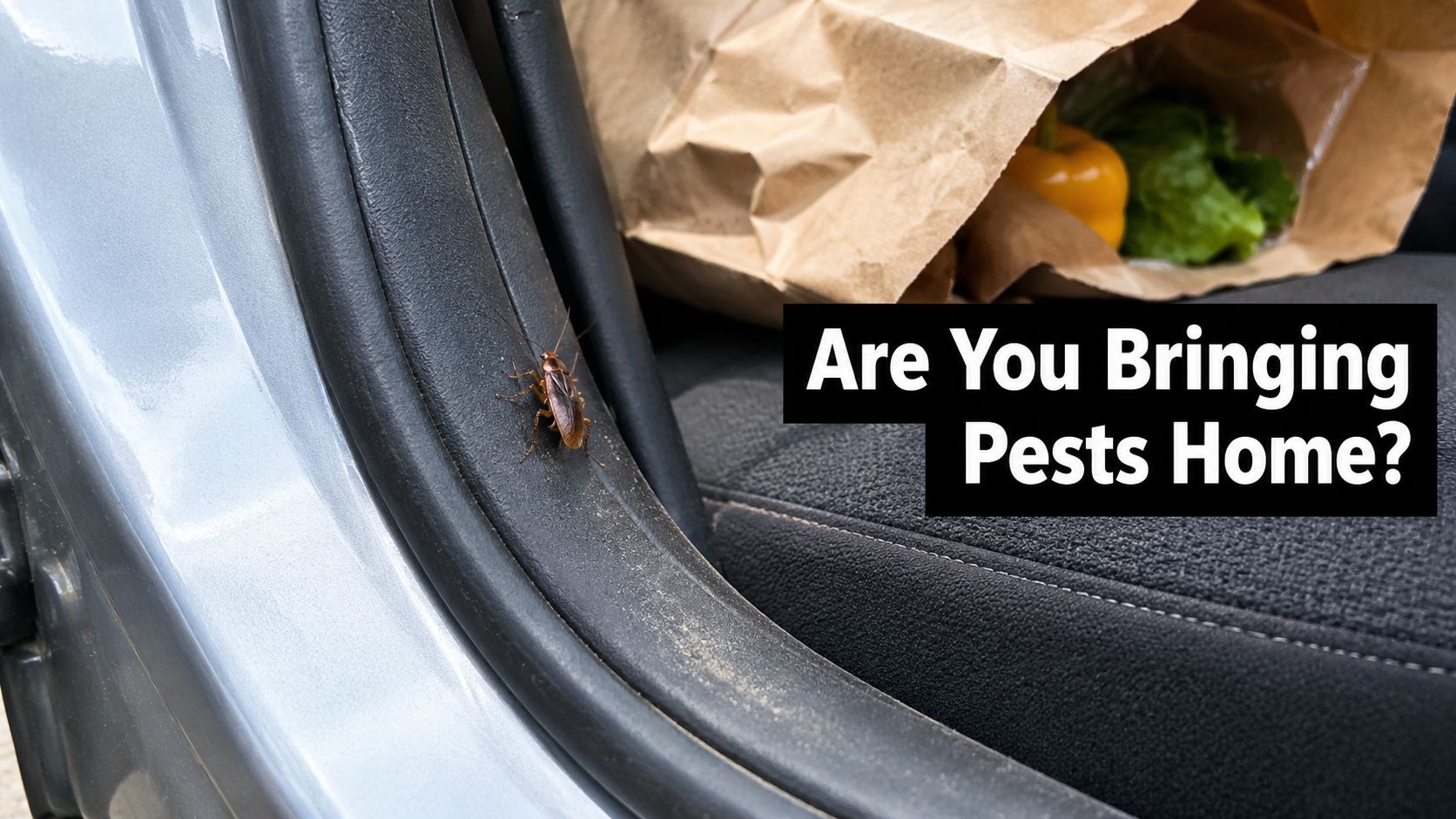
The cabin then supplies what the insect needs. Crumbs collect beneath seats, grease transfers to console edges, pet food gets trapped in floor mats, and damp clothing or umbrellas add moisture. Clutter gives roaches cover, while seat seams, door pockets, trunk corners, and vents provide narrow harborages that are difficult to inspect during a normal cleaning.
Temperature also matters. Cockroaches tend to seek environments around 75 to 90°F, and many can remain viable unless temperatures rise above about 120°F or fall below about 15°F, according to vehicle cockroach guidance on hiding places and heat. A parked car can therefore be warm and sheltered without being hot enough to kill the insects.
Practical rule: Treat the first roach as a possible sign of transportation and establishment, not automatically as a lone visitor.
A small introduction can become a persistent problem in a confined cabin. One cited guide reports that a single female German cockroach can produce an egg case every 20 to 25 days, with each case containing 30 to 48 eggs. That reproductive potential is why seeing adults around the pedals, center console, or rear seat deserves prompt action rather than a quick spray.
The Essential Deep Cleaning Protocol
Cleaning isn't cosmetic. It removes the food, moisture, and debris that allow baiting and monitoring to work. Start outside in a well-ventilated area, remove personal belongings, and keep children and pets away from any product you plan to use.
Strip the cabin before treating it
Remove floor mats, seat covers, child seats, trash, food containers, and anything stored under the seats. Check grocery bags, reusable totes, boxes, backpacks, and purses before bringing them back into the vehicle. Inspect the trunk as carefully as the passenger cabin, since roaches often move between those spaces through trim gaps and folded-seat openings.
Before aggressive dry vacuuming, wipe and disinfect hard surfaces where contamination may be present. Guidance on vehicle cleanup warns that vacuuming contaminated material first can aerosolize harmful residue, so wet cleaning and disinfection should precede forceful dry removal in contamination scenarios. Follow the product label and vehicle-material instructions, and don't saturate electrical components, controls, or upholstery.
Work from exposed surfaces into narrow gaps
After the initial wet-cleaning step, use a crevice tool and soft brush on:
- Seat seams and rails: Move seats forward and backward to expose both ends of the tracks.
- Floor edges: Follow carpet joins, door sills, and the area beneath the pedals.
- Console storage: Empty compartments and clean their corners, hinges, and lips.
- Trunk corners: Lift removable liners and inspect around the spare-tire well.
- Vents and trim gaps: Use a brush or controlled air movement to dislodge debris without forcing insects deeper into the dashboard.
A detailed car-specific cleaning protocol likewise recommends removing mats, covers, child seats, trash, and food sources, then addressing seams, rails, under-seat areas, trunk corners, and vents before wiping hard surfaces. If the seats need broader attention, guidance on achieving a spotless interior for commercial spaces can help you choose a method that suits the upholstery rather than damaging it.
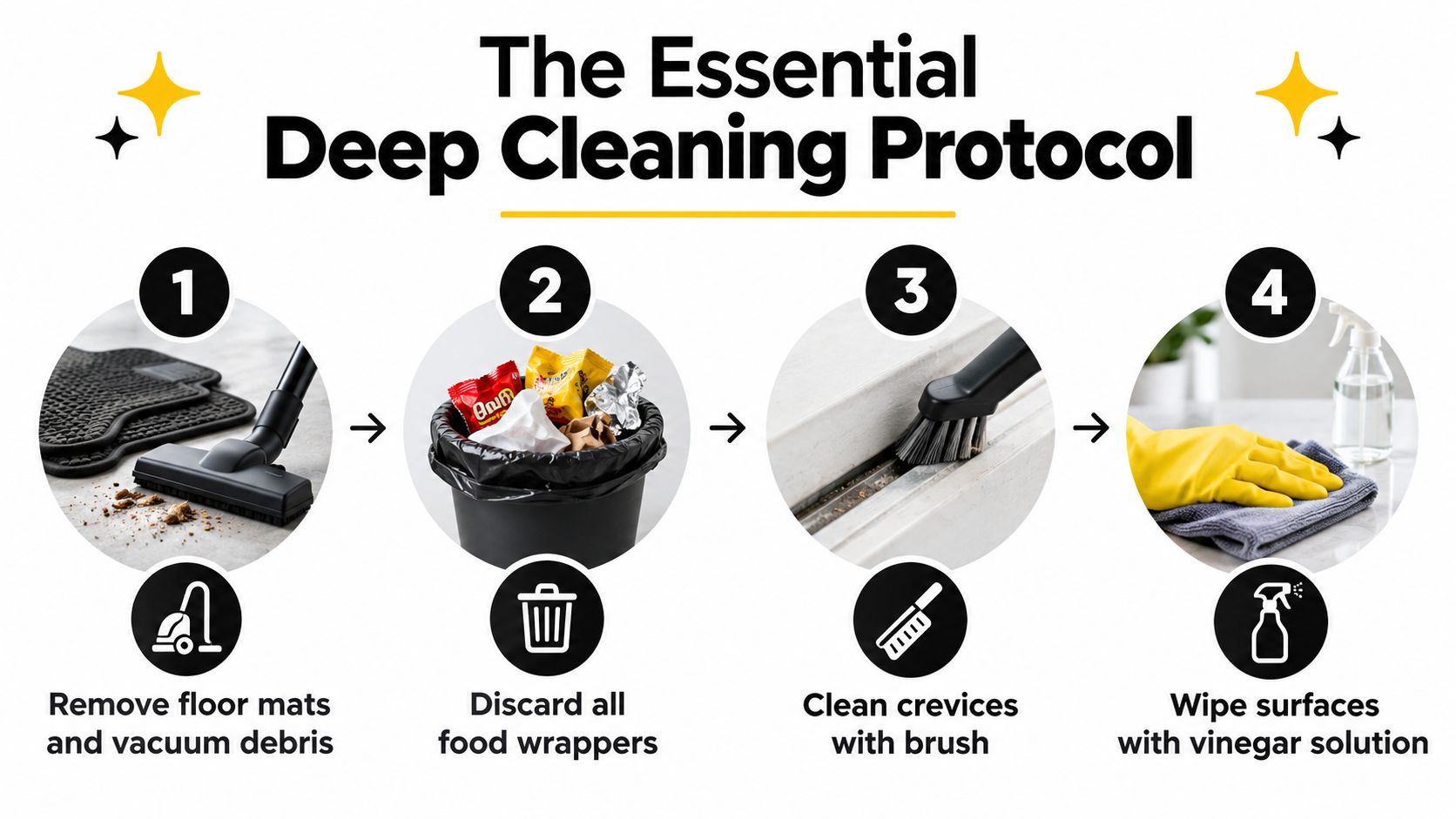
The cabin should be clean and dry before you place gel bait or traps. Don't put bait on top of crumbs, grease, or wet surfaces, because competing food and moisture reduce the usefulness of a targeted treatment. For broader cockroach prevention tips, apply the same discipline to anything regularly carried into the car.
A visual walkthrough can reinforce the order of work, but it shouldn't replace the product label or vehicle manufacturer instructions.
Choosing Safe Baits and Traps for Cars
A car isn't a small house. It has fewer hiding places in total, but those spaces are harder to reach and sit close to wiring, air ducts, switches, and surfaces you touch every day. That makes localized treatment more sensible than coating the entire cabin with aerosol insecticide.
Gel bait targets hidden activity
Apply a small amount of labeled cockroach gel bait in inaccessible locations, such as beneath seats, along floor edges, inside storage compartments, or near protected trim gaps. The objective is to put bait close to movement routes while keeping it away from children, pets, skin contact, food surfaces, and areas where it can smear onto clothing.
Use only a product whose label permits the intended application. More bait isn't automatically better. Large blobs create mess, while scattered applications in several protected locations can provide better coverage without turning the cabin into a contaminated surface.
Sticky traps show whether the problem is shrinking
Place glue traps in several zones, including beneath seats, near the center console, in the trunk, and along floor edges. Traps don't solve every established infestation, but they show where insects are traveling and whether activity continues after cleaning and baiting. They also help distinguish a one-time hitchhiker from repeated movement inside the vehicle.
| Method | Main value in a car | Main limitation |
|---|---|---|
| Gel bait | Places an insecticide at protected feeding points | Must remain uncontaminated and inaccessible to passengers |
| Sticky traps | Captures movement and provides visual monitoring | Won't reach insects inside inaccessible harborages |
| Broad aerosol spray | Fast contact with exposed insects | Can drive roaches deeper into vents and electrical spaces |
Independent vehicle-cleaning guidance emphasizes traps and localized gel bait under seats, along floor edges, and inside storage compartments, while warning against broad spray coverage that can push insects farther into hidden spaces. The same source supports cleaning before aggressive vacuuming when contamination is a concern, so roach boric acid guidance should never be treated as a substitute for sanitation or label-compliant application.
If activity persists despite source reduction and monitoring, Cockroach Control is the relevant service category to discuss with a qualified provider. The practical aim is to break the breeding cycle, not just kill the roaches you can see.
Foggers deserve caution. Vehicle-label products may specify one fogger for a small car or two for an SUV, followed by a 4 to 6 hour closed exposure and at least 1 hour of airing out, as described in the car-treatment guidance above. However, a fogger can contaminate gel bait and reduce its effectiveness, and conflicting consumer guidance means you should never improvise, exceed the label, or fog a vehicle without confirming that the product is approved for that exact use.
Preventing Reinfestation in Humid Climates
A clean cabin can become attractive again if the vehicle keeps collecting damp items, food residue, and clutter. This is especially important in South Florida, where humidity, frequent rain, outdoor dining, and high pest pressure can keep moisture and food access close to the vehicle.
Start with the places that stay hidden after a normal wash. Inspect seat seams, trunk liners, ventilation openings, door pockets, and cracks around doors and windows. Look for wet towels, beach gear, gym clothing, spilled drinks, and leaking containers. A moisture absorber may help manage dampness in the cabin, but it won't correct a water leak or replace drying and cleaning.
Change the vehicle's daily conditions
Don't leave food wrappers, takeout containers, pet treats, or grocery packaging in the car overnight. Empty the cabin after trips, shake out mats, and dry anything that came into contact with rain or seawater. If a drink spills, clean the area promptly, including the edge where the carpet meets the trim.
Parking also affects exposure. Avoid leaving the car beside overflowing trash, dense vegetation, or areas where pest activity is obvious when another practical parking option exists. Check door and window seals for gaps, torn rubber, or signs of water entry, then have damaged seals or leaks inspected.
The lasting fix is environmental: remove food, control moisture, inspect harborages, and reduce exposure around the vehicle.
This combined approach matters because cleaning removes current resources, while moisture control and seal maintenance reduce the conditions that support another introduction. Guidance on getting rid of roaches and ants in vehicles also highlights hidden areas and the importance of addressing the vehicle's condition, not just visible insects.
When to Call a Professional Pest Control Service
DIY treatment makes sense when you find limited activity, can fully empty the vehicle, and can monitor the result. It becomes less attractive when roaches keep appearing after a complete cleaning, when you see juveniles or egg cases, or when insects emerge from vents, dashboard gaps, seat structures, or inaccessible trim.
Repeated sightings in different parts of the vehicle suggest that the issue isn't limited to one exposed crumb or one trap location. A persistent odor, droppings in multiple compartments, or activity returning after the vehicle has been cleaned also deserves professional assessment. Don't keep layering sprays over an unresolved source. That can increase exposure for passengers while making the insects harder to reach.
A licensed technician can assess the vehicle as a connected system. The inspection should consider the cabin, trunk, seats, console, vents, door cavities, moisture sources, and the items that regularly enter the car. Treatment recommendations should account for the vehicle label, occupants, pets, ventilation, electronics, and the required re-entry conditions.
What a responsible service should clarify
Ask the provider:
- What will be inspected: Confirm that the technician won't focus only on the visible cabin.
- Which products are approved: Request label-based instructions for vehicle use and re-entry.
- How bait and monitoring fit together: A good plan should explain placement and follow-up, not just promise a quick spray.
- What you must remove: Food, child equipment, personal items, and damp materials may need to leave before treatment.
- How recurrence will be addressed: Ask about leaks, seals, harborages, and the source of hitchhiking items.
Miami-Dade drivers should choose a provider that can demonstrate the required Florida licensing and active insurance. Pestless Inc. connects Miami and Miami-Dade homeowners with licensed, insured pest professionals, allowing drivers to describe the issue through a short form or phone call and compare an appropriate local response.
A vehicle infestation may also reveal a wider property issue, particularly if the car is parked at a home, rental, garage, or multifamily building with ongoing pest pressure. Termite Control addresses a different pest problem, but the same practical principle applies: stop silent structural damage before it spreads, and use a qualified inspection when hidden activity exceeds what a surface cleanup can reveal.
Frequently Asked Questions About Car Roaches
Can heat alone kill roaches in a car?
Sometimes, but only under conditions that are difficult to verify from outside the vehicle. Sustained exposure around 115 to 120°F can be lethal, while a closed car in direct sunlight may reach those levels quickly, according to the cited cockroach heat and vehicle guidance. Shaded parking, mild weather, window gaps, and cooler areas inside seats or trim can let insects survive.
Don't assume that a hot dashboard means every hiding place reached a lethal temperature. Heat also won't remove egg cases, food residue, or the conditions that invite another hitchhiker.
How long can complete removal take?
Some car-removal guidance estimates 1 to 3 months to fully eliminate an infestation, particularly when egg cases, hiding places, and food residue remain untreated. That timeframe comes from car-focused cockroach removal guidance, and it reinforces why one cleaning session shouldn't be your only checkpoint.
Use traps to monitor activity after cleaning and bait placement. If sightings continue, adjust the plan or call a professional instead of repeatedly applying broad spray.
Is a normal car wash enough?
No. An exterior wash may remove dirt from the body, but it doesn't clean seat rails, floor edges, storage compartments, trunk corners, vents, or food residue inside the cabin. Interior treatment requires the strip-down and targeted cleaning described earlier.
A practical checklist is:
- Empty the vehicle completely, including the trunk.
- Wet-clean appropriate hard surfaces, then remove debris safely.
- Vacuum seams, rails, corners, and protected gaps once the initial cleaning step is complete.
- Use labeled gel bait and sticky traps locally, not broad cabin sprays.
- Inspect moisture, seals, and parking conditions so the infestation doesn't restart.
- Escalate when activity persists, especially around vents, trim, or upholstery.
The key distinction is between killing a visible insect and removing the conditions that support a mobile infestation. Treat the vehicle as a small, interconnected habitat, and your response becomes more controlled, safer, and more likely to last.
If roaches are appearing in your vehicle after cleaning, Pestless Inc. can connect you with licensed, insured pest control professionals serving Miami and Miami-Dade County. Visit Pestless Inc. to describe the infestation, request a no-obligation quote, and compare a local treatment option.
Dealing with this pest right now?
Pestless connects you with a licensed, insured Miami pest control provider for a free, no-obligation quote.