
A rat can enter through an opening as small as 1/2 inch, and young rats may fit through even smaller spaces, according to rodent exclusion guidance for homes. In a Miami house, that can mean a worn garage sweep, a gap around an air-conditioning line, an unscreened attic vent, or a small crack where the foundation meets the wall.
That small opening changes how you should think about prevention. The question isn't only, “How big is the hole?” It's also, “Did heavy rain, heat, landscaping, or normal wear recently turn that hole into a usable route?” For South Florida homeowners, a careful inspection of seals, vents, rooflines, and service penetrations before fall movement becomes active can matter more than waiting for unmistakable scratching inside the walls.
Table of Contents
- A Late-Night Sound in a Miami Kitchen
- How Small a Gap Rats Actually Need
- Walking the Building Envelope From Ground to Roof
- Why Miami Homes Face a Different Risk Profile
- Reading the Warning Signs Inside the House
- The Seasonal Timing Most Homeowners Get Wrong
- A Practical Exclusion Plan for Miami Homeowners
A Late-Night Sound in a Miami Kitchen
At 2 a.m., a Coral Gables homeowner hears a dry, irregular scratching behind the dishwasher. A week of heavy September rain has soaked the yard, and the kitchen is quiet except for the compressor cycling and the sound inside the wall cavity. The homeowner reaches for a flashlight, checks the baseboards, looks behind the stove, and starts asking the question that usually comes too late: how do rats get into a house?
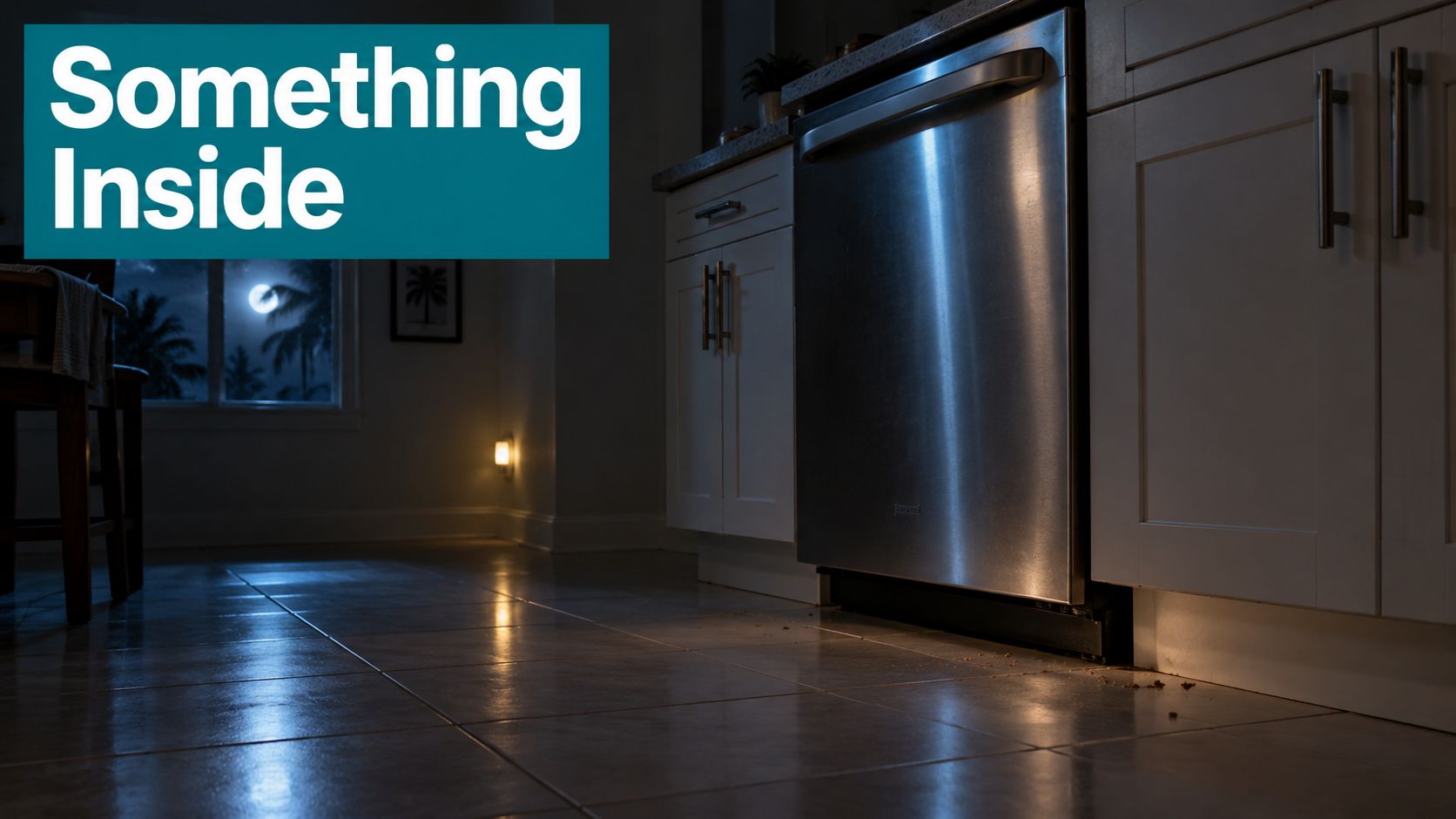
The rat probably didn't appear that night. Entry often starts without warning, with a gap near a pipe, a damaged screen, or a door seal that no longer closes tightly against the slab. Once inside a wall, crawl space, cabinet void, or attic, a rat can stay out of sight while it follows familiar edges toward food, water, and shelter.
The house is a connected system
Older Miami neighborhoods such as Coconut Grove and Shenandoah contain homes with many transitions to inspect. Raised foundations, detached garages, mature trees, additions, screened porches, and aging utility penetrations can create more than one route between the outdoors and the living space. A rat doesn't need a dramatic hole in the middle of a wall. It needs a weakness where two materials meet or where a service line enters the structure.
Behind a dishwasher, the likely route may be near plumbing or an opening in the wall rather than through the appliance itself. Under a kitchen sink, look at the pipe penetrations and cabinet backing. In a garage, inspect the bottom corners and the seal where the door meets the concrete. In an attic, examine vents, soffits, and roof junctions.
Practical rule: Treat the first indoor sound as evidence of a building-envelope problem, not as the starting point of the problem.
The immediate response should be calm and methodical. Keep children and pets away from suspected droppings or nesting material, avoid reaching blindly behind appliances, and don't seal a hole while a rat may still be inside a wall or attic void. First identify the active route and the signs that show whether the animal is still moving through the home.
Why a sudden discovery can follow a slow failure
Miami weather can expose weak maintenance points. Rain can reveal a gap beneath a garage door, wind can disturb a vent cover, and repeated expansion and contraction can loosen caulk around plumbing or air-conditioning lines. A flaw that seemed harmless during a dry week may become a sheltered route when outdoor conditions change.
That is why exclusion isn't a one-time response to a noise. It's a recurring inspection of the places where the home connects to soil, air, utilities, garages, trees, and drainage. The flashlight in the kitchen is useful, but the answer usually begins outside.
How Small a Gap Rats Actually Need
Start with the half-inch rule. Nebraska Extension guidance explains that rats need only a 1/2-inch opening, while mice can use a 1/4-inch opening, and it emphasizes sealing structural gaps rather than depending on traps alone. You can review the historical exclusion guidance in this rodent-proof construction reference.
A quarter-sized opening is a useful visual warning, but it isn't a perfect measuring tool. Openings aren't always round, edges may be flexible, and a gap can become larger when a rat gnaws at wood, plastic, foam, or other vulnerable material. Juvenile rats may pass through smaller spaces, while a larger adult may exploit an opening slightly wider than the minimum.
Use the rule as a screening test
Walk around the exterior with a flashlight and a stiff ruler or gap gauge. Pay special attention to:
- Door and garage seals: Look for daylight under the door, especially at the corners.
- Utility penetrations: Check where pipes, wires, conduits, and air-conditioning lines pass through walls.
- Vents and screens: Inspect bathroom vents, dryer vents, soffits, gable vents, and attic openings.
- Foundation transitions: Look where slabs, walls, crawl spaces, and floor-to-wall joints meet.
- Roof connections: Examine fascia, soffits, roof junctions, and openings near trees or cables.
Roof rats and Norway rats can use different parts of the envelope. Roof rats generally favor higher routes, so soffits, attic vents, roof junctions, and branches deserve close attention. Norway rats are often associated with lower routes, including foundation gaps, crawl spaces, soil-level openings, and drainage connections. The species isn't always obvious from a sound or dropping, so inspect from the ground up instead of guessing from one clue.

A window draft can also reveal the same kind of envelope weakness that pests use, although a draft and a rat entry point aren't automatically the same defect. If you're repairing loose window seals or other air leaks, this guide to stopping window drafts for good offers useful context for thinking about gaps, seals, and weather exposure.
Size doesn't tell the whole story
A half-inch gap beside a protected pipe can be more important than a larger opening that is exposed and difficult to reach. Rats can gnaw, climb, jump, and follow service routes, and public-health and university guidance has long treated exclusion details, screens, thresholds, and masonry repairs as a primary defense. The University of Nebraska rodent exclusion guidance also describes rats using rough vertical surfaces, wires, cables, vines, and ropes to reach higher openings.
For repair materials and application choices, homeowners can also consult this guide to rodent exclusion materials. The aim isn't to fill every visible defect with soft foam. The aim is to create a durable barrier that withstands moisture, chewing, movement, and the conditions around the opening.
Walking the Building Envelope From Ground to Roof
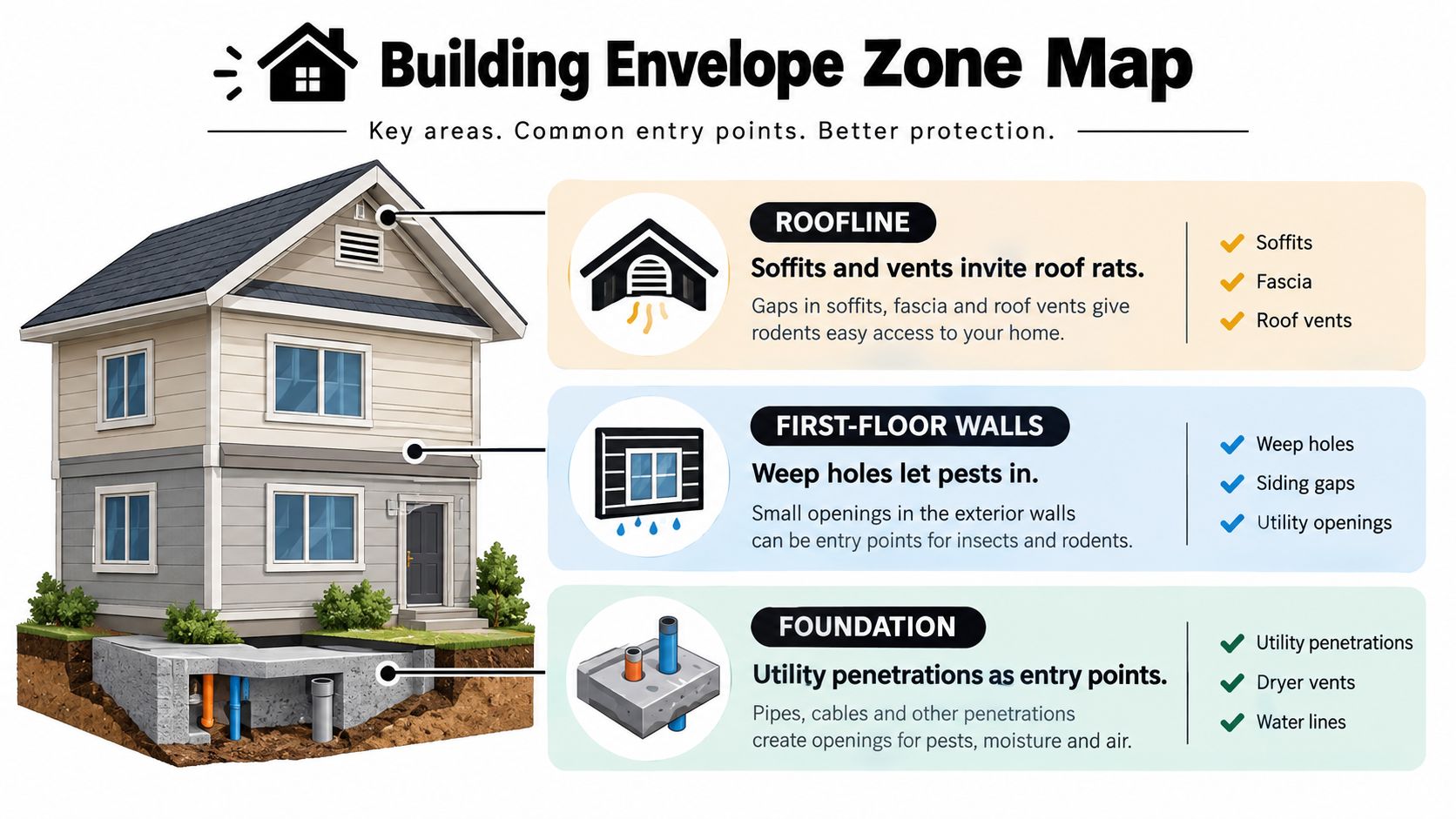
A Miami home is easier to inspect when you divide it into zones. Start at the lowest point, follow every place where the structure meets the outside, and finish at the roofline. This approach prevents the common mistake of checking only the kitchen or only the attic.
Ground level and below-grade interfaces
Begin at the foundation, slab edge, pier-and-beam openings, crawl spaces, and basement-style areas. Inspect the floor-to-wall junction, foundation cracks, vents, floor drains, and access panels. The National Park Service rodent exclusion manual identifies foundations, crawl spaces, basement vents, floor drains, sewer lines, and plumbing penetrations as important areas for exclusion work.
Look closely around water service lines, kitchen plumbing, electrical conduits, and air-conditioning penetrations. A pipe may enter through a rough opening that was never fully sealed, or old sealant may have pulled away from masonry. Check dryer vents and other low wall penetrations from both sides when possible. A capped or damaged drainage connection can create a route that isn't visible from the living room.
Garage and first-floor perimeter
The garage deserves its own inspection. Stand inside with the door closed and look for daylight at the bottom corners, along the threshold, and beneath the side weatherstripping. Press the seal lightly. If it has hardened, curled, or no longer contacts the slab, rainwater and pests may share the same opening.
Move along the exterior wall and inspect stucco cracks, hose bibs, electrical boxes, conduit entries, and air-conditioning line sets. Wall cladding can hide gaps, so don't stop at the surface. Check whether a pipe collar, screen, or seal meets the wall with no exposed void.
Soffits, vents, and roofline routes
At the upper wall, examine fascia boards, soffits, gable vents, ridge vents, and other roof openings. A screen can be missing, bent, corroded, or loose at its edge. In a one-story home, these areas may be visible from the ground with binoculars, but roof access should be left to someone equipped to work safely.
Trees, vines, cables, and rough walls can give roof rats a route to higher openings. Trim vegetation away from roof connections where practical, but don't assume pruning solves the problem. The roofline still needs a physical inspection for gaps, failed screens, and damaged trim.
For homeowners who need help with a full perimeter assessment, rodent exclusion services can help frame the difference between locating activity and repairing the routes that allow it.
Why Miami Homes Face a Different Risk Profile
The same rat will encounter a different set of opportunities in a Coconut Grove bungalow than in a newer Kendall ranch. The construction details, landscaping, drainage, and weather exposure determine which parts of the building envelope deserve attention first.
Consider a home with original jalousie windows. Each louver track and frame connection creates a place to examine for loose components or damaged screening. That doesn't mean every jalousie window is a rat route. It means the homeowner shouldn't inspect only the foundation and forget older window assemblies, porch enclosures, or additions.
A Kendall ranch built on a slab presents a different inspection picture. The plumbing penetrations through the floor and wall, the garage threshold, exterior utility lines, and openings near the air-conditioning equipment may deserve priority. A home with a detached garage adds another structure to inspect, including the door, roofline, and any covered connection between the garage and house.
Weather changes the route
Tropical storms and heavy rain can alter where rodents travel. Saturated yards may make low outdoor shelter less attractive, while wind and rain can expose defects in garage seals, vents, screens, and roof junctions. Mature ficus, mango, avocado, and other trees can also place animals close to the roofline, particularly when branches touch or overhang the structure.
That doesn't mean a storm automatically drives rats into every attic. It means homeowners should inspect vulnerable connections after severe weather instead of assuming an old seal is still performing as designed.
Landscaping can keep pressure close
Pinecrest and Homestead properties may have dense planting, irrigation, fruit trees, compost areas, chicken feed, or outdoor storage near the house. Little Havana properties may have tighter construction and fewer setbacks, making shared walls, utility penetrations, garages, and alley-facing openings more important to examine. In every setting, unsecured food and sheltered clutter can keep rodents near the structure.
Local inspection principle: Miami exclusion starts with the way your home meets its specific surroundings. A roofline under a mature canopy needs a different first look than an exposed slab edge beside an open yard.
The useful question isn't whether one neighborhood is “safe” or “unsafe.” It's which route your building offers today, and whether recent rain, maintenance wear, or landscaping has made that route easier to use.
Reading the Warning Signs Inside the House
Indoor evidence can tell you whether a defect is merely old or whether rats may still be moving through the home. Start with a flashlight and inspect along edges, because rats often travel beside walls, beneath cabinets, behind appliances, and around service lines rather than across open rooms.
Fresh gnawing may appear on a PVC drain line under the kitchen sink, insulation around an exterior air-conditioning line, plastic storage, or exposed wood. New damage usually has sharper edges and may be accompanied by debris. Dark, greasy smudges along a sill plate or wall edge can indicate repeated contact with a travel route, but one mark alone doesn't identify the species or prove current activity.
Places that deserve a closer look
Droppings behind the dishwasher, near the water heater, or in the cabinet beneath the sink matter because those locations combine concealment with plumbing, food, or warmth. Droppings in a garage may be old, especially if the area hasn't been cleaned or monitored. Compare their location and condition, then look for nearby gnawing, nesting material, odor, or tracks.
Useful inspection points include:
- Kitchen edges: Check behind and beneath appliances, inside lower cabinets, and around pipe openings.
- Utility areas: Inspect near the water heater, electrical penetrations, air handler, and laundry connections.
- Attic spaces: Look for disturbed insulation, musky odor, nesting debris, and sounds near vents or soffits.
- Pantry corners: Examine undisturbed dust for tracks and inspect food packaging for fresh damage.
A single dropping doesn't establish the size or duration of a problem. Fresh droppings near food preparation areas, repeated nighttime sounds, or new damage deserve prompt attention and careful sanitation.
Confirm movement without creating a hazard
You can photograph evidence before cleaning it and note the location, date, and nearby openings. In a low-risk, accessible area, a very light line of talcum powder along a suspected travel edge may show whether tracks appear later. Keep the powder away from food, children, and pets, and don't use this method around contaminated material or in a place where it could become airborne.
Don't reach into dark voids, handle droppings bare-handed, or disturb insulation without appropriate protection. If you find chewed wiring, damaged plumbing, or signs inside an inaccessible wall or ceiling, use these rodent infestation signs as a starting point, then arrange a professional assessment rather than opening the structure casually.
The Seasonal Timing Most Homeowners Get Wrong
Many homeowners treat rodent exclusion as a cold-weather project. That schedule makes sense in places where freezing conditions force animals indoors, but it doesn't fit Miami's mild climate. Current field reporting describes rodent activity moving indoors earlier in the fall, with compromised garage seals, damaged attic vents, and plumbing gaps appearing frequently in inspections, as reported in this seasonal Miami-area rodent update.
The practical change is simple. Don't wait for the first scratching sound in October to inspect the house. Use the warmer part of the year to identify and repair defects while access is easier and before a weather change or seasonal movement makes the weakness active.
Why late summer is an inspection window
A late-summer walk around the property should include the garage threshold, exterior seals, vent covers, roofline, and all visible service penetrations. Heavy rain can reveal where water enters, while heat and moisture can expose failed caulk, warped trim, loose screens, and deteriorated weatherstripping. These are maintenance clues even when no rat sign is visible.
Outdoor conditions also deserve attention. Pick up fallen fruit, secure trash and compost, move clutter away from the foundation, and check whether irrigation keeps sheltered areas consistently damp. These steps don't replace exclusion, but they can reduce the reasons rodents remain close to the building.
Build a Miami calendar around conditions
A useful rhythm looks like this:
- Before seasonal movement: Inspect seals, vents, roofline gaps, and utility penetrations.
- After heavy rain: Check the garage threshold, crawl-space openings, drainage connections, and low wall penetrations.
- After severe storms: Look for shifted screens, damaged soffits, loose fascia, and new daylight around doors.
- When indoor signs appear: Stop treating the issue as routine maintenance and investigate active routes.
The exact timing can vary by property. A home beneath dense canopy, beside a wet yard, or with aging exterior components may need earlier attention than a recently repaired, exposed structure. The important shift is from reactive trapping to time-sensitive exclusion before movement peaks.
A Practical Exclusion Plan for Miami Homeowners
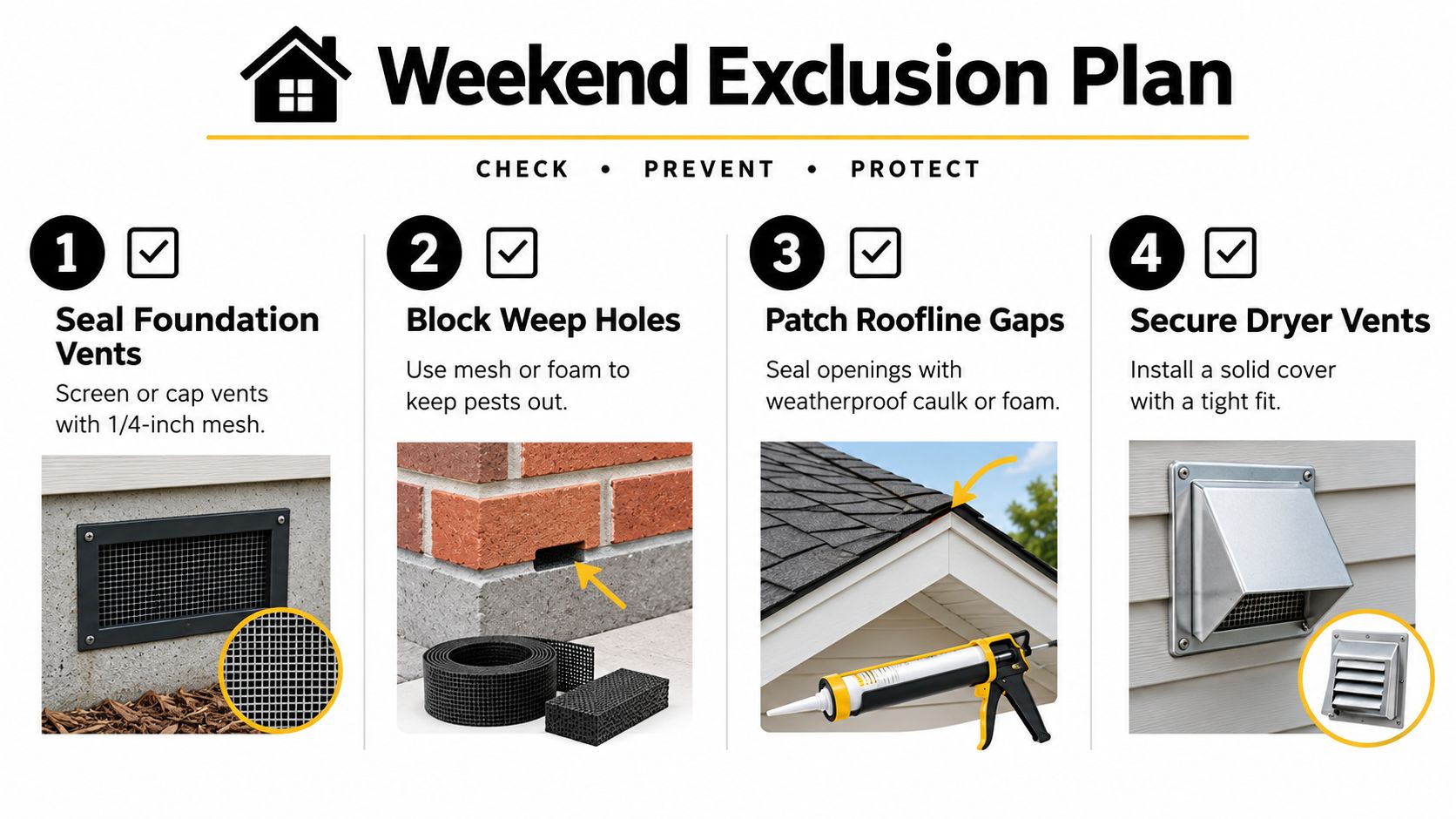
A weekend inspection can produce a useful repair list, but sequence matters. Begin with the lowest openings, work around the garage and walls, then finish at vents and the roofline. Photograph each defect before repairing it so you can monitor whether the same area fails again.
Start with repairs you can inspect safely
At foundation vents, weep holes, and other openings, use durable screening or a properly fitted cap rather than relying on a soft, exposed patch. Stainless steel mesh can help reinforce vulnerable areas, while exterior-grade caulk can close narrow stationary joints. Choose a repair that fits the opening and won't block required ventilation or drainage.
Replace a garage door sweep when it has gaps, curls away from the slab, or leaves daylight at the corners. Press the side weatherstripping firmly against the closed door and check again after rain. A door that seals in the middle but opens at both ends still needs repair.
Around gas, water, and air-conditioning lines, inspect the full perimeter of each penetration. Don't cover a required access point or interfere with electrical, gas, plumbing, or ventilation components. Expanding foam alone may not withstand chewing or movement, so a professional may need to combine a backing material, metal barrier, sealant, or a properly fitted collar.
Work upward through the service openings
Dryer and bathroom vents need covers that allow airflow while resisting pest entry. Inspect the flap, screen, and connection to the wall. Remove lint and debris, but don't install a cover that restricts the appliance's required exhaust.
At soffits, fascia, gable vents, and roof junctions, look for loose screens, damaged trim, and openings where different materials meet. Pool equipment pads, banana-plant clusters near the foundation, irrigation control boxes, and outdoor storage can conceal low routes or sheltered activity. Include them in the perimeter walk rather than treating them as unrelated yard features.
A homeowner can usually handle a visible door sweep, a straightforward screen repair, or minor exterior sealing when the work is safe and the repair won't affect building systems. Leave electrical subpanel gaps, gas-line areas, active drainage defects, and second-story soffit or roof work to appropriately qualified professionals.
Remove the rodents and close the route
Sealing an active entry point without addressing the animal inside can trap activity in a wall or attic. A complete response combines inspection, removal, sanitation, and durable exclusion. Rodent Control can be understood in those terms, remove the rodents and seal the way back in.
Walk the perimeter quarterly and re-check it after major rain or hurricane-season storms. Pay particular attention to the same seals, vents, screens, and service penetrations that showed wear before. If activity continues, or if you can't safely reach the suspected route, a licensed pest professional can distinguish an active entry from old damage and coordinate the next repair.
Pestless Inc. connects Miami and Miami-Dade homeowners with licensed, insured pest control professionals for rodent concerns and other household pest problems. Describe the entry signs through the Pestless Inc. form or by phone to be matched with a local provider who can assess the activity and the exclusion work your home needs.
Dealing with this pest right now?
Pestless connects you with a licensed, insured Miami pest control provider for a free, no-obligation quote.