You step into the kitchen at night, switch on the light, and a large reddish-brown roach disappears beneath the refrigerator. Or you notice several small tan insects around a cabinet hinge, sink, or bathroom pipe. In Florida, those two sightings can describe completely different problems. One may be an outdoor palmetto bug slipping through a gap. The other may be an indoor-breeding German cockroach population that needs a far more structured response.
Learning how to get rid of cockroaches in Florida starts with identification, not the spray can. The right plan combines species recognition, exclusion, moisture control, sanitation, targeted baiting, and monitoring. Broad spraying alone often wastes time, especially when it pushes roaches away from bait or leaves the conditions that support them untouched.
Table of Contents
- Why Florida Homes Attract Cockroaches Year Round
- Identifying Common Florida Cockroaches and Palmetto Bugs
- Preparing Your Home Through Sanitation and Habitat Reduction
- Targeted Baiting and Trapping That Actually Works
- Sealing Entry Points and Controlling Moisture for Lasting Prevention
- Monitoring Progress and Knowing When to Call a Licensed Pro
Why Florida Homes Attract Cockroaches Year Round
Florida homes provide roaches with a steady combination of warmth, moisture, food, and shelter. A slow leak beneath a sink, condensation near a utility line, or a gap around a garage door can support activity even in a well-cleaned kitchen. Sanitation reduces the available food supply, but it cannot correct water intrusion or seal an opening.
University of Florida IFAS identifies at least seven cockroach species commonly encountered in Florida, including Florida woods, American, smokybrown, brown, Australian, German, and Asian cockroaches. Their habits differ enough to change the inspection and treatment plan. UF IFAS species guidance describes the Florida woods cockroach as outdoor or peridomestic. The same guidance identifies the American cockroach as the largest common peridomestic cockroach, averaging 4 cm, or 1.5 inches, and occurring in buildings throughout Florida, particularly commercial structures.
The outside-in problem
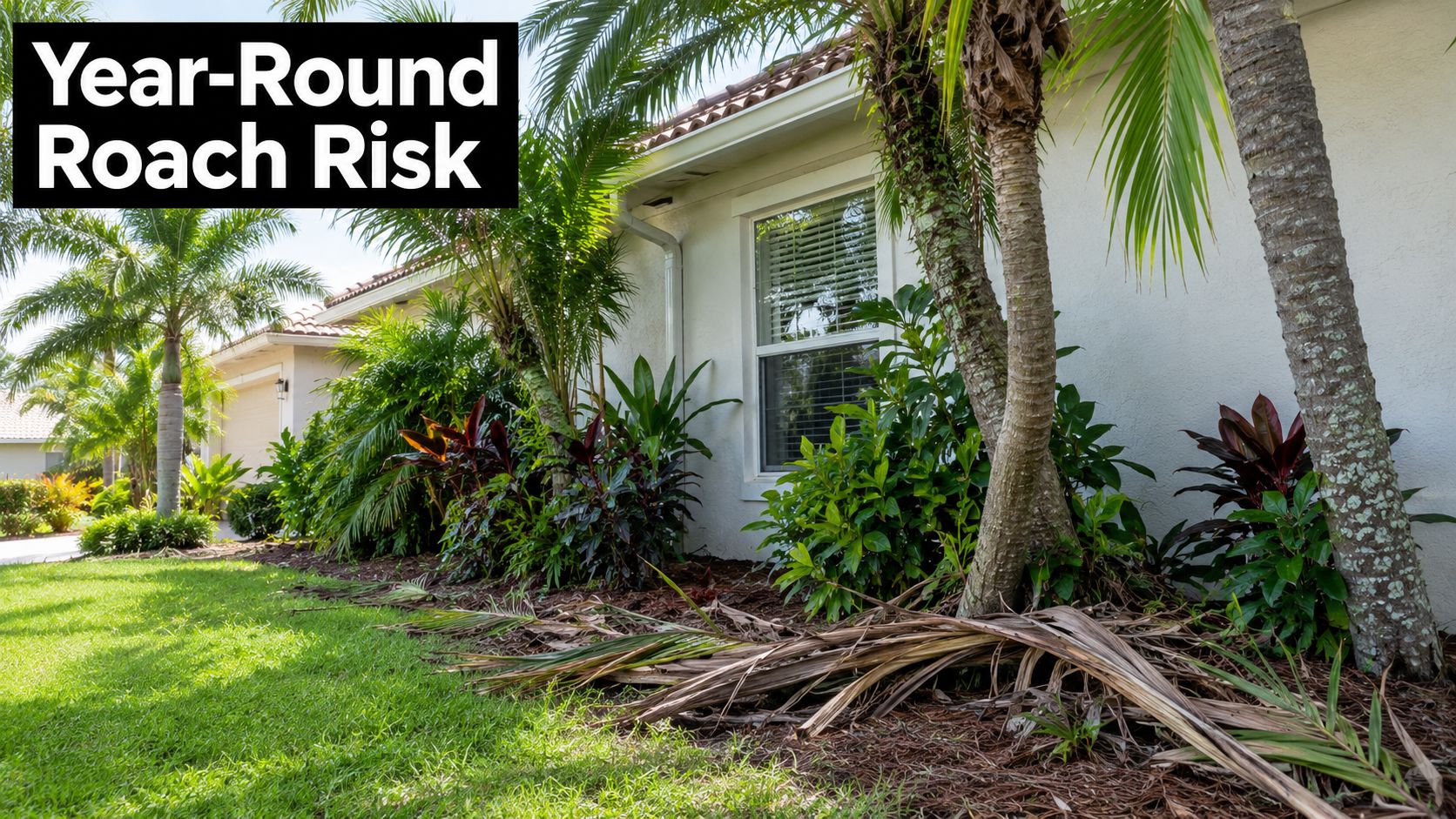
Large roaches usually reach homes from nearby exterior conditions. Rain, saturated ground, or a sudden change in outdoor shelter can push them toward a dry opening, where they may look for water or refuge rather than establish an indoor colony. The first response should therefore examine doors, drains, wall penetrations, and other routes into the structure.
Small German roaches follow a different pattern. They can find food, water, and hiding places inside kitchens and bathrooms. Repeated sightings near cabinets, appliances, or plumbing indicate an interior population that needs inspection and targeted treatment, rather than a response aimed only at outdoor entry points.
Practical rule: A large roach near a door points toward exclusion and exterior moisture control. Small roaches repeatedly clustered indoors point toward interior baiting, sanitation, and follow-up.
Species identification determines the workflow. Outdoor invaders call for entry-point checks and correction of conditions around the structure. German roaches call for a closer indoor inspection, careful bait placement, and monitoring for continued activity. Treating both problems with the same broad spray often wastes time and can leave the underlying source untouched.
A reliable plan follows the same order: identify the species, locate its likely source, remove accessible food and water, close entry routes, apply products where appropriate, and monitor the result. In apartments, condos, and other shared-wall properties, control may also require coordination because activity can move between connected units.
Identifying Common Florida Cockroaches and Palmetto Bugs
Start with three clues: size, location, and movement. A roach found beside a garage threshold after rain deserves a different response from one found repeatedly behind a refrigerator. Color helps, but location often tells you more.
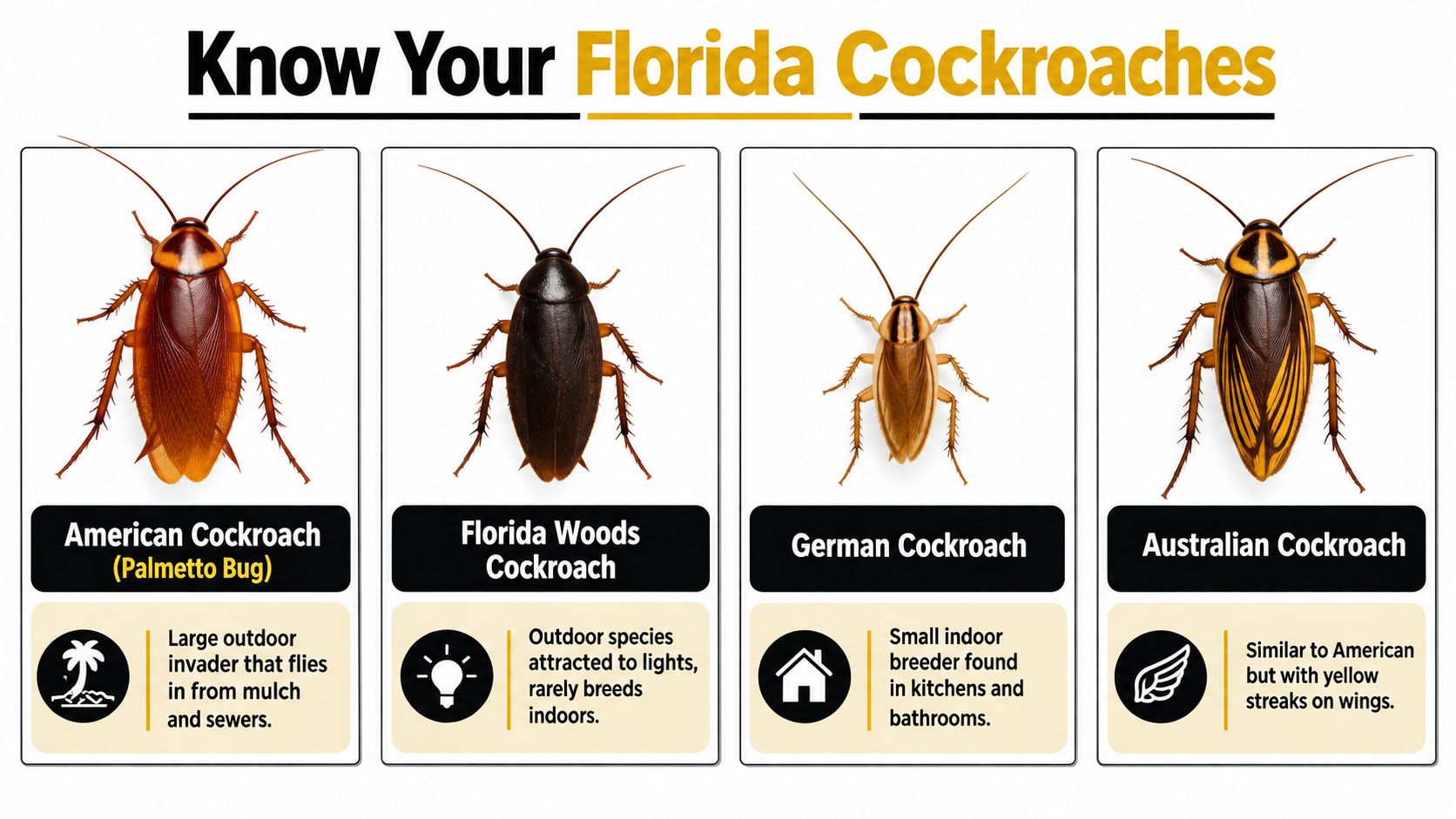
Palmetto bugs and other outdoor invaders
“Palmetto bug” commonly refers to a large American cockroach, although Florida homeowners may use the term for other large outdoor species. The American cockroach is reddish-brown and sturdy. UF IFAS identifies it as the largest common peridomestic cockroach in Florida, with an average length of 4 cm, or 1.5 inches. Seeing one near a drain, garage, patio door, or exterior wall usually sends the inspection outdoors as well as indoors.
Florida woods cockroaches tend to stay connected to damp shaded debris and outdoor shelter. They can appear around porches, storage spaces, greenhouses, or landscaping, but they aren't automatically evidence of an indoor colony. Smokybrown, Australian, and Asian cockroaches also commonly use exterior habitat and may enter through doors, windows, lights, roofline openings, or other gaps.
German cockroaches and indoor breeding
German cockroaches are much smaller and typically light brown or tan, with two dark stripes behind the head. Finding one in a cabinet, under a sink, beside an appliance, or near bathroom plumbing is more concerning than finding a solitary large roach in a garage. Repeated sightings, droppings, shed skins, or nymphs indicate that the insects may be reproducing inside.
Use this Florida cockroach identification guide when you need to compare photographs and habitat clues before choosing a treatment path.
| What you observe | More likely explanation | First priority |
|---|---|---|
| Large reddish-brown roach near a door, drain, garage, or patio | Outdoor invader | Seal gaps and reduce exterior harborage |
| Dark roach around mulch, leaf litter, or shaded storage | Florida woods or another outdoor species | Remove damp debris and inspect nearby openings |
| Small tan roaches around kitchen or bathroom fixtures | German roach activity | Interior inspection, sanitation, and targeted baiting |
| Small roaches appearing in several indoor rooms | Indoor population or another interior species | Monitor, identify, and coordinate treatment |
Don't rely on a single photograph if the insects are small or moving quickly. Capture one in a clear container or photograph it beside a familiar object, then note exactly where you found it. The distinction matters because exterior perimeter work won't solve a German roach population hidden inside cabinets, and indoor spraying won't correct a yard or plumbing entry route.
Preparing Your Home Through Sanitation and Habitat Reduction
Sanitation isn't a judgment about your housekeeping. Roaches need food, water, and shelter, and even well-maintained homes can provide those resources in small, overlooked places. Your task is to remove competing resources so a targeted bait has a better chance of being found and consumed.
Begin with water. Repair leaks beneath sinks, around dishwashers, near refrigerators, and at bathroom fixtures. Dry wet counters and sink basins before bed, improve ventilation in humid bathrooms, and inspect garages or utility rooms for condensation and seepage. A roach that can drink from a leak has less reason to investigate bait.
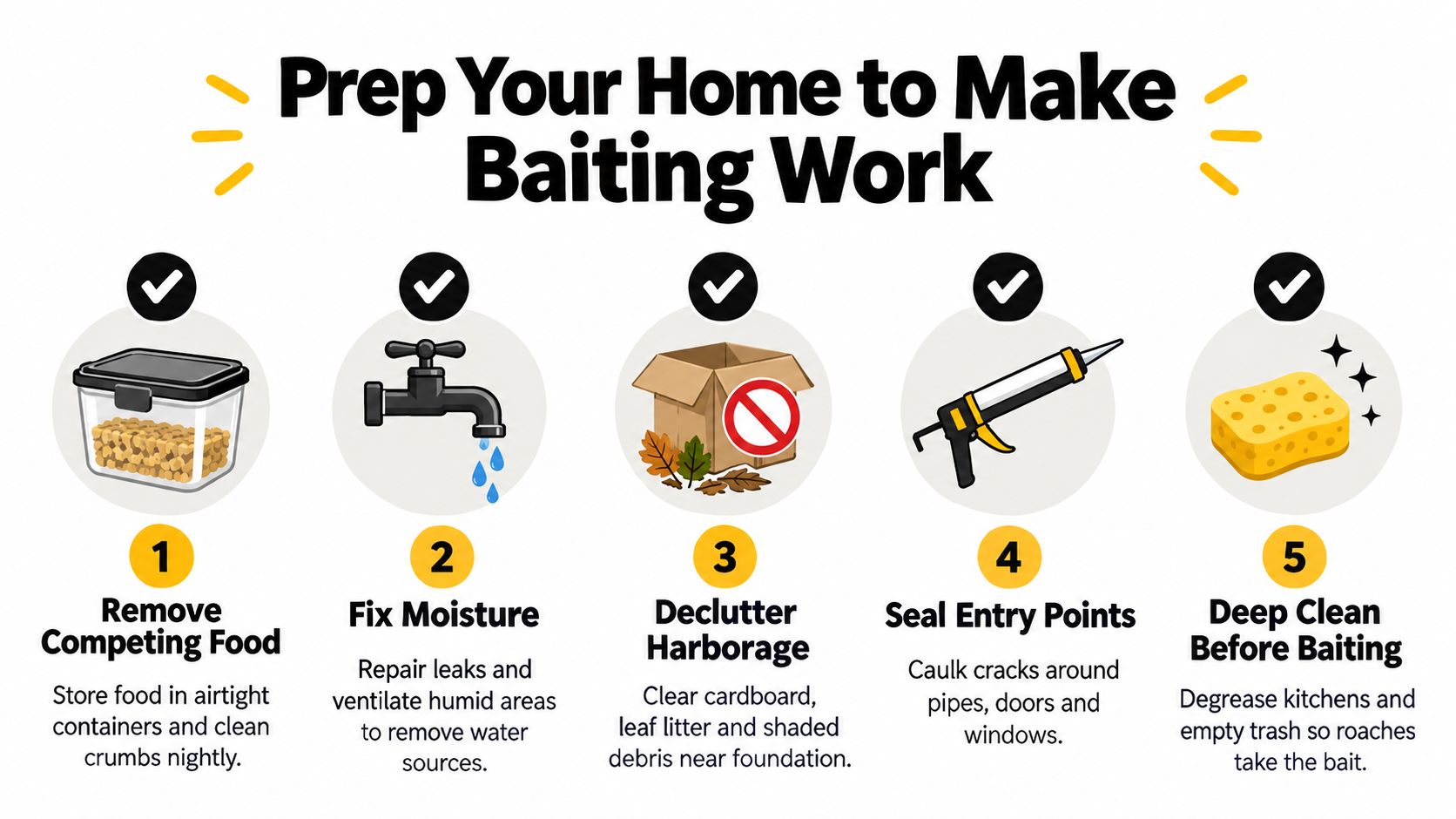
Make the kitchen less rewarding
Clean the areas people rarely see. Vacuum crumbs and debris beneath appliances, wipe grease from cabinet edges, empty trash regularly, and store dry food in sealed containers. Feed pets on a schedule rather than leaving bowls out continuously, and clean food residue around the bowl.
UF/IFAS-oriented guidance recommends vacuuming and wiping with hot soapy water as part of preparation. That combination removes food residue and some roach debris while also disturbing hiding places. Vacuum cracks, cabinet corners, appliance voids, and the junction between flooring and baseboards, then empty the vacuum contents safely.
Work outward from the structure
Outdoor habitat reduction is essential for palmetto bugs and Florida woods cockroaches. Pull leaf litter and decaying debris away from walls, keep mulch from creating a damp bridge to the foundation, and reduce clutter around garages, sheds, and storage areas. Cardboard is especially useful harborage because it creates dark, layered spaces close to food and moisture.
A Florida-focused survey involving 926 renters across 44 states, with Florida among the top response states, highlights why shared housing requires more than individual cleaning. The survey discussion and multi-family treatment context note that infestations can persist when treatment coordination is difficult and residents continue searching for better options.
Sanitation is preparation, not the entire treatment. Removing crumbs won't seal a drain gap, and sealing a gap won't eliminate an indoor breeding population.
Use a room-by-room pass:
- Kitchen: Degrease cabinet seams, clean beneath appliances, seal food, and dry the sink.
- Bathroom: Repair leaks, improve airflow, and inspect pipe penetrations.
- Garage: Remove cardboard and clutter, check the door seal, and keep stored items off the floor where practical.
- Exterior: Reduce damp debris, inspect drains, and keep vegetation from creating concealed routes to walls and openings.
These steps also differ from unrelated pest work. For example, Bed Bug Treatment addresses every life stage, including bugs and eggs, while cockroach preparation focuses on food, moisture, shelter, and access routes.
For additional prevention ideas, see these cockroach prevention tips. The important order is consistent: reduce water and food, remove harborage, close openings, and then bait.
Targeted Baiting and Trapping That Actually Works
A palmetto bug entering from a garage or drain needs a different response from German roaches breeding inside a kitchen. Baiting works when it follows the travel route and the species involved, rather than relying on one broad spray across the home. Place treatment where roaches already move, including cabinet hinges, plumbing voids, appliance edges, cracks, and protected corners, provided the product label allows that use. Apply gel in small placements, not large exposed lines.
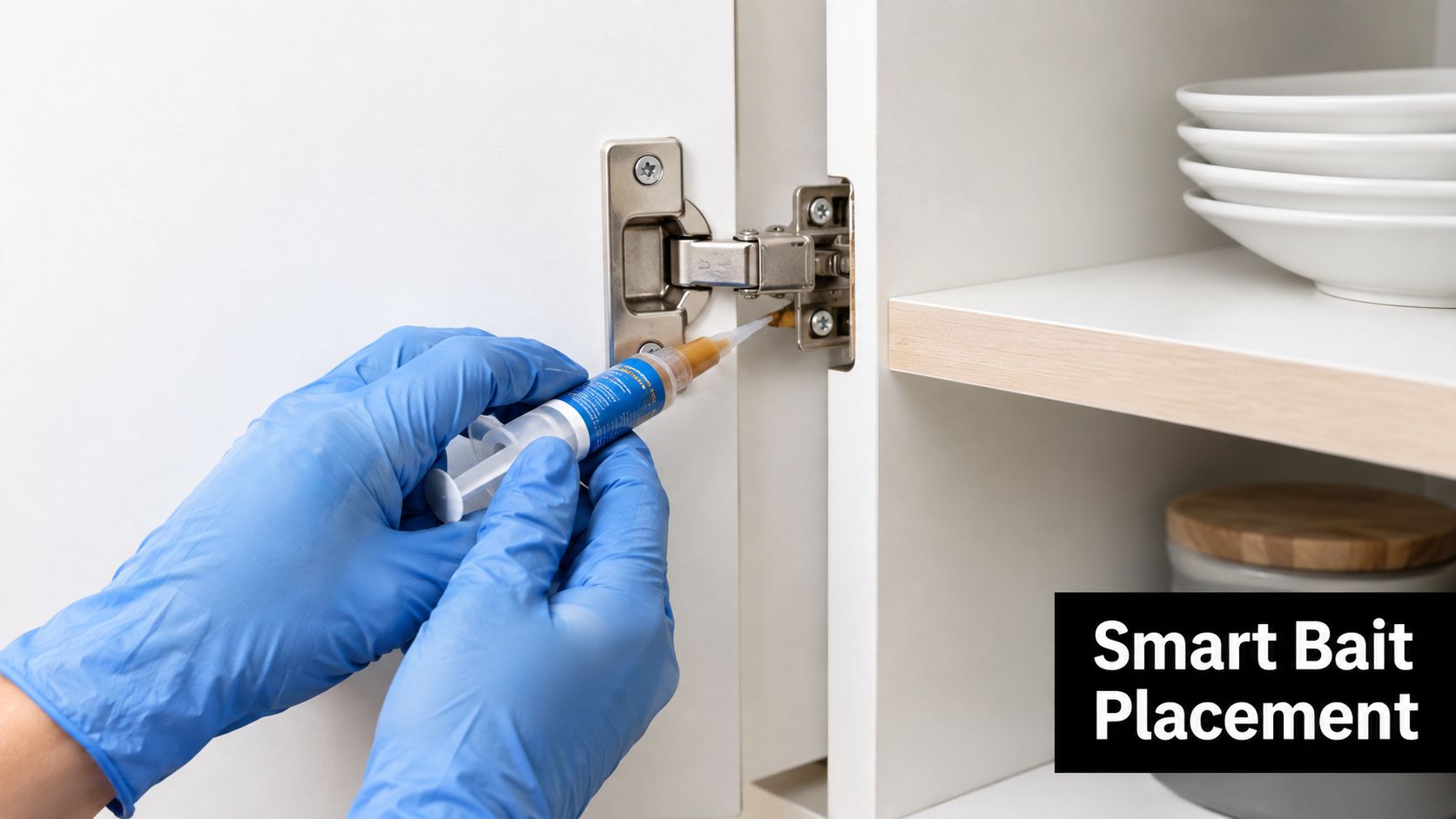
Use this sequence:
- Inspect first. Check edges and concealed areas for droppings, cast skins, dead insects, nymphs, and grease marks. Repeated nymph sightings point more strongly toward indoor breeding than a single outdoor invader.
- Remove competing food. Crumbs, pet food, grease, and accessible trash can reduce bait feeding.
- Match the treatment to the route. Use gel, stations, dusts, or crack-and-crevice liquids only as the label directs. Interior gel placements suit German roach activity near food and moisture. Outdoor invaders usually require attention to protected routes near doors, plumbing, garages, drains, and exterior harborage.
- Protect the applications. Keep bait inaccessible to children and pets, and follow every label precaution.
- Monitor consumption and activity. Consumed bait and trap counts provide better evidence than a wide spray pattern.
- Replace depleted material. An empty station can become another hiding place, so replace it instead of leaving it in position.
UF/IFAS guidance follows an integrated pest management order of exclusion, resource reduction, targeted treatment, and monitoring. This Florida cockroach control guidance also recommends sealing gaps around doors, windows, plumbing, and utilities, repairing leaks, cleaning surfaces, using gel or station baits according to label directions, and checking bait monthly until activity falls, then quarterly.
Heavy residual spraying often creates more work. A repellent product applied along the same edges roaches need to reach bait can push them into other rooms or reduce contact with the bait. More spray does not correct poor placement, competing food, or an untreated breeding site.
Sticky monitors help with smaller indoor populations and are useful for measuring change. Place them along walls, behind appliances, beneath sinks, and beside suspected travel routes. They will not eliminate an infestation, but they show whether activity is concentrated, declining, or spreading.
Use roach boric acid guidance when considering dust products. Dust requires dry, inaccessible voids and placement that follows the label. Heavy piles are not more effective, and exposed dust creates avoidable contact risks.
What results should look like
Gel bait can perform quickly under suitable conditions. Literature summarized by UF IFAS reports approximately 72% reduction after one week, 88% after two weeks, 97% after three weeks, and 99% after four weeks after one Advion gel application in laboratory and field data. The figures appear in UF IFAS cockroach resources. Treat them as benchmarks, not promises for every Florida home. Strain susceptibility, placement, sanitation, moisture, and reinfestation all influence results.
Follow-up matters when an indoor breeding population is present. Bait can remove active roaches, but missed harborages, newly emerging nymphs, or continued entry from outside can restart activity. Recheck monitors, refresh placements when the label permits, and adjust the treatment route based on fresh evidence.
A heavy infestation may need a clean-out treatment before maintenance baiting can perform well. For homeowners evaluating a service focused on the breeding population, Cockroach Control describes breaking the breeding cycle instead of addressing only the roaches that are visible.
Sealing Entry Points and Controlling Moisture for Lasting Prevention
Once active baiting begins, stop new roaches from entering. Inspect the entire boundary where the building meets the outside, including door thresholds, window frames, garage doors, plumbing penetrations, cable or utility openings, vents, drains, and foundation cracks. A small opening beside a pipe can matter more than a visible crack in a wide wall because it connects directly to a concealed route.
Use appropriate caulk or sealant for stationary gaps, repair damaged screens, and replace worn door sweeps or weather stripping. Don't seal a location before checking whether it contains an active indoor pest issue, and don't block required ventilation or drainage. The objective is controlled exclusion, not indiscriminate closure.
Match the fix to the roach
A German roach problem usually needs targeted interior work because the population is living near indoor food and moisture. Large American, Florida woods, smokybrown, and Australian roaches more often send you toward exterior entry points, landscaping, drains, and damp harborage. Recent Florida guidance on multi-family infestations and species differences reinforces why a single checklist doesn't fit both situations.
Moisture control deserves equal attention. Keep plumbing dry, correct drainage problems, inspect gutters and downspouts, and avoid allowing irrigation to soak the foundation or exterior walls. Around the perimeter, reduce damp mulch, leaf litter, decaying wood, and dense shaded debris that gives outdoor roaches a place to rest.
Florida's rainfall pattern can change the timing of outdoor pressure. The cited guidance notes that 2025 rainfall was heavily concentrated from June through September, a period associated with more noticeable palmetto-bug pressure. Use that seasonal cue to inspect seals, drains, landscaping, and garage thresholds before heavy wet-weather activity, then continue monitoring rather than waiting for a sighting.
The most durable treatment is often a building repair. A sealed utility gap and a dry foundation keep working after the product residue has declined.
If you're evaluating foam products for sealing suitable openings, the Airtight Spray Foam Insulation pest guide offers additional context on foam sealants and pest entry routes. Choose materials for the specific gap and location, and don't use expanding foam where it could interfere with drainage, moving parts, or required access.
Shared-wall housing adds another complication. Roaches can move through plumbing chases, wall voids, neighboring units, trash rooms, and common utility spaces. In an apartment or condo, notify management early and request coordinated inspection. Treating one kitchen while adjacent units remain untreated can produce repeated reinvasion, even when the individual resident follows the preparation steps correctly.
Monitoring Progress and Knowing When to Call a Licensed Pro
A treatment plan isn't finished when you stop seeing roaches for a few days. Keep monitors in likely travel zones, record what you find, and check bait according to the schedule on the label. UF/IFAS-oriented guidance recommends checking bait monthly while populations decline, then quarterly for maintenance, as summarized in the earlier Florida control guidance.
Look for a consistent downward pattern in trap captures, fresh droppings, and bait consumption. One dead roach doesn't prove control, and one live roach doesn't prove failure. The useful question is whether activity is becoming less frequent and less widespread after sanitation, exclusion, and targeted treatment work together.
Reset the plan when the evidence says to
Call a licensed professional when small roaches persist after careful bait placement, activity appears in several rooms, nymphs continue appearing, or residents in multiple units report the same issue. A heavy infestation may need a clean-out before maintenance baiting can work effectively. Properties with shared walls also benefit from a coordinated inspection rather than isolated treatment.
Ask the provider to identify the species, explain where activity was found, list the products and placement areas, and describe the follow-up schedule. In Florida, product use must follow the label, and a clear service record helps you distinguish a targeted plan from repeated broad spraying.
Pestless Inc. connects Miami and Miami-Dade homeowners with licensed, insured pest control professionals. It doesn't perform treatments itself. Instead, homeowners can describe the cockroach problem through the service and receive zero-cost, no-obligation quotes from vetted local providers, with responses typically expected within one business hour during the stated service hours.
Start with this short checklist:
- Identify the insect: Photograph it and record the room, time, and conditions.
- Check the source: Inspect drains, plumbing gaps, doors, windows, appliances, mulch, and leaf litter.
- Remove resources: Fix leaks, clean food residue, seal food, and clear cardboard or clutter.
- Treat precisely: Use labeled bait or other products only in suitable protected locations.
- Measure change: Review monitors and bait activity instead of relying on sightings alone.
- Escalate promptly: Get licensed help for persistent indoor breeding or multi-unit spread.
Use Pestless Inc. to describe your Florida cockroach issue and connect with licensed, insured Miami-Dade providers who can assess whether you need exclusion, targeted interior control, or coordinated treatment. Request a zero-cost, no-obligation quote, then choose a provider that gives you a species-specific plan and clear follow-up steps.
Dealing with this pest right now?
Pestless connects you with a licensed, insured Miami pest control provider for a free, no-obligation quote.