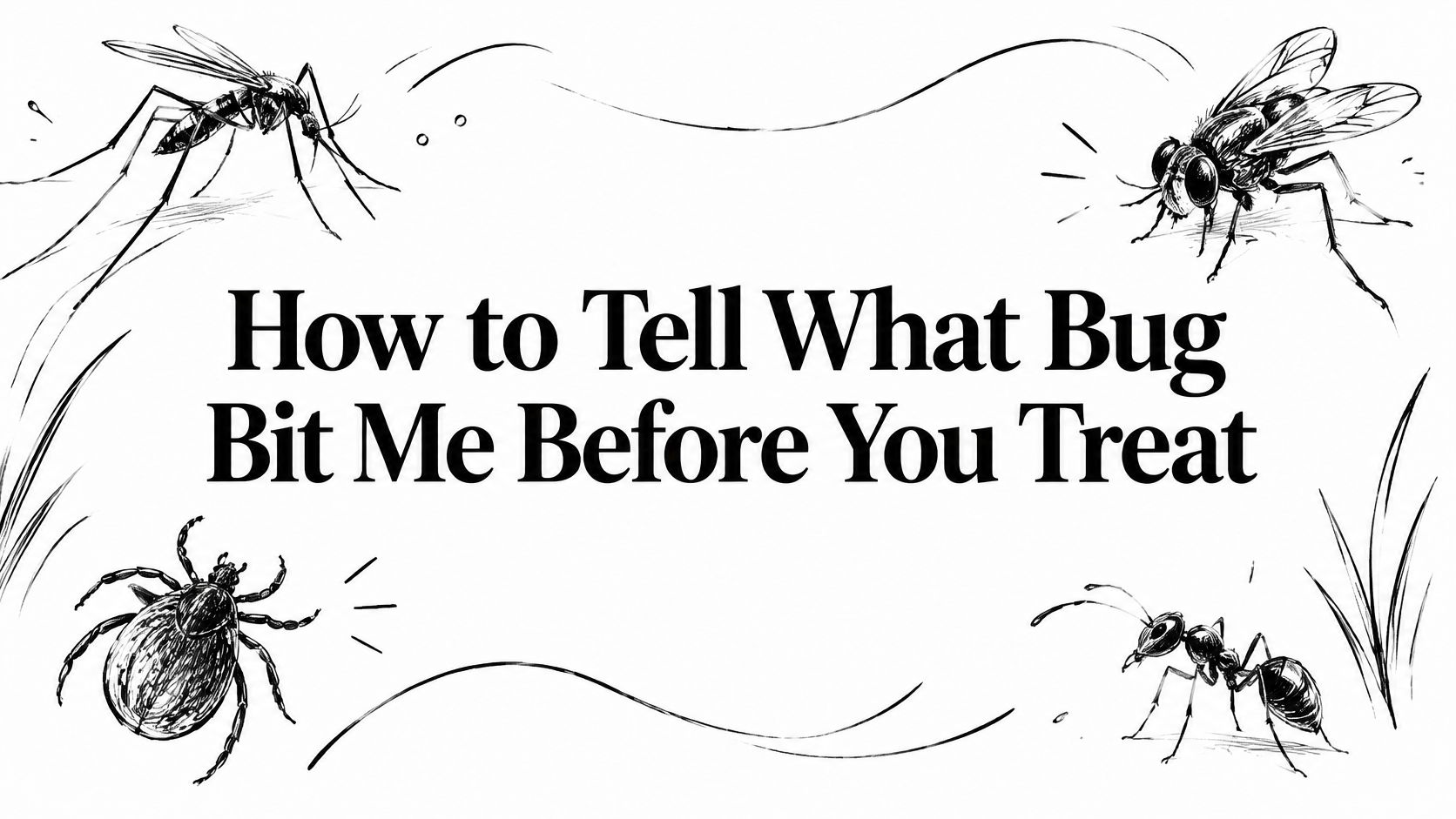
A line of itchy welts doesn't prove bed bugs, and a pair of dots doesn't prove a spider bite. Whether you noticed bumps after a Brickell patio evening or woke up scratching in Kendall, a phone photo can't reliably name the culprit. The useful question isn't just “How do I tell what bug bit me?” It's what evidence would make that identification trustworthy enough to act on?
Table of Contents
- Why the Bite Mark Misleads and the Miami Bite Chart
- How to Record the Bite Then Search
- Red Flags That End the Home Search
- Home Care While You Identify
- Bed Bug Evidence and Costly Mistakes
- Choose Care or a Licensed Miami Pro
Why the Bite Mark Misleads and the Miami Bite Chart
Most bite-identification advice starts with shape and color. That's a weak starting point because different insects can produce similar reactions, and people don't all react the same way.
The NHS guide to insect bites and stings describes common bites as small, swollen lumps that may be red, with itching, pain, and exposure context helping distinguish possibilities. It also notes that redness can be harder to see on black or brown skin. Swelling and changes in texture matter even when color changes aren't obvious.
Consider ankle bumps noticed after sitting outdoors near standing water. Mosquitoes belong on the shortlist. Similar bumps noticed after sleeping, particularly on uncovered skin, make a bedroom inspection reasonable, but don't establish bed bugs. The difference is the exposure story, not a special shape visible in the welt.
Miami bite clues by likely culprit
Use this chart to choose where to investigate, not which pesticide to buy. Timing describes when symptoms were noticed, which isn't always when the insect fed.
| Culprit | Typical mark | Body site | Timing | Sensation | Stronger clue |
|---|---|---|---|---|---|
| Mosquito, including day-biting Aedes | Small raised bump, sometimes a larger local swelling | Exposed arms, legs, or ankles | Noticed during or after outdoor exposure | Usually itch more than pain | Patio or yard exposure and nearby standing water |
| Bed bug | Welt that may be absent, scattered, or linear | Skin uncovered during sleep | Can be delayed after exposure | Itch-dominant | Identifiable bug, eggs, shed skins, rusty stains, or dark fecal dots |
| Flea | Small itchy marks in groups | Often below the knees or near sock lines | Noticed during or after exposure around pets | Itch-dominant | Fleas or flea evidence around pets and their bedding |
| Mite or chigger | Very itchy lumps, sometimes blisters | Ankles or areas near close-fitting clothing | After vegetation or relevant fabric exposure | Intense itch | A matching outdoor or bedding exposure |
| Biting midge | Small raised marks in groups | Exposed skin | After outdoor exposure in damp areas | Itch and irritation | Outdoor exposure rather than evidence around a bed |
| Spider, if actually seen | A localized lesion, not a diagnostic puncture pattern | Wherever contact occurred | A witnessed encounter is more useful than rash timing | Pain or irritation warrants attention | A spider observed biting, ideally safely identified |
| Bee, wasp, or hornet sting | Puncture and local swelling, sometimes a retained stinger | Site of contact | Immediate discomfort | Sharp pain | Witnessed sting or retained stinger |
The spider row deserves particular caution. Finding a spider somewhere in the room doesn't connect it to a skin lesion. Neither a painful bump nor apparent puncture marks provide enough evidence to label an unwitnessed reaction a spider bite.
For bed bugs, the CDC's bed bug overview explains that marks can be absent, resemble mosquito or flea bites, or appear one to several days after exposure. That delay can make a reaction from earlier travel look like something that happened in your own bedroom.
Read the chart without overreading it
A useful comparison combines several clues:
- Location: Lower-leg clusters make pet resting areas worth checking. Uncovered arms after sleep make the sleeping area relevant.
- Sensation: Immediate sharp pain supports a sting more than an unnoticed, itch-dominant feeding event.
- Exposure: Grass, a patio, a hotel room, and pet bedding suggest different places to investigate.
- Physical findings: An identifiable insect is more useful than an arrangement of bumps.
The familiar breakfast, lunch, and dinner explanation for bed bugs is especially easy to overread. Repeated marks may reflect repeated feeding, but an arrangement doesn't identify the animal that caused it.
For another plain-language comparison of biting insects, Misaj's biting insect field guide provides useful context. It's a UK-focused resource, so use it for general comparisons rather than as a Miami species checklist.
Practical rule: If different rows fit equally well, keep both possibilities open. Don't turn uncertainty into a treatment decision.
Household differences can also mislead. If you itch and your partner doesn't, that doesn't establish that only you were exposed. Conversely, several itchy people don't automatically prove an infestation, since shared products or environmental exposures can also affect a household.
Think of the chart as a way to narrow the search area. The mark creates a hypothesis; the environment supplies the stronger evidence.
How to Record the Bite Then Search
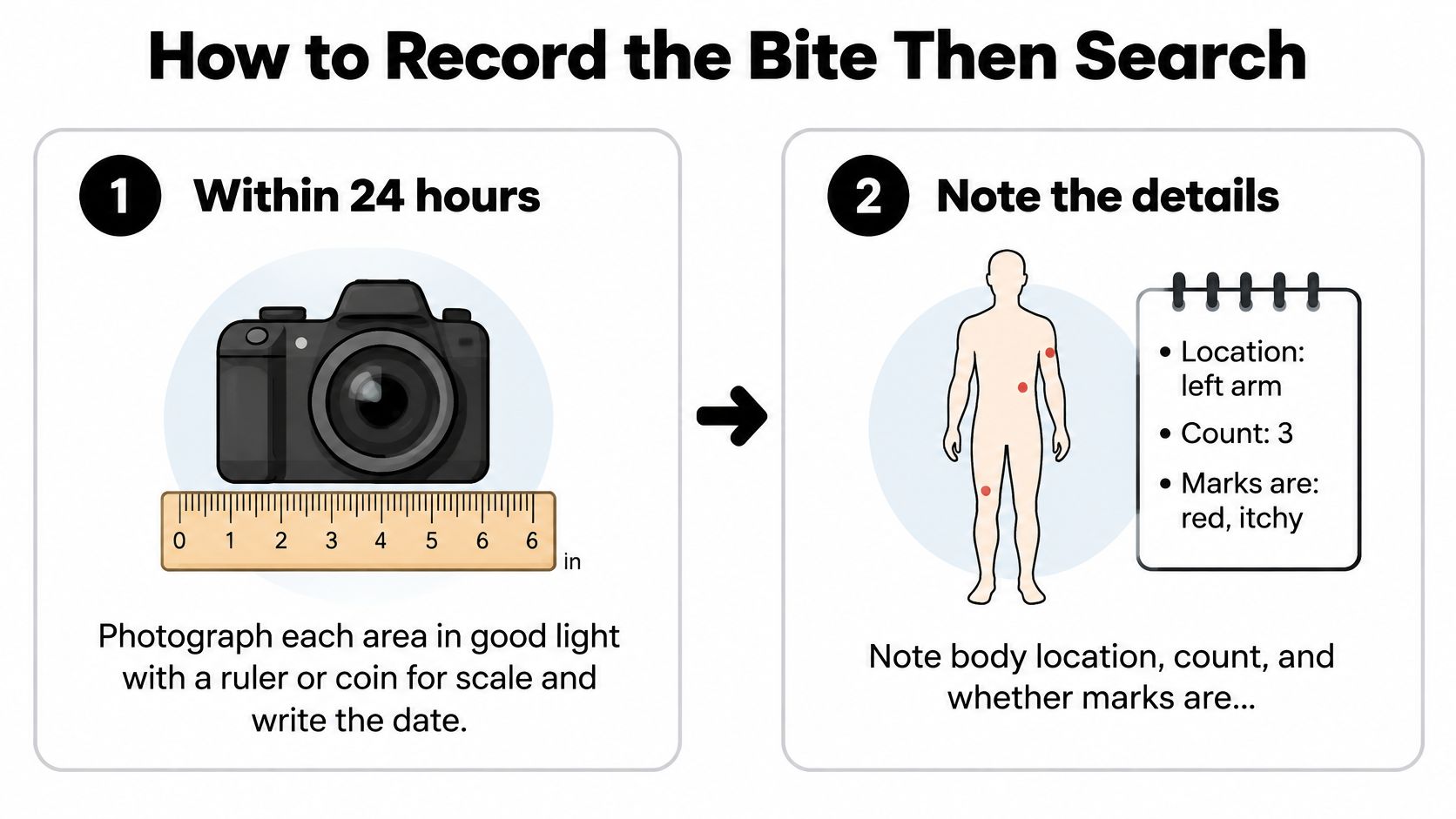
Use a two-stage method: document the reaction, then investigate the matching environment. The clinical overview of insect bites hosted by the National Library of Medicine supports recording lesions within 24 hours, together with their distribution, symptoms, and exposure history, rather than diagnosing from appearance alone.
Keep the record simple enough that you'll complete it.
Document before searching
Photograph the affected areas in good light. Include a ruler and save the date with the image. Take an overview showing body location as well as a close-up; a tightly cropped bump loses useful context.
Write down the number and arrangement of marks, where they are, and whether they itch, hurt, or burn. Don't substitute an interpretation such as bed bug bites for the actual observation, such as itchy grouped bumps on the forearm.
Log plausible exposures. Include where you slept, outdoor activities, pets, travel, luggage, laundry changes, and which skin was uncovered. Note whether others are affected, but don't assume an unaffected companion rules out a shared exposure.
Photograph changes over the following days. Keep the angle and lighting similar so you can compare the images. The common mistake is treating every newly noticed bump as proof of a new bite.
Search where the evidence points
Inspect the matching location. Start with the bedroom and nearby upholstery after sleep-related exposure, pet resting spots for lower-leg clusters, or outdoor containers and foliage after yard exposure. Searching every room at random makes it harder to connect findings to a plausible source.
If you find an insect, preserve it rather than crushing it. Use a sealed container or clear tape, and label where it was found. An intact specimen gives a clinician or licensed professional something more useful than a dark smear.
Interrupt the search for medical warning signs. Breathing trouble, facial or throat swelling, dizziness, vomiting, or a persistent racing heart require medical assessment. A spreading spotted rash or expanding ring after possible tick exposure also belongs with a clinician, not a household identification exercise.
Evidence ladder from weak to strong
This is a practical confidence guide, not a diagnostic score.
| Evidence | Strength | What it suggests |
|---|---|---|
| Welts appear only after yard or garden time | Weak | Mosquitoes or midges are possibilities |
| Onset after nights at home, on skin exposed in bed | Weak to moderate | Bed bugs are possible; inspect the sleeping area |
| Clusters below the knees, near pets | Moderate | Check pets and pet bedding for fleas |
| Several household members affected | Moderate | Investigate a shared source |
| Live insect or specimen saved for identification | Strong | Have the specimen identified |
| Shed nymph skins, pale eggs, rusty stains, or characteristic dark dots | Strong | Bed bugs become more likely when signs occur together |
Red, itchy bumps are nonspecific. Skin disorders can resemble bites, so a lack of pest evidence should leave room for a medical explanation.
If the pest remains unclear, describe what you found. At Pestless, we connect customers who aren't sure which pest they have with a licensed Miami professional who can help identify it and provide a free quote.
Red Flags That End the Home Search
Severity outranks species. You don't need to identify an insect before recognizing that a reaction needs care.
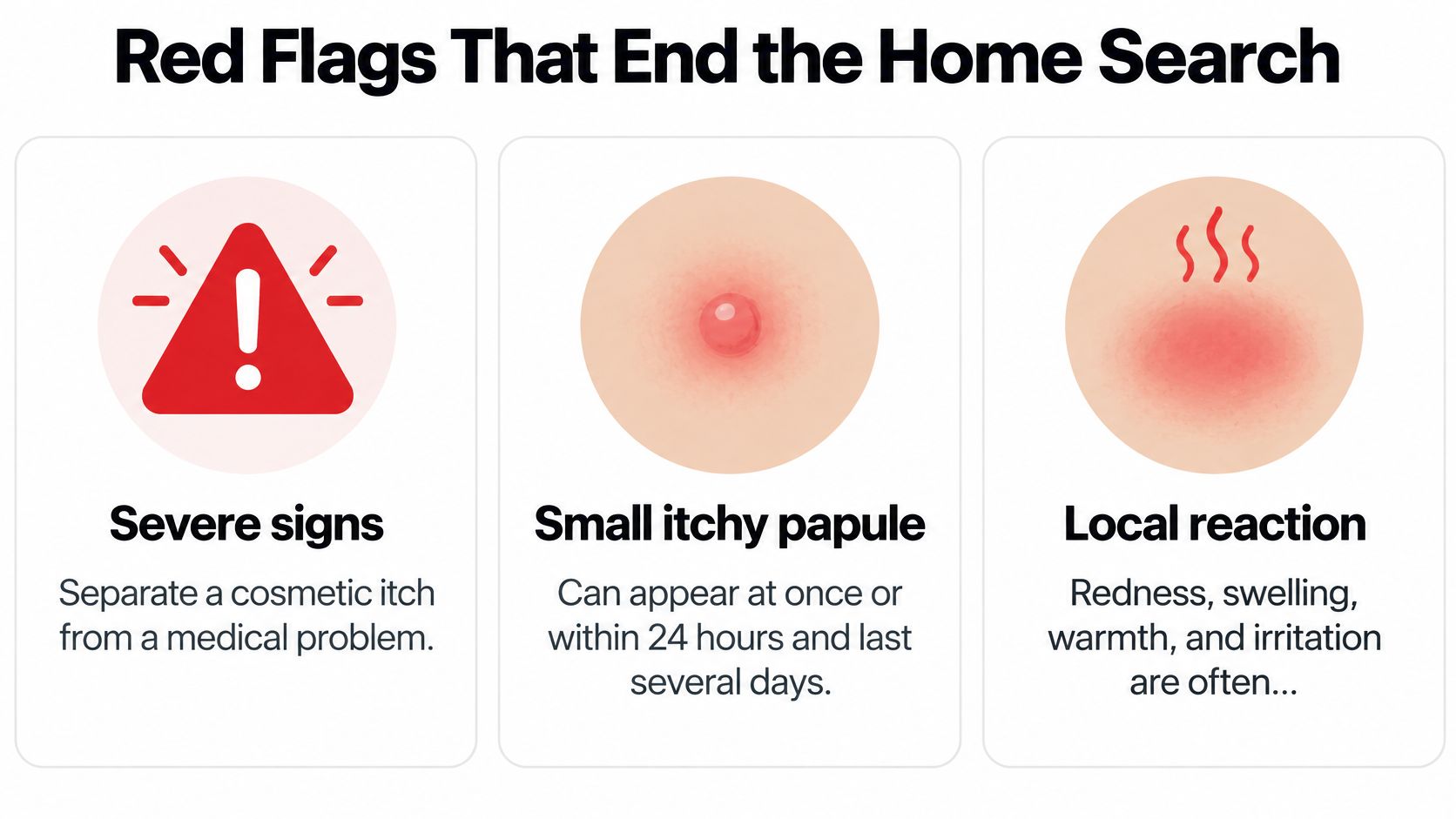
A small itchy bump isn't automatically infected. The Northern Care Alliance guidance on insect bites and stings explains that a reaction may appear immediately or within 24 hours and persist for several days; local redness, swelling, warmth, and irritation can reflect inflammation rather than infection.
What matters is the direction of change. Increasing pain, spreading redness, discharge, or illness deserves more attention than a stable bump that is only itchy.
Use symptoms, not your confidence about the insect, to choose the next action.
Medical triage by sign
| Sign | Tier | Action |
|---|---|---|
| Swelling of the face, lips, tongue, or throat | Emergency | Call emergency services now |
| Wheezing, trouble breathing, fainting, racing heart, or widespread hives | Emergency | Seek emergency care, particularly when symptoms occur together or progress |
| Rapidly spreading redness, pus, blistering, or a red streak | Same-day clinician | Obtain medical assessment |
| Fever or severe muscle or joint pain after mosquito exposure | Same-day clinician | Contact a clinician with photos, exposure dates, and travel history |
| Spreading spotted or ring-shaped rash after possible tick exposure | Same-day clinician | Obtain prompt clinical attention |
| Small itchy bump or limited redness without systemic symptoms | Watch | Photograph and monitor; escalate if it worsens |
Why delayed illness matters in Miami
A mosquito bite and the illness it may transmit don't necessarily announce themselves together. The CDC mosquito-bite guidance describes reactions ranging from small itchy bumps to extensive swelling, hives, fever, and signs of infection; the associated Miami-Dade health warning reported two confirmed locally acquired dengue cases in 2025, with symptoms potentially developing within 14 days of an infected Aedes aegypti bite.
That report is historical context, not a claim about today's alert status. Fever, severe muscle or joint pain, and sometimes a rash after mosquito exposure warrant a clinical conversation, especially during a local alert. Don't wait for a distinctive-looking bite, because the skin mark can't tell you whether a mosquito transmitted an infection.
Nationally, the CDC reports more than 1 million reported vector-borne disease cases between 2001 and 2023. That doesn't mean an ordinary itchy bump is likely to become a serious illness. It explains why whole-body symptoms deserve priority over naming the bug.
A pest professional identifies and manages the household source. A healthcare professional evaluates the reaction, infection risk, and illness.
If you're considering a spider because a lesion looks unusual, our guide to what spider bites can look like at first offers additional context. Don't let a comparison photo delay assessment of worsening pain or systemic symptoms.
Bring the clinician your photo log, medication or cream history, travel details, and likely exposure locations. Those details remain useful even when you never find the insect.
Home Care While You Identify
You can relieve uncomplicated irritation without deciding which insect caused it. Treating the itch and identifying the source are separate jobs, and improvement after a cream doesn't prove your guess was right.
Keep care simple and preserve the record
Photograph before applying products. Creams, scratching, and rubbing can change the appearance. Save an untreated image when possible, but never delay urgent care to take one.
Wash gently with soap and water, then pat dry. Avoid scrubbing or squeezing the bump, which can further irritate the area.
Apply a cool compress. Wrap a cold pack in cloth rather than placing ice directly on skin. Stop if the skin becomes painful or numb.
Consider an over-the-counter antihistamine or hydrocortisone product for itch when appropriate. Follow its label, and ask a pharmacist before use during pregnancy, on young children, or alongside other medicines.
Keep nails short and use loose clothing to reduce rubbing and scratching. Don't repeatedly pick at a puncture or blister to see what's inside.
Avoid irritating home remedies. Household chemicals and harsh mixtures can create another skin problem. Record which products you used and when.
For a possible ant encounter, our pavement ant bite guide provides pest-specific context without making a skin mark diagnostic.
Stop self-treating when the reaction worsens: spreading redness, increasing pain, pus, or fever calls for assessment, not another layer of cream.
Bed Bug Evidence and Costly Mistakes
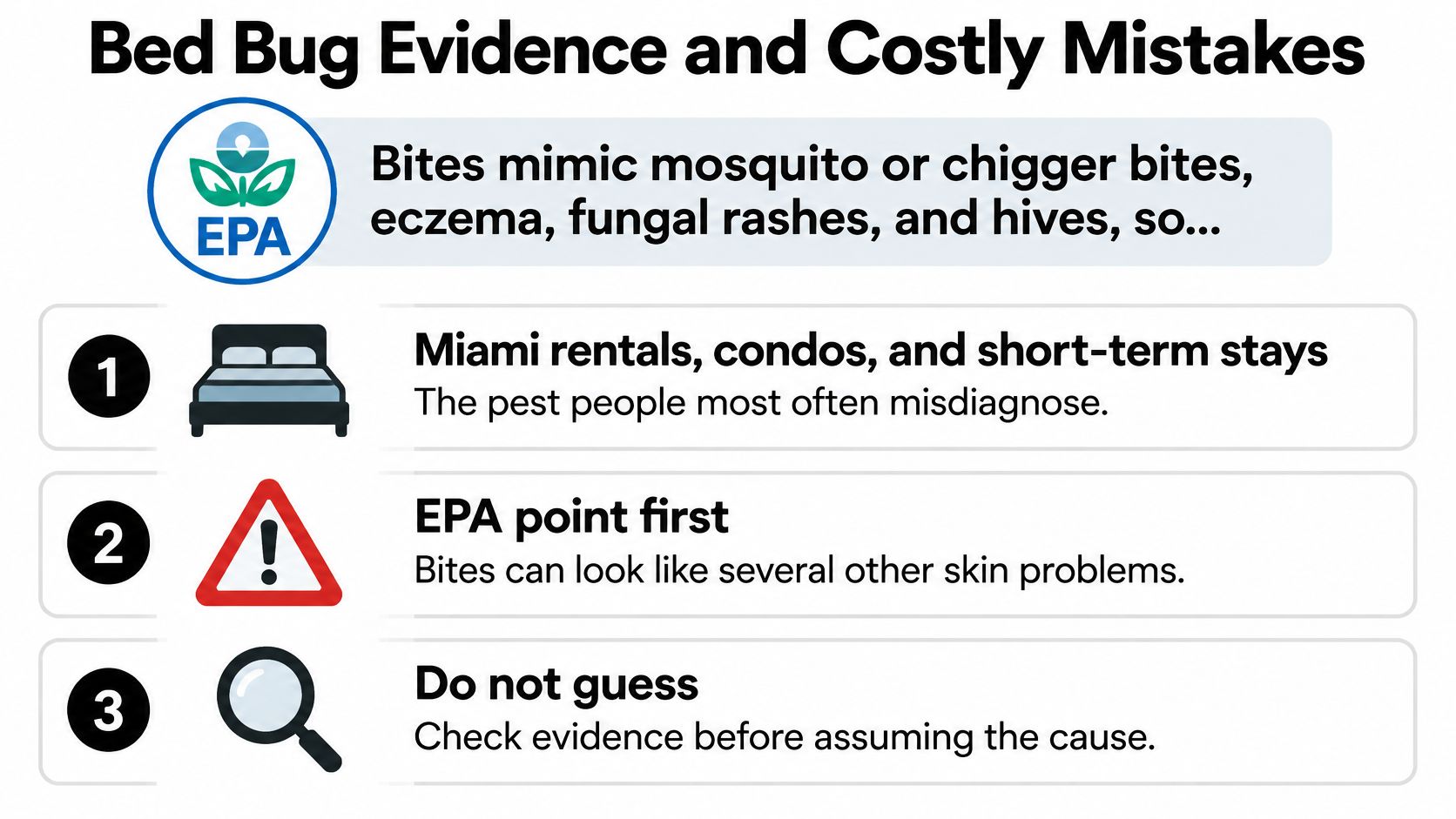
The U.S. EPA's bed bug identification guidance calls bites a poor indicator because they can resemble mosquito or chigger bites, eczema, fungal infections, or hives, and describes pale eggs or eggshells measuring approximately 1 mm. A line of welts isn't a treatment order.
For Miami condo residents, rental hosts, and homeowners, the practical task is to establish whether the sleeping area contains credible evidence. An unexplained rash alone doesn't justify discarding a mattress or treating every room.
Use this checklist to keep skin interpretation separate from the inspection.
Follow the bed outward
Remove bedding carefully without shaking it. Keep it contained rather than carrying loose bedding through the home. Preserve any insect or suspicious material you find.
Use a bright flashlight and a thin card to examine folds and narrow joints. Start with mattress seams, piping, and labels, then check box-spring edges.
Inspect bed-frame joints and headboard attachments. Look into screw recesses and adjoining surfaces rather than checking only the broad, visible faces.
Continue to nearby furniture and room edges. Examine cracks in bedside furniture, upholstered furniture close to the bed, and wall-floor junctions. Record the location of each finding.
Look for live insects, pale eggs or eggshells, shed nymph skins, rusty or reddish stains, and dark fecal spots that may bleed into fabric like marker ink. Photograph findings with a scale, preferably in daylight or clear neutral lighting.
A stain alone can have another explanation. An identified insect is stronger confirmation, while several characteristic signs together justify professional assessment. If the specimen is unclear, get an independent identification rather than treating your first impression as settled fact.
Our bed bug inspection checklist can help you organize the search. The initial professional inspection confirms bed bugs, identifies hiding places, and assesses how far they've spread.
This video provides an additional visual reference for the inspection.
Avoid decisions that erase evidence
- Don't fog before identification. It substitutes treatment for diagnosis and can complicate a useful inspection.
- Don't discard the mattress as your first move. You may lose evidence without resolving insects elsewhere.
- Don't label every new rash a fresh infestation. Keep the medical and environmental questions separate.
- Don't spray an unidentified pest. A product chosen for the wrong target won't answer what caused the exposure.
If the only clues are lower-leg marks and pets, inspect pet resting areas before blaming the bed. If signs cluster around the headboard, document those locations rather than sending only a cropped welt photograph.
When evidence supports an infestation, Bed Bug Treatment targets every life stage, including bugs and eggs. Providing the first-noticed date, affected rooms, photographs, and an honest description of how widespread the signs seem helps the matched provider prepare.
Choose Care or a Licensed Miami Pro
Choose the next action by risk first, evidence second. Emergency symptoms require emergency care, and suspected infection or illness belongs with a clinician. When danger signs are absent and exposure keeps recurring, a targeted inspection is more useful than another guess from a skin photo.
Match the visit to the evidence
- Bedroom evidence: An identifiable specimen or characteristic findings around sleeping furniture support an inspection-first response. Preserve samples and avoid moving belongings between rooms before receiving preparation instructions.
- Outdoor evidence: Repeated yard exposure and water-holding containers support a property assessment. Mark the places where people were bitten and where water collects.
- No environmental evidence: Keep the diagnosis open. A clinician may need to assess a persistent rash that doesn't match a demonstrated pest source.
We're a matching service, not a pest control company, and we don't perform treatments. We connect Miami and Miami-Dade homeowners with licensed, insured local professionals.
Getting matched takes about a minute. Our form asks for your name, phone number, email address, ZIP code, and pest problem, including a description when the insect is unknown. A matched provider typically contacts you within one business hour during business hours to discuss the situation and provide a no-obligation quote.
Send dates, clear photographs, specimen details, and the locations where insects or signs were found. You don't need a confident species name to request help. An accurate description is a better starting point than a confident guess.
Pestless Inc. connects Miami-area homeowners with licensed, insured local pest professionals who can assess the evidence and provide a free, no-obligation quote. If bites keep recurring and you're unsure what's responsible, visit Pestless Inc. and describe when they started, where they happen, and what you've found.
Dealing with this pest right now?
Pestless connects you with a licensed, insured Miami pest control provider for a free, no-obligation quote.