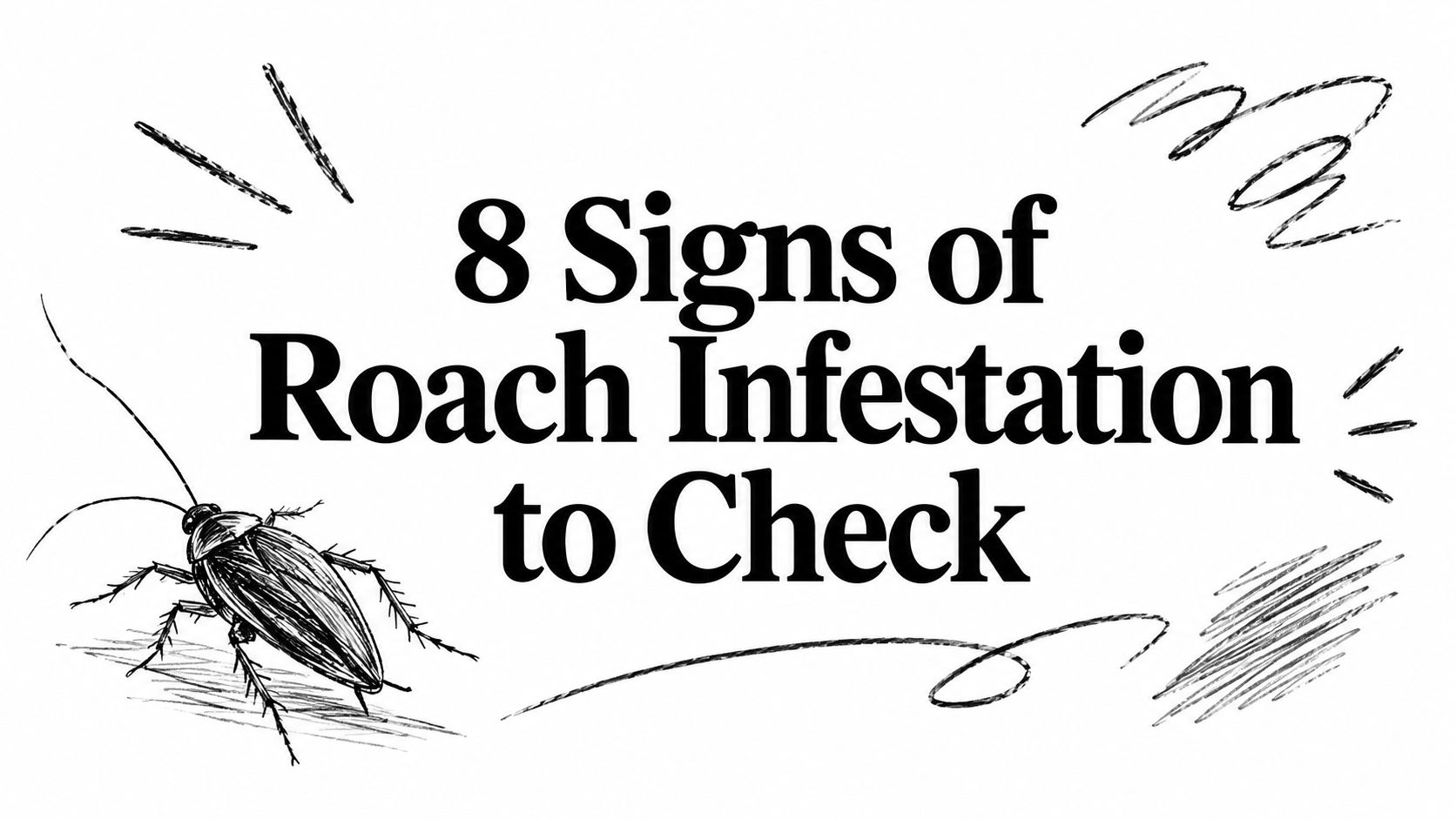
A Miami homeowner turns on the kitchen light and catches a roach moving near the sink. Or perhaps the insect never appears, but there's a dark speck in a cabinet corner and a musty smell under the sink. One clue alone doesn't tell you how large the problem is. A pattern of live activity, droppings, egg cases, shed skins, and odor gives you a much clearer answer.
Start with the kitchen and bathroom, then inspect warm, damp hiding places such as cabinet joints, plumbing gaps, appliance edges, and baseboards. Photograph evidence before cleaning it, note the room and time of day, and look for signs in more than one location. Repeated activity, especially during daylight, deserves faster attention than an isolated nighttime sighting. These are the eight signs of roach infestation that can help you document what's happening and decide what to do next.
Table of Contents
- 1. Roach Droppings
- 2. Musty, Oily Odor
- 3. Live or Dead Roaches Visible
- 4. Egg Cases
- 5. Roach Shed Skins
- 6. Greasy Smudges and Staining
- 7. Damaged or Chewed Items
- 8. Unusual Activity at Night or in Dark Areas
- Comparison of 8 Roach Infestation Signs
- Know When the Evidence Requires a Pro
1. Roach Droppings
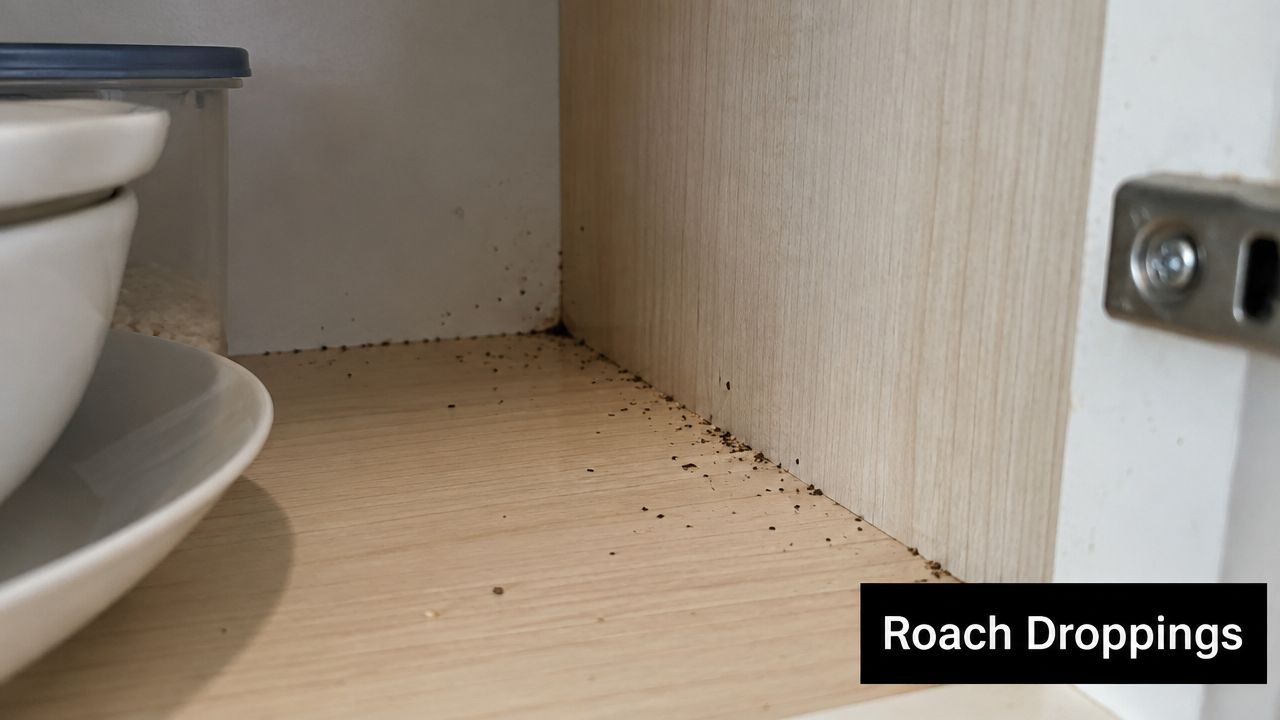
Roach feces often provide the first physical evidence because they collect where insects repeatedly travel or hide. The material may look like ground pepper, dark specks, or small mouse-like droppings, depending on the roach and the location. Public-health guidance from Illinois public health officials recommends inspecting dark speckling where German cockroaches gather, while Los Angeles County guidance also identifies fecal matter as a common infestation sign.
Look first under sinks, behind refrigerators and stoves, inside cabinet corners, along baseboards, and near food storage. In a Miami home, warm and damp areas can support hidden activity, but droppings may also appear in laundry rooms, utility closets, or around stored boxes. A clean countertop doesn't rule out roaches if the insects are sheltering behind an appliance or inside a cabinet void.
How to document droppings
Use a flashlight rather than relying on overhead lighting. Take close photographs and wider photographs that show the exact location. Don't wipe the material away before an inspection if you can safely leave it undisturbed.
- Record the location: Note the room, cabinet, appliance, and surface where you found it.
- Check nearby harborages: Look around plumbing penetrations, hinges, corners, and wall-to-baseboard joints.
- Protect yourself: Wear gloves and wash your hands after handling contaminated material or nearby objects.
- Compare carefully: Dark crumbs, coffee grounds, or mouse droppings can resemble roach feces, so identification matters.
Droppings suggest activity, but they don't independently prove the infestation is large or still active. Fresh-looking deposits combined with live roaches, egg cases, or shed skins are more significant. If the evidence points to a breeding population, Cockroach Control should focus on breaking the breeding cycle, not just the roaches you can see.
2. Musty, Oily Odor
A persistent musty, stale, or oily odor can indicate that roaches are gathering in an enclosed area. Odor may come from feces, saliva, and body secretions, and Missouri Extension notes that large populations can produce an objectionable smell associated with feces and saliva. WebMD also explains that a musty odor tends to appear when infestations are larger, so smell is more useful as part of a pattern than as a standalone diagnosis.
Walk through the home with your attention on transitions. Does the smell become stronger when you open a cabinet, move a bin under the sink, or stand behind the refrigerator? Compare the kitchen, bathrooms, laundry area, and nearby closets. A localized odor can help a technician identify where to inspect first, even when surfaces look clean.
Odor needs context
Smell alone can mislead you. Moisture damage, mold, drains, spoiled food, and poorly ventilated cabinets can create similar conditions. The practical question is whether the odor appears alongside droppings, live insects, egg cases, or shed skins.
Pay attention to timing, too. Cockroaches are most active at night, so an odor that seems stronger after the home has been closed up may point to a harborage nearby, but it doesn't establish species or severity by itself. Photograph visible evidence and write down when and where the smell is strongest before cleaning or using deodorizer.
Practical rule: A musty smell is a location clue, not a complete diagnosis. Pair it with physical evidence before deciding how urgent the response is.
If you find structural moisture as well as pest evidence, keep the two problems separate. A request for Termite Control addresses silent structural damage, while roach inspection requires attention to food, water, harborages, and breeding signs. For broader background on household odors, you can also review this guide to identifying a musty smell in a house.
3. Live or Dead Roaches Visible
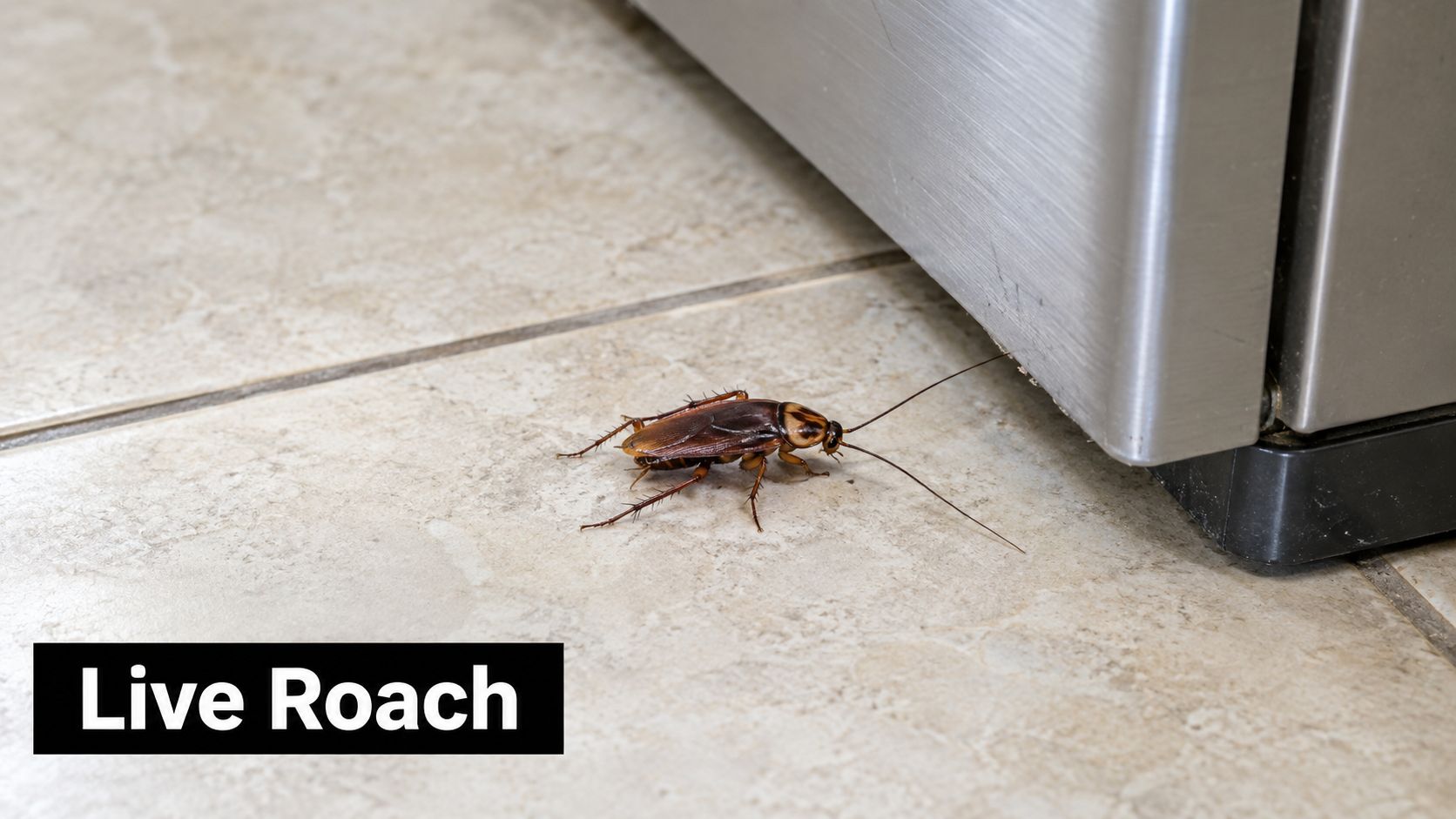
A live roach is direct evidence that at least one insect has entered or established itself indoors. A dead roach is also meaningful, although it may represent current activity, a recent treatment, or an insect that entered from outside. Record what you saw instead of relying on memory. Species, size, color, location, and time of day can change the interpretation.
Miami homes commonly encounter small German cockroaches around kitchens and bathrooms and larger American cockroaches, often called palmetto bugs, near damp areas, drains, garages, or building common spaces. Don't assume every large roach means the same thing as a small roach found inside a cabinet. If you need help distinguishing them, use this guide to Florida cockroach identification.
German roaches and American roaches
German roaches are typically associated with indoor food, water, and warmth. They often hide near sinks, appliances, cabinet hinges, and plumbing. American roaches are larger and may enter from drains, garages, wall openings, or damp exterior areas. A professional needs to confirm the species before choosing treatment, because the inspection priorities and control strategy can differ.
If you see an insect, capture it only if you can do so safely. A clear container, sealed bag, or sharp photograph can help with identification. Don't chase it into an inaccessible wall void, and don't spray blindly into food-preparation areas.
Seeing a roach in daylight can suggest a more established infestation, because cockroaches are usually most active at night. It still isn't a precise population count.
Note the exact time and place, then inspect nearby surfaces for droppings, egg cases, and shed skins. Multiple sightings across rooms, recurring dead roaches, or daytime activity should move the problem from casual observation to professional assessment.
4. Egg Cases
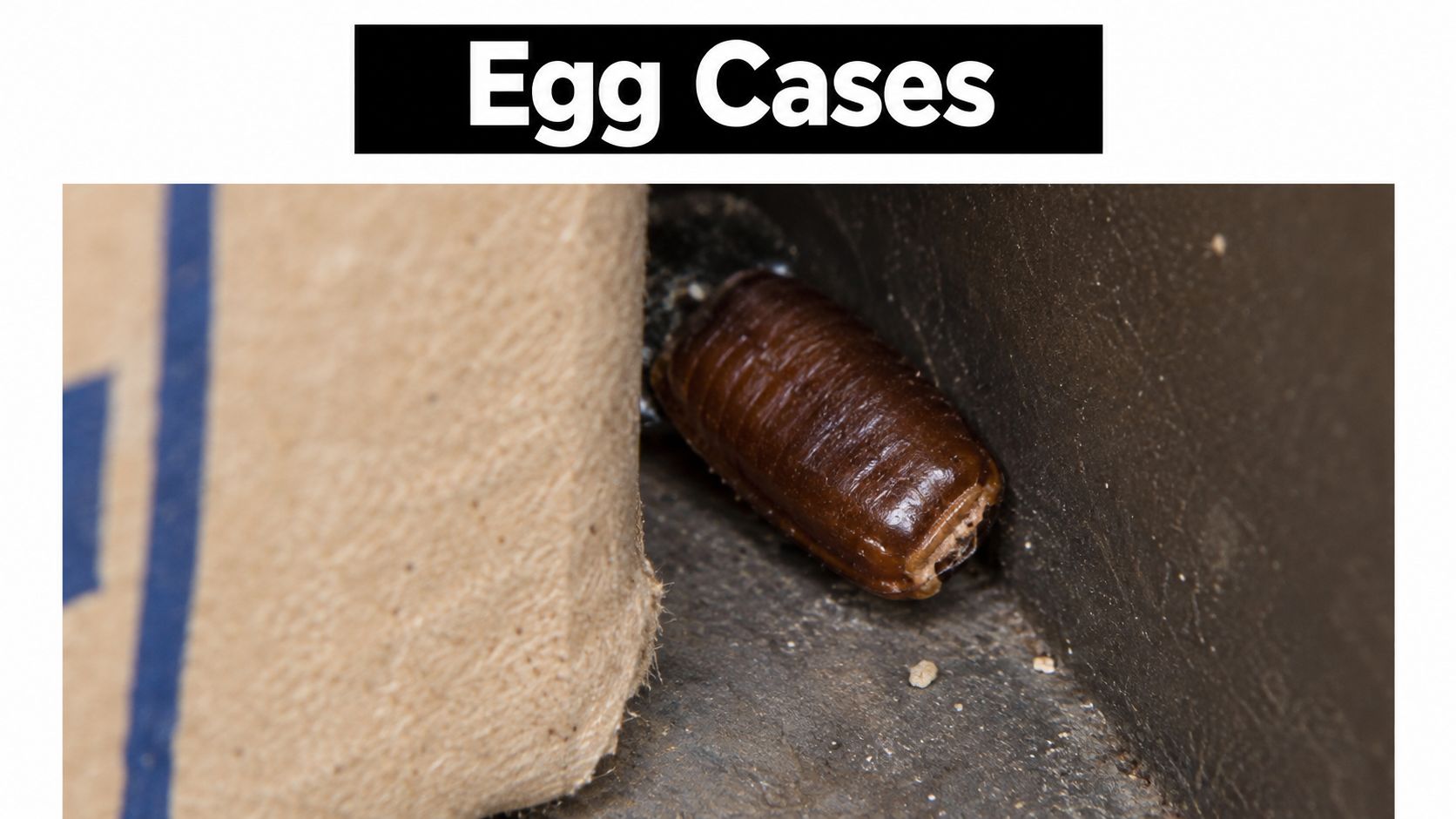
Cockroach egg cases, called oothecae, are firm, brown capsules that may look like small ridged purses. They're easy to miss because roaches place them in protected cracks, cabinet joints, appliance spaces, and other undisturbed areas. Unlike a single wandering adult, an egg case points to reproductive activity.
One ootheca can contain dozens of eggs. A detailed pest-control reference reports that a German cockroach ootheca typically contains about 30 to 48 eggs and hatches in about 28 days, while an American cockroach ootheca typically contains about 14 to 16 eggs and may take 30 to 55 days to hatch. Those figures are documented by Orkin's cockroach infestation guide. Because one case can represent many developing insects, even a small number of cases deserves prompt attention.
What the case tells you
German cockroaches commonly carry their egg cases until close to hatching. American cockroaches generally deposit theirs in protected locations. You shouldn't use the case alone to identify a species, but its location and the surrounding evidence can help a licensed professional form a working assessment.
Search behind appliances, beneath sinks, inside cabinet walls, around drawer tracks, and along baseboards. Use a flashlight and photograph every case before moving it. Note whether the case is intact, empty, attached to a surface, or surrounded by feces and shed skins.
Don't rely on household spray as a complete solution. An egg case can remain a source of future activity even when visible adults disappear. If you find cases in more than one room, or find them with nymphs and droppings, document the pattern and request an inspection. This guide to what a cockroach nest looks like can help you understand why the surrounding harborage matters as much as the capsule itself.
5. Roach Shed Skins
Roaches shed their outer coverings as they mature. The discarded skins are thin, pale, tan, or translucent, and they may remain in cabinet corners, under appliances, behind baseboards, or inside pantry gaps. A single skin can be difficult to interpret, especially in a dusty storage area. Several skins concentrated near other evidence suggest that young roaches are using the location.
This sign matters because it can reveal activity that you haven't seen directly. Nymphs are smaller and more likely to remain concealed, so a home may contain developing roaches before adults become obvious. Shed skins don't provide a reliable population count, but they can show that the area has supported roach growth.
Find the harborage, not just the skin
Use a headlamp or flashlight and inspect dark surfaces from several angles. Check the underside of shelves, the rear of cabinets, the space under appliance toe-kicks, and the corners where plumbing enters walls. Avoid pulling heavy appliances away from walls unless you can do it safely and without damaging flooring or connections.
- Photograph the cluster: Include a wider image showing the surrounding cabinet or appliance.
- Map repeated locations: Mark each finding on a simple room sketch.
- Look for companion signs: Droppings and egg cases in the same area increase the significance.
- Limit disturbance: Don't vacuum or wipe the area before documenting it.
A shed skin doesn't necessarily mean that roaches are still present at that exact moment. It does mean the location deserves closer inspection, particularly when skins appear fresh or accumulate near food and water sources. If a property manager finds them during a routine check, documenting the room pattern can help distinguish one localized harborage from activity moving through multiple units.
6. Greasy Smudges and Staining
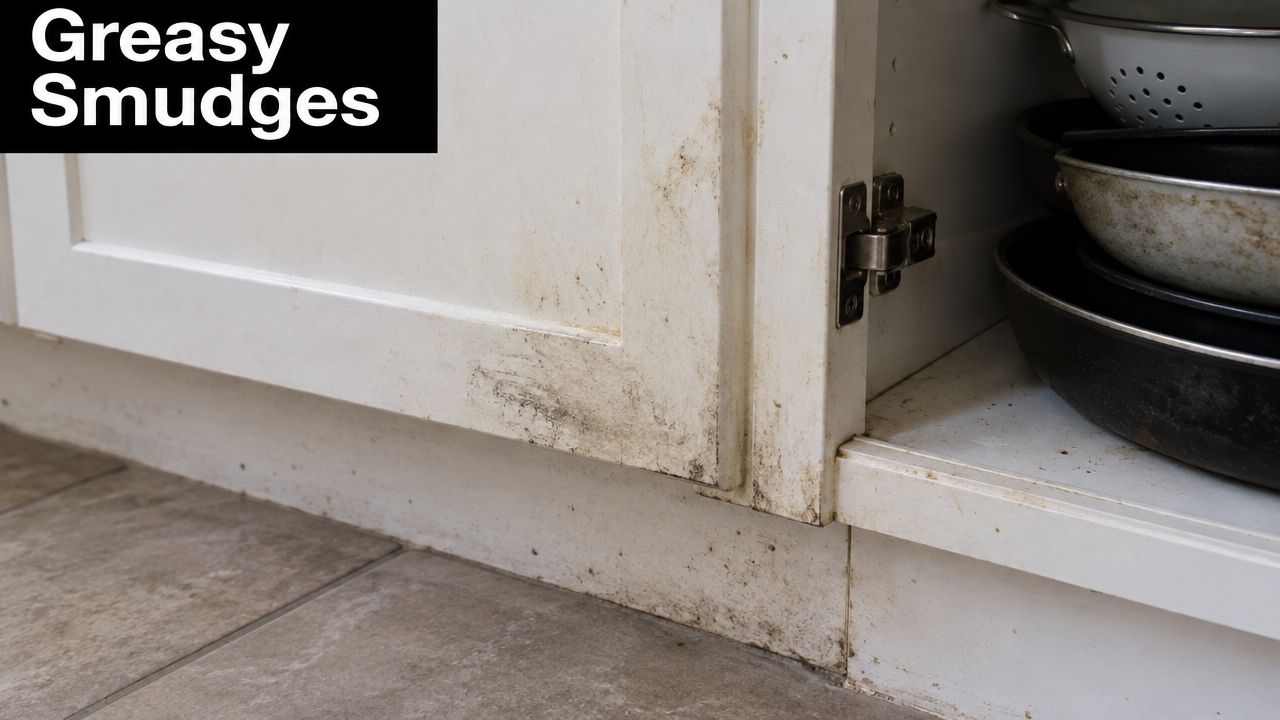
Dark smears along cabinet edges, baseboards, walls, or appliance sides can show where roaches repeatedly travel. Body oils and contact with dirty surfaces may leave a greasy appearance, especially along narrow routes where insects move between food, water, and shelter. Smudges are more useful as route evidence than as proof of a specific number of roaches.
Start with vertical surfaces and protected corners. Check cabinet hinges, the underside of shelves, the wall behind a refrigerator, and the strip where the floor meets the baseboard. In a Miami kitchen, stains near a sink or appliance may point toward a warm, damp harborage, but the mark itself doesn't establish whether the source is German, American, or another cockroach species.
Preserve the trail
Take photographs before scrubbing. A clean surface may look better, but it removes information about movement and concentration. Mark the locations on a sketch or use removable notes nearby, without touching the evidence.
Multiple smudges that connect cabinets, appliances, and baseboards suggest repeated traffic. A single dark mark could instead be grease, dirt, or an old spill. Compare the mark with nearby droppings, skins, odor, or live activity before drawing a conclusion.
For prevention steps that reduce food, water, and shelter opportunities, review these cockroach prevention tips. Prevention can make the home less attractive, but it won't locate or remove a concealed breeding area by itself. A technician can use the smudges as a map, then inspect the cavities and appliance spaces along the route.
7. Damaged or Chewed Items
Roaches can damage paper, cardboard, fabric, leather, book bindings, wallpaper, and food packaging when they forage or shelter in stored materials. Look for irregular holes, scraped edges, gnawing around paper seams, and deterioration near pantry goods. Damage is especially relevant when it appears with droppings or egg cases in the same storage area.
Begin with the pantry and places where items remain undisturbed. Inspect cardboard boxes, paper bags, stored books, textiles, and food packages before moving them to another room. Miami's humidity can soften paper and cardboard, so moisture damage and insect damage may look similar. A close photograph of the edge, hole, and surrounding residue gives a professional more useful information than a description alone.
Separate attraction from proof
Chewed packaging doesn't prove that roaches caused the damage. Mice, pantry pests, moisture, and ordinary wear can produce similar results. The strongest interpretation comes from a combination of damaged materials, feces, shed skins, odor, or sightings.
Move dry goods into sealed glass or rigid plastic containers, discard contaminated food packaging, and reduce unnecessary cardboard clutter. Don't move suspect boxes through the home without inspecting them first. Keep a dated record of new damage, because repeated deterioration in one cabinet or storage closet can reveal an established harborage.
If the evidence points to a different pest, use the correct service category rather than treating blindly. For example, Bed Bug Treatment addresses bugs, eggs, and all life stages associated with bed bug activity, not unexplained damage from every household pest. Correct identification prevents wasted effort and reduces unnecessary product use.
8. Unusual Activity at Night or in Dark Areas
Cockroaches are generally nocturnal, so a kitchen, bathroom, or pantry that becomes active after the lights go out deserves attention. You may see insects run along baseboards, hear faint movement around cabinets, or notice activity beneath an appliance. WebMD notes that seeing roaches during daylight can suggest a more established infestation, while its health guidance also identifies feces, shed skins, egg cases, and odor as relevant signs.
A simple observation can provide useful context. Turn off the kitchen or bathroom lights, leave the area undisturbed, then return with a flashlight. Don't use the exercise to provoke insects into unsafe areas, and don't reach into gaps or appliance motors. Record the room, time, direction of movement, and whether activity repeats on another night.
Interpret nighttime observations carefully
One nighttime roach may be an isolated intruder, particularly near an exterior door, garage, drain, or plumbing opening. Repeated sightings in the same cabinet, activity in several rooms, or movement accompanied by droppings and skins indicates a stronger pattern. Daylight sightings deserve faster attention because they can mean normal hiding space is under pressure, although they still don't provide an exact measure of severity.
Nighttime rustling isn't automatically a roach. Plumbing, appliances, rodents, and building movement can create sounds that seem similar. Treat the sound as a prompt to inspect, not as confirmation.
Don't judge the problem by the insects you can see. Judge it by the number of rooms, types of evidence, and whether breeding signs are present.
Comparison of 8 Roach Infestation Signs
| Sign | Detection Complexity 🔄 | Resources / Effort ⚡ | Evidence Strength ⭐ | Ideal Use Cases / Recommended Action 💡 | Key Advantages / Impact 📊 |
|---|---|---|---|---|---|
| Roach Droppings (Feces) | Low 🔄, easily visible during routine checks | Low ⚡, flashlight, gloves, photos | High ⭐, clear indicator of active infestation | Inspect cabinets, under appliances; document locations and call pros if fresh | Quickly locates harborage and gauges severity; easy to document for technicians |
| Musty, Oily Odor | Medium 🔄, subjective, varies by person | Low ⚡, olfactory check; may need professional assessment | Medium ⭐, indicates hidden or large infestations | Use when no visual signs; compare rooms to localize source and notify professionals | Early warning for hidden populations; persists and signals established infestation |
| Live or Dead Roaches Visible | Low–Medium 🔄, may require night checks | Low ⚡, capture/photo for ID; note time/location | Very High ⭐, definitive proof of infestation | Capture specimen, note species/size/time, contact pest control immediately | Confirms infestation and enables species-specific treatment planning |
| Egg Cases (Oothecae) | High 🔄, often hidden in crevices or wall voids | Medium ⚡, flashlight, careful inspection; often requires pro | High ⭐, confirms breeding and future population growth | Report immediately; professional treatment targeting oothecae and nymphs | Predicts imminent population increase; critical for comprehensive treatment |
| Roach Shed Skins (Exoskeletons) | Medium 🔄, subtle, translucent, easily missed | Medium ⚡, detailed inspection, collect samples for pros | Medium–High ⭐, indicates nymph development and ongoing breeding | Search harborage areas; collect samples and request staged treatment | Shows multiple life stages present; signals growing infestation and urgency |
| Greasy Smudges and Staining | Low 🔄, visible trails but can be mistaken for grime | Low ⚡, visual inspection; photograph before cleaning | Medium ⭐, maps travel paths but not exact nests | Use to map movement corridors; avoid cleaning before professional inspection | Helps identify high-traffic routes and treatment target areas |
| Damaged or Chewed Items | Medium 🔄, can be confused with other damage | Low ⚡, inspect storage, packaging, books | Medium ⭐, indicates feeding/nesting activity | Inspect pantries/storage; seal goods and report damage to pros | Reveals feeding sites and advanced infestation; motivates prompt action |
| Unusual Night Activity / Dark Areas | Medium 🔄, requires nighttime observation | Low ⚡, night checks, red-light flashlight | High ⭐, confirms live, active infestation | Conduct night inspections, note peak activity times for treatment scheduling | Verifies active population and best timing for professional interventions |
Know When the Evidence Requires a Pro
Severity comes from combinations, not from a rigid count of clues. One nighttime sighting calls for documentation and a focused inspection. Repeated sightings, daytime activity, egg cases, shed skins, or evidence across rooms indicate a more established problem and make waiting less useful.
A practical response guide looks like this:
- Single nighttime sighting: Photograph the insect if possible, note the location, and inspect nearby sinks, cabinets, appliances, and baseboards.
- Repeated sightings: Inspect the surrounding room and connected plumbing or appliance spaces, then arrange a licensed assessment.
- Egg cases or shed skins: Treat these as breeding or development evidence. Don't rely on surface cleaning or random spraying.
- Multiple evidence types: Droppings plus odor, smudges plus live activity, or skins plus egg cases indicate a stronger case for professional intervention.
- Daylight activity: Escalate the inspection, especially if insects appear in more than one room.
- Health concerns: Seek prompt help when household members have unexplained nighttime symptoms or respiratory sensitivities that may relate to indoor pest allergens.
Illinois public-health guidance identifies live or dead roaches, fecal matter, egg cases, and cast skins as signs worth inspecting. The peer-reviewed public-health literature on cockroach infestation indicators likewise treats visible roaches, dead roaches, egg cases, shed exoskeletons, and feces as direct evidence, especially when found under sinks, behind refrigerators, and along cabinet edges.
Field research also supports using monitoring rather than waiting for obvious sightings. A study of sticky-trap images and computer vision in food premises found that infestation rates varied substantially by site type, with the highest rates in dense, food-heavy areas. That supports trap-based monitoring and image analysis as screening tools, although a homeowner still needs a qualified inspection to identify the species, source, and treatment requirements.
Start with low-risk actions while you arrange help. Remove food residue, store food in sealed containers, eliminate standing water, repair accessible leaks, reduce cardboard and paper clutter, and seal obvious gaps around pipes or baseboards. Don't disturb documented evidence, fog rooms, or place pesticides where children and pets can reach them. Follow every product label and use only products approved for the intended setting.
Contact a licensed professional when you find breeding evidence, activity that keeps returning, signs in inaccessible spaces, uncertainty about species, or concerns about household health. In condos, apartments, and shared-wall homes, tell the property manager or association as well, because activity may not be limited to one room or one unit.
Pestless offers a Miami-focused matching service for homeowners and property managers seeking a licensed, insured provider. Through its Cockroach Control category, you can request a zero-cost, no-obligation quote. Pestless doesn't perform treatments itself. It connects customers with licensed, insured local professionals so they can compare options and choose a provider for the inspection and control work.
Pestless Inc. connects Miami and Miami-Dade homeowners, landlords, property managers, and hosts with licensed, insured pest control professionals for roach inspections and treatment requests. If you've documented droppings, egg cases, shed skins, or recurring sightings, visit Pestless Inc. to describe the problem and request a zero-cost, no-obligation quote from a local provider.
Dealing with this pest right now?
Pestless connects you with a licensed, insured Miami pest control provider for a free, no-obligation quote.