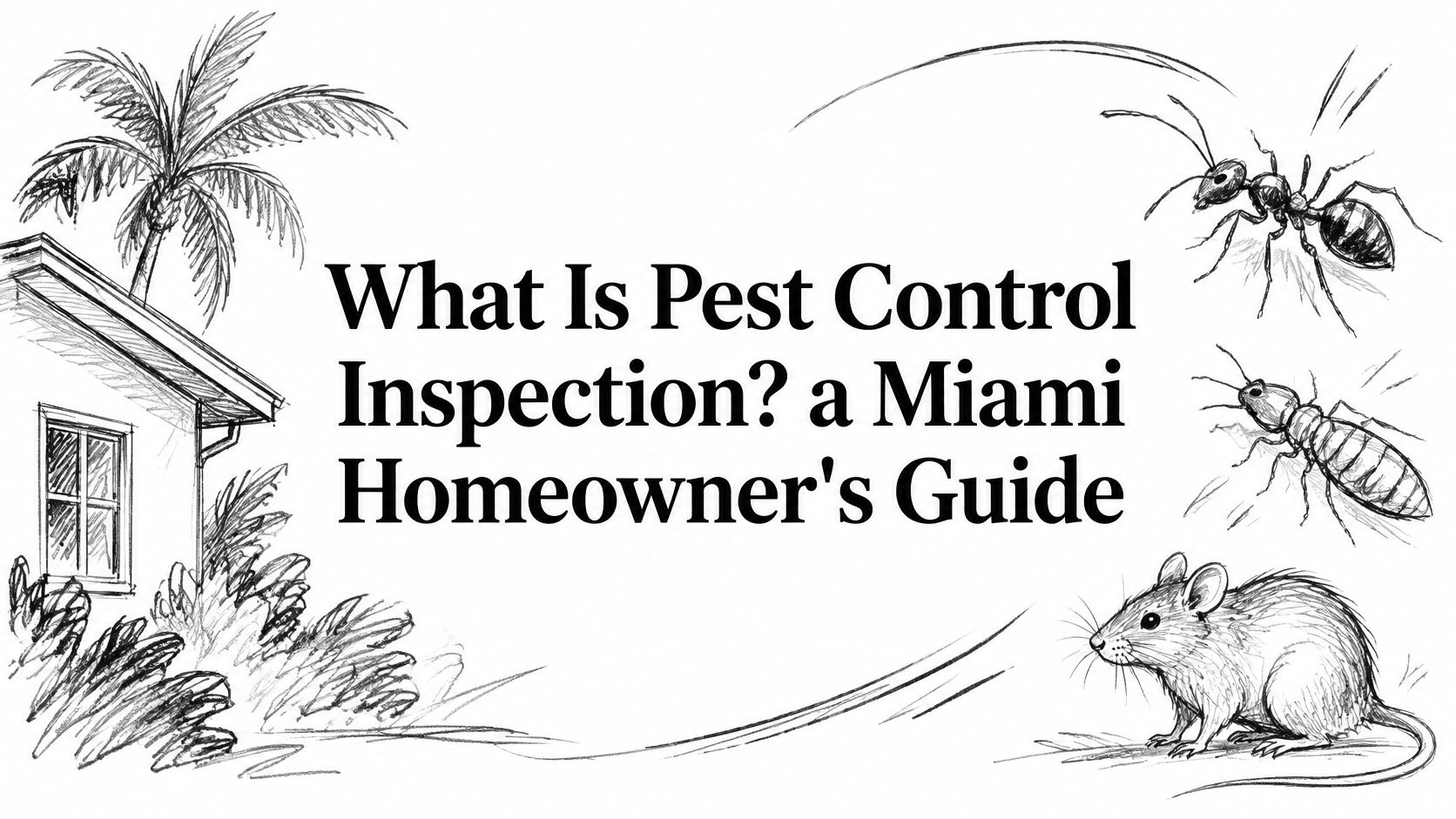
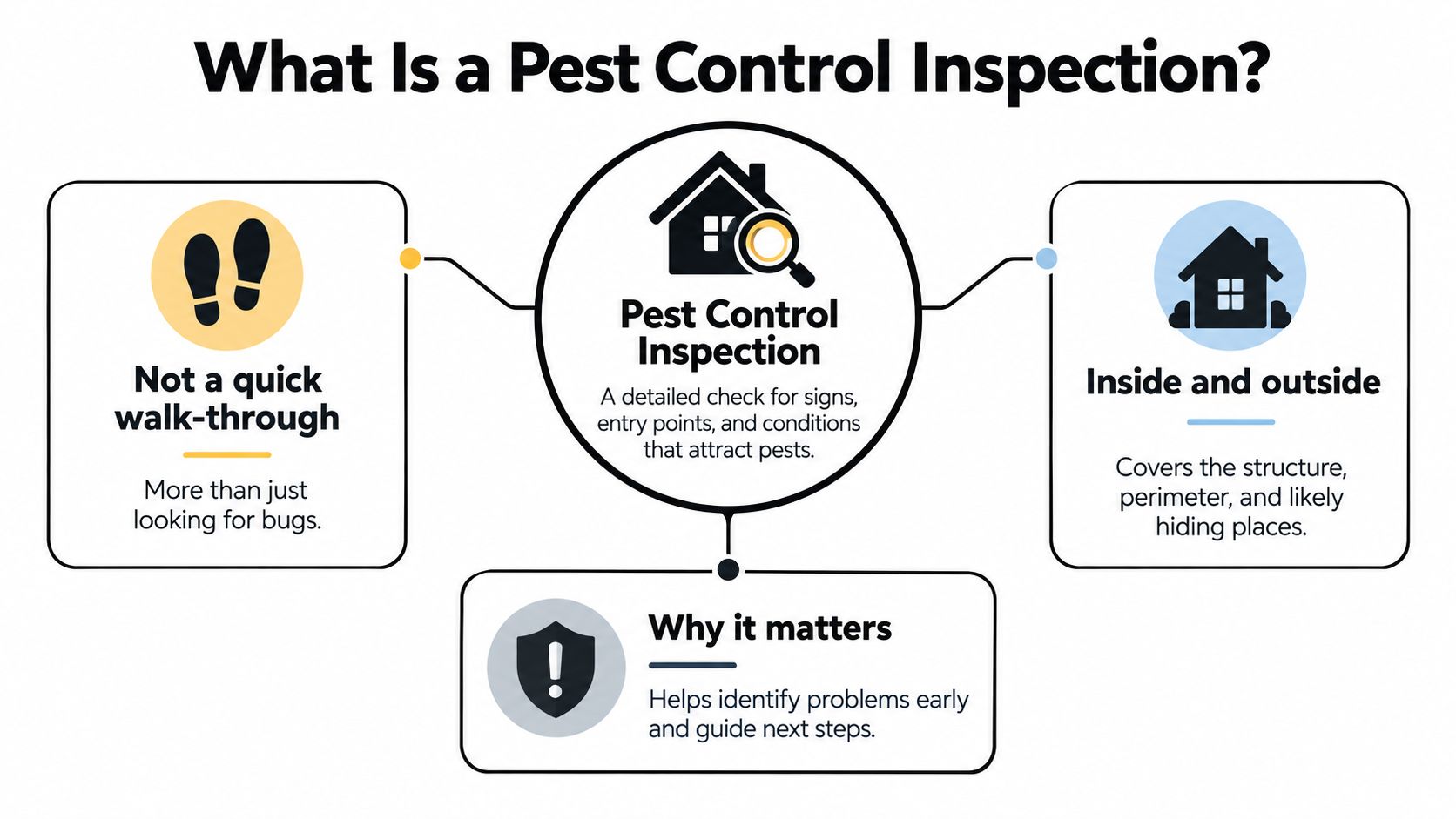
A pest control inspection is a structured examination of a building and its grounds for active pests, the conditions that support them, and the routes they use to get in, ending in evidence-based findings rather than an automatic treatment recommendation.
The familiar advice to “have someone walk through and look for bugs” misses the point. In a Miami home, an insect on the kitchen counter may be the easiest clue to spot. The more useful finding might be a leaking pipe, an opening behind a cabinet, or a concealed space that needs further investigation.
Table of Contents
- Defining a Pest Control Inspection and Why It Matters
- What a Typical Inspection Covers Inside and Outside
- Pest-Specific Evidence Inspectors Look For
- What an Inspection Can and Cannot Rule Out
- How to Read Inspection Findings and Outcomes
- Florida Licensing and Insurance Checks Before You Hire
- Choosing a Provider and Your Next Steps
Defining a Pest Control Inspection and Why It Matters
A quick walk-through alone isn't enough. The inspector needs to connect observations to a diagnosis, much as a doctor checks your history and symptoms before prescribing medicine. Seeing a pest starts the investigation. It shouldn't end it.
Think about a cabinet beneath your kitchen sink. An inspector might find an insect, damp wood, and a gap around a drainpipe. Those findings answer different questions: what's present, what might sustain it, and how it might move through the building.
Evidence comes before treatment
A useful examination separates these categories:
- Pest presence: Live organisms or diagnostic signs, such as droppings, shed material, or damage.
- Supporting conditions: Available food, water, and sheltered hiding places.
- Access routes: Structural openings or connections that deserve closer attention.
This distinction matters because a risk factor isn't the same as an infestation. Damp wood deserves attention, but dampness alone doesn't identify a pest. Likewise, an old sign shouldn't automatically be described as current activity.
Why careful diagnosis matters
The financial stakes can be substantial. USDA Forest Service materials estimate annual termite damage to wood in and around buildings at about $1 billion, with some estimates reaching $7 billion. These aren't precise national accounting totals. They can combine treatment, prevention, structural repairs, lost property value, and damage not immediately attributed to termites.
For a homeowner, buyer, landlord, or property manager, the inspection record should support a decision rather than create pressure to purchase a treatment. You need to know whether the evidence suggests an active problem, a possibility requiring investigation, an old problem, or a condition worth correcting.
Practical rule: Ask the inspector to show you the evidence before discussing the remedy.
What a Typical Inspection Covers Inside and Outside
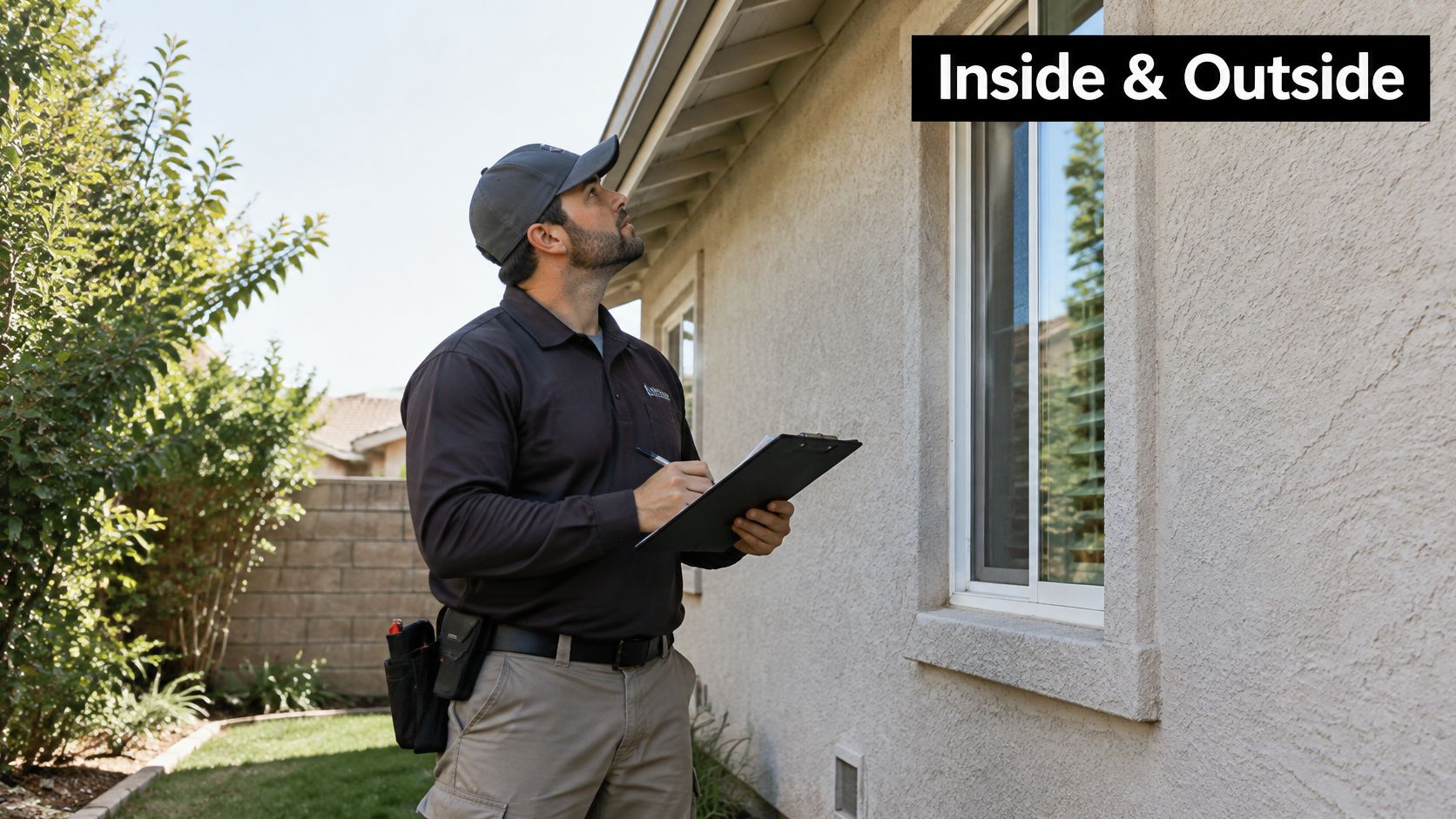
Start outside, near the foundation. Ask the inspector to explain where the building meets the ground and where pipes, cables, doors, and other openings interrupt its exterior. Treat this as tracing possible routes, not assuming every gap is an entrance.
An exterior inspection should involve looking closely at the structure, not just circling the house.
Follow the perimeter, then the plumbing
Discuss the foundation line, stucco or siding gaps, weep holes, soffits, and roof penetrations. Ask which areas can be examined safely from the available access points. Irrigation zones, mulch beds, and trash storage also belong in the conversation because the inspection includes surrounding conditions, not just walls.
At a sliding patio door, examine the screen and how the opening is used. If you want ventilation without leaving an unscreened doorway, Cross Breeze Screens' guide to bug protection with an open-door breeze offers a resource to consider. A screen decision should complement the inspection findings, not replace investigation elsewhere.
Indoors, follow kitchens, bathrooms, and utility connections. Ask about sink cabinets, appliance gaps, closets, and wall-ceiling junctions. In a condo, discuss whether shared plumbing chases, trash rooms, or adjoining units require coordination with management.
Use the accompanying video as another prompt for questions about the visit's scope.
Agree on access before the visit
- Attics and garages: Ask whether stored cardboard, insulation, or restricted access will limit the examination.
- Raised foundations and crawlspaces: Confirm whether the inspector will assess accessible moisture and wood-to-soil contact.
- Shared building areas: Establish who can authorize entry and arrange any separate appointments.
Before the inspector leaves, request the inspection date, agreed scope, locations examined, and access restrictions. Don't let “whole-home inspection” remain an undefined phrase on the quote.
Pest-Specific Evidence Inspectors Look For
A live insect is only part of the evidence. The important question is whether the inspector can identify the sign and explain what it means. A stain, damaged surface, or small pellet shouldn't receive a confident diagnosis without supporting observations.
Cockroaches and termites require different interpretations
HUD's infestation inspection standard recognizes live or dead cockroaches, shed skins, fecal spotting or smears, and egg cases as evidence of cockroach presence. It describes egg cases as brown, oblong structures approximately 5–9 mm long. It also directs attention toward warm, dark, concealed locations, including sink cabinets, appliance gaps, cabinet voids, and wall-ceiling junctions.
Ask whether the signs suggest a nearby harborage, meaning a sheltered place where pests hide. Then ask what should be cleaned, repaired, or monitored. Finding evidence in a cabinet isn't the same as establishing the full extent of the problem.
With suspected subterranean termites, ask the inspector to distinguish a possible mud tube from an ordinary surface mark. The next questions concern its location, nearby wood, moisture, and whether further examination is needed. A termite inspection checklist can help you prepare those questions without trying to diagnose structural damage yourself.
Primary Evidence and Inspection Locations by Pest Type
The table below is a discussion guide, not a substitute for professional identification.
| Pest | Strongest Evidence | Where Inspectors Look |
|---|---|---|
| Cockroaches | Identified insects, shed skins, fecal spotting, egg cases | Sink cabinets, appliance gaps, concealed cabinet spaces |
| Subterranean termites | Suspected mud tubes assessed alongside wood and moisture findings | Accessible foundation interfaces and structural wood |
| Rodents | Droppings, gnawing, rub marks, or nesting material requiring identification | Accessible storage areas, garages, attics, utility routes |
| Ghost ants | Observed trails and specimens for identification | Food preparation areas and nearby water sources |
| Bed bugs | Specimens and suspected spotting or shed material | Accessible mattress seams and nearby furnishings |
| Mosquitoes | Identified mosquitoes and suspected breeding sites | Standing water and surrounding outdoor areas |
For attic concerns, Airtight Spray Foam Insulation's discussion of how to stop rodents damaging attic insulation provides maintenance context. Have the pest issue assessed before deciding what insulation work is appropriate.
Suspected bed bug evidence also needs confirmation before selecting Bed Bug Treatment. Ask how the proposed plan addresses bugs and eggs, rather than assuming treatment of visible insects covers every life stage.
For mosquitoes, identification and monitoring deserve particular attention. CDC materials describe surveillance through species identification, abundance measurement, and geographic mapping using eggs, larvae, and adults. A yard assessment should therefore involve more than listening to a description of bites.
What an Inspection Can and Cannot Rule Out
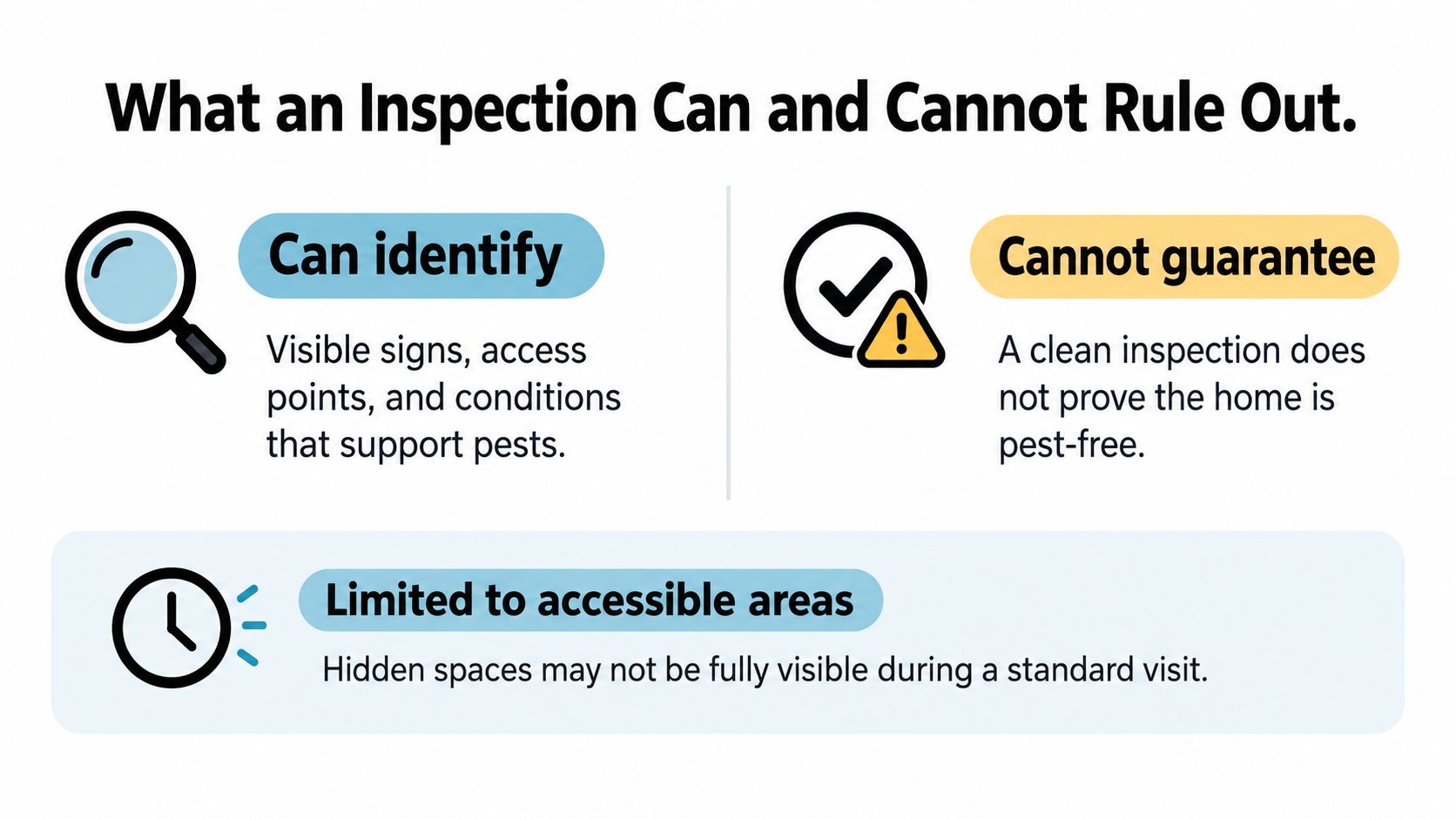
A clean inspection doesn't prove a home is pest-free. It means the inspector didn't find reportable evidence within the examination's scope, methods, access, and timing. Those qualifications matter.
Maryland's inspection standard focuses on readily accessible areas and locations where target pests are likely to occur. That's a useful illustration of inspection limits, not a statement of Florida law. Concealed, blocked, raised, or inaccessible spaces may remain unexamined.
Different methods provide different confidence
A visual examination and a monitoring program aren't interchangeable. Think of the difference between looking through a window and checking a recording over time. Each can provide useful information, but neither shows everything.
- Visible evidence: What the inspector could observe during the visit.
- Active monitoring: Information collected using appropriate traps, stations, or other devices over a defined period.
- Historical signs: Evidence that may remain after activity has stopped.
- Risk assessment: Conditions that could support a future problem, even without a confirmed infestation.
In a Miami condo, the accessible side of a kitchen wall may look clean while the plumbing chase remains hidden. An attic hatch may be reachable while portions of the attic aren't. A neighboring unit may fall outside the authorized scope entirely.
No evidence found and no pests present are different conclusions.
Ask what would change the conclusion
Ask whether cockroach or bed bug monitors would help resolve uncertainty. If mice are suspected, ask whether the monitoring method and bait are appropriate for that concern. Don't assume devices were used unless the report says so.
A moisture check, targeted monitoring, or return visit may provide more useful information than a fast visual pass. The right question isn't how quickly someone can declare the home clear. It's what additional evidence would make the conclusion more reliable.
How to Read Inspection Findings and Outcomes
A report that says only “roaches found, treatment recommended” leaves too much unexplained. You should be able to connect the pest identification to a location, a contributing condition, and a proposed response.
Suppose an inspector documents cockroach evidence beneath a kitchen sink, a plumbing leak, and an opening around a pipe. In that hypothetical example, a useful recommendation would distinguish pest control from plumbing repair and entry-point work. Otherwise, you could pay for treatment without understanding what else needs attention.
Look for a complete explanation
| Report output | What you should be able to understand |
|---|---|
| Pest identification | What was identified and whether uncertainty remains |
| Extent and location | Where evidence was found and how far the examination supports that conclusion |
| Contributing conditions | Which leaks, storage practices, food sources, or structural issues need attention |
| Corrective actions | What to treat, repair, clean, seal, or monitor, and who should handle it |
Reports may distinguish active infestation, suspected activity requiring monitoring, historical evidence, and future-risk conditions. Ask the inspector to explain the category in ordinary language. An old sign and a confirmed active problem shouldn't receive identical descriptions.
Understand when action is warranted
An action threshold is the point at which pest activity or environmental conditions justify intervention because they present a nuisance, health concern, or economic threat. It isn't a universal trigger that treats every organism the same way. Ask what threshold the provider is using for your situation and why.
The EPA's integrated pest management framework connects identification, monitoring, control selection, and evaluation in a repeating process. It also supports recording monitoring methods, locations, schedules, findings, and recommendations so conditions can be compared over time.
That makes a dated report more than paperwork. It gives you a baseline for the next visit.
Research discussed in the Journal of Integrated Pest Management also highlights the importance of household conditions and understanding pest management. For a Miami-Dade landlord, the practical lesson is to assign responsibilities clearly: the tenant may need storage guidance, the owner may need to repair a leak, and building management may need to investigate shared spaces.
Florida Licensing and Insurance Checks Before You Hire
Verify credentials and insurance before authorizing work. A confident explanation at your kitchen table doesn't replace checking who will perform the service, what they're qualified to do, and which business is responsible.
For Florida work, ask the provider to identify the applicable state credentials and explain how you can verify their current status through the Florida Department of Agriculture and Consumer Services. Confirm current requirements directly with the state rather than treating an online summary as legal advice.
Request documents that match
Use this short checklist before signing:
- Business identity: Request the legal business name and compare it with the written quote.
- Applicable credentials: Ask for license details and clarification about the person who will inspect or treat the property.
- Current insurance: Request a certificate of insurance and check the named business and coverage dates.
- Scope of responsibility: Ask who handles inspection, treatment, exclusion work, repairs, and follow-up.
A guide to pest control licensing can help you organize questions. It shouldn't replace direct verification of the provider's current status.
Don't mistake insurance for unlimited protection
An insurance certificate isn't a promise that every possible loss is covered. Ask the provider or insurer to clarify relevant coverage and exclusions, especially if work could affect a wall, fixture, shared area, or neighboring unit.
Before signing: Resolve mismatched business names and unclear responsibilities in writing.
For landlords, HOA boards, and short-term rental hosts, keep these documents with the inspection report and service agreement. Also confirm any building access or contractor-document requirements with management. Your goal is a clear record of who is entering the property, what they've agreed to do, and where their responsibility begins and ends.
Choosing a Provider and Your Next Steps
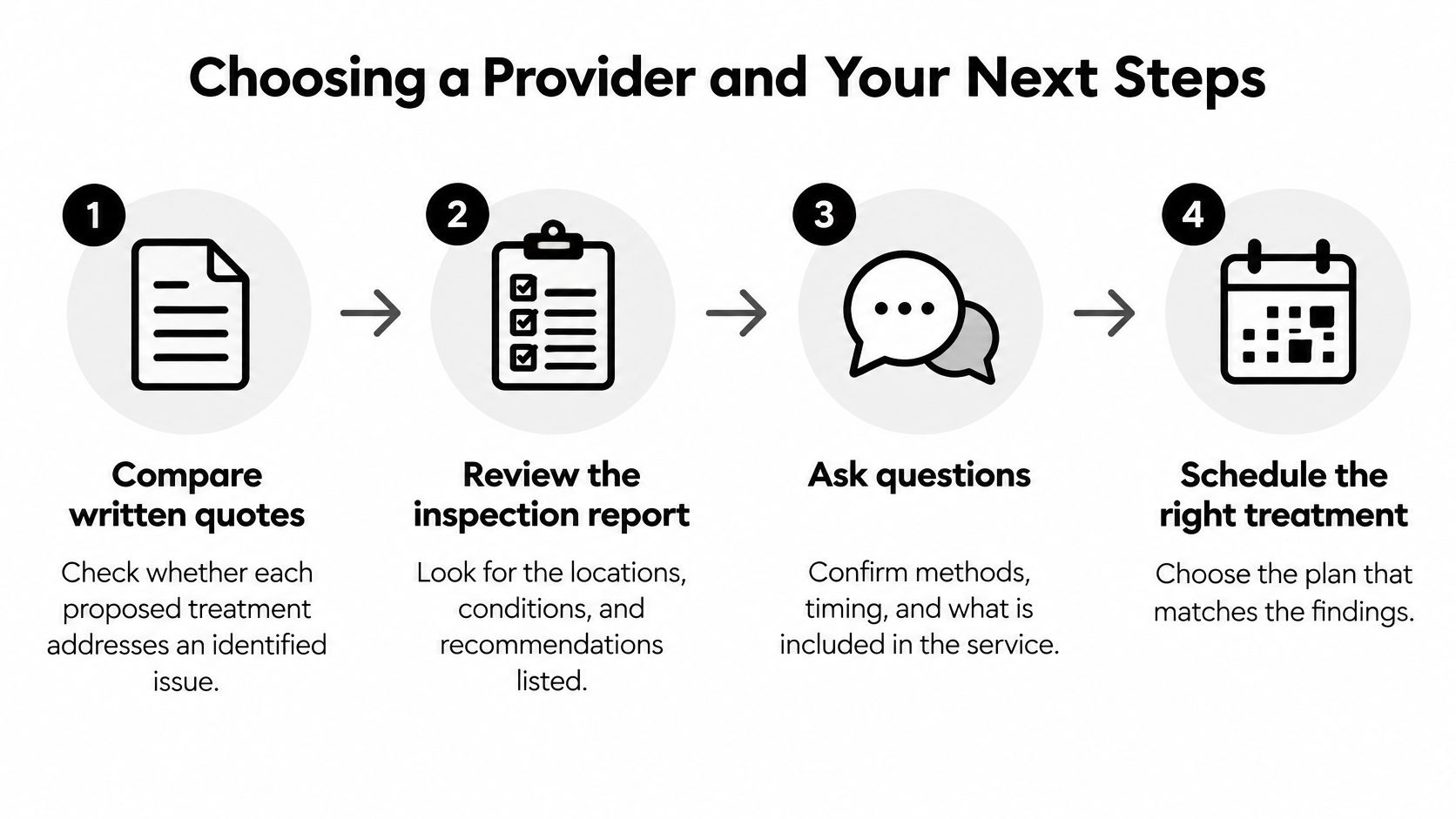
Compare each written quote with the inspection findings, not just with the other prices. A cheaper proposal may cover a different area or omit monitoring. A more expensive proposal still needs a clear explanation of what it addresses.
If the report identifies a specific problem beneath a sink, ask how the proposed work relates to that finding. If a provider recommends broader treatment, request the evidence and reasoning behind the expanded scope.
Compare decisions, not package names
Ask providers questions that make their proposals easier to compare:
- Evidence and coverage: Which documented pest and locations does this proposal address?
- Included work: Does the price include monitoring, return visits, or entry-point work?
- Owner responsibilities: Which repairs or housekeeping changes remain yours to arrange?
- Evaluation: How will the provider decide whether the plan worked?
Use this pest inspection cost guide to prepare pricing questions, then obtain a written quote for your property's actual scope. Don't assume an inspection fee, treatment quote, and repair estimate describe the same service.
Prepare a useful request
Gather the report, photos, access restrictions, and any unresolved identification questions. Add where you've noticed activity and whether building management needs to arrange entry to shared areas. Providers can then explain what they would inspect next instead of guessing from a vague description.
You can contact local professionals directly or use a matching service to request introductions. Either way, choose the next step based on evidence and clearly stated limits, not a promise that someone can prove every hidden space is clear.
Pestless Inc. connects Miami and Miami-Dade homeowners with licensed, insured local pest control professionals and facilitates introductions rather than performing inspections or treatments itself. Gather your inspection notes, photos, and questions, then visit Pestless Inc. to request zero-cost, no-obligation quotes and compare proposed next steps.
Dealing with this pest right now?
Pestless connects you with a licensed, insured Miami pest control provider for a free, no-obligation quote.