You're standing in a Miami kitchen at night when a large roach drops from the cabinet, opens its wings, and seems to head straight toward you. It's an unsettling moment, especially when the insect appears to fly instead of run. But why do roaches fly? The answer usually involves a combination of species, temperature, humidity, disturbance, and the roach's sensory system, not an attempt to attack you.
A “flying roach” may be performing powered flight, gliding toward a lower surface, or fluttering as it loses its grip. Understanding that difference helps you identify what happened and, more notably, recognize which indoor conditions may be encouraging airborne activity.
Table of Contents
- What Counts as a Flying Roach
- The Biology Behind Roach Flight
- What Triggers a Roach to Take Off
- Why Flying Roaches Seem to Chase Your Face
- How to Make Your Miami Home Less Inviting
- When to Call a Licensed Pest Pro
- Key Takeaways and Your Next Step
What Counts as a Flying Roach
A roach that leaves a wall, cabinet, or porch and enters the air may be called a “flying roach,” but that label covers several different movements. Species, body structure, surface height, and surrounding conditions all affect what you see. The Florida cockroach identification guide can help you compare body size, color, wing shape, and habitat after the insect is safely gone.
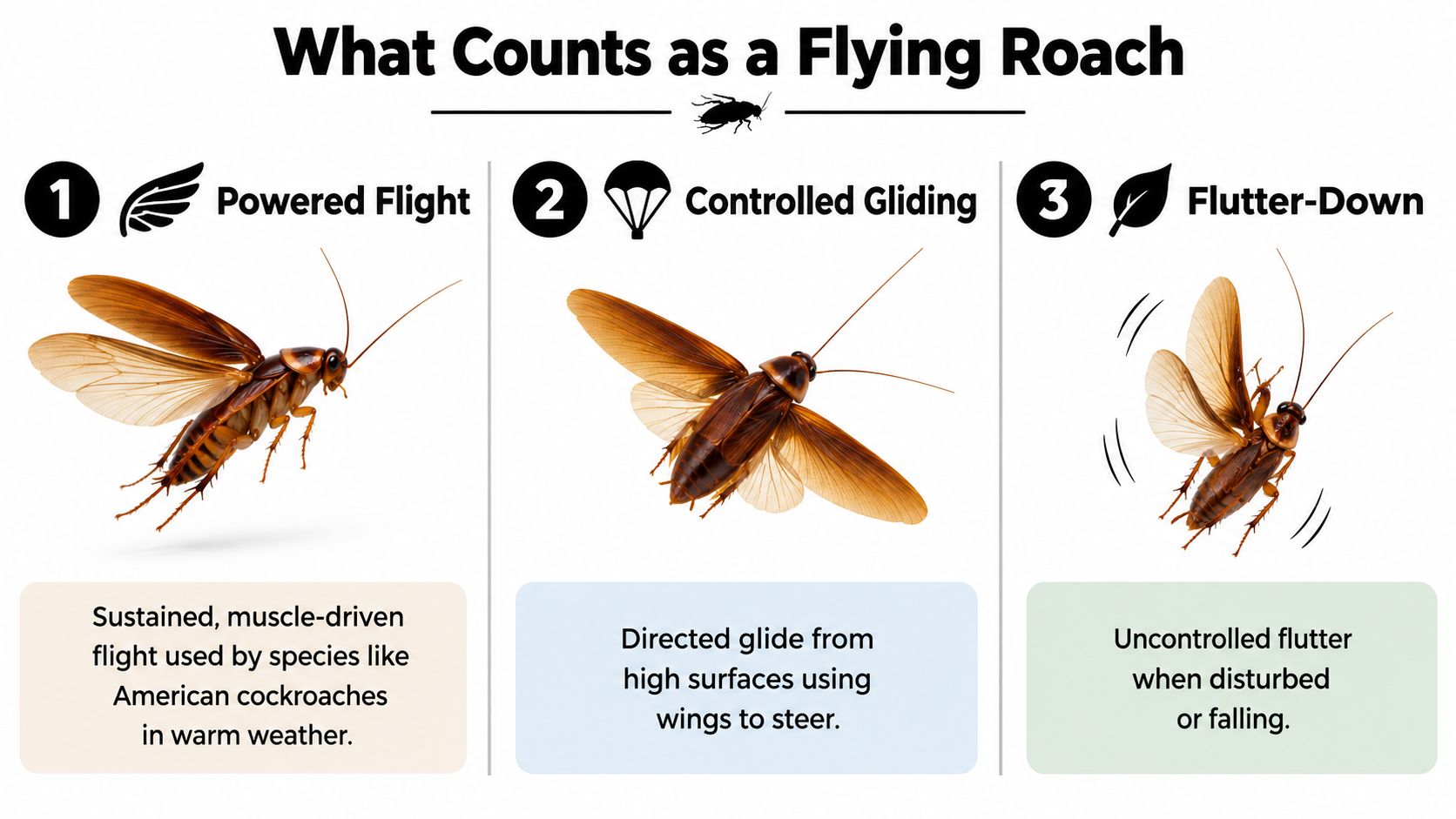
Three behaviors explain most airborne sightings: powered flight, controlled gliding, and flutter-down. The difference matters because a roach crossing the room under its own wing power suggests something different from one dropping from a cabinet.
With powered flight, the roach beats its wings through thoracic muscle action and stays airborne long enough to move between surfaces. American cockroaches, often called palmetto bugs, can fly, although research indicates that they do so only at high ambient temperatures. Miami's hot, humid conditions can therefore make airborne activity more noticeable. Experimental research on cockroach landing and flight also describes flight as a controlled landing behavior, not necessarily long-distance travel.
Controlled gliding begins when a roach launches from a cabinet, wall, tree, or porch structure. It spreads its wings and directs the descent toward a nearby surface. From across a kitchen, this can look like a deliberate flight across the room, even though the wings mainly help stabilize and steer the drop.
Flutter-down is less directed. A disturbed roach may lose its grip, fall, and move its wings as it descends. The wings slow the fall, but the insect may have little influence over where it lands. A roach dropping from a kitchen cabinet after a light switches on may be fluttering rather than flying toward anyone.
In Miami homes, smoky brown cockroaches and Asian cockroaches are among the species more likely to take off indoors. American cockroaches may also become airborne in warm, humid conditions. Smaller German cockroaches usually run instead, so a quick, low-moving roach in a kitchen cabinet may belong to another category.
The Biology Behind Roach Flight
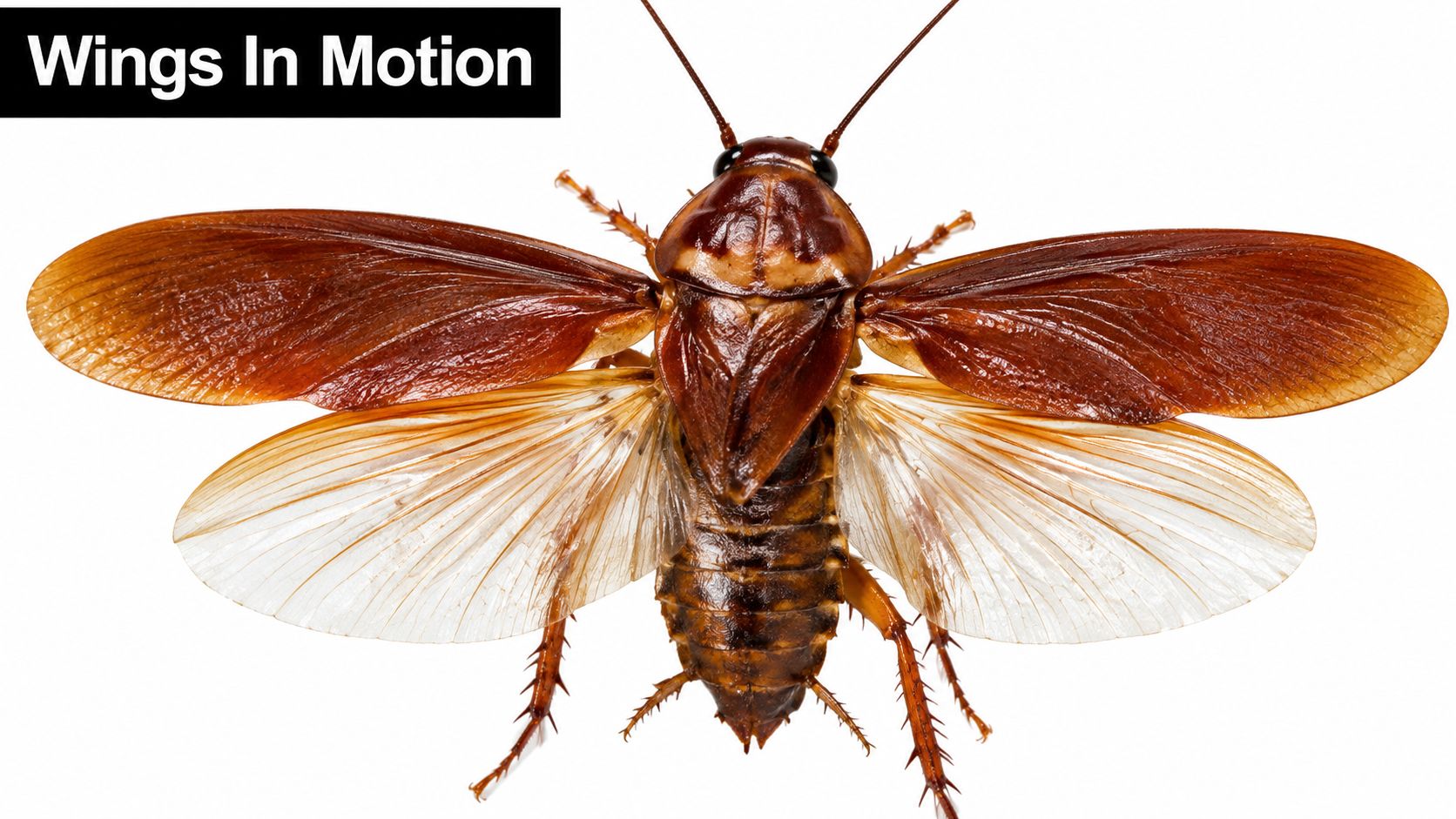
A cockroach's wings work as a coordinated system rather than as simple flat panels. The outer wings, called tegmina, are tougher and help protect the folded hind wings underneath. The delicate hind wings provide much of the surface used during flight or a controlled descent.
Flight begins in the thorax, the body region between the head and abdomen. Winged adult roaches have specialized thoracic muscles that drive wing movement. Those muscles can produce a sudden burst when the insect is escaping, responding to heat, or losing stable footing. The flight may be brief because running usually requires less energy and gives the roach better control close to the ground.
Wings provide lift, but sensors provide control
A roach doesn't rely on wing motion alone. Its antennae detect movement and changes in air movement, while sensory structures on the body help the insect monitor orientation. Research on Periplaneta americana found that intact antennal mechanosensation is important for prolonged flight. Removing the antennal flagella stopped sustained flight, while restoring contact enabled flight again, showing that antennae provide feedback needed for stability. Research on antennal control during cockroach flight describes how receptors, including Johnston's organ and campaniform sensilla, help maintain the flight pattern.
A useful comparison is a small drone. The motor supplies movement, but sensors tell the controller whether the craft is tilting, turning, or drifting. A cockroach's antennae and other sensory structures play a similar role. If the insect can't read its position properly, it may veer, wobble, or land against a wall.
The wings also contain sensory systems that respond to movement at the wing joints. Flight-control research describes receptors that respond to the angle and speed of wing movement, helping stabilize the rhythm generated by the thoracic muscles. Research on cockroach flight mechanics and wing-joint receptors connects coordinated wingbeats with feedback from the wings and thorax.
That coordination still has limits. Cockroach flight can look clumsy because the insect is working with a compact body, stiff wing structures, and short bursts of control. When it takes off near a wall, ceiling fan, patio screen, or kitchen island, it may turn abruptly or land awkwardly because its sensory feedback and wing movement can't produce the smooth navigation people associate with birds or aircraft.
What Triggers a Roach to Take Off
A roach may take flight when its surroundings make running less effective or shelter less comfortable. Temperature, humidity, crowding, light, and physical disturbance can work together. In Miami, a hot patio, warm garage, or steamy bathroom can create a more flight-ready setting than a cool, dry room.
Cockroaches are ectothermic, so the surrounding temperature affects how actively they move. The American cockroach, for example, is more likely to fly in high ambient temperatures. Warm air does not guarantee takeoff, but it can give the insect enough activity and opportunity to leave the ground.
Humidity adds another layer. Damp spaces support general cockroach activity, especially where moisture also provides cover. A poorly ventilated bathroom, a leaking under-sink cabinet, or damp cardboard in a garage can serve as both shelter and a launch area.
Crowding can push roaches to disperse. Several insects packed under mulch, beneath an appliance, inside a wall void, or among stacked boxes may move when the hiding place becomes stressful. One airborne sighting does not prove a large infestation. Repeated indoor takeoffs do suggest nearby harborage.
Light and disturbance change the immediate response. A porch light switched on at dusk, a vacuum cleaner, a hand reaching behind a cabinet, or footsteps near a hiding place may send a roach running, dropping, gliding, or flying. Outdoor insects may cross short gaps between vegetation, walls, and roofline openings. Indoor activity deserves closer attention because the home may be supplying food, moisture, and protected clutter.
| Trigger | Approximate Threshold | Where to Check in a Miami Home |
|---|---|---|
| Warm air | Activity may increase above roughly 85°F, according to analysis of heat-related cockroach activity | Attic, garage, patio, kitchen, and rooms near warm appliances |
| Humidity | Activity may rise in humid, steamy conditions, including spaces around 70% humidity | Bathroom, laundry room, under-sink cabinets, and enclosed porches |
| Crowding | No single household reading confirms crowding | Cardboard stacks, wall voids, mulch, storage shelves, and appliance gaps |
| Sudden light | A bright light can disturb a hidden roach immediately | Porch, lanai, kitchen, garage, and utility areas |
| Physical disturbance | Contact or vibration can provoke takeoff or a controlled drop | Behind cabinets, under appliances, and along baseboards |
Practical rule: Treat temperature and humidity as conditions that increase opportunity, not as proof that a roach will fly every time.
For a Miami homeowner, inspect the launch point rather than focusing only on the wings. Note whether the insect was resting near clutter, moisture, or warmth, and whether a disturbance came first. Removing damp cardboard, reducing stacked storage, sealing gaps, and improving ventilation can make those takeoff conditions less available.
Why Flying Roaches Seem to Chase Your Face
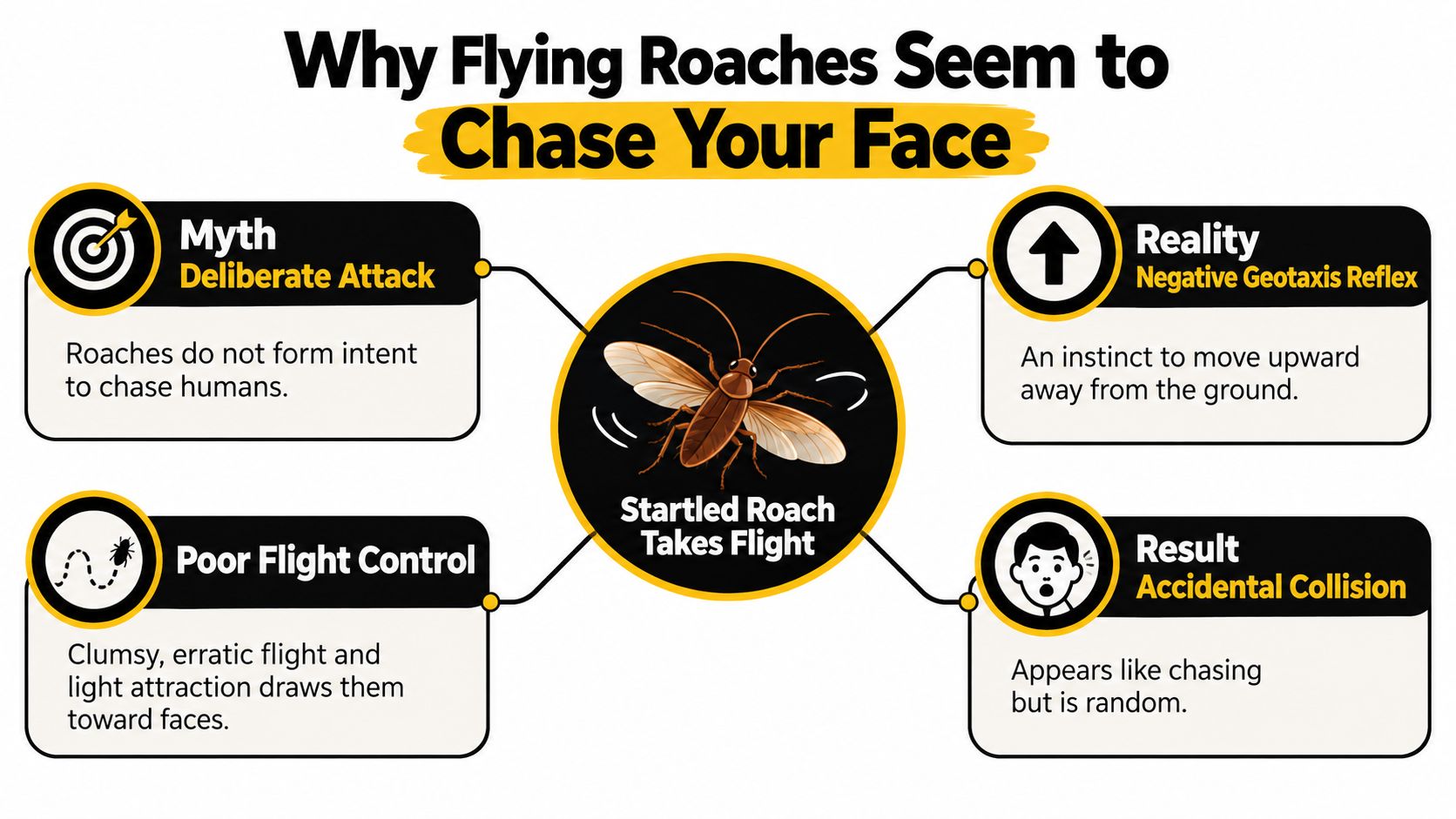
A roach that crosses your field of vision can look targeted, but it usually isn't pursuing you. The observed direction is more often an escape path shaped by sudden movement, light, air currents, disorientation, and nearby surfaces. Background on flying cockroach behavior explains why a close encounter can appear deliberate even when the insect has no reason to select a person as a target.
Roaches use sensory feedback to orient themselves, especially when their feet leave the ground. Their antennae help detect surrounding air movement and contact with nearby objects. A startled insect may also respond to warmth and the air plume created by breathing. If you're standing directly in its path, the roach may rise toward the same space your face occupies.
That's an accidental collision, not an attack.
Why the path looks intentional
A roach taking off from a kitchen counter or patio table may initially move upward because leaving the ground is safer than staying near a disturbance. Once airborne, it has limited steering compared with a bird or a highly maneuverable flying insect. Its path can wobble, curve, or change suddenly as the roach adjusts its wings and responds to air movement.
The result looks like a direct charge because people notice the insect most when it enters the space around the head. A ceiling, wall, person, or light fixture may all influence the same short flight. The insect isn't calculating a route to your face. It's trying to stabilize, find a surface, or move away from the disturbance.
If a roach takes off near you, step sideways instead of swatting wildly. Give it a clear surface to land on, then close the room's entry points and inspect the area where it started. The practical concern is the home condition that allowed the encounter, not the insect's supposed intention.
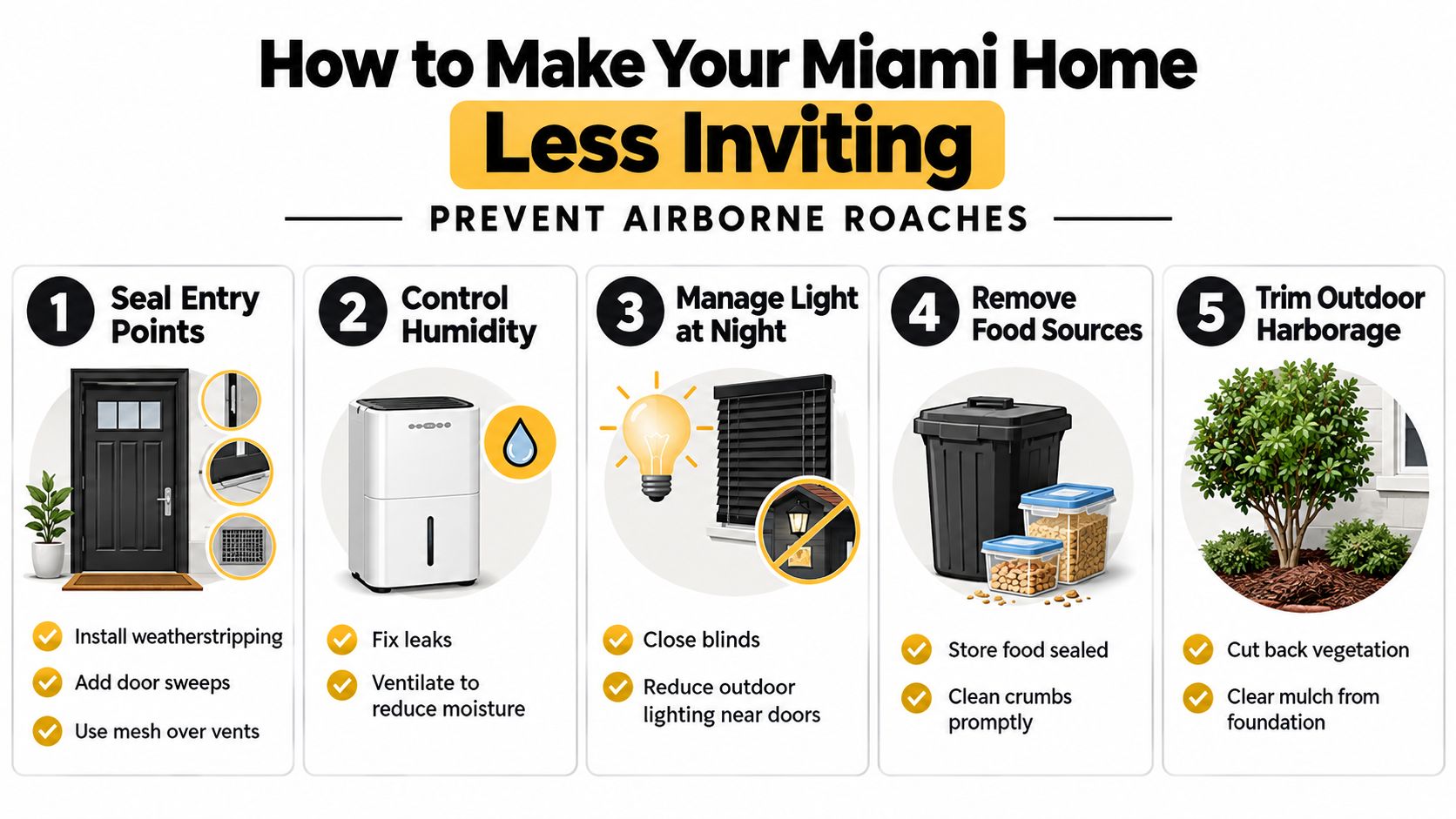
How to Make Your Miami Home Less Inviting
The most effective prevention plan changes the conditions that support takeoff. You can't change a cockroach's anatomy, but you can reduce access to warm, damp, cluttered, and well-connected shelter.
Start with the building envelope. Install weatherstripping around loose door frames and a door sweep along exterior doors. Cover attic, soffit, and other ventilation openings with suitable mesh, while keeping airflow intact. Seal plumbing penetrations and visible wall gaps with appropriate materials. A gap smaller than a quarter inch can still matter to small roaches, so inspect around pipes, cabinets, baseboards, and utility lines rather than looking only for large openings.
Humidity control deserves daily attention in South Florida. Use a hygrometer in bathrooms, laundry rooms, and enclosed storage areas. If readings approach or exceed 60%, run exhaust fans during and after showers, repair leaks, use a dehumidifier where appropriate, and have the air-conditioning system checked if it isn't removing moisture effectively. A practical goal is to keep indoor humidity below 50%, which reduces the damp conditions that make rooms more attractive to cockroaches.
Remove crowded hiding places
Cardboard stacks, paper bags, unused boxes, and crowded garage shelves give roaches protected seams and dark spaces. Break down shipping boxes promptly, store items in sealed plastic containers, and leave inspection space around walls and appliances. Clean crumbs and food residue from counters, empty indoor trash regularly, and keep pantry goods in sealed containers.
Outdoor maintenance matters too. Trim vegetation touching walls, clear dense mulch away from the foundation, and inspect around lanais and patio doors. These steps reduce the sheltered routes that connect outdoor habitat with indoor gaps.
Lighting can change what gathers near an entrance. Broad-spectrum white lights may attract insects to doors and patios, where roaches can find warmth, shelter, and a pathway inside. Consider warm amber LEDs or sodium-vapor-style lighting, close blinds near bright indoor fixtures, and keep exterior lights away from door thresholds when possible.
For a broader room-by-room checklist, use these cockroach prevention tips. If inspection also reveals gnawing, droppings, or damaged stored goods, Rodent Control focuses on removing rodents and sealing the way back in.
When to Call a Licensed Pest Pro
A Brickell homeowner notices one large roach fly from a kitchen cabinet. The next evening, another appears near the bathroom, and later the homeowner finds droppings in more than one room. Gel bait and store-bought traps reduce some activity, but airborne sightings continue.
That pattern calls for an inspection, not panic. DIY products can affect exposed insects, but they may not reach wall voids, attic areas, plumbing chases, roofline gaps, or exterior harborages. Scattered sightings can mean the insects are moving through connected spaces that a homeowner can't inspect safely or treat consistently.
A licensed professional starts by locating the conditions that support the population. Depending on the property, the inspection may include moisture meter readings near sinks and walls, thermal imaging to identify unusual conditions around wall voids, attic or crawlspace checks, and perimeter mapping of likely entry points. The technician also looks at exterior vegetation, drainage, door gaps, vents, utility penetrations, and the locations of sightings.
The license matters because Florida pest work involves regulated practices and professional responsibilities. Homeowners can review the basics in this guide to checking a pest control license. If a property inspection also uncovers signs of wood-destroying insects, Termite Control addresses silent structural damage before it spreads.
What a targeted plan changes
Instead of treating every room the same way, a professional can connect the evidence. A damp bathroom may need moisture correction, a garage may need clutter removal, and a soffit gap may need sealing alongside treatment. The goal is to match control measures to the roach's shelter and movement routes.
Pestless Inc. connects Miami and Miami-Dade homeowners with licensed, insured pest professionals. A homeowner can describe the problem through a short form or by phone, then receive a local provider match for inspection and treatment decisions. Pestless facilitates the introduction rather than performing the pest-control work itself, so the homeowner can discuss the property directly with the assigned professional.
Key Takeaways and Your Next Step
A roach in the air isn't always flying in the strict sense. Use these distinctions:
- Powered flight: Wingbeats keep the roach airborne, a behavior more likely in suitable warm conditions and in species capable of sustained movement.
- Controlled gliding: The roach launches from a high surface and uses its wings to direct a short descent.
- Flutter-down: The roach drops after disturbance and spreads its wings to slow the fall.
For prevention, measure the conditions you can change:
- Humidity: Aim for indoor readings below 50%. Pay close attention to bathrooms, laundry rooms, garages, and under-sink cabinets.
- Lighting: Replace bright exterior lighting near entry doors with warm amber or sodium-vapor-style options where practical.
- Entry gaps: Seal openings under one-quarter inch, including spaces around doors, pipes, vents, and utility lines.
- Clutter: Remove cardboard, paper bags, and crowded storage that give roaches protected harborages.
- Outdoor shelter: Trim vegetation and reduce dense mulch near the foundation.
If you've seen a flying roach indoors within the last 30 days, schedule a professional inspection. A winged cockroach indoors may indicate an established nearby population rather than a lone wanderer, and an inspection can identify the moisture, clutter, and entry routes sustaining it.
Pestless Inc. helps Miami and Miami-Dade homeowners describe cockroach activity and connect with licensed, insured local pest professionals for inspection and treatment options. Visit Pestless Inc. to submit a request or call, then take the next step toward finding where the airborne activity is starting.
Dealing with this pest right now?
Pestless connects you with a licensed, insured Miami pest control provider for a free, no-obligation quote.


