A small yellow patch appears near the driveway in your Kendall or Coral Gables lawn. You water it, wait, and expect the St. Augustinegrass to green up. Instead, the patch turns brown, creeps into healthy turf, and leaves you wondering whether the problem is drought, disease, fertilizer, or an insect.
That confusion costs time. Chinch bugs in Florida lawns can look like ordinary heat stress, but another bottle of insecticide isn't always the answer. Florida has a documented history of chinch-bug resistance, so the safer path is to identify the insect, confirm the damage, treat only where necessary, and correct the lawn conditions that make recovery difficult.
Table of Contents
- Why Chinch Bugs Are a Miami Lawn Emergency
- What Chinch Bugs Are and Why They Love St. Augustinegrass
- Recognizing Chinch Bug Damage in Your Lawn
- Chinch Bug Lifecycle and Seasonal Timing in South Florida
- Why Your Chinch Bug Treatment Keeps Failing
- Preventing and Recovering From an Infestation
- When to Call a Licensed Pest Professional in Miami
- Your Action Plan for a Chinch-Bug-Free Lawn
Why Chinch Bugs Are a Miami Lawn Emergency
In South Florida, a homeowner can lose valuable turf while treating the wrong problem. A brown patch may prompt extra irrigation, a fungicide, or a general-purpose lawn spray. If chinch bugs are feeding at the edge, those responses don't remove the cause. The damaged area continues expanding while the homeowner waits for the grass to recover.
The risk is highest in St. Augustinegrass, especially in hot, exposed parts of a property. A lawn beside a driveway, sidewalk, patio, or south-facing wall can become stressed before a shaded section does. That doesn't mean every brown patch contains chinch bugs. It means the location and pattern deserve a physical inspection instead of a guess.
Early confirmation can keep the response focused. A small, confirmed area may be suitable for localized treatment and careful monitoring. A lawn with broad, advancing damage, repeated failed applications, or dead turf needs a more deliberate diagnosis and possibly licensed professional help.
The practical sequence is simple: identify the grass, inspect the damage, confirm the insect, then choose a treatment.
This approach matters because chinch bugs aren't controlled reliably by reflexive spraying. The correct product, application method, timing, and chemical class all matter, and a treatment that worked elsewhere may fail against a resistant Florida population. By the end of this guide, you'll know where to look, how to use a coffee-can flotation test, why treatments sometimes fail, and when a professional should take over.
What Chinch Bugs Are and Why They Love St. Augustinegrass
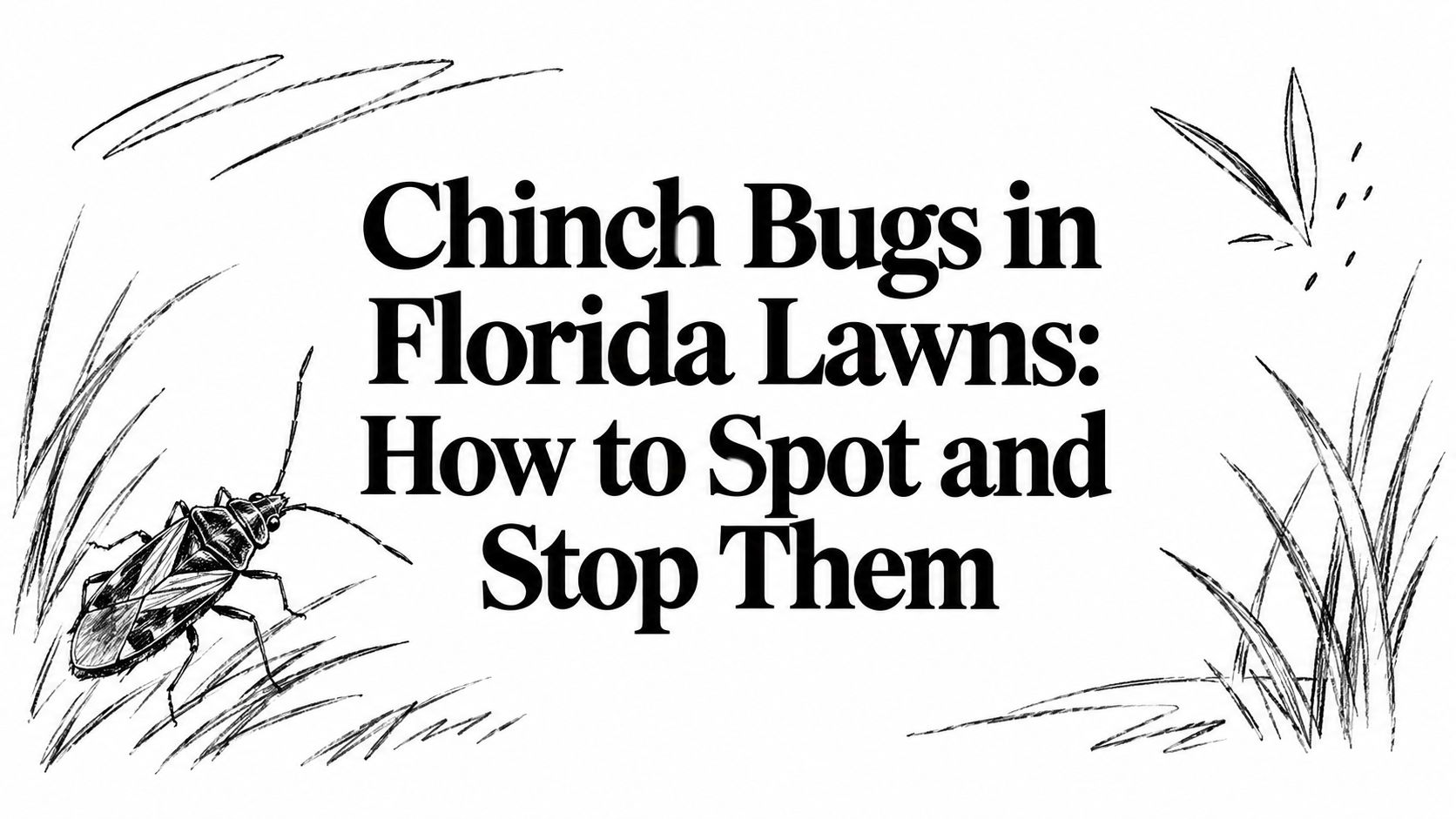
The southern chinch bug, Blissus insularis, is a tiny sap-feeding insect. Think of the grass plant as having a plumbing system that moves water and nutrients through its tissues. A chinch bug pierces the plant, removes sap, and injects saliva that interferes with water transport.
Chinch bugs don't simply “eat” a blade. They drain the plant and disrupt its internal water movement, so the grass can brown even when the soil has been watered.
Adults are typically dark, with pale folded wings that create a noticeable light marking when viewed closely. Young nymphs are smaller and often show orange and black coloring. Because they hide low in the turf, under thatch, and around leaf bases, you may see the damage long before you notice the insects.
St. Augustinegrass is the main concern because the southern chinch bug is recognized as its most important insect pest. The grass is managed across more than 400,000 hectares in the southern United States, and Florida research examined insects from five Palm Beach County locations and nine locations throughout Florida, showing that the issue isn't limited to one lawn or municipality. The entomological study on St. Augustinegrass and southern chinch-bug resistance also evaluated 14 grass lines by measuring adult-bug mortality after 14 days of feeding.
Grass variety changes the risk
Not all St. Augustinegrass responds in the same way. In those trials, lines including NUF 76, NUF 216, and FX-10 showed high resistance. A related comparison found that adults placed on susceptible Floratam produced 11 times more eggs and 18 times more offspring than adults placed on resistant FX-10. NUF-76 supported five times fewer eggs and nine times fewer offspring than Floratam, according to the same research.
Those findings don't mean a named grass variety makes a Miami lawn immune. They show that cultivar choice can materially influence infestation pressure. Sun exposure, irrigation, mowing, fertilization, and thatch also shape how well turf withstands feeding. The neighborhood may have chinch bugs, but the condition and variety of your own lawn determine how severe the problem becomes.
Recognizing Chinch Bug Damage in Your Lawn
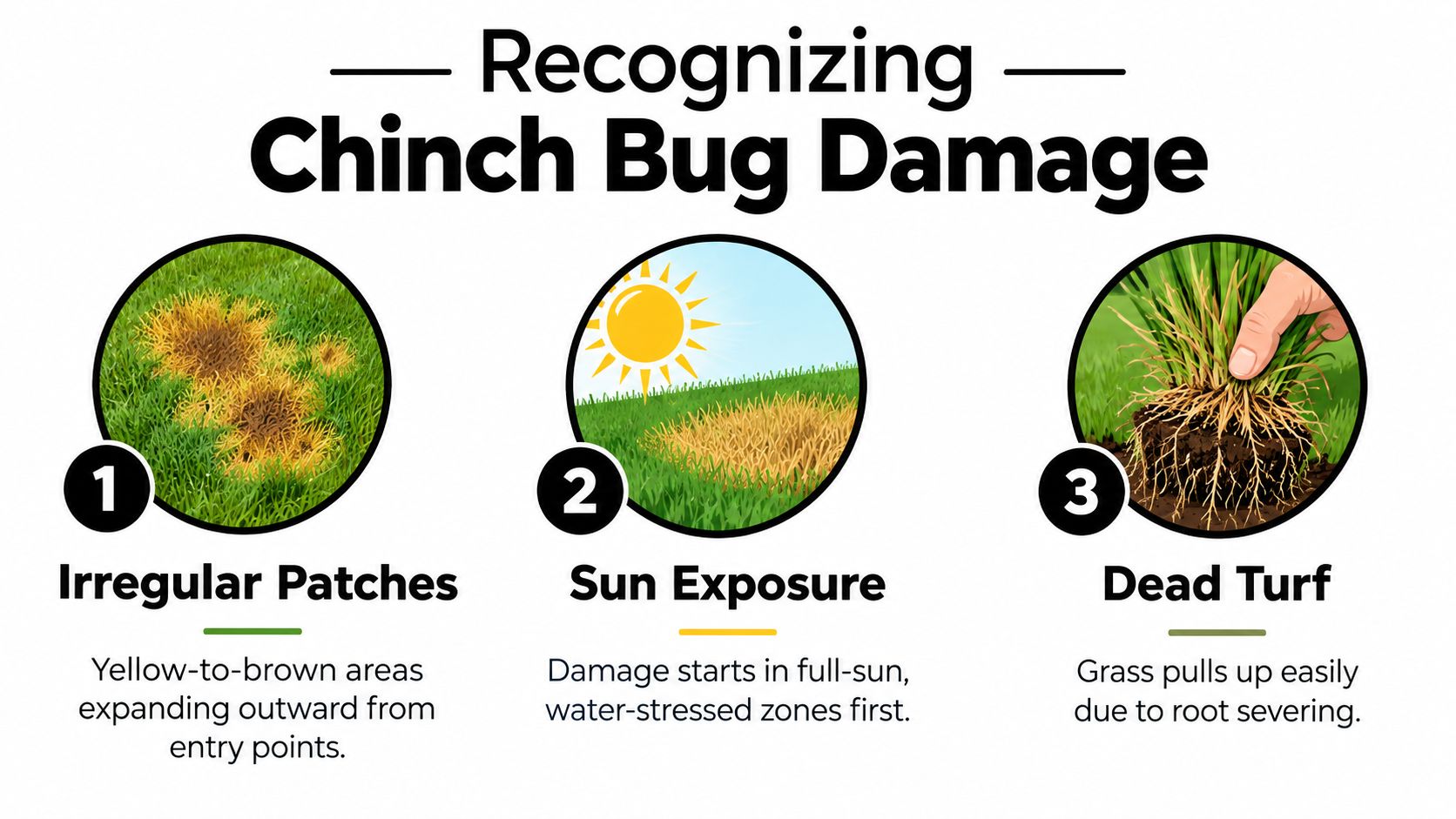
Chinch-bug injury usually begins as an irregular yellow or tan area rather than a neat circle. The patch may turn brown and expand outward, with dead or bare turf developing in the center. Look first in full-sun, water-stressed areas, especially where pavement or buildings add heat.
The pattern is useful, but it isn't proof. Drought, nutrient stress, fertilizer injury, and turf disease can all discolor St. Augustinegrass. If watering doesn't improve the area, don't automatically conclude that insects are responsible. Inspect the lawn where healthy green grass meets declining brown grass, because active insects often remain near that transition.
Part the blades and examine the thatch and the bases of the leaf sheaths. Move slowly. Adults and nymphs are small, and they may hide when disturbed. A visual check can raise suspicion, but a flotation test gives you a more useful field confirmation.
Use the coffee-can flotation test
UF/IFAS recommends a straightforward test:
- Prepare the container. Remove both ends of a coffee can so it forms an open cylinder.
- Choose the boundary. Push the can into the soil at the line between healthy and damaged grass.
- Add water. Fill the cylinder and watch the surface.
- Inspect the insects. Chinch bugs typically float up within about five minutes. UF/IFAS field guidance on identifying chinch-bug damage explains why this boundary is useful: feeding insects remove sap and inject saliva that disrupts water movement in the plant.
Repeat the check in another part of the patch if the first test is negative but the damage continues. A negative result doesn't prove that drought or disease is responsible, particularly if you tested the wrong location.
| Symptom clue | Likely chinch bugs | Likely look-alike |
|---|---|---|
| Irregular patch that expands outward | Active feeding near the green-brown edge | Disease or uneven irrigation |
| Damage in hot, exposed turf | Stress and insect activity concentrated in full sun | Drought or reflected heat |
| Brown center with declining edges | Older injury inside, active damage around the perimeter | Nutrient stress or fertilizer injury |
| Insects in thatch or at leaf bases | Chinch bugs or nymphs present | No insects found, suggesting another cause |
| Grass fails to improve after watering | Pest injury may be blocking recovery | Severe drought, root problems, or disease |
A patch that looks like a pest problem still deserves a diagnosis before treatment. If you're researching other lawn or household pests, don't confuse turf damage with signs discussed in guides about moles or voles. Likewise, Cockroach Control addresses a different pest problem and shouldn't be used as a substitute for turf diagnosis.
Chinch Bug Lifecycle and Seasonal Timing in South Florida
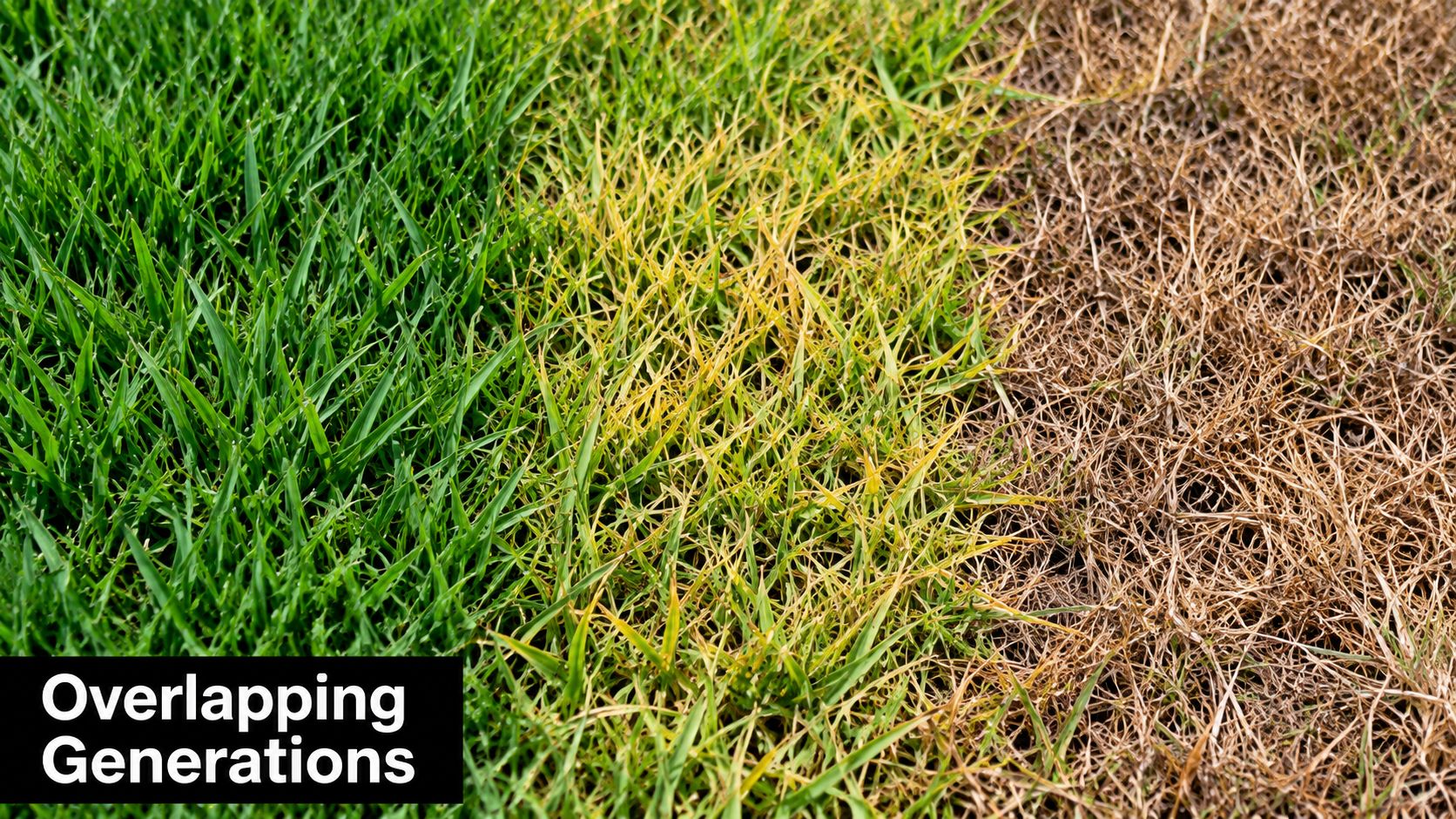
Chinch bugs pass through egg, nymph, and adult stages. The nymphs resemble smaller, more brightly marked versions of the adults, and they develop while feeding close to the soil surface. In South Florida's warm climate, these stages can overlap, so a lawn may contain eggs, young nymphs, older nymphs, and adults at the same time.
That overlap explains a common treatment disappointment. An application may reduce the visible adults, but eggs can remain, and newly developing nymphs can continue the infestation. Killing the insects you notice today doesn't necessarily remove the next generation.
Read the lawn, not just the calendar
Warm weather increases the importance of monitoring. In Miami, start paying close attention as turf enters its hotter growing period, then inspect more often during sustained heat, especially after a dry stretch. Check the same areas repeatedly rather than treating one inspection as a permanent answer.
The most useful monitoring route is predictable:
- Sunny borders: Walk along driveways, sidewalks, walls, and other heat-reflecting surfaces.
- Patch edges: Look at the transition between green and brown grass, not only at the dead center.
- Thatch and leaf bases: Separate the turf and inspect where insects shelter.
- Water-stressed zones: Check areas with poor sprinkler coverage or compacted soil.
- Recovery areas: Reinspect treated patches to see whether the margin is still moving.
Why one inspection isn't enough
A lawn can appear stable after rain or irrigation while insects remain active at the margin. Conversely, brown turf may continue looking worse after the insects are gone because damaged tissue doesn't instantly regain its color. Separate new spread from old injury by marking the edge or photographing the area from the same position during each check.
This is also why timing and follow-up belong together. If a treatment is needed, the applicator must consider which life stages are present, whether the product reaches insects beneath the canopy, and whether the turf is stressed enough to delay recovery. A single visual visit rarely answers all three questions.
Why Your Chinch Bug Treatment Keeps Failing
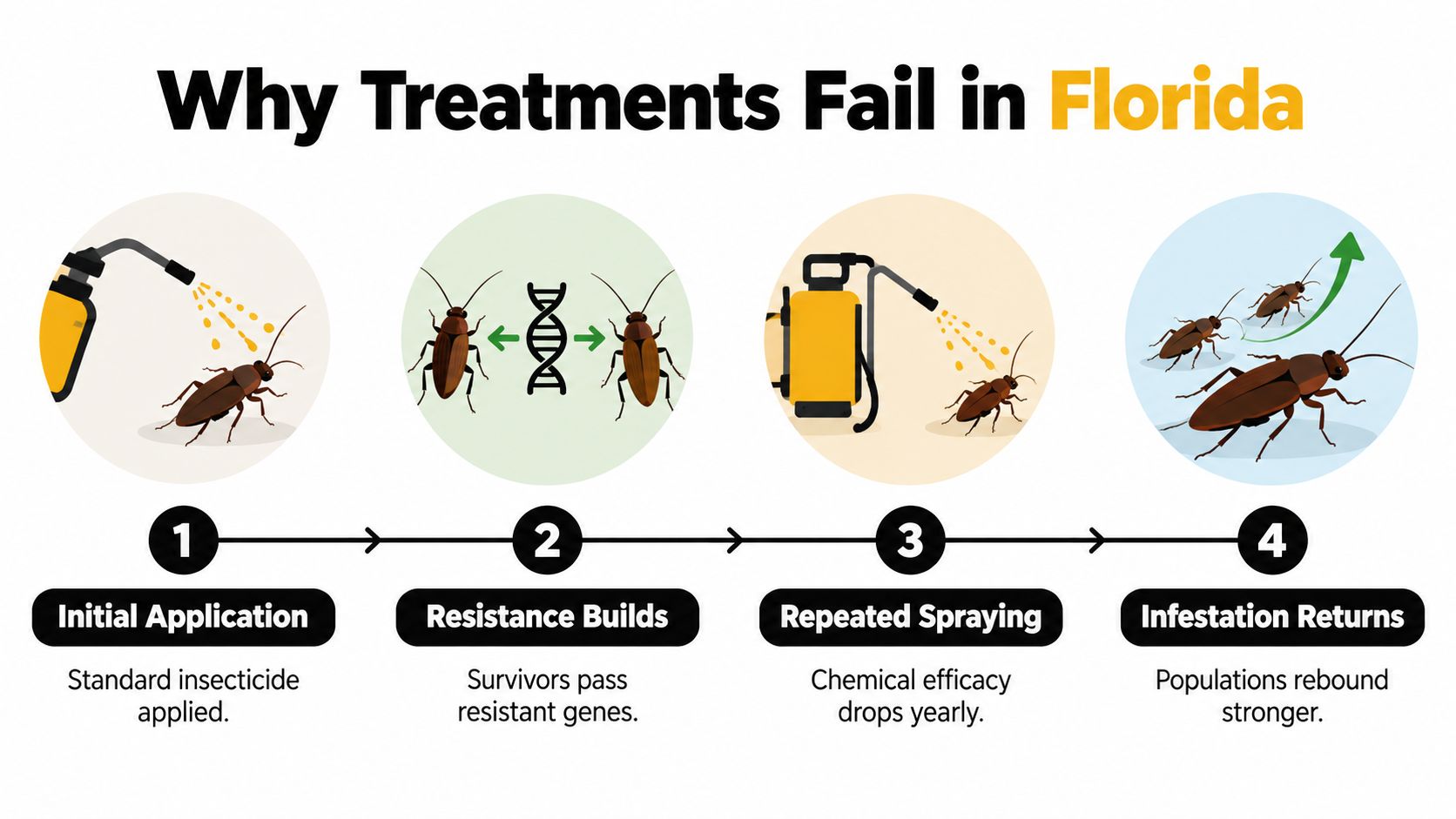
A browned lawn in Miami can tempt you to reach for a stronger bottle. That response can fail because the problem may be resistance, a wrong diagnosis, or an application that never reached insects hiding in the turf. Florida's history includes resistance in both the grass and the insect. Floratam's chinch-bug resistance lasted until 1985, when damage to that previously resistant cultivar was reported in Florida and later research confirmed that the resistance had been overcome.
In 1983, field-control work examined organophosphate-resistant chinch bugs on two infested residential St. Augustinegrass lawns. Each lawn had previously received chlorpyrifos at the recommended rate of 1.12 kilograms of active ingredient per hectare, without successful control. Later testing of Florida chinch bugs collected from 10 locations found varying degrees of resistance to bifenthrin, deltamethrin, imidacloprid, and lambda-cyhalothrin. The Florida insecticide-resistance research identified the latter three as products for which resistance was documented there for the first time.
Think in chemical classes
A brand name can change while its mode of action remains similar. Repeating products from the same chemical class applies the same basic pressure again. Surviving insects may reproduce, leaving the next treatment with less effect. Resistance management principles are not unique to Florida turf. The same reasoning appears in guides to Dublin garden pest management.
Rotation requires more than alternating bottles. A licensed applicator should choose a product labeled for chinch bugs and the turf, follow that label, and plan treatment around resistance risk. Product selection cannot correct a misdiagnosis. Disease, irrigation failure, or another turf problem can produce similar discoloration.
Before applying anything else, use this checklist:
- Verify the insect: Repeat the flotation test or seek a professional diagnosis.
- Record the product: Note the active ingredient, product name, and application date.
- Check the class: Avoid repeating the same chemical class after failure.
- Evaluate the spread: Continued expansion can indicate active insects, misdiagnosis, or inadequate control.
- Escalate when necessary: A licensed professional can assess resistance and treatment options.
For broader context, review sustainable pest management. A treatment that worked on one property may not transfer safely or effectively to another.inermi
Preventing and Recovering From an Infestation
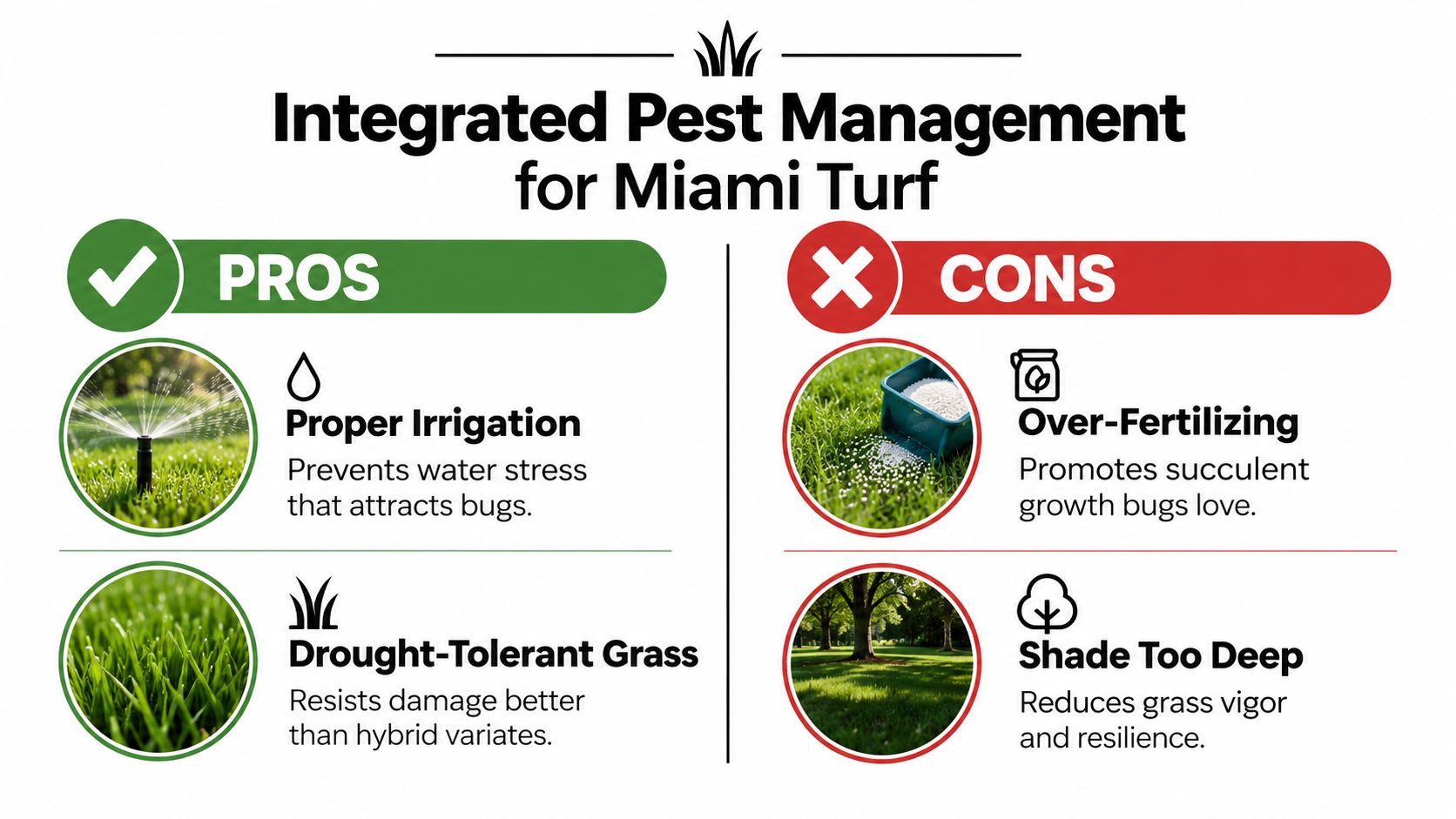
Prevention starts with the plant, not the spray cabinet. Chinch bugs take advantage of stressed St. Augustinegrass, so irrigation, mowing, fertilization, and thatch management affect how much damage the lawn can absorb.
Water thoroughly enough to support healthy roots, while following local restrictions and avoiding a constantly wet surface. Check sprinkler coverage rather than assuming the timer serves every zone evenly. Mow at the correct height for your turf and keep the blade sharp. Cutting too short removes leaf area and leaves the grass less able to cope with heat.
Fertilize for steady growth, not a sudden flush of soft tissue. Excessive or poorly timed feeding can create a dense, tender canopy and may complicate disease and insect management. Reduce excessive thatch because it provides shelter and can interfere with an insecticide reaching pests near the soil surface.
Be cautious with resistant-lawn claims
Recent UF/IFAS reporting documents southern chinch-bug resistance involving five insecticide classes, including pyrethroids and neonicotinoids. It also states that no commercially available St. Augustinegrass, zoysiagrass, or bermudagrass varieties are known to be resistant to southern chinch bugs. The UF/IFAS report on continuing chinch-bug challenges recommends integrated pest management that combines irrigation, fertilization, mowing, thatch reduction, monitoring, and appropriately labeled treatment.
That doesn't make grass selection irrelevant. The earlier research shows that some St. Augustinegrass lines performed better under testing conditions, but a marketing claim shouldn't replace current diagnosis or maintenance. Ask what “resistant” means, what evidence supports the claim, and whether the grass is suitable for your property's light, drainage, and maintenance conditions.
Repair with realistic expectations
Treat confirmed patches instead of automatically broadcasting an insecticide across the entire property. Localized treatment limits unnecessary exposure and makes it easier to judge whether the margin is still advancing. Follow the product label and use a licensed professional when the application or product requires one.
Grass that is yellowing may recover after the insects are controlled and stress is corrected. Turf that is fully dead and bare won't return because the insects are gone. Give surviving runners time to fill in, and replace areas that no longer have viable grass only after the pest problem is under control. UF/IFAS notes that even a thorough application may provide only temporary control in serious infestations, so monitoring remains part of recovery.
When to Call a Licensed Pest Professional in Miami
DIY inspection makes sense when the damaged area is limited, the diagnosis is uncertain, and you can monitor the lawn closely. The coffee-can test helps you avoid treating a brown patch that has nothing to do with chinch bugs. It also gives a professional useful information if you record where and when you found insects.
Professional help becomes more important when:
- The patch keeps spreading: Active expansion means the lawn is losing ground while you decide what to do.
- Previous treatments failed: Resistance, poor coverage, wrong timing, or misdiagnosis may be involved.
- Several areas are affected: Multiple patches make spot-by-spot decisions harder.
- The turf is valuable or extensive: A property manager, landlord, or HOA may need consistent documentation and follow-up.
- You aren't sure about the label: Chemical class selection and application requirements shouldn't be guessed.
A licensed, insured Florida pest control professional can examine the transition zone, distinguish insects from disease or irrigation problems, and design a treatment plan that accounts for resistance. Ask the provider to document the suspected pest, active ingredient, application date, follow-up plan, and any cultural corrections needed for the turf.
You can also review guidance on choosing a licensed pest control professional before requesting service. Pestless connects Miami-Dade residents with vetted, licensed local providers through a form or phone call, which can be useful when a homeowner, landlord, or board needs help comparing options. A separate service such as Mosquito Control addresses biting mosquitoes, not chinch-bug damage, so describe the turf symptoms specifically when requesting an inspection.
Your Action Plan for a Chinch-Bug-Free Lawn
Start with the patch, not the product. Walk the green-brown boundary and inspect the thatch and leaf bases. Note whether the area is in full sun, near pavement, or within a zone with uneven irrigation.
Then run the flotation test. If you find chinch bugs, mark the affected area and record the date. Treat confirmed areas with an appropriately labeled product and a resistance-aware plan, rather than repeating a chemical class that already failed. If you don't find insects, investigate irrigation, disease, nutrient stress, and other causes before spraying.
Keep the lawn capable of recovery by maintaining suitable irrigation, mowing practices, balanced fertilization, and manageable thatch. During warm weather, revisit vulnerable patch edges regularly and compare the boundary over time. If damage continues after a documented treatment, call a licensed professional instead of escalating through random products.
Confirm before you treat. Treat precisely. Then monitor what happens next.
Chinch bugs are a serious Florida turf problem, but they become easier to manage when you replace guesswork with verification. The goal isn't to eliminate every insect from the neighborhood. It's to protect healthy turf, catch active feeding early, and use the least wasteful effective response.
If chinch bugs are spreading across your Miami-Dade lawn, Pestless Inc. can connect you with licensed, insured local pest professionals who can assess the damage and treatment history. Visit Pestless Inc. to describe the problem and request a no-obligation quote from a suitable provider.
Dealing with this pest right now?
Pestless connects you with a licensed, insured Miami pest control provider for a free, no-obligation quote.