
At 11 p.m., you're rinsing a glass in the Miami kitchen when a large palmetto bug launches from the wall and flutters straight toward the light. You grab the aerosol can, hit it until the insect drops, and expect the problem to be over. Then another one appears a few nights later.
That cycle continues because the flying roach usually isn't the whole problem. It's evidence that the property still offers moisture, food, shelter, or an easy route inside. Learning why roaches fly helps explain the behavior, but lasting control depends on finding the conditions that keep bringing them back.
Table of Contents
- Why Flying Cockroaches Keep Coming Back
- Identifying Which Flying Cockroach You Are Dealing With
- Mapping the Infestation With Sticky Traps
- Removing What Attracts Flying Roaches Indoors
- Sealing Your Home Against Roach Entry
- Choosing the Right Treatment for Flying Roaches
- When to Call a Licensed Pest Professional
Why Flying Cockroaches Keep Coming Back
A palmetto bug entering through a door or window is often an outdoor invader, not proof that dozens are breeding in the kitchen. But repeated sightings still deserve attention. Warm, humid South Florida nights create favorable conditions for short flights, gliding, and movement around exterior lights. If the home remains accessible, the next roach has no reason to stay outside.
The visible adult is also the easiest target and the least useful place to focus. Killing it may solve that immediate encounter, but it won't close a gap under the back door, dry a cabinet beneath a leaking sink, or remove damp cardboard in the garage. Public health guidance links cockroach activity strongly with food, water, clutter, and entry points, and recommends sealing cracks, repairing leaks, removing cardboard clutter, and storing food tightly rather than just chasing insects at night. See the North Carolina guidance on cockroach control and prevention for the same conditions-first principle.
The building problem behind the insect problem
A Miami homeowner may spray the roach seen near a patio door, then find another beneath the refrigerator. Those insects might not share the same harborages. One could have entered from outside, while another may be using a damp void, drain area, or appliance space that remains undisturbed.
Practical rule: If flying cockroaches keep appearing after visible adults are killed, inspect the property before buying a stronger spray.
The durable sequence is straightforward. Identify the species, map activity with sticky traps, remove food and moisture, seal entry routes, and then use targeted treatment where monitoring shows a need. That order matters because an outdoor palmetto-bug problem and an indoor German cockroach infestation require different decisions.
Start with the question, “Where are they coming from?” A trap behind the refrigerator, a monitor near an exterior door, and an inspection of plumbing and wall penetrations can tell you far more than a cloud of insecticide in the middle of the room.
Identifying Which Flying Cockroach You Are Dealing With
A roach with wings isn't automatically a flying roach. Many adults have wings but rarely use them, and some only glide or flutter from a raised surface. Most of the world's more than 3,500 cockroach species can fly in some form, yet common household species generally make short, clumsy flights or don't fly at all, as documented in this cockroach identification overview.
Species identification changes the treatment plan. A large roach entering from a patio suggests an exclusion and outdoor-harboring problem. Small roaches appearing around a refrigerator, cabinet hinges, or food storage point more strongly toward indoor activity. Use a clear photograph, a captured specimen, or guidance on Florida cockroach identification before applying products.
Common cockroach species and flight behavior
| Species | Flight Ability | Where It Lives | What It Signals |
|---|---|---|---|
| American cockroach, often called a palmetto bug | More likely to glide or flutter from elevated places than sustain controlled flight | Drains, utility areas, exterior harborage, damp building spaces | Outdoor entry, moisture, or a route through plumbing and structural gaps |
| German cockroach | Typically doesn't fly | Kitchens, bathrooms, appliances, cabinets, and other indoor harborages | Possible indoor breeding activity requiring careful monitoring and targeted control |
| Oriental cockroach | Can't fly | Damp, cool, sheltered areas, often near ground level | Moisture, debris, foundation access, or sanitation conditions |
| Asian cockroach | Capable of flight and commonly associated with outdoor activity | Vegetation and exterior areas, with attraction to lights | Outdoor population pressure and light-driven entry |
| Smoky brown or other outdoor species | Flight ability varies by species and individual | Rooflines, vegetation, attic-adjacent spaces, and exterior harborages | Upper-level gaps, screens, vents, or outdoor lighting may be contributing |
The table is a decision aid, not a substitute for a close identification. Color can change with lighting, and a frightened roach may behave differently from one moving normally. Note the insect's size, body color, wing length, location, and whether it flew from a high surface or crawled out of a concealed area.
Why the distinction matters
Spraying every winged roach as though it were the same pest wastes time and can push insects into less accessible spaces. German cockroaches typically need indoor harborage treatment and strict bait placement, while American and Asian cockroaches often require attention to exterior conditions and entry points.
Keep the specimen or photograph available for a technician. A reliable identification narrows the likely source, tells you which areas to inspect first, and prevents a costly mismatch between the product and the insect's behavior.
Mapping the Infestation With Sticky Traps
Don't treat blind. Flat glue monitors are inexpensive diagnostic tools that show where cockroaches travel when the house is quiet. University of California IPM recommends placing sticky traps along walls, under appliances, and near exterior doors to locate heavier activity and guide treatment before insecticide is used. The UC IPM cockroach guidance also supports using traps as part of an integrated pest-management process.
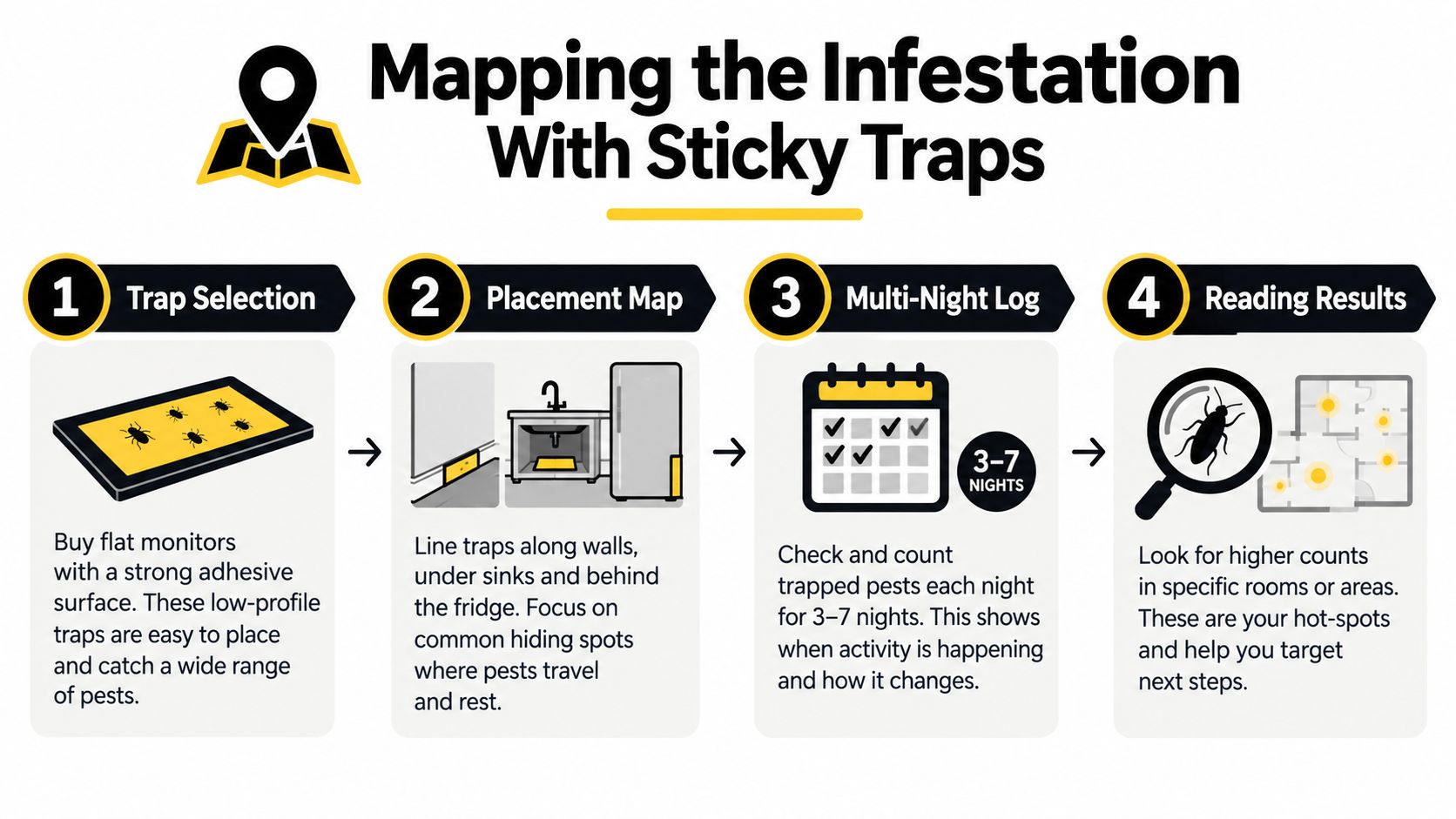
Set the trap map
Buy flat sticky monitors designed for cockroaches, preferably with a folded or covered surface that reduces accidental contact with pets and children. Label each monitor with its location and date. Place them where roaches naturally travel, not in the center of an open room.
Use locations such as:
- Kitchen routes: Behind or beside the refrigerator, beneath the sink, near the dishwasher, and along the wall behind the range.
- Bathroom moisture points: Behind the toilet, beneath the vanity, and near plumbing penetrations.
- Entry routes: Beside exterior doors, near sliding doors, and along walls beneath windows.
- Utility and storage areas: Near water heaters, laundry appliances, garage doors, and stacked storage.
Keep monitors flat against walls or tucked beside edges. A trap placed in the open may catch less than one pressed into a dark travel corridor.
Read the pattern, not just the count
Check the monitors at the same time each night and record what you find. The plan notes call for checking for 3 to 7 nights, and that repeated observation helps separate a random visitor from a consistent route.
A heavy catch behind the refrigerator points toward an appliance or kitchen harborage. Activity beside an exterior door supports an entry-route theory. A monitor near a bathroom may reveal a moisture or plumbing issue, while several empty traps inside combined with catches near doors suggest the insects are entering rather than breeding throughout the home.
Empty traps don't prove the property is clear. They may mean the monitors are in the wrong locations, the activity is limited to another room, or the insect is moving through a hidden void. Move monitors only after recording the original placement, because the first map becomes your baseline. After corrections and treatment, repeat the same checks and compare activity by location.
If the trap map reveals structural concerns around penetrations or concealed wood damage, a separate Termite Control evaluation addresses a different pest issue. That service description is direct: “Stop silent structural damage before it spreads.”
Removing What Attracts Flying Roaches Indoors
Sanitation isn't about making the house look spotless for an afternoon. It's about removing the small, dependable food and water sources that let roaches remain after they enter. In a humid Miami home, moisture correction matters just as much because damp areas can stay attractive long after a surface appears dry.
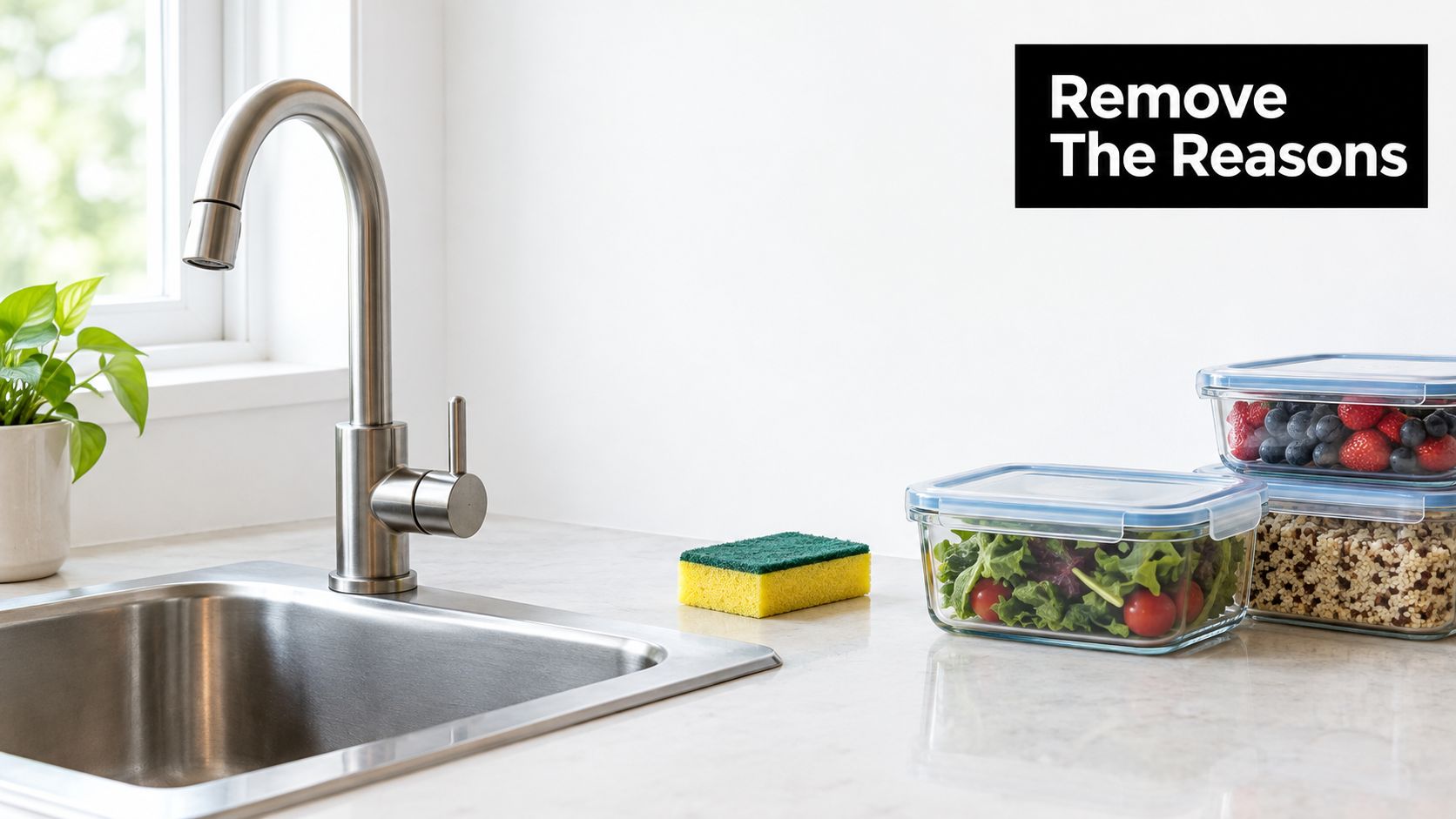
Start with the kitchen
Clean the places people miss:
- Behind appliances: Pull out the refrigerator and range when safe to do so, then remove grease, crumbs, and food residue along the wall and floor edges.
- Small appliances: Empty crumbs beneath the toaster and wipe food particles from countertop equipment.
- Sink cabinet: Check for slow leaks, wet sponges, swollen wood, and condensation around supply lines.
- Pet feeding area: Pick up leftover food and avoid leaving bowls beside walls overnight.
- Storage: Transfer opened dry goods into tightly closed containers and keep trash inside a sealed bin.
A single wipe of the countertop won't address grease behind the stove or residue beneath an appliance. Those concealed edges are where a trap map becomes useful.
Chase moisture room by room
In bathrooms, inspect the toilet supply line, vanity plumbing, caulk joints, and floor edges. In laundry areas, look beneath the washer, around the drain hose, and behind stored cleaning supplies. Repair dripping faucets and pipe leaks promptly rather than waiting for the cabinet to dry naturally.
Air-conditioning components deserve attention in South Florida. Check for condensation around lines, drain pans, and nearby wall penetrations, then have qualified personnel correct mechanical or drainage problems. Use ventilation after showers and cooking, and keep damp towels, mops, and sponges from remaining in dark corners.
Remove hiding material
Cardboard boxes, paper bags, stacked magazines, and loose storage create protected harborages. Break down unwanted cardboard, move necessary items into clean plastic containers, and keep storage raised and away from damp walls where practical. Vacuum along baseboards and beneath furniture so you remove debris without scattering hidden insects.
This work comes before chemical treatment because bait and residual products perform better when competing food and water sources are limited. It also makes new activity easier to spot, which is critical when the aim is to stop reinvasion rather than kill a single adult.
Sealing Your Home Against Roach Entry
For a palmetto bug that lives primarily outdoors, exclusion is the part of the job that stops the nightly repeat visit. A large roach doesn't need a dramatic opening. It needs a damaged screen, a gap beneath a door, or an unsealed pipe penetration that connects the exterior to a dark interior space.
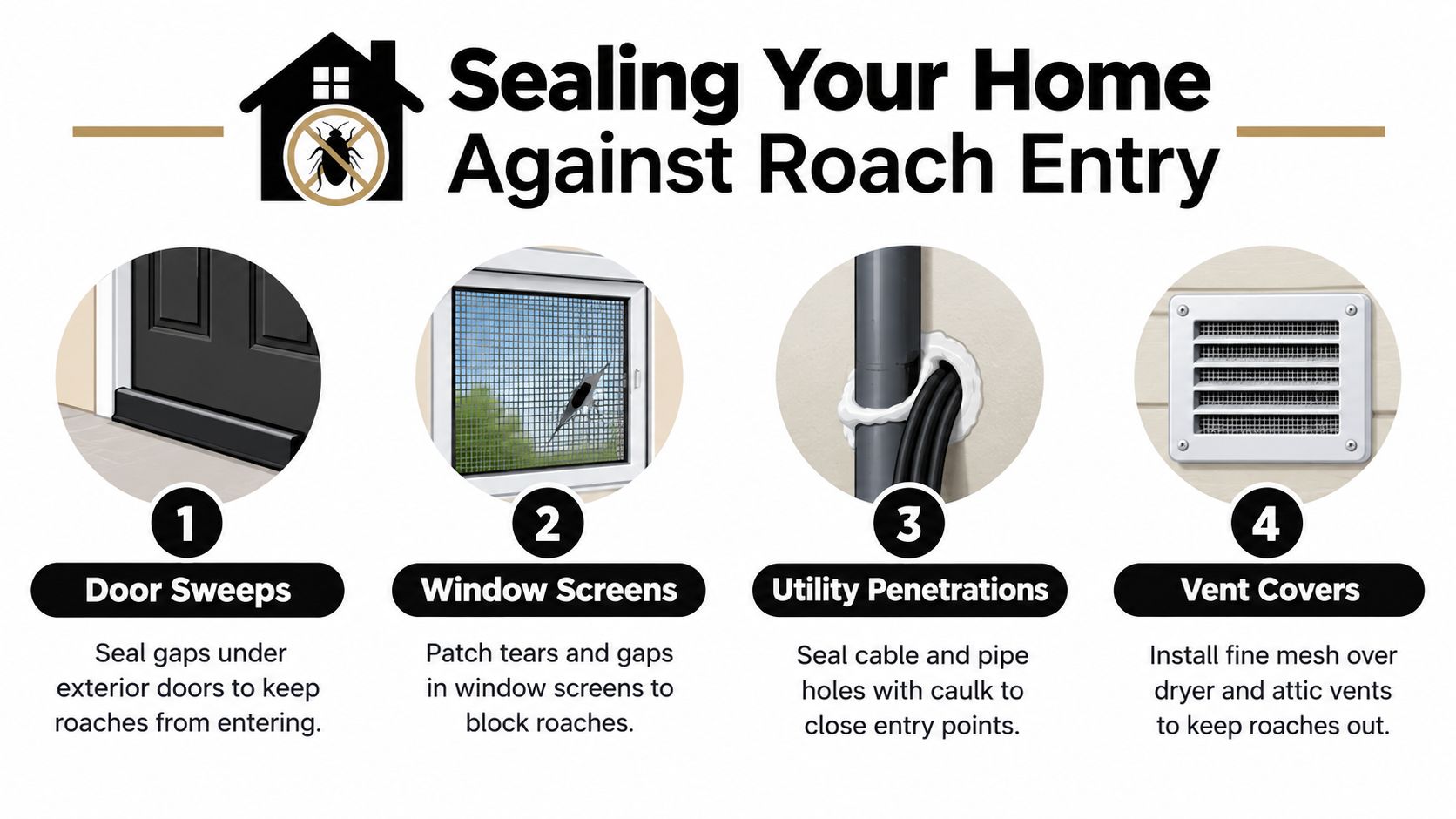
Work from the ground up
Begin at every exterior door. Hold a light low to the floor at night and inspect for visible gaps beneath the slab. Install a properly fitted door sweep and replace compressed weather stripping. Sliding doors need attention at the meeting point and along damaged tracks, while garage doors need a continuous seal against the slab.
Next, inspect:
- Window screens: Patch tears and close gaps around frames.
- Utility penetrations: Seal openings around pipes, cables, and conduits with an appropriate sealant.
- Soffits and vents: Check attic vents, roofline openings, and loose covers. Use suitable fine mesh where ventilation requirements allow.
- Block-wall openings: Inspect weep holes and other designed openings carefully. Don't seal systems that require drainage without understanding their function.
- Drains and plumbing routes: Ask a professional to evaluate recurring activity connected with pipes or concealed voids.
Roof and wall penetrations can be difficult to inspect safely, especially around raised equipment and flashing. For that part of the perimeter, this resource on professional roof penetration sealing offers useful context on why those openings need proper building-envelope work rather than a quick smear of caulk.
Reduce the outdoor welcome mat
Trim dense vegetation away from exterior walls and remove leaf piles, yard debris, and damp storage materials beside the house. Keep garbage bins closed, correct standing water near the foundation, and store firewood away from walls. Outdoor lighting can also draw flying insects toward doors and windows, so reduce unnecessary illumination and keep screens intact where lights remain.
A property with open doors, wet debris, and overgrown edges can keep receiving roaches even after an interior treatment. Use this cockroach prevention guide as a practical reminder that sealing and outdoor maintenance belong in the same plan.
If a property also needs Bed Bug Treatment, its stated objective is to “Eliminate every life stage, bugs, eggs, and all.” That is a separate pest issue, so don't assume a cockroach exclusion inspection addresses it.
Choosing the Right Treatment for Flying Roaches
Once species, activity routes, food sources, moisture, and entry points are understood, treatment becomes more precise. The product matters, but placement and residual performance matter more than dramatic knockdown. A spray that kills the roach in front of you may do nothing to the insects traveling behind an appliance or entering beneath a door.
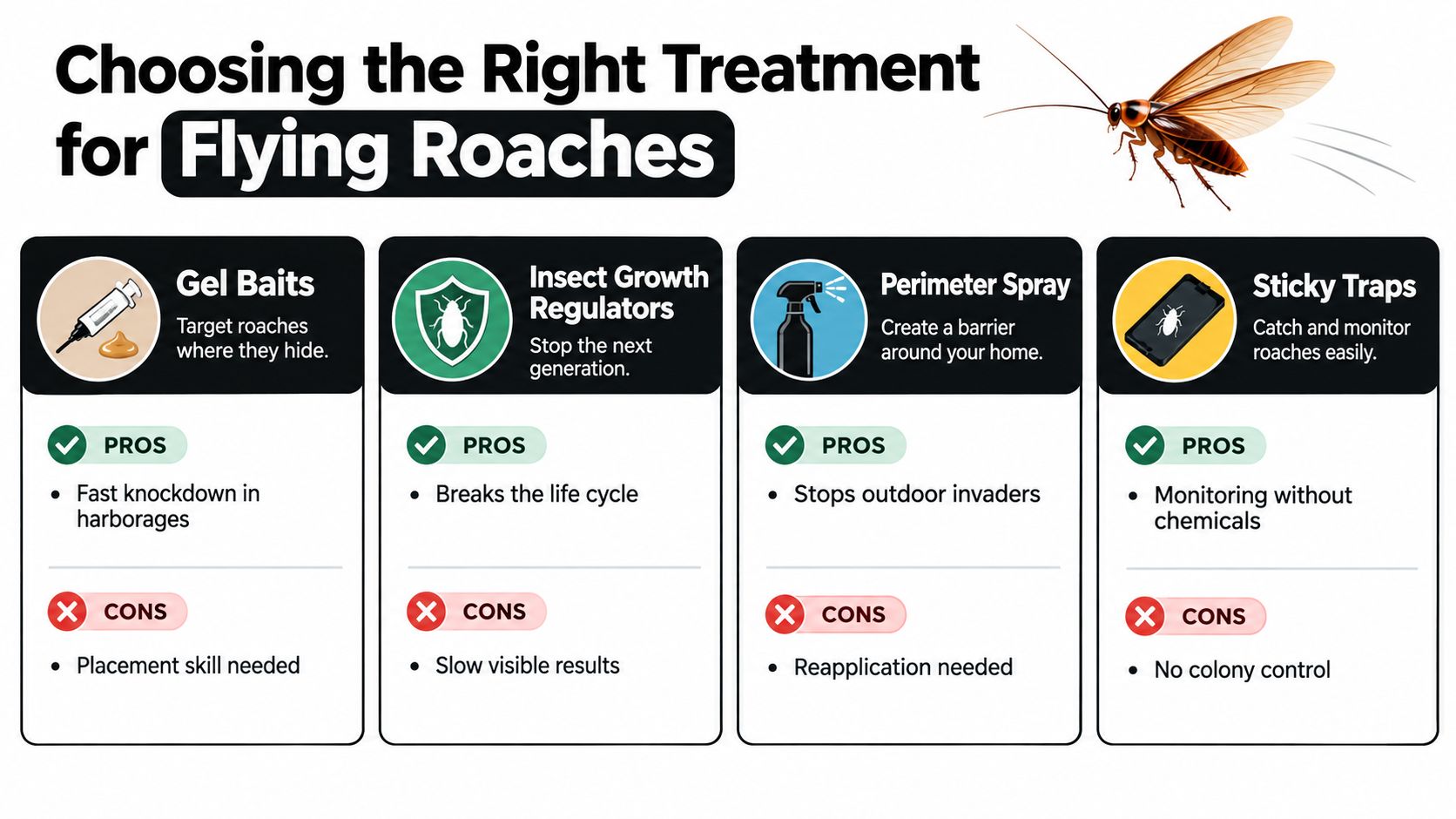
Match the tool to the route
Gel bait works best in small placements near harborages and along trap-mapped travel routes. It needs skill because contamination, competing food, or indiscriminate spraying can make the bait less attractive. Never place it where children or pets can reach it, and follow the product label.
Targeted residual insecticide has a different job. Apply only a product labeled for the site and pest, focusing on cracks, protected entry points, exterior harborage, and other locations identified by monitoring. Don't broadcast it across food-preparation surfaces, bedding, toys, or areas where people and animals have regular contact.
Sticky traps remain valuable after treatment. They don't control a colony, but they show whether activity is declining and whether one entry route remains active. A monitor beside a door that continues catching roaches tells you to inspect the threshold again instead of spraying every room.
Why foggers and fast sprays disappoint
University of California IPM advises avoiding foggers, bombs, and aerosol sprays because they can repel and disperse cockroaches without reliably killing them. That can turn one visible problem into activity spread across cabinets, wall voids, or neighboring rooms.
Field results also show why residual control deserves more attention than first-day excitement. In studies of outdoor flying species, label-rate β-cyfluthrin EC and fipronil granules reduced populations by 100% at 7 days and maintained strong suppression through 30 days, while an essential-oil formulation dropped from 68% reduction at 7 days to 2% by 30 days, according to the Journal of Economic Entomology study. The same research reported that several formulations maintained over 90% control for five consecutive months against American cockroaches.
Those findings don't mean every product works in every house. They show why label compliance, correct placement, weather exposure, reinvasion pressure, and follow-up checks determine the outcome. A product that looks impressive immediately may fail if the exterior population keeps entering through an unsealed gap.
For homeowners comparing Cockroach Control, the useful question isn't whether a service kills the roach you saw. It's whether the plan addresses the breeding cycle and the routes that keep supplying new insects. Keep people and pets away from treated areas as directed, store pesticides securely, and never combine products unless the label specifically permits it.
When to Call a Licensed Pest Professional
DIY work is reasonable when the problem is an occasional outdoor visitor and you can identify the route, correct the conditions, and monitor the result. It becomes a poor bet when the same problem returns despite those corrections. Repeated activity means the source may be concealed, shared with another unit, or beyond what household products can safely reach.
Call a licensed professional when:
- You suspect German cockroaches indoors: Small roaches around appliances, cabinets, and food areas can indicate an indoor breeding problem rather than a few flying invaders.
- The property is multi-unit: Condos and apartment buildings can share plumbing chases, wall voids, service penetrations, and sanitation conditions. Treating one unit alone may not solve the source.
- Reinvasion continues: If traps remain active after sealing, moisture correction, and targeted baiting, the inspection needs to expand to rooflines, drains, crawl spaces, exterior harborage, or neighboring areas.
- Someone has asthma or significant allergies: Avoid unnecessary pesticide exposure and ask a licensed professional to design a controlled treatment plan.
- You need a pre-closing inspection: Buyers, sellers, landlords, and property managers benefit from documented attention to visible activity, conducive conditions, and accessible entry routes.
- The work involves height or concealed spaces: Roof edges, attic areas, crawl spaces, and large-scale insecticide use carry safety risks that shouldn't be improvised.
A qualified technician should identify the roach, explain the proposed placements, provide label-based safety instructions, and distinguish indoor treatment from exterior exclusion. Ask which conditions you need to correct and how follow-up monitoring will determine whether the work succeeded.
Pestless Inc. doesn't perform pest treatments. It facilitates introductions between Miami and Miami-Dade homeowners and vetted, insured professionals who hold a Florida license. Homeowners can submit a free, no-obligation 60-second request or call, then compare options from local providers serving areas from Brickell and Coconut Grove to Doral, Hialeah, and Kendall. Typical responses are within one business hour during Monday through Saturday, 7 a.m. to 9 p.m. Eastern Time, although details may change.
The complete plan is practical: identify the species, map the activity, remove food and moisture, seal the building, use targeted treatment, and verify the result with traps. If the roaches keep returning, stop escalating the spray and investigate the property conditions with a licensed professional.
For recurring palmetto bugs or suspected indoor cockroach activity, Pestless Inc. connects Miami and Miami-Dade homeowners with vetted, insured, Florida-licensed pest professionals through a free, no-obligation request or phone call. Submit the details of your home and entry problem so you can compare local treatment options instead of continuing the spray-and-pray cycle.
Dealing with this pest right now?
Pestless connects you with a licensed, insured Miami pest control provider for a free, no-obligation quote.