Why do little black flying bugs keep coming back after you've killed the ones you can see? Often, you've removed the insects that fly without finding the damp material where the next batch is developing.
For Miami homeowners, where the flies gather is usually more useful than their color. A plant beside a window, a guest bathroom drain, and a balcony door can point to different insects and different fixes. Start with that location, then look closely enough to choose the right response without treating every tiny fly as a biting pest.
Table of Contents
- Tell Fungus Gnats, Drain Flies and Midges Apart
- Why These Flies Multiply Faster Than You Expect
- Find the Breeding Source Before You Spray
- When Small Flies Point to a Building Problem
- Stop the Breeding and Keep It From Returning
- Confirm the Source, Then Call a Pro
Tell Fungus Gnats, Drain Flies and Midges Apart
Before reaching for a spray, watch where the insects land, how they move, and whether they look slender or fuzzy. Use your phone's camera to enlarge a resting insect, and place a ruler nearby if you can do so without disturbing it. Size helps, but location and body shape are easier starting clues.
Common small black flies in Miami homes
| Insect | Size | Look | Where adults gather | Breeding source |
|---|---|---|---|---|
| Fungus gnat | Tiny, best examined with magnification | Slender, mosquito-like, long legs and bead-like antennae | Around houseplants, windows and lamps | Wet potting soil, compost and organic debris |
| Drain fly | Small, with a relatively broad outline | Fuzzy, moth-like, gray-brown to black | Near sinks, tubs and floor drains | Slime film lining drains and traps |
| Small midge | Tiny, often difficult to identify unaided | Delicate, long-legged, mosquito-like | Near lights, screens and outdoor-facing doors | Water or damp organic material, depending on the insect |
Read the gathering place carefully
Fungus gnats flit weakly around plants, though you may notice them first against a bright window. Gently disturb a suspect pot and watch for adults leaving the soil. For plant-focused prevention, Little Green Leaf's guide to keep tiny flies out of houseplant soil offers a useful companion to your watering checks.
Drain flies look more like miniature moths than mosquitoes. They often rest on bathroom walls or around plumbing fixtures, with their wings held roof-like over their bodies. A fuzzy fly beside a sink deserves a different investigation from a slender fly circling a planter.
Small midges may gather outdoors and drift inside near lights. Their presence beside a screen or balcony door doesn't automatically mean they're breeding indoors.
Fruit flies are another common source of confusion. They're typically tan rather than black, often have conspicuous red eyes, and are drawn to fermenting produce and residues rather than houseplant soil.
Most familiar household fungus gnats and drain flies aren't biting pests. However, “gnat” is an imprecise name, so use this guide to whether gnats can bite if bites are part of the complaint.
Adults clustered at plants: check the soil.
Adults clustered at sinks, tubs or floor drains: check the drains.
Where flies gather gives you a starting point for finding where they breed, not a final identification by itself.
Why These Flies Multiply Faster Than You Expect
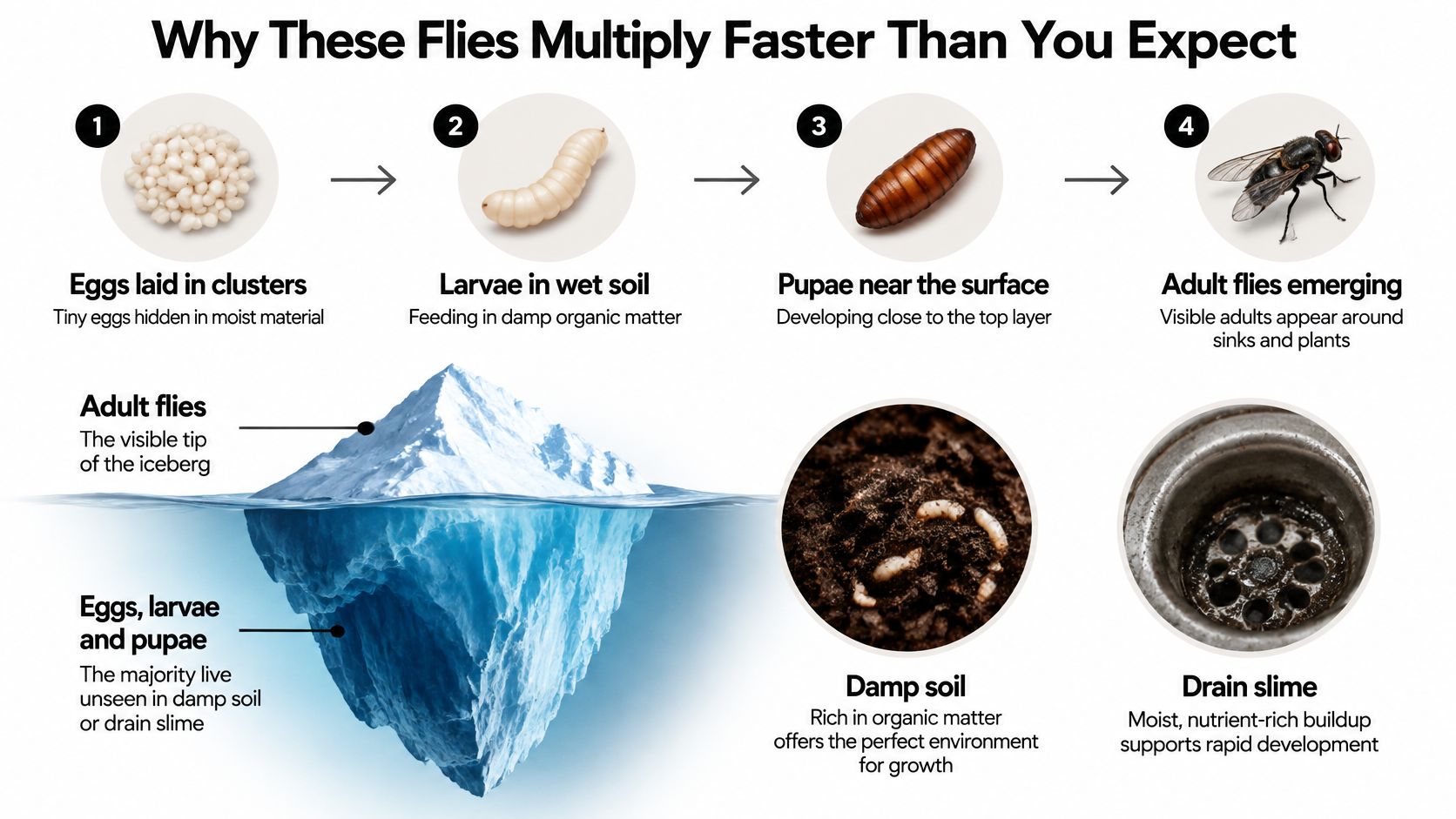
The adult fly is the visible tip of the infestation. In a plant-related problem, eggs, larvae and developing pupae can remain concealed while you're counting insects on the window.
The University of Maryland Extension's fungus gnat guide describes an egg-to-adult cycle of about four weeks under ordinary conditions, with females capable of laying as many as 300 eggs. A few visible adults therefore don't tell you how much activity is hidden in the growing medium.
The illustration shows how the visible adults connect to those concealed stages.
Follow the hidden stages
- Eggs laid in clusters. Females deposit eggs in moist growing material. You generally won't notice this stage during an ordinary plant inspection.
- Larvae feeding below the surface. The young insects feed on fungi and decomposing organic matter. They aren't the adults circling your desk.
- Pupae developing in the medium. The insects transform before emerging. Catching adult flies doesn't interrupt pupae already present.
- Adults emerging and mating. This is the stage you see near plants, lamps and windows. New adults can appear even after you've removed the previous flyers.
Temperature changes the pace. Colorado State University's fungus gnat resource summarizes reports that development can finish in under three weeks near 75°F, compared with about four weeks under normal spring and summer conditions. Warm interiors can support overlapping generations rather than a single, neatly separated batch.
That explains an apparent overnight invasion. You may notice the adults together even though the insects have been developing out of sight for some time.
Why a clean window isn't proof of control
Spraying the flyers can make a room look clear while leaving the developing insects untouched. Drain-associated flies present a similar practical challenge: their young remain in the organic coating inside plumbing rather than on the wall where adults rest.
This video offers another way to examine the small-fly problem.
Judge progress at the suspected source, not just across the room. Continued sightings after cleaning justify another inspection, but they don't prove that every treatment failed. Some developing insects may still emerge, and an overlooked source may also be contributing.
Find the Breeding Source Before You Spray
Treat the suspected breeding material as the inspection target. A spotless countertop doesn't tell you whether there's slime beneath a drain cover, and a dry-looking planter can still hold water in its saucer.
The University of Maryland Extension's drain fly guidance identifies the gelatinous organic film in drains and traps as a larval habitat and recommends an overnight screen or clear-tape test to check for emerging adults. That's more informative than assuming every insect found in a bathroom came from the nearest sink.
Where to check for breeding sources
| Source | What to check | Sign it may be the cause |
|---|---|---|
| Potted plants and saucers | Moisture just below the soil surface and water trapped underneath | Adults cluster around the plant and the growing medium stays damp |
| Floor, shower and sink drains | Accessible slime, debris and rarely used fixtures | Adults emerge from the opening or repeatedly rest nearby |
| Air conditioner or refrigerator drain pan | Standing water and organic buildup in the condensate pan | Activity concentrates around the pan or appliance base |
| Garbage bins and produce | Residue beneath liners, leaking packaging and rotting fruit | Adults gather over the bin or fermenting food |
Run a targeted inspection
At a plant, gently move aside loose surface material without digging through roots. Check the saucer, decorative outer pot and shelf underneath. A yellow sticky card positioned near the soil can help connect adult activity to that particular plant.
For a drain, start with a flashlight and inspect the accessible opening. Don't dismantle unfamiliar plumbing to look for larvae. Slime beneath the stopper or cover is worth checking even when the basin itself looks clean.
Run the overnight test when the fixture won't be used:
- Cover the suspect opening. Place fine screen over it, or position clear tape across part of the opening with the sticky surface facing downward.
- Keep the test identifiable. Note which drain you covered and avoid washing insects away before checking.
- Inspect in the morning. Adults caught beneath the covering support that opening as an emergence route. An empty test doesn't conclusively rule it out.
A drain with recurrent blockage or inaccessible buildup may need more than surface cleaning. Total Plumbing & Hot Water Systems' explanation of professional drain clearing helps distinguish clearing an obstruction from pouring cleaner into a fixture; use a suitable local plumbing professional for work in your Miami property.
Check appliance pans only where they're safely accessible. Don't open electrical equipment or pull out a heavy refrigerator alone.
Isolate a suspect source before changing everything. Moving a plant, cleaning every drain and spraying the room simultaneously may reduce sightings, but it makes it harder to know which correction mattered.
When Small Flies Point to a Building Problem
Killing the adults isn't always a complete household fix. In a Miami-Dade condo or rental, you may control the visible insects inside your unit while the moisture problem sits beyond the area you can access.
Purdue Extension's guidance on household small flies connects these pests with moist organic breeding materials, including sanitation and drainage sources. In a shared building, that calls for investigating the property conditions, not assuming that the resident with the most visible flies caused the problem.
Separate a local source from a shared one
An occasional adult beside a wet planter points toward a manageable plant-care issue. Repeated emergence at a bathroom drain, especially after accessible buildup has been removed, deserves a closer plumbing evaluation.
A shared drain line, concealed leak, irrigation problem or neighboring source is a possibility to investigate, not a diagnosis you can make from insect color. Flies near a vent also don't prove that the air-conditioning system is their breeding site.
Use a building-level record:
- Name the exact location. Record the room, fixture and nearby surfaces, rather than reporting flies everywhere.
- Document the pattern. Note whether activity follows fixture use, rain, irrigation or extended vacancy.
- Check visible moisture. Look for cabinet swelling, damp flooring, persistent condensation or staining without opening walls.
- Notify management in writing. Include photographs, the source tests completed and whether common areas or neighboring units appear affected.
Escalation clue: Repeated emergence from the same fixture after targeted cleaning is a reason to inspect the plumbing, not simply increase indoor spraying.
A ceiling stain can be useful evidence of moisture, but it doesn't establish where insects are breeding. Restore Heroes' guide to safe fixes for brown ceiling marks provides context for assessing staining; report active leaks before attempting cosmetic repairs.
Keep nuisance and biting concerns separate
Familiar indoor fungus gnats and drain flies are primarily nuisance concerns. That reassurance shouldn't be extended to an unidentified insect that bites or gathers outdoors.
For biting insects, unusually aggressive behavior or substantial outdoor activity, seek identification from a licensed pest professional. Contact the local health authority when there's a concern about disease-transmitting insects, and seek medical advice for concerning symptoms rather than trying to diagnose them from a fly photograph.
Stop the Breeding and Keep It From Returning
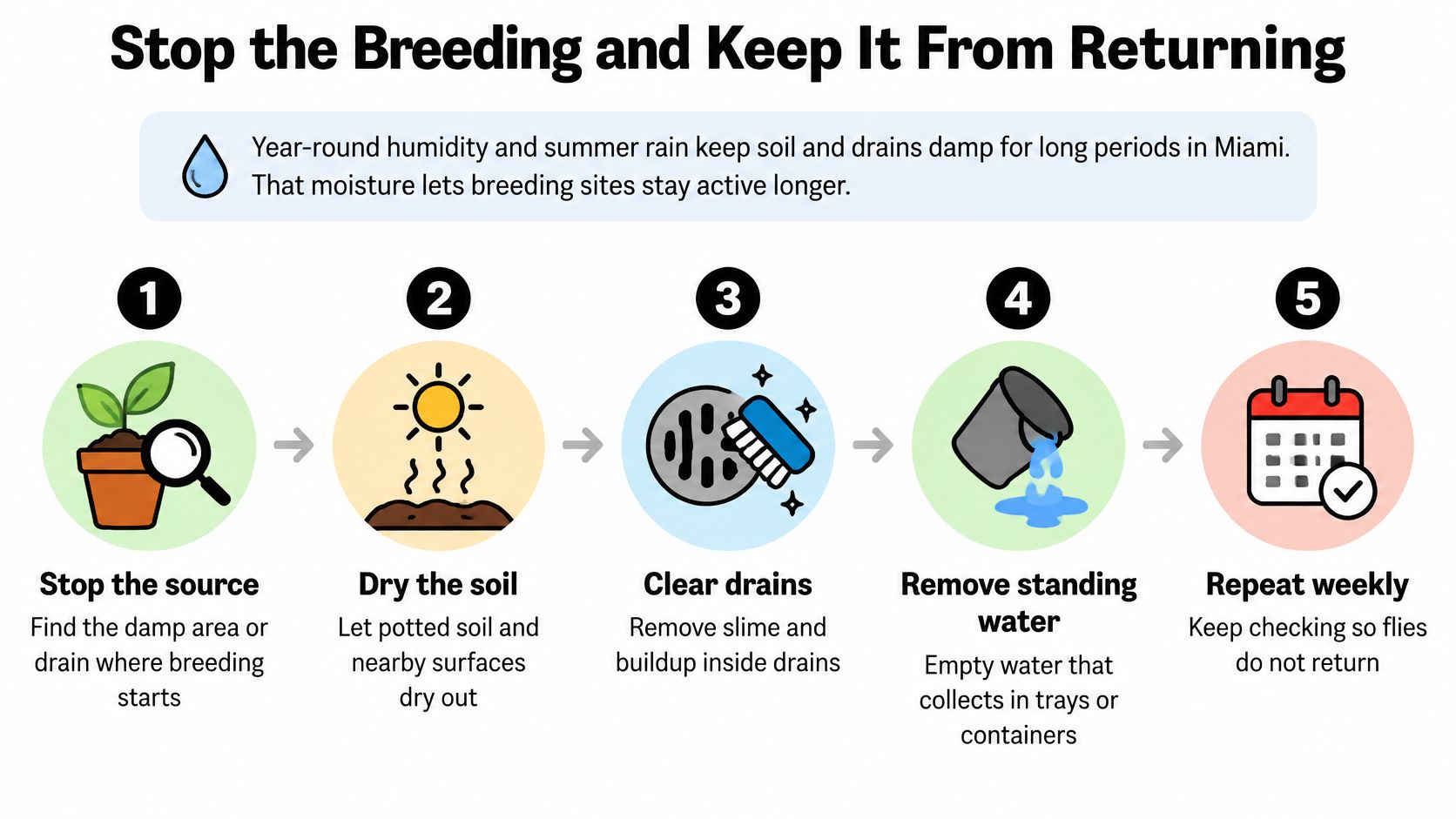
Miami's humidity and summer rain can leave soil, trays and drainage areas damp for extended periods. Concentrate your effort on places that stay wet, including sheltered areas that don't dry readily between rain or watering.
The University of Maryland Extension's fungus gnat control guidance recommends allowing the soil surface to dry substantially between waterings, improving drainage and removing dead plant material. It also identifies Bacillus thuringiensis israelensis, commonly shortened to Bti, as a biological option for larvae when the product label permits that use.
Work from the source outward
Adjust watering to the plant and soil. Check moisture before adding water rather than watering because the calendar says it's time. Let the surface dry as appropriate for the plant, and empty standing water from saucers after drainage. Don't try to solve gnats by drying a moisture-sensitive plant beyond its needs.
Remove fallen leaves, dead roots exposed at the surface and decaying material from pots and planters. Check decorative moss or mulch that stays continually wet. Keep the surface inspectable while you're working out where adults are emerging.
Brush accessible drain buildup. Remove the stopper or cover only if it's designed for routine removal, then use an appropriately sized drain brush to loosen slime. Flush with hot water where compatible with the fixture and plumbing. A clean basin isn't a reason to skip the drain opening, and boiling water isn't a substitute for removing buildup.
Check accessible condensate collection areas. Empty and clean a removable appliance tray according to the manufacturer's instructions, and arrange repair of a continuing drip. For air-conditioning equipment, leave inaccessible pans and condensate-line work to a qualified technician.
Use sticky cards to monitor adults. Place yellow cards near suspect soil, away from children, pets and plant leaves. Label their locations so you can compare activity at the source rather than relying on memory. Keep traps from obstructing drains or getting soaked.
For a confirmed fungus gnat problem, consider a Bti product labeled for the intended indoor plant or growing-medium use. Check the application directions, dilution and repeat-treatment instructions before buying it. Don't assume a product sold for outdoor water treatment is automatically suitable for your houseplants.
Compare the trend after source correction. Look for fewer adults at the same monitoring points and less persistent dampness. If sightings stay unchanged, inspect another source or obtain identification rather than repeatedly adding treatment to an unconfirmed location.
The process illustration keeps the priorities focused on moisture and breeding material.
Keep a Miami maintenance checklist
Use a recurring phone reminder and record what you checked. Increase attention after storms, irrigation changes or a period when the property has been vacant.
- Plants: Keep drainage holes open, check moisture before watering and redirect sprinkler spray away from balcony planters. Inspect decorative outer pots that conceal runoff.
- Drains: Clean accessible strainers and stopper assemblies, use neglected fixtures, and maintain water in infrequently used traps. Have recurrent slow drainage or unexplained odors evaluated.
- Air handling: Include the condensate line and pan in equipment maintenance. Report overflowing trays, algae buildup and persistent dampness around the unit.
- Outdoors: Close bin lids, rinse residue from recycling and empty water from buckets and saucers after rain. Arrange safe gutter maintenance rather than climbing to inspect an inaccessible roof edge.
Never mix drain cleaners, bleach or other cleaning chemicals. If a drain already contains a chemical cleaner, tell the plumber before any work begins.
This source-first approach fits sustainable pest management: identify the insect, correct the conditions and use targeted treatment only where it's appropriate. Spraying adults alone rarely provides lasting relief.
Confirm the Source, Then Call a Pro
If you've identified a source, corrected it and no longer see activity, professional treatment may not be necessary. Continue monitoring that location without adding products just to be safe.
Get help when sightings persist despite targeted checks, when the likely source is inaccessible or shared, or when the insects are biting. You don't need to settle on a species name before asking for identification.
Bring observations rather than a guessed diagnosis
A useful description might read: “Small fuzzy flies keep resting beside the guest shower drain. I cleaned the removable cover, checked the nearby planter and photographed an insect beneath the overnight drain covering.”
That tells a provider much more than a request for general gnat spraying. Include what you haven't checked, too, particularly a concealed condensate pan or plumbing behind a cabinet.
Prepare these details:
- First noticed: Say when you began seeing the insects and whether the activity has changed.
- Gathering location: Identify the specific plant, fixture, appliance or exterior doorway.
- Extent: Explain whether the issue affects a single room, several rooms or a shared area.
- Checks completed: List drain tests, plant isolation, moisture corrections and any products already applied.
- Photographs: Provide a sharp image of a resting insect and a wider view of the suspected source.
When you're unsure what you have, we can connect you with a licensed Miami pro who can identify the pest and give a free quote. Describing when you first noticed the insects and how widespread they seem helps the matched provider prepare.
Match the help to the problem
A pest professional can help identify the insects and assess likely breeding areas. A plumber or air-conditioning technician may also be needed when the inspection reveals a drainage defect or condensate problem, while property management should coordinate access to shared building systems.
Our guide to choosing a licensed pest control professional explains what to check before arranging service. Pestless facilitates the introduction; we don't perform the treatment ourselves.
Write down the source checks you've completed before submitting your request. That record helps turn a vague complaint about little black flying bugs into a focused inspection.
Pestless Inc. connects Miami homeowners with licensed local professionals who can identify an uncertain pest and provide a free quote. If the flies keep returning or the source remains unclear, visit Pestless Inc. and describe where they gather, when you first noticed them and which source checks you've already completed.
Dealing with this pest right now?
Pestless connects you with a licensed, insured Miami pest control provider for a free, no-obligation quote.