You hear scratching above the bedroom ceiling after a summer storm. In the morning, there are dark droppings near the washing machine, a torn section of insulation in the attic, or gnaw marks around the pool equipment wiring. In Miami, those clues rarely point to a single animal that wandered in by accident. They often indicate a route through the roofline, soffit, utility penetration, or shared infrastructure.
Rodent infestation removal works best as a sequence: inspect, reduce activity, seal access, clean contamination, and verify that the rodents haven't returned. A trap can remove one animal. It can't repair a stucco gap, correct a dumpster problem, or stop movement through a shared sewer line.
Table of Contents
- What Rodent Infestation Removal Really Means in Miami
- Inspecting the Property and Reading the Signs
- Trap Placement, Bait Choice, and Daily Reset Discipline
- Sealing Entry Points and Hardening the Structure
- Safe Cleanup of Droppings and Contaminated Areas
- When to Call a Licensed Pro and What to Expect
- Preventing Reinfestation in a Hot, Dense City
What Rodent Infestation Removal Really Means in Miami
A homeowner in Coconut Grove may hear movement in the attic after heavy rain, while a Brickell tenant finds fresh droppings behind the refrigerator. Those situations look different, but the underlying question is the same: where are the rodents entering, what keeps them there, and how will you confirm the activity has stopped?
The scale of the problem is larger than many residents assume. The 2019 American Housing Survey reported that approximately 14.8 million U.S. housing units had seen mice or rats, and about 2.9 million reported seeing both rodents and cockroaches. The CDC housing reference also documents rodent-associated disease risks, including hantavirus, leptospirosis, plague, murine typhus, rickettsialpox, and rat-bite fever. (CDC housing data)
Miami's heat and humidity keep food odors, nesting materials, and moisture available for much of the year. Storms can disturb roofline gaps, construction leaves unsealed penetrations, and dense housing lets rodents move between units, walls, utility chases, and shared sewer connections.
Practical rule: A visible rat or mouse is evidence of access, not the full extent of the problem.
A sound removal plan includes population reduction, exclusion, sanitation, and follow-up monitoring. It may also involve checking storm-resistant openings and window assemblies, especially where older frames or damaged screens meet stucco walls. Homeowners comparing Miami-Dade approved window systems should still treat windows as one part of the exterior envelope, not as a substitute for inspecting soffits, flashing, and utility openings.
Inspecting the Property and Reading the Signs
Don't set traps before you know the travel route. Start inside, then work outward, because rodents often use a concealed path that connects a kitchen, attic, garage, wall void, and exterior opening.
Start with interior zones
Check food storage, the kitchen sink cabinet, pantry edges, laundry areas, garage corners, attic insulation, and crawlspaces. Fresh droppings are usually darker and softer than old, dusty waste. Look for greasy rub marks along baseboards, shredded paper or insulation, urine odor, and gnawing around wiring or plastic.
Miami-specific clues can be easy to miss:
- Attic insulation: Disturbed or compressed areas under roof-to-wall flashing can reveal a nesting route.
- Air-conditioning lines: Droppings near attic AC condensate lines may indicate a rodent is following the warm, protected service path.
- Laundry and kitchens: Gaps behind appliances and around plumbing let rodents travel without crossing open floors.
- Pool equipment: Gnaw marks on heater wiring or droppings near the pump enclosure suggest an exterior harborage close to the structure.
Use a flashlight and photograph each finding before moving insulation or debris. A practical rodent infestation signs guide can help homeowners compare droppings, gnaw marks, rub marks, odors, and nesting evidence without treating every dark speck as proof of active infestation.
Trace the exterior perimeter
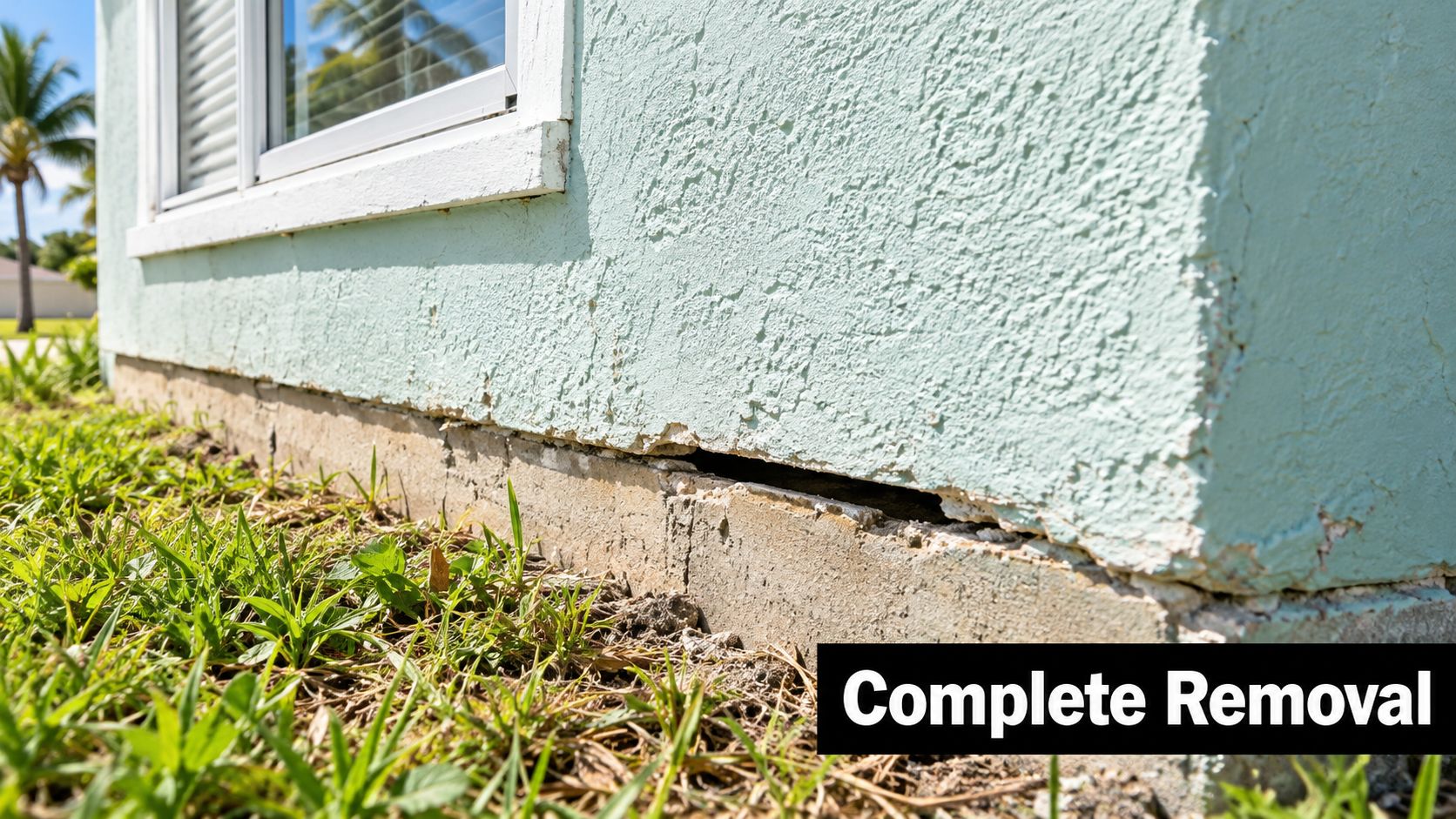
Walk the foundation, garage door, roofline, soffits, vents, hose bibs, cable entries, refrigerant lines, and pool equipment penetrations. Pay close attention where stucco meets the roof, where roof-to-wall flashing changes direction, and where wind-driven rain may have opened a deteriorated seal.

A single droppings trail in a kitchen may be a localized issue. Activity in the attic, garage, pool area, and exterior perimeter points to a structure-wide inspection. In a condo or townhouse, ask whether adjacent units, trash rooms, roof spaces, or shared sewer lines have also been checked.
Trap Placement, Bait Choice, and Daily Reset Discipline
A trap only works if it sits where the rodent already feels safe moving. In Miami homes, that usually means tight wall lines, the back edge of garage storage, attic perimeter paths near insulation runs, and the narrow travel lanes rodents use beside AC lines or framing. Set a spring-loaded trap tight to the wall with the baited end forming a T against the wall. Good trap placement beats adding more traps in the wrong spot.
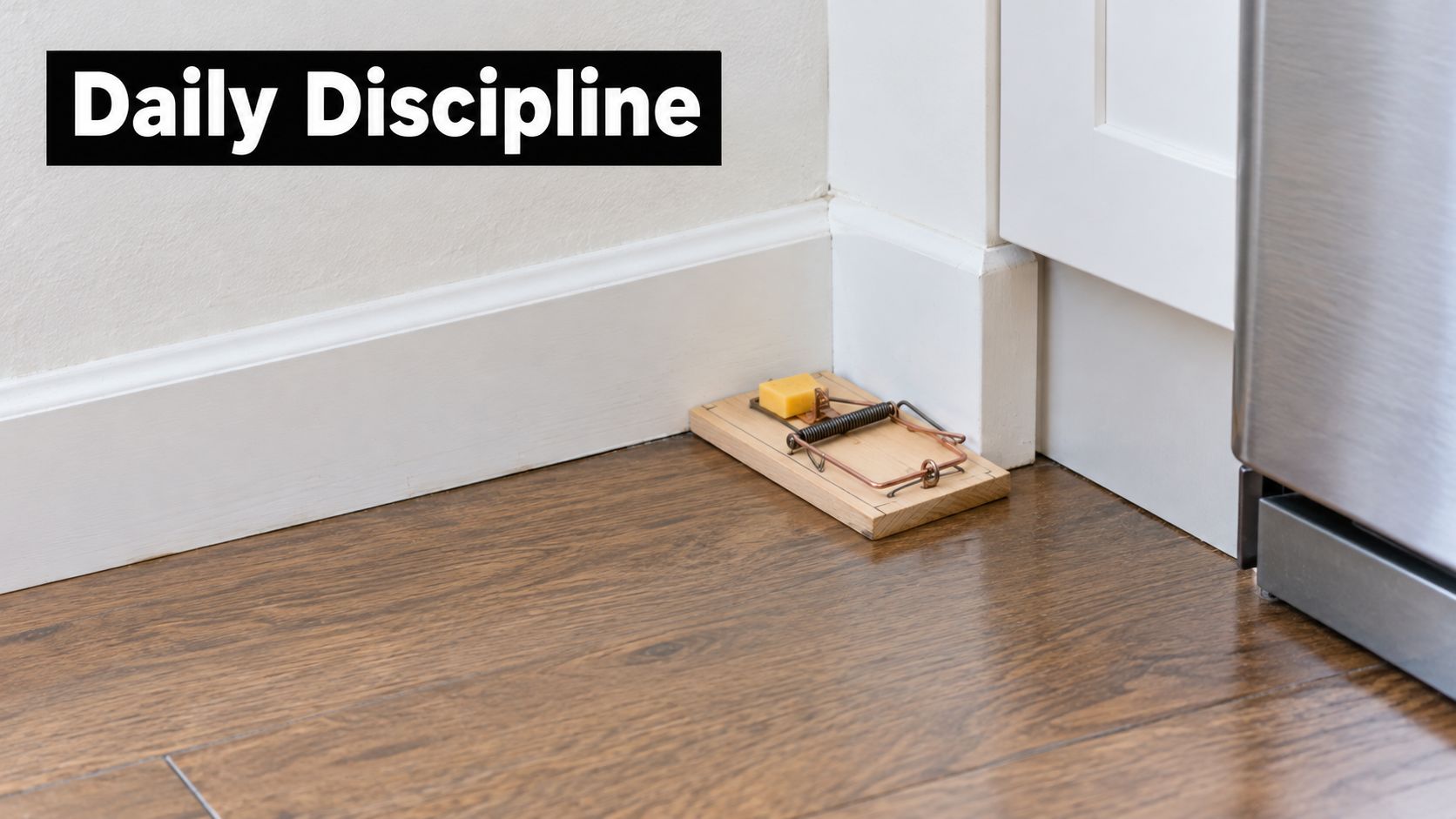
Bait choice matters more in humid conditions than many owners expect. Peanut butter can still produce catches, but in hot attics, garages, and soffit-adjacent spaces it can smear, spoil, or draw insects before the rodent commits. I get better results with a small, firmly attached bait amount, or with nesting material such as fabric or dental floss when activity suggests the animal is collecting material rather than feeding in the open. Do not scatter loose food around the trap. That muddies the read on whether the set is being investigated and gives the rodent a way to feed without firing the mechanism.
Put traps on confirmed runs, behind appliances where safe, along wall edges, and near the route the rodent is using now. In multifamily buildings, that may be near plumbing chases, shared utility paths, or areas affected by shared sewer lines, not just the kitchen. Keep every trap away from children and pets. CDC trapping guidance advises against glue and live traps, and stresses checking and repositioning traps instead of leaving them untouched.
Check and reset traps daily with gloves. Remove captures promptly, then look beyond the trigger itself for fresh droppings, rub marks, or disturbed insulation. A practical benchmark is this: if no rodents are caught and no fresh signs appear for one full week, the infestation is considered controlled, but trapping and monitoring should continue for at least 15 days.
Sealing Entry Points and Hardening the Structure
Trapping removes animals already inside. Exclusion prevents the next animal from using the same route. Mice can use openings approximately the size of a dime, while larger rats need wider access, including poorly fitted doors, broken vents, roofline gaps, and utility penetrations.
Find the openings Miami buildings create
Inspect the joint where stucco meets the roofline, soffit returns, roof-to-wall flashing, attic vents, and fascia. Then check AC refrigerant conduits, condensate lines, electrical conduits, plumbing penetrations through the slab, pool equipment lines, garage corners, and gaps around exterior doors.
A patch that looks solid from the ground may fail behind the stucco or flashing. Rats can also exploit damaged screens and openings near shared sewer connections. In multifamily buildings, an individual unit's repair won't solve movement through a common wall, trash room, roof cavity, or sewer line.
Use materials that survive exposure
Steel wool alone is a poor exterior repair in South Florida. Sun, rain, salt air, movement, and persistent gnawing can create a failure point long before the homeowner notices. Use durable metal mesh or hardware cloth where ventilation must remain open, pack appropriate mesh around penetrations, and finish with an exterior-rated sealant or a properly fitted metal repair.
Don't block required ventilation or trap water behind a patch. A soffit is part of the roof and attic ventilation system, so homeowners should understand its function before covering an opening. This overview of soffit care from SuperiorPRO provides useful background on why those components need careful repair.
For material selection and placement details, review this guide to rodent exclusion materials. After sealing, inspect the same locations during or after heavy rain. Look for displaced mesh, fresh gnawing, water intrusion, and new droppings. A seal that holds only in dry weather isn't finished work.
Safe Cleanup of Droppings and Contaminated Areas
Cleanup starts with controlling dust, not sweeping it away. Before disturbing droppings, urine, nests, or carcasses, ventilate the space and keep people and pets out. Don't sweep or vacuum dry waste, because contaminated particles can become airborne.
Wear rubber or plastic gloves and use a disinfectant or a 1:10 chlorine solution. Thoroughly soak the contaminated surface, allow a five-minute contact period, then collect the waste with paper towels. The CDC provides this procedure for reducing exposure during rodent cleanup. (CDC cleanup guidance)
Handle waste and traps carefully
Place droppings, nesting material, used disposable supplies, and dead rodents into sealed plastic bags. CDC guidance specifies double-bagging carcasses before outdoor disposal. Reusable traps should be submerged in disinfectant for the stated contact period, rinsed, and dried before reuse.
Don't clean an attic or crawlspace first and trap later. Disturbing nests while rodents remain active can spread contamination and scatter the animals into new areas. If insulation is heavily fouled, access is restricted, or the area has a strong persistent odor, stop and arrange professional assessment rather than working through the space casually.
Homeowners dealing with overlapping moisture or mildew concerns can also review these DIY mold cleanup precautions and tips, while keeping rodent contamination procedures separate and following the CDC steps above. Cleanup is only complete after exclusion and surveillance show that new contamination has stopped.
When to Call a Licensed Pro and What to Expect
DIY trapping can make sense for a small, accessible problem with clear signs and no contamination hazard. It becomes a poor bargain when activity persists, the route is hidden, or the source is outside your unit.
Call a licensed, insured provider when you find persistent attic activity, contaminated insulation, damaged wiring, multiple entry zones, or evidence of movement through shared walls, sewer connections, dumpsters, or neighboring units. Landlords, condo boards, and short-term-rental hosts should escalate earlier because treating one room may leave the building-level source untouched.
A credible service should document more than the products it plans to use. Ask for:
- Written inspection findings: The report should identify signs, likely routes, harborage conditions, and structural defects.
- An exclusion plan: The provider should distinguish repairs the pest company will perform from work requiring a roofer, electrician, plumber, or association.
- Safe control methods: Outdoor bait placements should use tamper-resistant and weather-resistant stations where children, pets, or wildlife could be exposed.
- Verification scheduling: The plan should explain when technicians will revisit, what signs they will check, and how unresolved activity changes the scope.
Federal oversight and product regulation have shaped rodent control for decades. EPA actions in 2008 restricted consumer access to second-generation anticoagulants, limited consumer packages to one pound or less, and required tamper- and weather-resistant bait stations for certain outdoor placements. (EPA rodenticide regulation document)
A licensed pest control professional guide can help property owners evaluate licensing, insurance, documentation, and treatment boundaries before accepting a quote. The right question isn't only “What will you apply?” It's “How will you close the route and prove the activity has stopped?”
Preventing Reinfestation in a Hot, Dense City
A clean home can still be easy to enter. Accessible trash, unsealed rooflines, construction disturbance, neighboring units, shared sewer lines, and warm conditions can keep reinvasion pressure high even after a successful service visit.
A January 2025 peer-reviewed study linked rising urban rat populations with warmer conditions and urbanization, and concluded that the strongest strategies make city environments less favorable to rats rather than only removing animals already present. It points to rodent-proof refuse containers, more frequent garbage collection, food-waste diversion, exclusion enforcement, clutter removal, surveillance, and public education. (peer-reviewed urban rat study)
Bait avoidance also changes the decision. Professional survey data reported that 82% of respondents encountered some form of resistance in 2025, while 62% reported behavioral resistance such as bait avoidance. (2025 pest-management survey) Continued sightings don't automatically mean stronger poison is needed. The cause may be poor placement, alternative food, an active opening, or reinvasion from a shared structure.
| Situation | Best Next Step | Key Indicator |
|---|---|---|
| One accessible room, limited signs | Trap, inspect, and seal | No fresh signs during continued monitoring |
| Attic, garage, and exterior activity | Licensed inspection and exclusion plan | Multiple connected routes |
| Condo or multifamily activity | Coordinate units, common areas, trash, and sewer checks | Sightings recur after one unit is treated |
| Bait present but rodents remain | Stop escalating products and reassess access and behavior | Rodents avoid bait or use another food source |
| Droppings in insulation or inaccessible spaces | Professional sanitation assessment | Contamination can't be safely disturbed |
FAQ
Does bait avoidance mean stronger poison is necessary
No. It may indicate bait aversion, poor placement, competing food, an active entry point, or a neighboring source. Document where and when signs appear, protect children and pets, and have a licensed professional evaluate the full route before changing products.
Why did rodents return after treatment
Removal may have succeeded while the building remained attractive. Heat, open refuse, roof disturbance, vegetation, shared walls, and unsealed infrastructure can all support reinvasion. Ask for a follow-up exclusion and monitoring plan, not just another application.
How can I tell whether the source is my unit or the building
Compare signs across kitchens, attics, trash rooms, pool equipment areas, roof spaces, adjacent units, and sewer-connected penetrations. Repeated activity along common walls or after treatment in one unit strongly suggests that the inspection must expand beyond the apartment.
Pestless Inc. connects Miami and Miami-Dade property owners with licensed, insured pest professionals who can assess rodent activity, exclusion needs, and follow-up monitoring. Visit Pestless Inc. to describe the problem through its short request form and compare a no-obligation local response.
Dealing with this pest right now?
Pestless connects you with a licensed, insured Miami pest control provider for a free, no-obligation quote.