You open the kitchen cabinet to reach for a coffee mug and notice something unusual. The smell resembles old cooking oil mixed with damp cardboard, with a sour or fermented edge. It fades when the door closes, then returns the next time you open it.
That pattern raises a difficult question for many Miami homeowners: what does a roach infestation smell like, and can the odor prove cockroaches are present? The short answer is that roach odor often smells stale, oily, musty, sour, rancid, or slightly pungent. But it isn't one universal scent, and a clean-smelling room can still contain cockroach allergens or hidden activity.
Table of Contents
- That Persistent Musty Smell in Your Miami Kitchen
- What Exactly Creates the Roach Infestation Smell
- Why the Odor Acts as a Chemical Warning Signal
- Why a Faint Smell Does Not Mean a Small Problem
- Physical Signs That Confirm What the Smell Suggests
- Why Cleaning Alone Will Not Fix a Smelly Infestation
- Next Steps for Miami Homeowners With a Suspected Infestation
That Persistent Musty Smell in Your Miami Kitchen
A homeowner might first notice the odor while unloading groceries. The cabinet looks ordinary, the counters are clean, and there may be no visible insect. Yet the smell is strongest near the back corner, around stored cardboard, under the sink, or beside the refrigerator.
That recurring whiff can feel like a hygiene failure, but the biology is more complicated. Cockroach bodies, feces, shed material, saliva, and decomposing insects release compounds that collect in enclosed spaces. Warm, humid conditions and limited airflow can make those compounds linger, particularly inside cabinets, wall gaps, appliance compartments, and shared utility spaces.
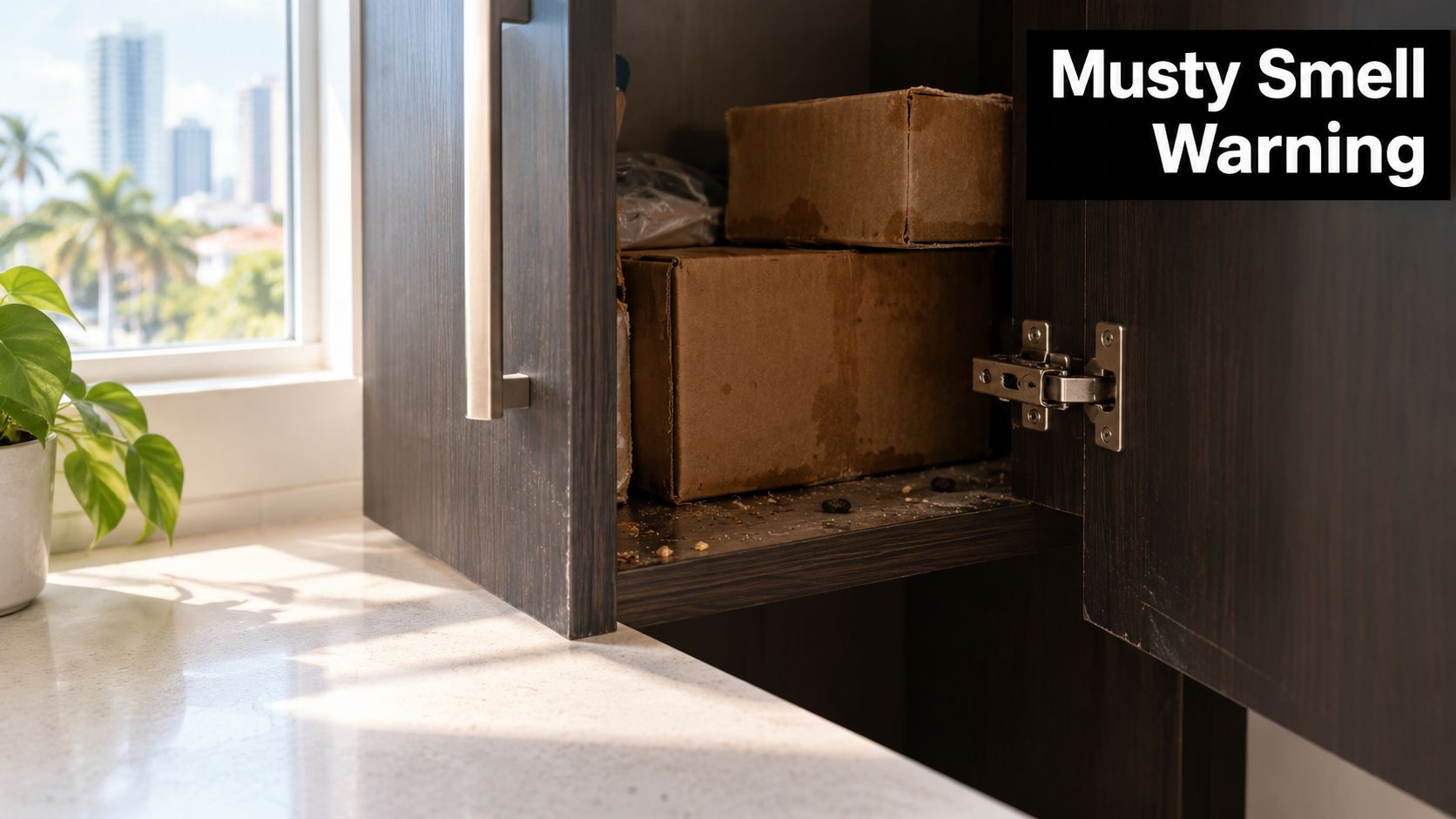
Practical rule: A smell that repeatedly returns from one enclosed location deserves inspection, even if cleaning temporarily makes it less noticeable.
The comparison matters. A general damp odor may come from moisture or mold, while a concentrated stale, greasy, or sour odor near food, plumbing, or appliances can point toward cockroach residues. If you're unsure whether a lingering smell comes from a pest source or damp fabric, a Rubber Ducky carpet deodorizing guide can help you separate carpet-related odors from a cabinet or wall-void problem.
Odor is often the first clue because cockroaches hide. You may smell activity before you see a live insect, but you still need physical evidence or a professional inspection to identify the species, locate the harborage, and determine whether activity is ongoing.
What Exactly Creates the Roach Infestation Smell
Roach odor is a mixture of volatile organic compounds, or VOCs, rather than one chemical with one recognizable scent. These compounds can come from the insects' bodies, fecal material, microbial activity, and decomposition.
Research on the American cockroach, Periplaneta americana, found that air, water vapor, and ultraviolet radiation can break down unsaturated cuticular hydrocarbons on the insect's outer body. In plain language, the waxy oils that help cover and protect a cockroach can change as they react with the environment. The resulting VOCs may contribute to stale, oily, musty, or sour notes. The research identified 14 VOCs that triggered antennal responses in cockroach nymphs, with 10 chemically identified, including compounds such as 2-nonanone, 1-pentanol, 1-octanol, acetic acid, propanoic acid, and butanoic acid (research on cockroach body-derived VOCs).
German cockroach feces add another layer. Researchers identified 40 volatile carboxylic acids in fecal extracts using gas chromatography and mass spectrometry, along with ammonia, alkyl amines, amino alcohols, and alcohols. These chemicals can create acidic, fermented, rancid, or ammonia-like impressions, especially where residues accumulate in a confined space.
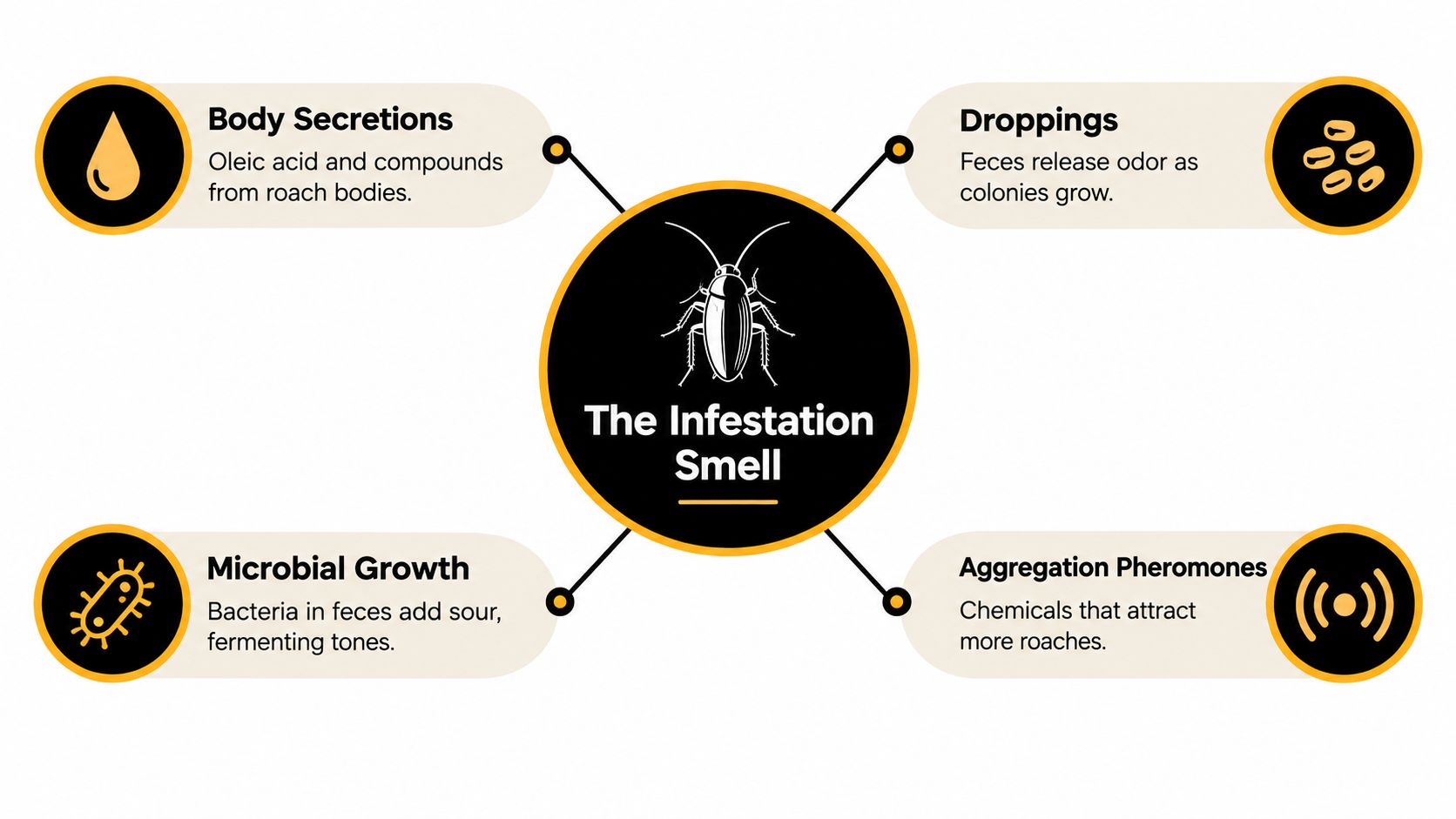
The kitchen locations where compounds collect
The odor often becomes noticeable where several conditions overlap:
- Cabinet voids: Porous wood, cardboard, fecal spotting, and poor airflow can hold odor.
- Appliance spaces: Motors and warm cavities provide shelter while crumbs and grease supply residues.
- Under-sink areas: Plumbing openings offer access, while leaks or condensation support activity.
- Wall penetrations: Gaps around pipes and shared chases can conceal movement and trap smells.
This is why Cockroach Control focuses on breaking the breeding cycle, not just the roaches you can see. Killing one insect won't remove the chemical residue, egg cases, or protected harborage that allowed the activity to persist.
For a visual explanation of how these sources interact, the following video provides additional context:
Why the Odor Acts as a Chemical Warning Signal
Cockroach odor can function as a social signal. Fecal volatiles and body-associated chemicals help cockroaches recognize locations used by others of their kind. The same residue that smells unpleasant to a person may tell another cockroach that a shelter contains a suitable colony site.
Controlled behavioral research found that German cockroach larvae preferentially moved toward papers carrying the odor of their own species. The research also found distinguishable odor signatures among laboratory strains, showing that odor can vary with colony biology (behavioral research on German cockroach odor).
That finding changes how you interpret a recurring smell. A concentrated odor behind a refrigerator or inside a bathroom vanity isn't merely evidence that one cockroach passed through. It may indicate repeated sheltering and travel in that location. Fecal compounds can act as aggregation pheromones, encouraging cockroaches to remain near an established harborage.
The scent also varies. Species, food sources, colony age, and gut microbes can change the blend. A German cockroach colony may produce a different odor profile from an American cockroach population, and two colonies of the same species may not smell identical.
A persistent odor is more informative when it stays concentrated in a protected area and returns after cleaning.
An air purifier may reduce some airborne odor, but it won't identify or remove the source inside a wall void or cabinet. Homeowners comparing filtration options can browse EcoQuest Purifiers air purifiers as part of indoor-air management, while treating the purifier as a supplement rather than a pest diagnosis.
Why a Faint Smell Does Not Mean a Small Problem
Odor intensity is a poor measure of infestation size. A strong smell may collect inside a small, closed cabinet, while a larger colony remains difficult to detect when air movement spreads its compounds through the room.
Kitchen conditions can hide the odor entirely. Cooking grease, citrus cleaner, air conditioning, and ventilation release competing scents that overlap the cockroach signal. Humidity may help volatile compounds linger, but cold, dry air can suppress them. An air-conditioned Miami condo, for example, may have an active colony inside a wall void while the kitchen smells normal.
The source can also sit beyond the room where you notice it. Shared plumbing chases, neighboring units, and gaps around cabinets may carry odor into a living space without revealing the colony's exact location.
A weak or absent smell still deserves attention. Treat it as one clue, then look for droppings, shed skins, egg cases, live insects, and activity near water, food, warmth, or plumbing. A recurring odor concentrated near one protected area matters more than a brief smell after cooking.
Research on cockroach gut bacteria and fecal communication helps explain why fecal odors can support aggregation, but odor strength alone cannot show how many cockroaches are present. Use the smell to guide a methodical inspection, not to estimate the colony's size.
Physical Signs That Confirm What the Smell Suggests
Odor becomes more meaningful when it appears alongside visible evidence. Inspect methodically, and avoid disturbing dusty debris with bare hands, especially if anyone in the home has asthma or respiratory sensitivity.
Check the places cockroaches use as shelter
Use a flashlight during a quiet period and inspect:
- Behind appliances: Look around refrigerator edges, motor compartments, ovens, and kickplates for dark spotting or shed material.
- Under plumbing: Examine the back of sink cabinets, pipe openings, and damp corners.
- Inside storage areas: Check pantry corners, drawer tracks, cardboard, and gaps behind shelving.
- Along travel routes: Inspect baseboards, wall-floor joints, cabinet seams, and trash enclosures.
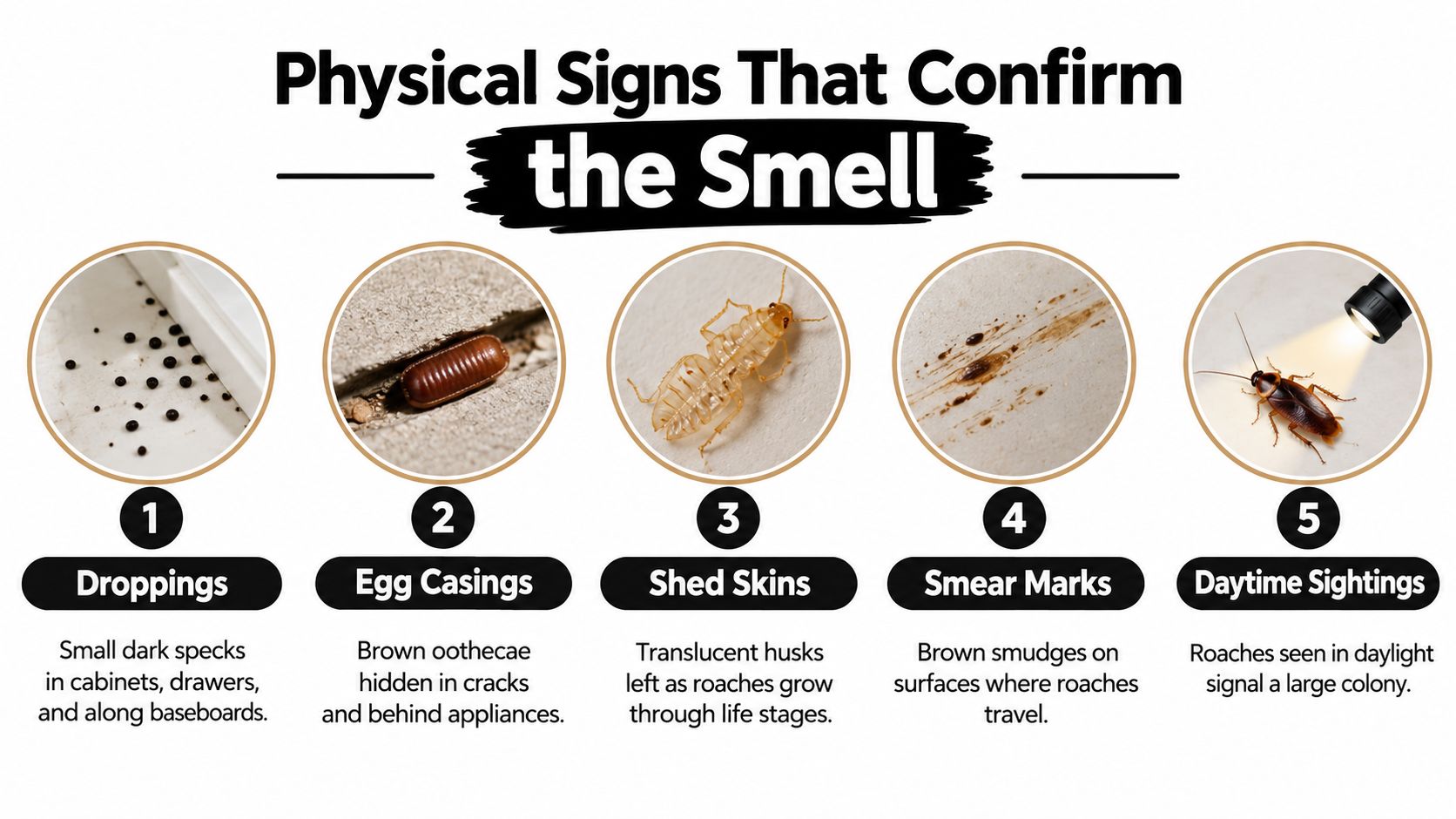
Match the odor to the evidence
Small dark specks may resemble pepper or coffee grounds. Brown smears can appear where insects repeatedly travel. Translucent shed skins indicate that cockroaches have been growing nearby, while brown capsule-like egg cases suggest reproductive activity. Repeated nighttime sightings in the same area also help locate the harborage.
Daytime sightings deserve attention because cockroaches typically avoid light and movement. A daytime insect doesn't prove the colony's size, but it becomes more concerning when paired with recurring droppings, egg cases, or odor.
Cockroach residues can also contribute to allergen exposure. A U.S. review found cockroach allergens in 85% of inner-city homes, and reported cockroach-allergy prevalence among U.S. study participants ranging from 17% to 41% (review of cockroach allergens and asthma). The same review reports detectable allergen levels in 63% of U.S. dwellings, with 10.2% exceeding a concentration associated with asthma morbidity. These figures don't mean odor alone causes asthma, but they explain why recurring residues deserve careful handling.
For a broader visual checklist, compare these observations with the signs of a roach infestation. If the evidence points to another pest, such as termites, Termite Control addresses the separate concern of stopping silent structural damage before it spreads.
Why Cleaning Alone Will Not Fix a Smelly Infestation
Wiping the counter removes food residue from the counter. It doesn't reach a cockroach harborage behind the dishwasher, inside a cabinet void, or around a pipe penetration. If the source remains, the odor returns because new feces, body material, and microbial byproducts continue to accumulate.
Air fresheners create the same problem in a different way. They cover the sensory experience without removing contaminated dust, porous residues, egg cases, or access routes. Strong cleaners can also make it harder to notice where the original odor is concentrated.
Deep cleaning still has a role. Remove accessible food debris, fix leaks, reduce clutter, and clean visible surfaces carefully. But recurring odor after sanitation is a source problem, not a fragrance problem.
Cleaning removes evidence from reachable surfaces. Inspection finds what the cleaning cannot reach.
Avoid sweeping or aggressively disturbing dry debris, since feces, shed skins, saliva, and body fragments can contribute to indoor allergen exposure. A professional can identify the species, trace activity, inspect concealed areas, and recommend targeted treatment instead of relying on repeated broad spraying.
Homeowners researching DIY methods should also understand the limitations described in this guide to roach boric acid. A product may affect insects in an accessible location while leaving protected harborages and egg cases untreated. If the smell keeps returning, use the recurrence as a reason to investigate, not as a signal to keep adding deodorizer or spray.
Next Steps for Miami Homeowners With a Suspected Infestation
Start by documenting the pattern. Write down where the smell is strongest, when you notice it, whether it returns after cleaning, and whether the area is near food, water, heat, plumbing, or a shared wall. Photograph droppings, smear marks, egg cases, and shed skins if you can do so without disturbing the material.
In a condo, townhome, or rental, notify the property manager and ask whether adjacent units or shared utility spaces have reported activity. Cockroaches can move through connected plumbing and wall voids, so treating only the room where you noticed the smell may leave the source untouched.
Protect sensitive occupants while you investigate
Cockroach allergens can collect in dust and fabrics. The American Lung Association reports that one in five homes without a known infestation can still have significant allergen levels (EPA guidance on cockroaches and allergens). Smell therefore answers only one question, whether volatile compounds are noticeable. It doesn't establish whether indoor air is safe or whether allergenic debris is present.
Keep children and pets away from contaminated debris, avoid stirring up dry residues, and seek medical guidance if anyone experiences asthma symptoms or an allergic reaction. Ventilation may help when practical, but it won't replace source control.
A licensed, insured pest professional can identify the species, locate harborages, and account for Miami's building layouts and shared spaces. Avoid using masking agents or broad indoor sprays as a substitute for inspection, because they can delay treatment and complicate the evidence.
Pestless Inc. connects Miami and Miami-Dade homeowners with licensed, insured local pest professionals for issues including cockroaches. Visit Pestless Inc. to describe the odor and supporting signs through its short request process, then compare a response from a vetted provider without treating the smell as a diagnosis.
Dealing with this pest right now?
Pestless connects you with a licensed, insured Miami pest control provider for a free, no-obligation quote.