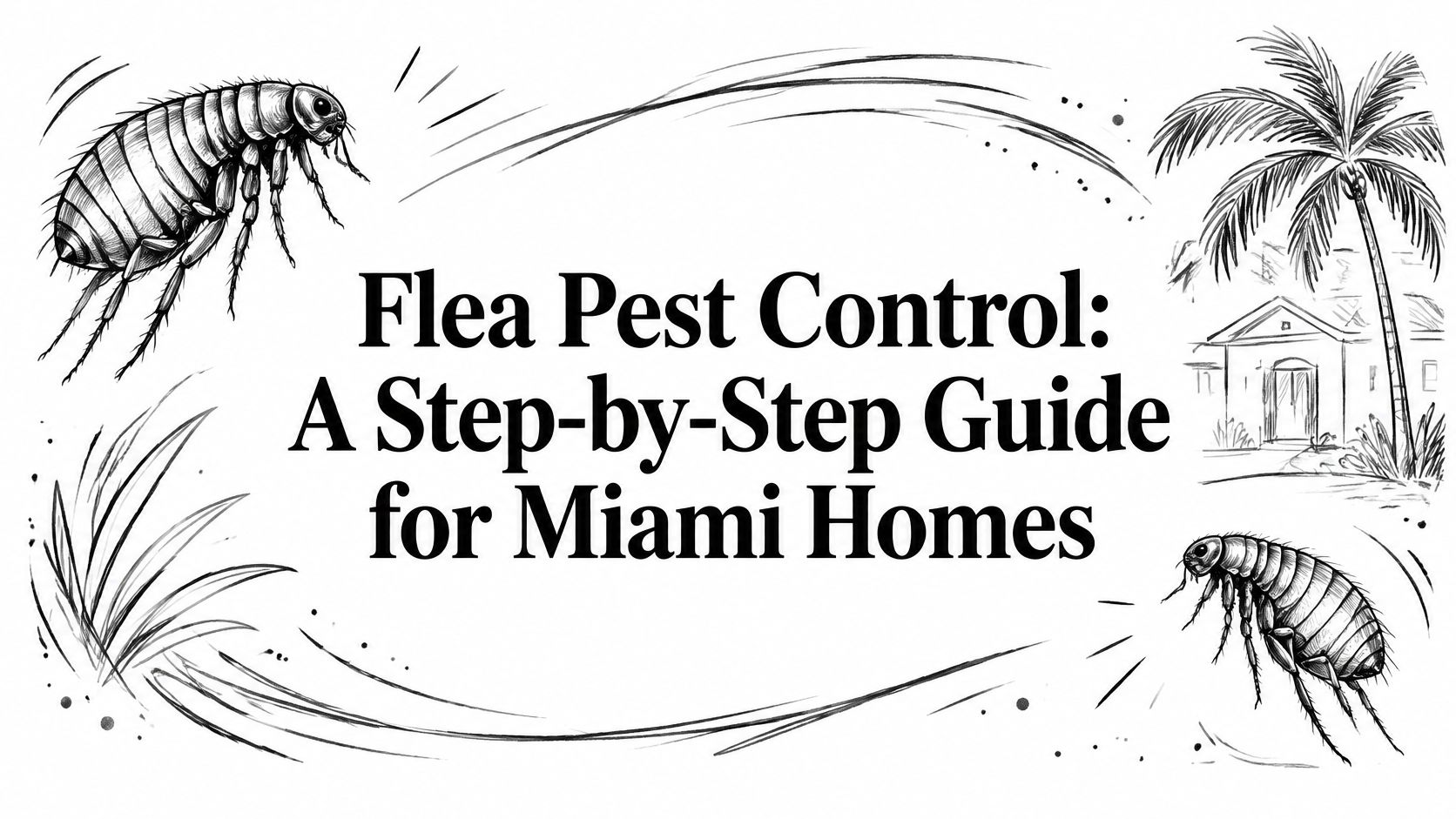
Your dog won't stop scratching, you're finding bites around your ankles, and a quick spray from the store seemed to work for two days before the jumping started again. That's the normal pattern in Miami, not a sign you're doing something unusual. Effective flea pest control treats the pet, the floors, the bedding, and the yard as one system, because killing only the adults you can see leaves the next generation already in place.
Table of Contents
- How to Confirm Fleas and Find Their Source
- Your Flea Control Plan at a Glance
- How to Vacuum, Wash and Treat Your Home
- Treating Pets Without Overexposing Them
- Why Fleas Return After One Treatment
- DIY Flea Control Versus a Professional
- Decide Whether to Hire a Licensed Miami Pro
How to Confirm Fleas and Find Their Source
Don't start spraying until you've confirmed what you're dealing with. Bites alone don't prove fleas, and treating the wrong pest wastes weeks. If you're unsure about the marks on your skin, compare them using this guide to bed bug bites versus flea bites before you buy anything.
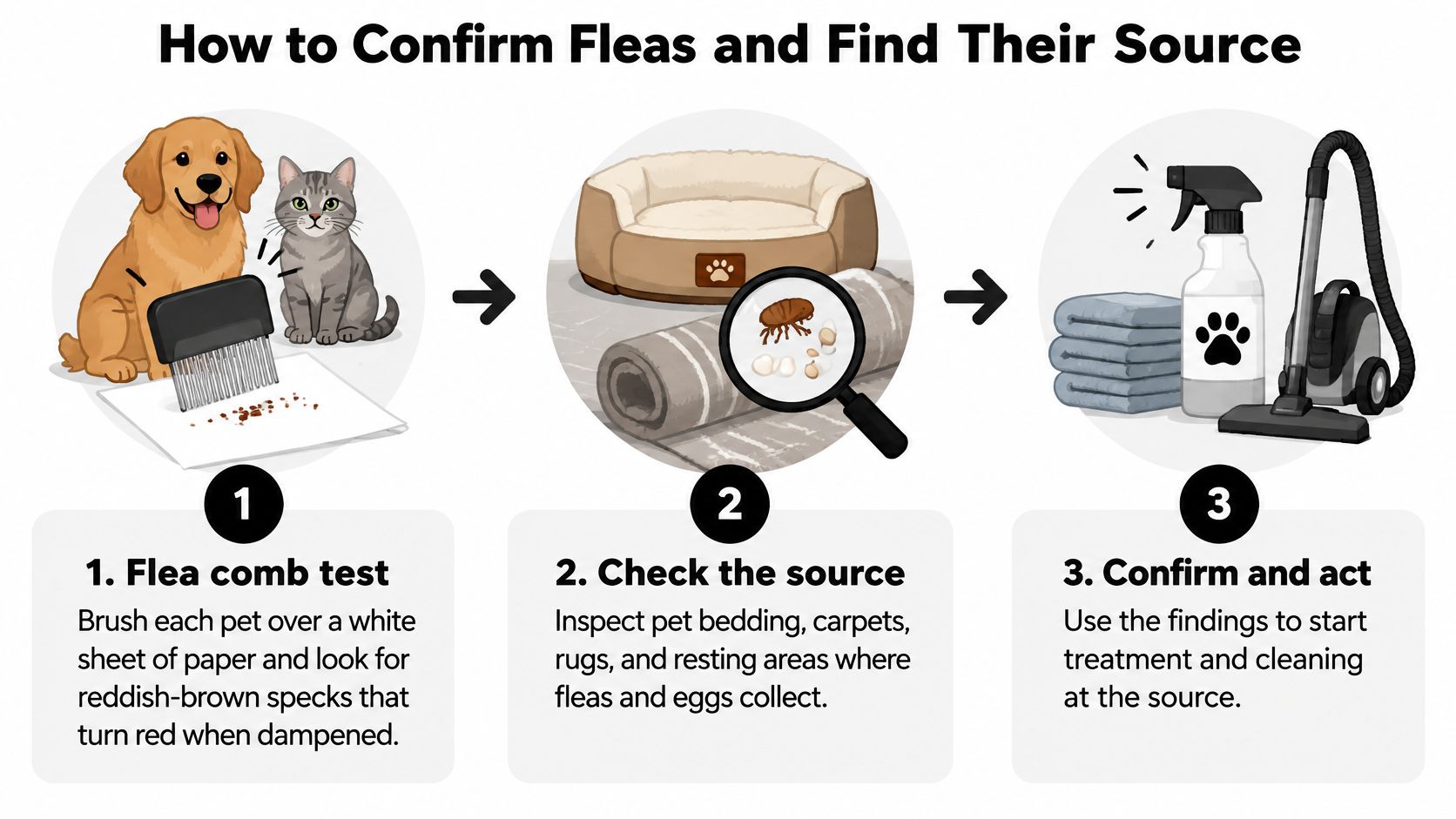
Six Checks That Settle the Question
- Run the flea comb test. Brush each pet with a fine-tooth flea comb over a white sheet of paper, working the neck, back, and base of the tail. Tap the comb on the paper after each pass.
- Wet what falls out. Move any reddish-brown specks onto a damp white paper towel. If they smear red, that's flea dirt, which is digested blood, and it proves fleas are actively feeding even if you never catch an adult.
- Walk in white socks. Shuffle slowly across carpets and rugs in rooms where pets rest. Tiny dark specks that land on the socks and jump away confirm adults are emerging from the flooring, not just riding on the animal.
- Inspect resting spots. Check pet beds, blankets, sofa cushion seams and undersides, and the corners where your pet naps during the day. Eggs roll off the animal and collect exactly where it sleeps.
- Check edges and thresholds. Look along baseboards and carpet edges near doors and windows. Larvae move away from light and settle in these protected seams.
- Walk the yard. Look for damp, shaded spots under decks, shrubs, and porches where strays, opossums, or rats rest. Mark every hotspot, indoors and out, on a rough floor plan so nothing gets skipped later.
What a positive result means: Flea dirt on the pet plus activity in the home means you treat both at the same time, on the same day.
If the comb comes back clean but you're finding fleas near a porch where a neighborhood stray sleeps, the source is outside. Treat the animal exposure and the yard first, or the house will keep refilling no matter how well you clean it.
Your Flea Control Plan at a Glance
Flea control works only when four actions run together: sanitation, treatment of every pet, simultaneous indoor and outdoor treatment where needed, and scheduled follow-up. The CDC guidance on getting rid of fleas recommends at least two follow-up treatments within 5 to 10 days after the initial application, with vacuuming and sanitation continuing through that interval. Skip one phase and the survivors restart the cycle.
| Phase | What to Do | Timing | Who Handles It |
|---|---|---|---|
| Sanitation | Vacuum carpets, furniture and cracks; wash bedding hot | Daily during active control | You |
| Pet treatment | Treat every dog and cat with a vet-approved product | Same day as home treatment | Veterinarian |
| Indoor treatment | Labeled adulticide plus insect growth regulator | Same day as sanitation | Licensed applicator |
| Outdoor treatment | Shaded, pet-resting areas only | Where pets rest | Licensed applicator |
| Follow-up | Two follow-up treatments with continued vacuuming | 5 to 10 days after the first application | Licensed applicator |
One spray fails for a structural reason. Adult fleas are only one life stage, while eggs, larvae, and pupae sit protected in carpets, bedding, and cracks where a surface application barely reaches them. Pupae inside cocoons can wait and emerge later when warmth, carbon dioxide, pressure, or vibration signals a host nearby.
In South Florida's warm, humid climate, that cycle moves at its fastest, so the timing column matters more than the product brand. Vacuum immediately before a professional application, concentrating on pet source points, under furniture, and along wall edges, then seal and discard the debris outside.
Start today with three moves: count every pet in the home, begin daily vacuuming, and book a vet visit for each animal. Everything else builds on those.
How to Vacuum, Wash and Treat Your Home
Treat this as life-cycle suppression, not instant elimination. You're removing stages mechanically, then applying product to clean surfaces where newly emerged adults will contact it. If you want the detailed case for the vacuum doing real work here, this breakdown of whether vacuuming gets rid of fleas covers it well.
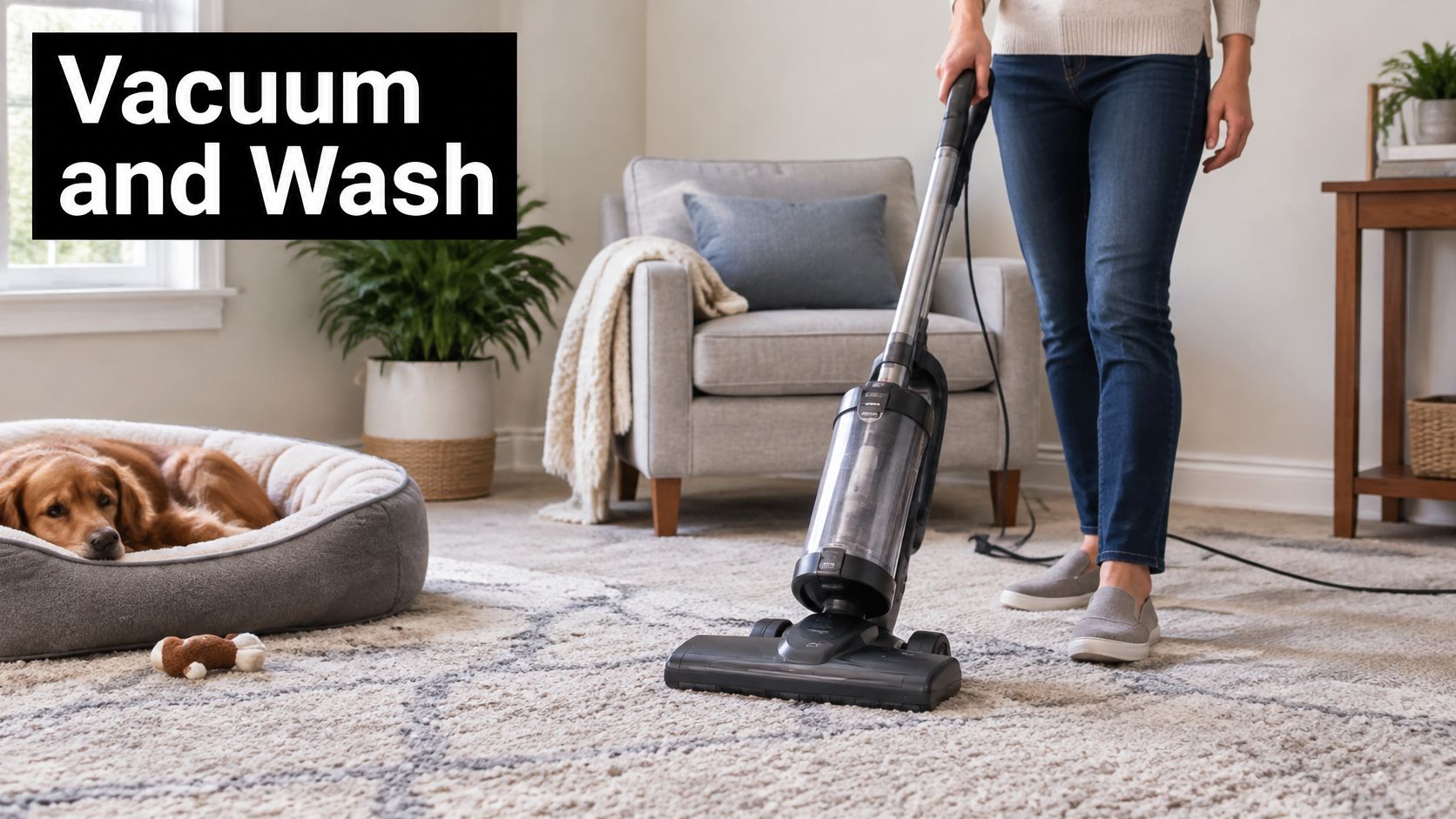
The Indoor Sequence in Order
- Vacuum daily and slowly. Cover every carpet, rug, upholstered piece, baseboard, and crack, with extra passes under furniture and around pet bedding. Slow passes let the beater bar dislodge eggs from carpet fibers instead of skimming over them.
- Empty it outside, every time. Dump the canister or bag straight into a sealed plastic bag and carry it out of the house. Leaving debris in an indoor bin lets eggs and larvae work their way back out.
- Wash everything washable hot. Run pet bedding, throw blankets, and removable covers in hot, soapy water and dry on high heat. Bedding is where eggs concentrate most densely, so skipping it undoes the vacuuming.
- Vacuum once more before treatment. Do a focused pass on pet resting spots right before a licensed applicator arrives. This also vibrates cocoons, prompting adults to emerge onto freshly treated surfaces.
- Apply only labeled indoor products. A product combining an adulticide for active adults with an insect growth regulator (IGR) that interrupts egg and larval development is the standard pairing. Follow the label exactly for dilution, ventilation, and drying time.
- Clear the room during application. Move pets and houseplants outside, and keep children off treated surfaces until they're fully dry.
- Keep vacuuming through follow-up. Don't stop after the first quiet week. That is precisely when remaining pupae are still emerging.
The mechanical work earns its keep. The University of Maryland Extension fleas resource notes that NC State Extension reports vacuuming may remove up to 60% of flea eggs and 30% of larvae from infested carpet. No spray you can buy removes eggs from carpet fibers that reliably.
Most homeowners stop vacuuming after the first week because the biting drops off. That drop is the adulticide working, not the infestation ending.
Adult killers alone miss eggs and pupae entirely, which is why the IGR matters and why a clean, dry floor matters too. Product applied over gritty, debris-filled carpet contacts dirt instead of the surfaces insects walk on.
The Yard Gets a Lighter Touch
Limit outdoor product to shaded, humid pet-resting spots, under decks, shrubs, and porches. Don't blanket-spray sunlit lawn, since fleas don't develop well in hot, exposed grass and you'd be adding chemical exposure without hitting the pest. Follow-up decisions should rest on label directions and evidence of ongoing activity, not on a calendar guess.
Treating Pets Without Overexposing Them
The most dangerous mistake in flea control is rarely undertreating. It's using the wrong product for the species or weight band. A dog product applied to a cat, or a large-dog dose split across two smaller animals, can seriously harm the pet. That's why every animal in the household gets treated on the same day, through a veterinarian, with a product matched to that individual.
The EPA page on its regulation of flea and tick products explains that the agency evaluates these products for human-health, ecological, and companion-animal risks before registering them. Responsibility for pet flea products is divided between EPA and FDA depending on whether the active ingredient stays on the skin or enters the bloodstream, and that split is one more reason your vet rather than a store shelf should make the call between oral and topical options.
Oral Versus Topical in Practice
Topical products sit on the skin and coat, so residue can transfer to hands, furniture, and bedding until fully dry. Oral products work through the bloodstream, leaving no surface residue for children to touch, but the flea has to bite before it's exposed. Neither is automatically safer for your household. Your vet weighs the animal's age, weight, other medications, and how much handling the pet gets from small children.
Bring three things to that appointment: the name of anything you've already applied, the pet's current weight, and a list of other medications. Guessing at weight is how dosing errors happen.
- Never use outdoor products indoors or on an animal the label doesn't name.
- Keep pets off treated carpets until both the pet product and any home spray have dried completely.
- Watch after application for tremors, drooling, vomiting, or unusual lethargy, and call your vet immediately if any appear.
- Ventilate treated rooms and keep children away from treated areas for as long as the label requires.
Incorrect dosing harms people as well as pets, and residue doesn't stay put. It spreads onto household surfaces and can wash into wastewater. Layering extra products on top of a working one raises everyone's exposure while adding nothing against the eggs and pupae still sitting in carpet.
Practical rule: Use the lowest effective product your vet confirms, and never layer a second product on top without asking first.
I would rather see one correctly chosen product per animal, applied on schedule, than three overlapping treatments bought in frustration. The second approach is where poisonings come from.
Why Fleas Return After One Treatment
By week two, many owners ask the same question: if the treatment worked, why am I still seeing fleas? Usually because it is working. What you're seeing is pupal emergence, adults leaving cocoons that no insecticide could penetrate, then contacting treated surfaces.
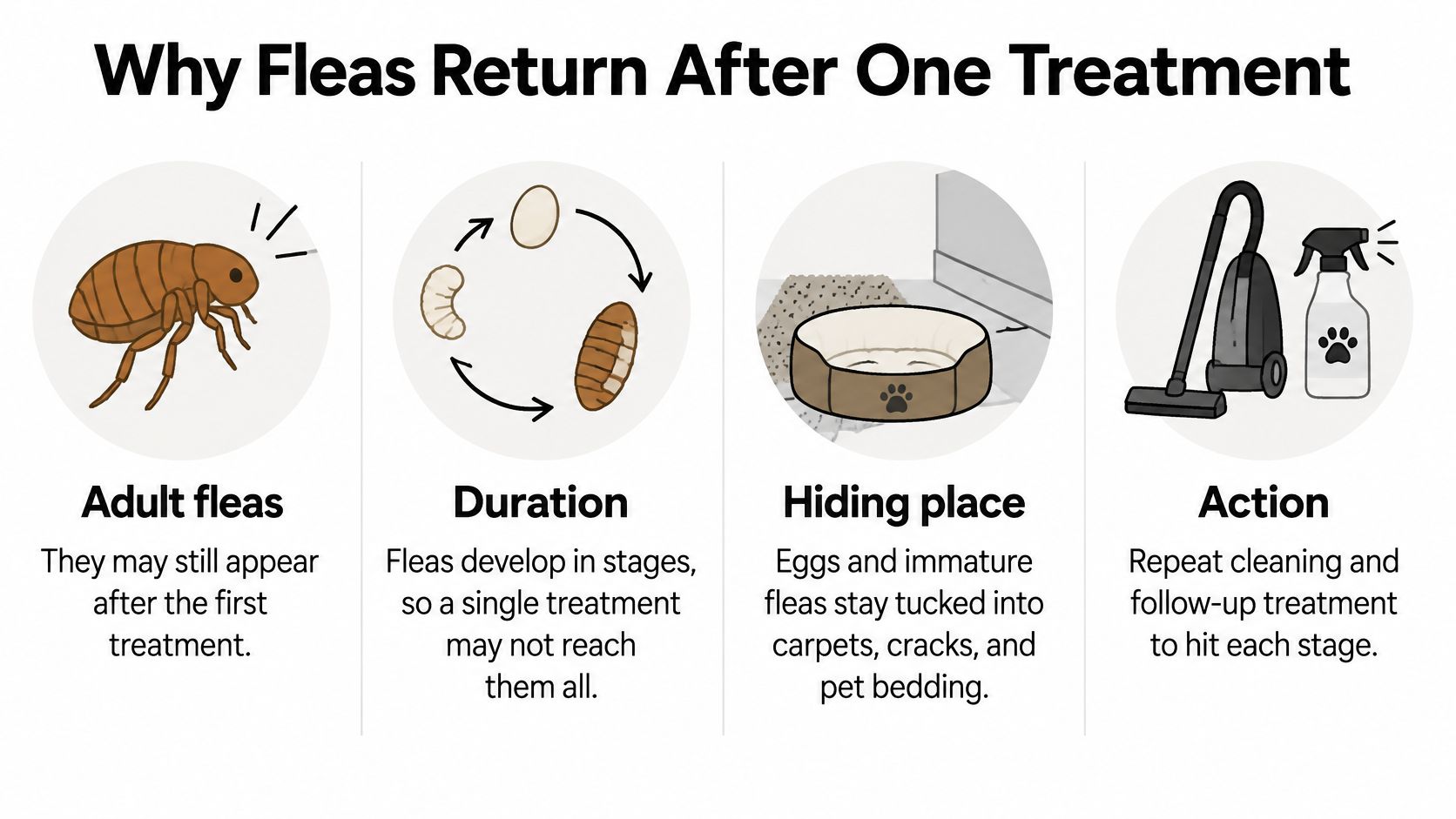
The Purdue Extension public health page on fleas notes that female fleas can lay 25 to 40 eggs per day and that the three larval stages can be completed in approximately 7 to 14 days under warm, humid conditions. South Florida sits at the fast end of every range below, which compresses the gap between generations and makes a second wave more likely, not less.
| Life Stage | Typical Duration | Where It Hides | What Handles It |
|---|---|---|---|
| Egg | Roughly 1 to 12 days | Carpet, bedding, pet resting areas | Daily vacuuming, hot laundry, insect growth regulator |
| Larva | Approximately 7 to 14 days | Carpet fibers, under furniture, cracks | Daily vacuuming, insect growth regulator |
| Pupa | 4 to 14 days, potentially up to a year | Cocoons in carpet, upholstery and cracks | Vacuuming plus repeat treatment as adults emerge |
| Adult | On the host; females lay 25 to 40 eggs per day | On pets and pet resting areas | Veterinary pet treatment plus indoor adulticide |
Reading Each Stage Correctly
Eggs hatch across a wide window as temperature and humidity shift, so a warm, humid Miami spell can restart visible activity within days of a good first service. Larvae stay deep in carpet fibers and cracks, feeding on debris, which is why vacuuming removes them and the IGR stops survivors from maturing.
Pupae are the stall point. The cocoon shrugs off insecticide contact, and the adult inside waits for vibration, warmth, or carbon dioxide from people and pets before emerging. Walking across a quiet room triggers the wave you then blame on the treatment. Adults live on the host, so one untreated cat refills carpets and bedding with eggs daily while you clean around it.
The Count That Separates Normal From Failing
Comb every pet and check the main rooms once a week, and write the number down. Treat the job as failing only when that count is still rising after both follow-up treatments are complete and daily vacuuming plus hot laundry have continued without gaps. A flat or falling count with occasional adults is the cycle playing out, not evidence of failure.
DIY Flea Control Versus a Professional
The cost gap is real, so start there. Angi's 2025 pricing data puts professional flea extermination in the United States at approximately $75 to $400 in 2025, while DIY flea-removal methods cost about $5 to $30. What that gap buys, and what it doesn't, decides which route fits your situation.
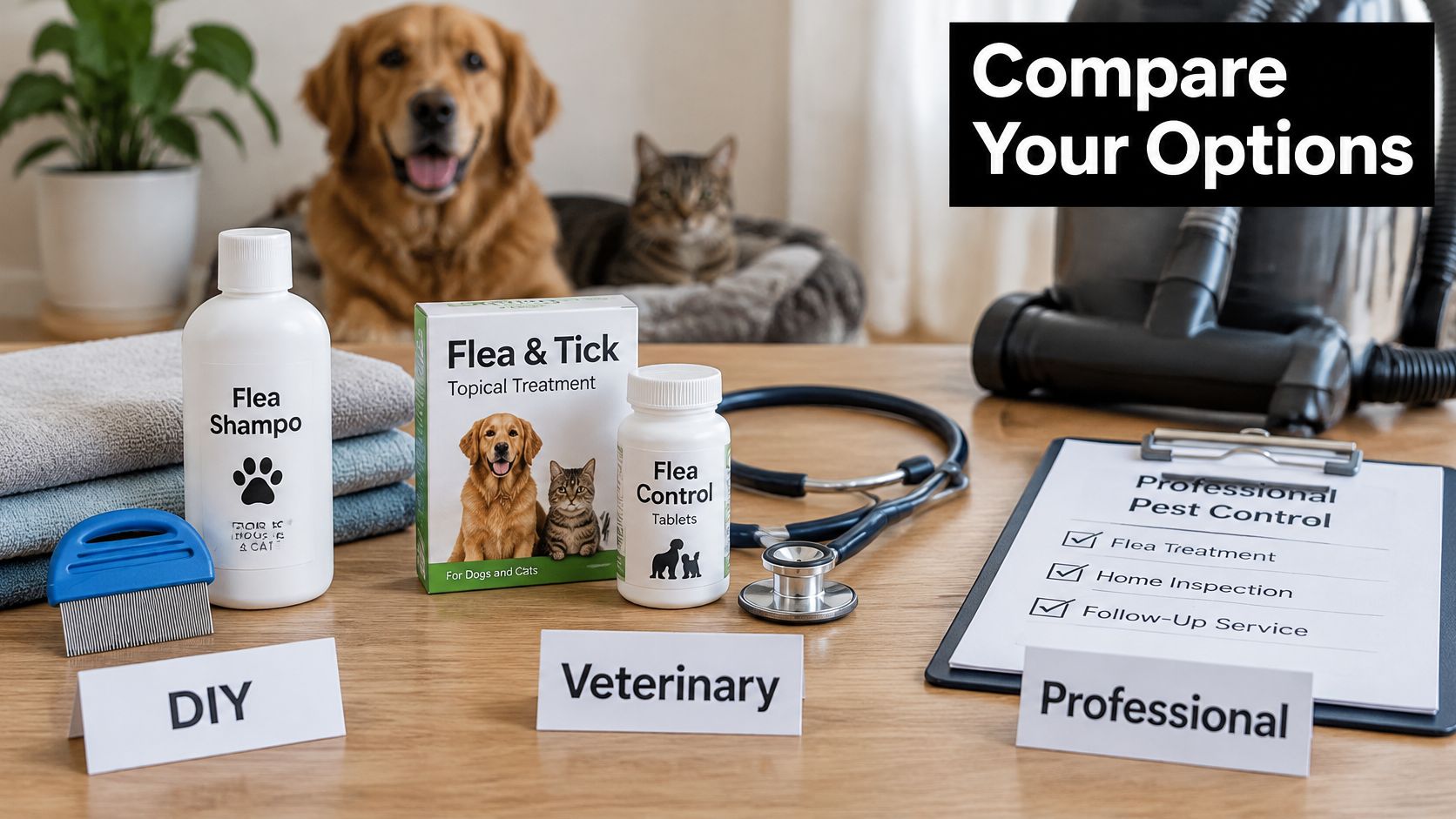
DIY does well on early, light infestations in one or two rooms, where daily vacuuming and hot laundry catch most stages before pupae build up. It runs out when the problem spreads across rooms, when you can't sustain daily cleaning for weeks, or when repeated retail spraying becomes your only lever. That repeated spraying is the hidden cost: it raises exposure for kids and pets, adds up in product spend, and still doesn't reach inside cocoons.
| Option | Typical Cost | Best Fit | Main Limit |
|---|---|---|---|
| DIY vacuuming, washing and retail products | About $5 to $30 | Light, early infestations in one or two rooms | Misses pupae without sustained daily effort |
| Veterinary pet treatment | Priced per pet by your veterinarian | Every dog and cat in the home | Treats animals only, not the environment |
| Licensed professional extermination | About $75 to $400 | Spreading infestations and multi-unit buildings | Cost rises with visits and home size |
A professional adds three things you can't easily replicate: a site inspection that finds source points you'd miss, a labeled indoor product matched to the infestation's severity, and scheduled return visits timed to emergence. The cleaning still falls to you. Deep carpet work pairs naturally with flea prep, and if you're already pulling furniture out for treatment, pre-holiday cleaning with J.G. Carpet Cleaning is a reasonable way to reset carpets once the active window closes.
This short video walks through how the stages respond differently to treatment, which is the part most product labels never explain.
For apartments and condos, treating one unit rarely clears a building, since fleas move through shared walls, hallways, and neighboring pets. Coordinate with adjoining units and the property manager before spending anything. When you do hire, note that the inspection and treatment are performed by the matched third-party provider, so confirm who will be on site and which product labels they'll be using.
Decide Whether to Hire a Licensed Miami Pro
Keep going yourself while the weekly count falls and activity stays in one area. Hire when any item on this checklist is true, because each one signals a problem that cleaning and retail products can't close on their own.
Triggers That Mean Call Now
- Still active after three to four weeks of daily vacuuming, vet treatment on every pet, and hot laundering with no missed days.
- Fleas in more than one room or unit, which points to multiple source points rather than one pet bed.
- Infants, pregnant people, asthma, or chemically sensitive pets in the home, where product selection and re-entry timing carry real consequences.
- A rental, condo, or HOA building where neighbors share the problem and one unit's effort gets undone by the next.
- A pending sale that needs documented treatment before closing.
How to Vet Whoever You Hire
Ask for proof of the Florida pest control license and active insurance before anyone sprays anything. Ask for the treatment and follow-up schedule in writing, plus the product labels they plan to use, so you can read the re-entry and pet restrictions yourself. This overview of what makes a licensed pest control professional explains what those credentials should look like in Florida.
We're direct about how we work: Pestless is a free referral service and does not perform pest control treatments itself. Every provider we match holds the pest control license required by the State of Florida under FDACS, Chapter 482, and carries active insurance. We never refer unlicensed operators, so the credential check is done before a name reaches you.
A provider who won't show you a product label before the visit is telling you how the rest of the job will go.
Three actions for this week: count and treat every pet through your vet, start daily vacuuming today rather than after the first service, and request local quotes if any checklist item above applies. The order matters. Pets treated after the home service reseed clean carpet within days.
After the Active Window Closes
Keep year-round veterinary prevention on every pet, since Miami doesn't give you a cold-season reset. Wash bedding hot the moment scratching returns instead of waiting for visible fleas, and vacuum pet zones several times a week as routine maintenance. That steady, low-effort pattern is what stops a single wildlife visitor in the yard from rebuilding the whole cycle inside your home.
If your weekly count isn't falling, or fleas have spread beyond one room, Pestless Inc. will match you free with a licensed, insured Miami-Dade pro who can inspect your source points and set a written follow-up schedule. Tell us how many pets you have and which rooms are affected, and we'll connect you with a local provider who handles the treatment while you keep up the vacuuming that makes it stick.
Dealing with this pest right now?
Pestless connects you with a licensed, insured Miami pest control provider for a free, no-obligation quote.