You're on a weekend walkthrough in Coconut Grove, and a faint line of soil sits on the foundation wall above the mulch. It looks like splash from last night's rain. It might be a shelter tube instead. Termites rarely announce themselves, and in South Florida's warm, humid climate a colony can grow for years before anyone sees a problem.
That line is easy to walk past. In 2025, only 31% of U.S. homeowners said they were familiar with common signs of termite infestations, according to a Harris Poll survey conducted for the National Pest Management Association among 1,365 homeowners. In Miami-Dade, slab edges, plumbing penetrations, and humidity give subterranean termites a path that stays hidden behind paint and stucco.
This guide covers eight signs of termites you can check yourself. I'll pair each one with the non-termite cause Miami homeowners mix it up with, so you can rule out humidity, a plumbing leak, carpenter ants, or flying ants before you call. The point isn't to name the species from the sidewalk. It's to know which clues are strong and which ones are just South Florida weather. I'll also say when I'd stop guessing and book a licensed inspection.
Get a photo, note the room, and leave the evidence in place. Tubes, wings, and pellets are how an inspector finds the colony.
Table of Contents
- 1. Mud Tubes (Shelter Tubes)
- 2. Discarded Wings After Swarming
- 3. Swarmers Near Lights and Windows
- 4. Frass (Termite Droppings)
- 5. Hollow-Sounding or Damaged Wood
- 6. Blistering, Bubbling, or Wavy Paint and Wallpaper
- 7. Sticking Doors, Windows, and Sagging Floors
- 8. Pinholes, Exit Holes, and Honeycomb Galleries in Wood
- How the eight termite signs compare across location, termite type, and look-alike risk
- What to Do Next When You Spot Any of These Signs
1. Mud Tubes (Shelter Tubes)
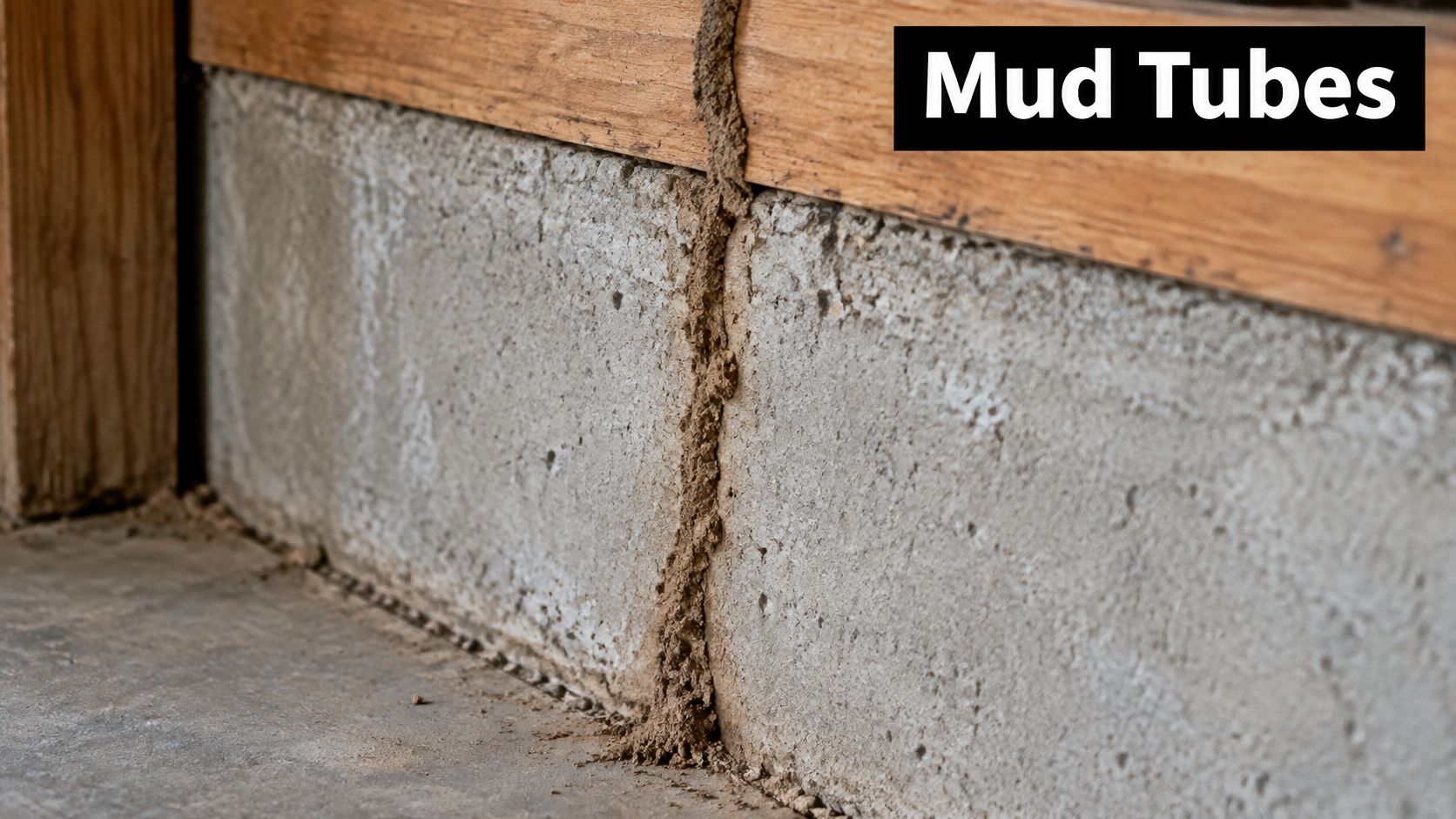
A soil line on stucco after a summer storm is usually splash from mulch or a sprinkler. Ants also push loose dirt along a slab edge. A shelter tube is a built tunnel, not a smear, and it stays put after the wall dries.
Subterranean termites pack soil, wood particles, and saliva into that route so they can travel from the ground to wood without drying out in open air and light. The University of Maryland Extension termite guide notes that Colorado State University Extension describes these tubes as commonly about 1/4 to 1/2 inch wide. Check foundation walls, crawl-space piers, slab edges, and plumbing penetrations. A fresh, moist tube can mean a live colony. A dry, empty tube can be an old route, so the tube alone doesn't prove today's activity.
Say a pre-purchase walk turns up two tubes at a garage corner. I'd photograph them, mark the wall, and leave them in place. Scraping them off before an inspection removes the map a pro uses to see where feeding meets the structure. A termite infestation in a house often follows those routes into framing long before the paint fails.
Practical rule: Recheck slab edges and piers after heavy rain, and don't knock the tubes down first.
2. Discarded Wings After Swarming
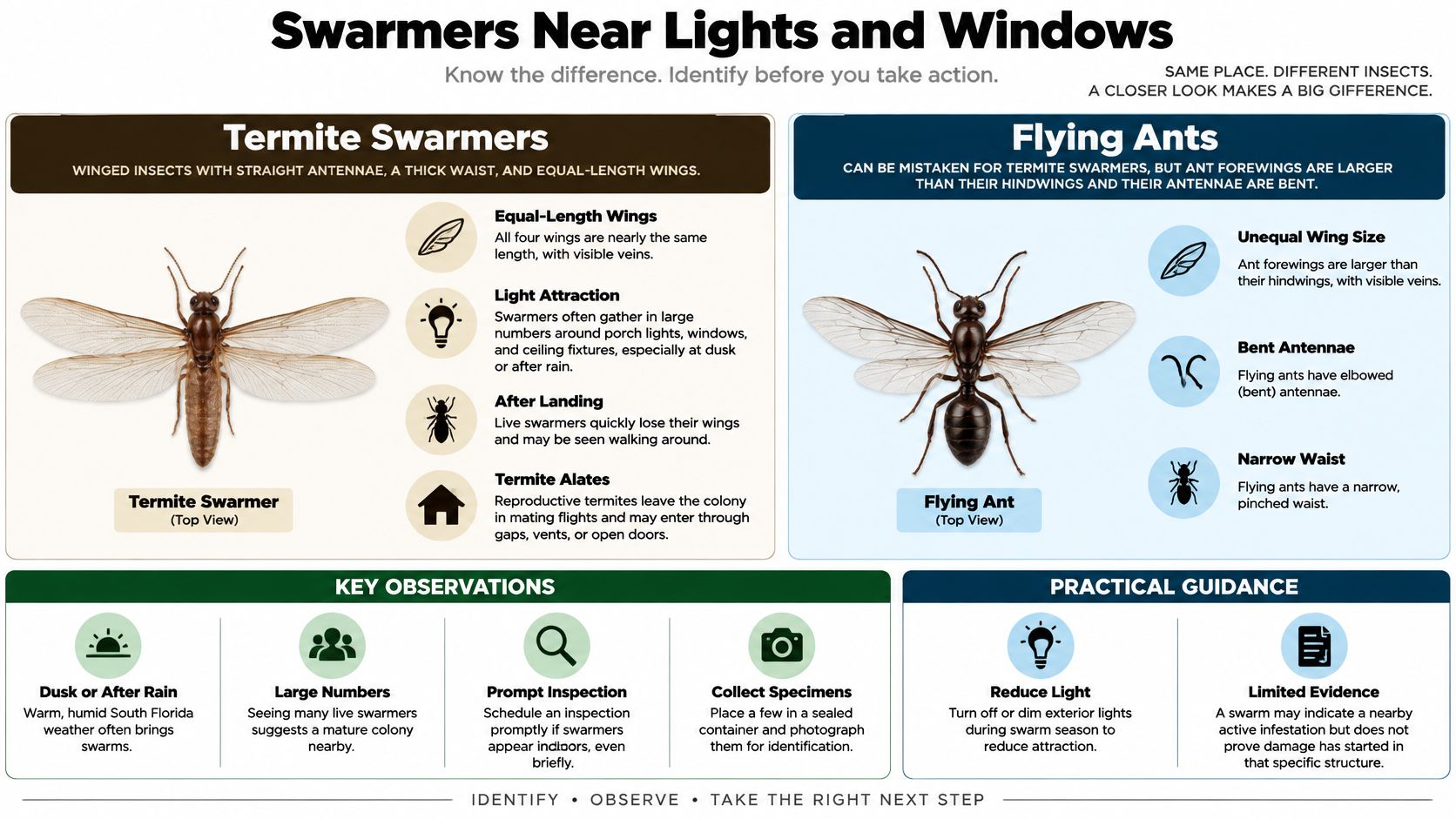
Equal-length wings and a straight body point to termites. Unequal wings and a pinched waist point to flying ants, the insect homeowners mix up with a termite swarm.
Termite swarmers, also called alates, leave to start a new colony, then shed four wings of similar length. Their antennae are straight, and the body doesn't pinch at the waist. Flying ants have a narrow waist, elbowed antennae, and forewings clearly longer than the hindwings. Both insects show up after rain, and both dump wings near light, so the mix-up is easy.
Mississippi State University Extension reports that subterranean colonies generally mature in approximately 3 to 5 years before they produce these winged adults. Swarmers inside a building usually mean a colony in the structure or right under it. Wings beside an outdoor stump or garden timber only show termites nearby.
Sweep the wings into a sealed bag, not the trash. Note the sill, window track, or light fixture, and the date. A condo track full of identical wings is worth an identification even if you never saw the flight. Outdoor piles by a stump can wait for a calmer look.
Indoor piles shouldn't.
Match the sample before you write it off as ants. A zip bag holds up better than a phone photo once the wings are crushed. After storms, recheck window tracks and fixtures. Daily sweeping hides a fresh pile that shows the flight happened again.
3. Swarmers Near Lights and Windows
Catch a few insects in a jar before sweeping them away. A sample makes it easier to distinguish termite swarmers from flying ants, which also gather near lights and windows.
A swarmer is a reproductive adult that has left a colony to start a new one. University of Maryland Extension explains that swarmers do not damage structures themselves, but their presence indoors warrants investigation because it points to a mature colony nearby. The insects may be harmless to the wood in that moment; their appearance can still signal a termite problem that needs attention.
Photograph the wings and body, then note where the insects gathered or emerged. If they came from trim, a floor crack, or the ceiling, tell the inspector the exact location. The guide to when termites swarm can help you understand seasonal flights, but the timing alone cannot rule out an infestation.
Dim exterior lights during a flight to avoid drawing more insects to the glass. If swarmers are active indoors, mention that when requesting a quote so Pestless can prioritize a faster response.
If your sample has the equal-length wings and thick waist typical of termite swarmers, keep it for identification and request an inspection.
4. Frass (Termite Droppings)
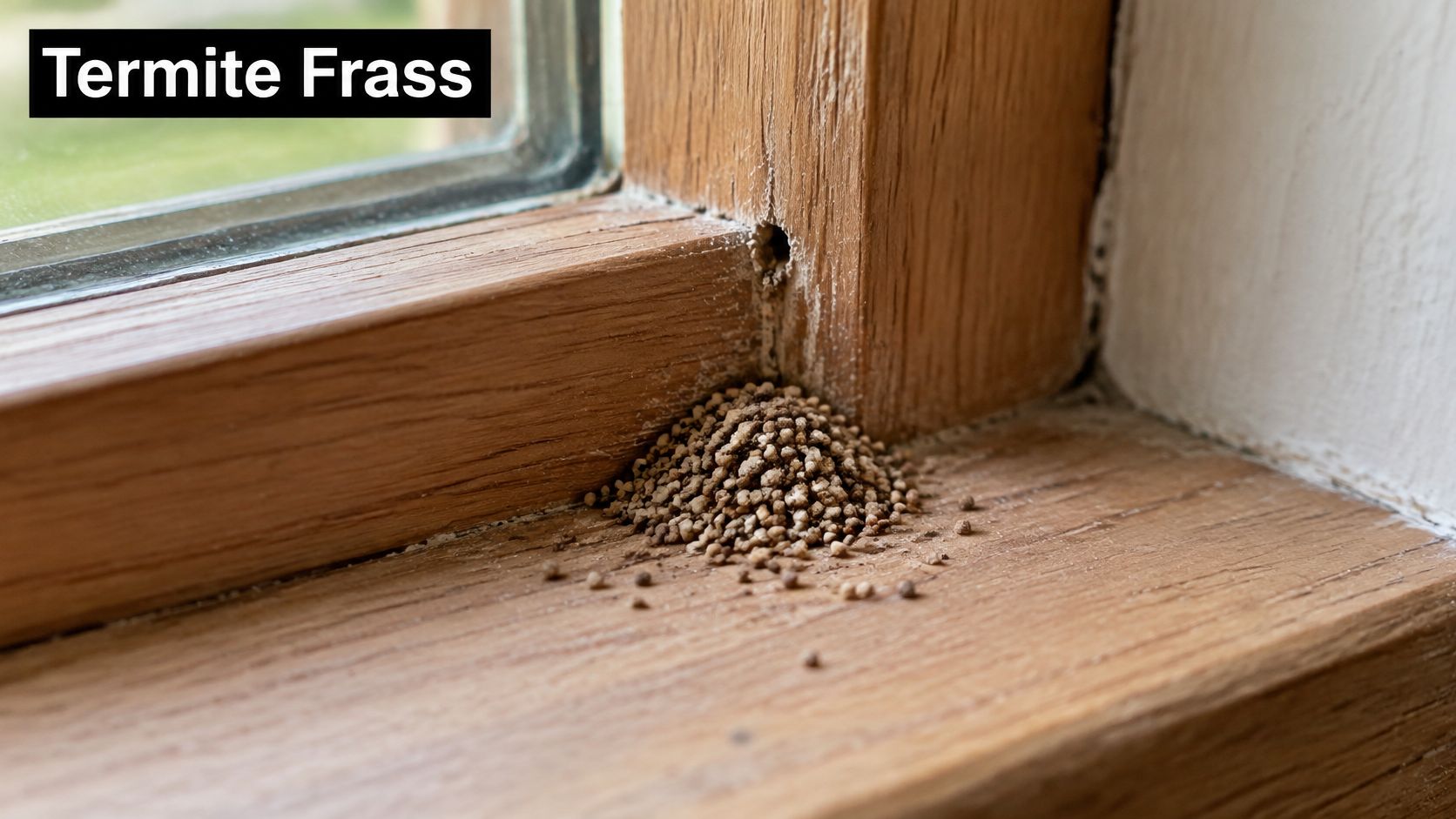
Drywood termite frass feels like a compact pile of small, hard, evenly shaped pellets. Sand feels gritty and irregular. Carpenter-ant debris is shredded wood, sometimes mixed with insect parts, and often collects beneath a rough opening.
Drywood termites live inside the wood they feed on and push their droppings out through a tiny kick-out hole. Look for pellets on window sills, beneath door casings, on attic boards, or under deck rails. A fresh pile beneath one rail joint deserves closer inspection; dust on a shelf that stays unchanged is a weaker sign.
Check the wood near the pile for damage, and bag a small sample for identification. Avoid caulking any nearby opening before an inspector can examine it. Check nearby furniture, including dressers and headboards, too, since the frame beside the pile may not be the only affected wood.
5. Hollow-Sounding or Damaged Wood
Tap the trim with a screwdriver handle. Solid wood gives a firm thud; termite galleries can make it sound papery or hollow. A damp, dark, fibrous patch points more toward water damage, though moisture can occur alongside termite activity.
This short clip demonstrates the hollow sound to listen for in painted trim.
Probe only where the trim is already failing. Avoid puncturing beams or sound wood. A soft subfloor could reflect old damage, active termites, or moisture; the sound alone cannot tell you which. Look for other evidence nearby, such as live insects or soil-packed galleries, and have a qualified inspector assess damage that extends into structural wood.
Acoustic detection can help locate activity beneath an intact surface, but a positive reading needs confirmation. In a controlled study, acoustic equipment detected termites in pine with 83.75% accuracy. A separate wireless-sensing experiment reported 100% accuracy at 5–7.5 cm and 32% at 20 cm, according to this acoustic termite detection study. For visible signs inside damaged wood, see how to identify termite damage. If the floor needs repair after the termite question is resolved, consult Flacks Flooring hardwood damage advice.
6. Blistering, Bubbling, or Wavy Paint and Wallpaper
Blisters with no plumbing above them are the pattern that separates termite damage from a leak or from ordinary Miami humidity. A band of bubbles that gets scraped, painted, and then lifts again in the same line is not a bad paint job.
Humidity blistering shows up wide and soft after a wet week, often on exterior walls and in bathrooms that never dry out. A plumbing leak sits under a bath, a roof penetration, balcony flashing, or an air-conditioner drain, and it leaves a wet stain or a brown ring. Termite-related bubbles can sit mid-wall, along a baseboard, or on door trim with dry paint around them. Galleries just under the film let moisture from the colony lift the coating into soft waves. Wallpaper does the same thing in a narrow track that follows a stud.
Purdue entomology guidance notes that a leaking roof or pipe can allow an infestation to become established without direct soil contact. A damp wall with no insects still deserves a look. Chronic moisture makes an infestation more likely once the wood stays wet, even when you never see an insect.
If the blister has no plumbing above it and the paint lifts in a tunnel shape, stop repainting and have the cavity checked before you skin the wall again.
I'd want a moisture reading on the drywall before anyone closes it with new paint. Wavy paint plus pellets on a door casing is a drywood lead. A blister directly under a sweating supply line is a plumber's job first. Fix the leak, then still have the cavity checked if the wood behind the blister is soft or tunneled.
7. Sticking Doors, Windows, and Sagging Floors
When does a sticking door point to humidity, and when does it point to structure? In Miami, humidity can swell a door or frame, especially during wet weather. A single door that sticks seasonally may reflect that movement. Several doors binding at once, a door that stays stuck in drier weather, or a nearby floor that feels bouncy deserves closer attention.
Termite damage can weaken framing or joists, shifting a doorway and causing the latch to miss or drywall to crack at a corner. Similar signs can come from a worn subfloor or a plumbing leak, so check for tile cracks, baseboard gaps, and nearby moisture. Note when the sticking began, and avoid planing the door until you understand what is causing it.
If exterior water may be entering around damaged siding, a siding repair guide for East Texas explains that repair issue. A sagging floor or changing door frame calls for a separate structural assessment and termite inspection.
Texas A&M AgriLife describes wings, tubes, and weakened wood as initial signs to check. Moisture meters, borescopes, and infrared cameras can help identify where to investigate, but they may not reveal every termite. Use them to choose where to open a wall, and treat a clean reading as a starting point, not a clearance.
8. Pinholes, Exit Holes, and Honeycomb Galleries in Wood
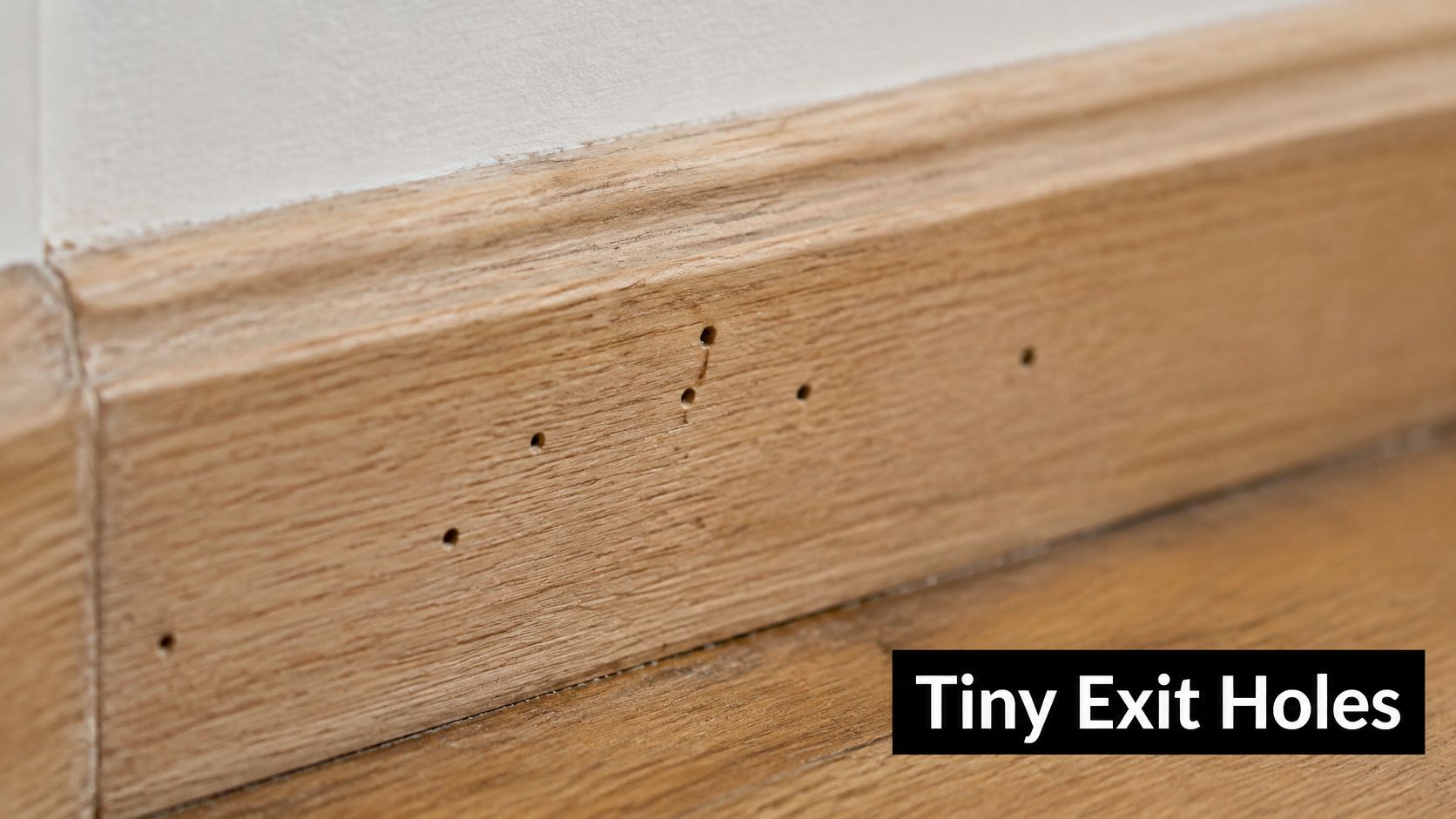
Flour-like dust beneath pinholes points toward wood-boring beetles, while firm pellets can indicate drywood termites. Powderpost beetles also leave fine powder. Carpenter bees make larger round holes in bare exterior wood, sometimes with yellow staining below.
A termite kick-out hole is small, but the galleries inside the wood matter more. Drywood termites push pellets through openings; subterranean termites more often leave soil-lined galleries. Both can hollow wood along the grain, leaving a thin surface over honeycomb-like damage. Exit holes in attic rafters near an old roof leak are a structural finding that needs a closer look.
Check trim, rafters, and the backs of used furniture with a flashlight. Leave the holes and any dust undisturbed so an inspector can assess the evidence. If the wood is damaged, have the affected area inspected before filling or repainting it.
How the eight termite signs compare across location, termite type, and look-alike risk
Use the location and the first ruling-out check together. A single sign can have several causes, so look for evidence that fits the suspected termite type before treating damage as proof of an infestation.
| Sign | Where to check | Termite type most associated | First ruling-out check |
|---|---|---|---|
| Mud tubes (shelter tubes) | Foundation walls, slab edges, piers, crawl spaces, and baseboards | Subterranean termites | Check whether the tube follows a rain or splash pattern, and whether it is hollow. Mulch splash or ant-pushed soil along slab edges can look similar. |
| Discarded wings after swarming | Windowsills, floors, and beneath light fixtures | Reproductive termites; type depends on the colony | Compare the wings: flying ants have a pinched waist and bent antennae; termite swarmers have a broad waist and straight antennae. |
| Swarmers near lights and windows | Around porch lights, windows, ceiling fixtures, and gaps or vents | Reproductive termites; type depends on the colony | Check for the same body shape and antenna differences that distinguish termite swarmers from flying ants. |
| Frass (termite droppings) | Windowsills, floors, beneath wood, and below kick-out holes | Drywood termites | Look for firm, pellet-shaped droppings. Sawdust and many wood-boring insect residues are finer or less uniform. |
| Hollow-sounding or damaged wood | Baseboards, door frames, subflooring, joists, and wooden fences | Subterranean or drywood termites | Check for damp, softened wood that points to water rot, or ant activity and galleries associated with carpenter ants. |
| Blistering, bubbling, or wavy paint and wallpaper | Painted wood, drywall, trim, door frames, window casings, and walls near the ground | Termites may be present in concealed wood | Check for a plumbing leak, condensation, or another moisture source before attributing the surface change to termites. |
| Sticking doors, windows, and sagging floors | Doors, windows, floors, and nearby drywall or tile | Termites may be present in nearby structural wood | Check whether humidity, settling, or poor installation explains the change, and look for other signs of wood damage. |
| Pinholes, exit holes, and honeycomb galleries in wood | Furniture, wood trim, attic rafters, and structural beams | Drywood or subterranean termites | Check whether the residue is pellet-shaped or flour-like, and whether the holes and galleries point to another wood-boring insect. |
What to Do Next When You Spot Any of These Signs
Photograph the sign, note the room and date, and leave tubes, wings, and frass in place. Their location and condition can help an inspector determine whether termites are entering from the soil or feeding within the wood.
If you see active swarmers, say so when requesting a quote so Pestless can prioritize a faster response. Most licensed providers in its network can schedule a termite inspection within a day or two. A licensed inspector checks the structure, attic, and crawl spaces, then identifies the termite species before treatment is discussed.
The 2024 homeowner survey found that inspections and preventive steps are not universal. Buyers, landlords, and association boards in Miami-Dade should arrange a wood-destroying organism inspection rather than wait until a closing or repair makes the issue urgent.
Termite Control connects you with a licensed, insured professional for an inspection and treatment quote. Treatment may use a liquid soil barrier, a baiting system, or localized drywood treatment, depending on the infestation. Cost depends on the termite species, home size, and whether you choose a liquid barrier or baiting system. Pestless connects homeowners with providers but does not perform treatments. Submit the form with your specific address to be matched with a local pro. Quotes are free and there is no obligation to buy.
While you wait, fix leaks, move mulch away from the slab, and keep firewood off the wall. These steps address conditions that can attract pests, but they do not replace an inspection. Landlords should document any sticking doors and call for an inspection before repainting or patching. For a sale, do not treat a general home inspection as a wood-destroying organism inspection. If moisture has also worn the exterior, SuperiorPRO's exterior refresh checklist can help with that separate issue.
If you have found tubes, wings, frass, hollow wood, or active swarmers, describe what you saw and when you first noticed it. Submit a quote request through Pestless Inc. to connect your Miami or Miami-Dade address with a local termite professional.
Dealing with this pest right now?
Pestless connects you with a licensed, insured Miami pest control provider for a free, no-obligation quote.